NEW YEAR, NEW GOALS:   Kickstart your SaaS development journey today and secure exclusive savings for the next 3 months!
Check it out here >>
White gift box with red ribbon and bow open to reveal a golden 10% symbol, surrounded by red Christmas trees and ornaments on a red background.
Unlock Your Holiday Savings
Build your SaaS faster and save for the next 3 months. Our limited holiday offer is now live.
White gift box with red ribbon and bow open to reveal a golden 10% symbol, surrounded by red Christmas trees and ornaments on a red background.
Explore the Offer
Valid for a limited time
close icon
Logo Codebridge
AI

How AI Agents Detect Workflow Bottlenecks, and Why Most Companies Are Not Ready to Act on Them

May 26, 2026
|
6
min read
Share
text
Link copied icon
table of content
photo of Myroslav Budzanivskyi Co-Founder & CTO of Codebridge
Myroslav Budzanivskyi
Co-Founder & CTO

Get your project estimation!

Most leadership teams can tell you where their operations slow down. Now, the question that matters is whether they can prove where these bottlenecks sit, why they persist, and what action follows from finding them.

KEY TAKEAWAYS

Proof beats perception, bottleneck detection is useful only when the company can prove where work slows down and why.

Agents need visibility, they can only analyze workflows made visible through system data, event streams, ownership records, and exception patterns.

Insight is not action, companies may see the bottleneck clearly but still lack ownership, data quality, or authority rules to remove it.

Architecture enables change, bottleneck detection becomes operational improvement only when workflows, permissions, approvals, and feedback loops are designed together.

This is where AI agents are supposed to help, but also where most deployments stall. The McKinsey 2025 Global Survey on AI reports that 88% of organisations use AI in at least one business function, but only about a third have begun scaling, and only 23% are scaling agentic AI anywhere in operations. It means that adoption is running ahead of operational maturity by a wide margin.

The reason is structural, as the agents can only analyze the workflow the company makes visible to them, such as event streams, status changes, ownership records, and exception patterns. When the real workflow lives in undocumented habits and Slack messages, the agent produces a clearer picture of the disorder.

This article explains how AI agents can identify workflow bottlenecks, what signals they need to do it well, why many companies are not ready to act on the findings, and what kind of architecture turns bottleneck detection into operational improvement. 

For CEOs and CTOs, the value is in building a system that can prove the delay, assign ownership, and change how work moves through the company.

Why Proving a Workflow Bottleneck Is Harder Than Finding It

Producing evidence that pinpoints why a specific process is slow, in a form a finance committee or product council will accept, is harder than noticing the delay itself. 

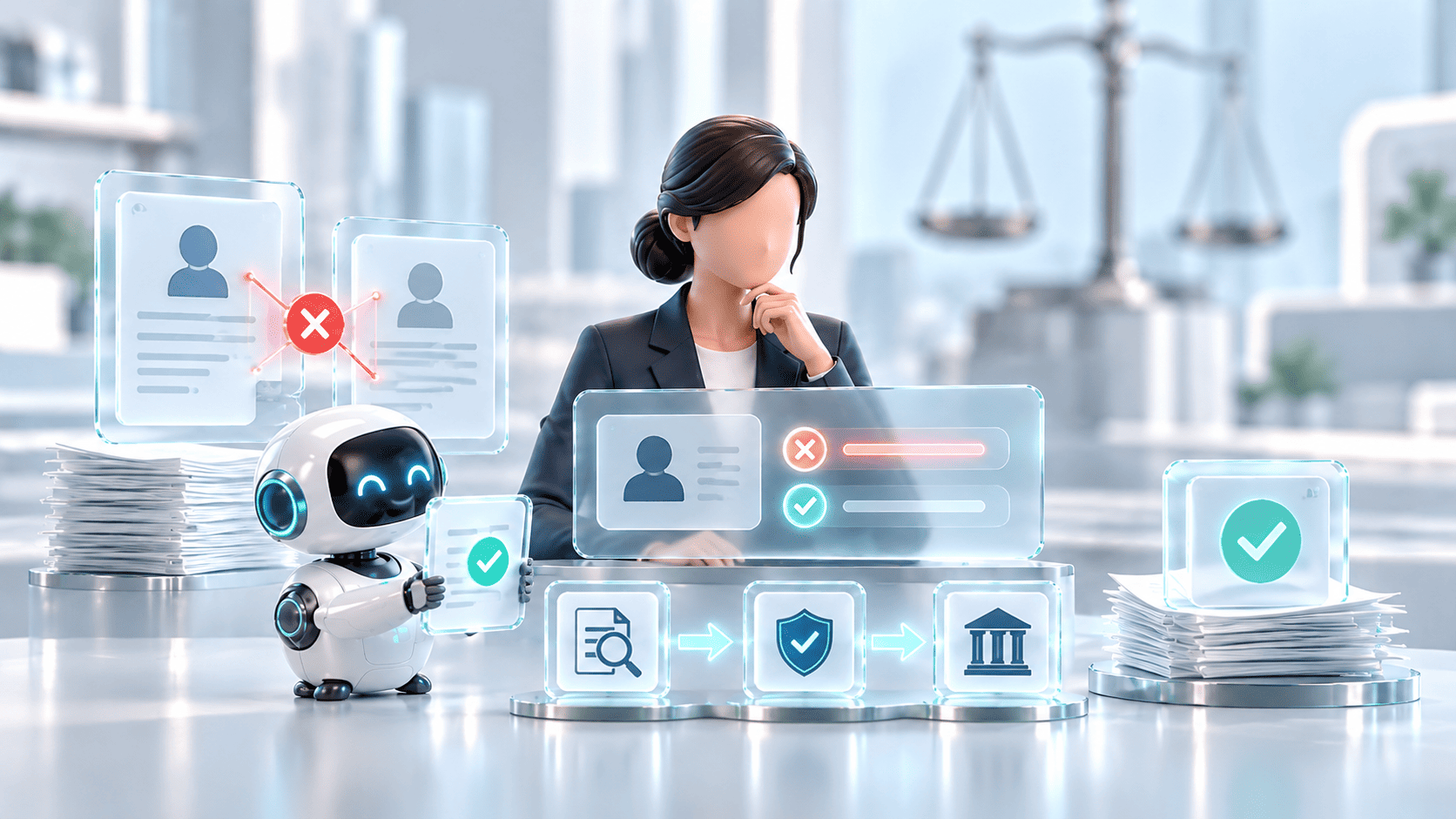
The diagnosis they reach for is usually wrong. A sales team that is slow to follow up gets called unproductive, when the actual cause is more often incomplete CRM data and routing rules that leave leads sitting in no one's queue. 

Or a growing support backlog gets blamed on headcount but the constraint is more often a knowledge base nobody has maintained, or escalation paths that require manual intervention at every step.

And this pattern is consistent; while bottlenecks live in the workflow, the people inside the workflow are doing what the workflow allows. The recurring shapes:

  • A queue with no defined owner.
  • A system handoff that loses context on the way through.
  • An approval step that exists because nobody trusts the underlying data.
  • A manual reconciliation step between two tools that should be integrated.
  • An exception path that became the normal path because nobody pruned it.
  • A reporting delay that hides emerging problems until they get expensive to fix.

Companies that misdiagnose these patterns spend AI budget reinforcing them, and based on a recent studies, only 39% of organisations attribute any EBIT impact to their AI initiatives, and most of those report under 5%.

39% The article states that only 39% of organisations attribute any EBIT impact to their AI initiatives, and most of those report under 5%. Source used in article: Recent studies cited in the article.

The useful question for a CTO is where does work lose ownership and context as it crosses system boundaries? Because that is where bottlenecks form and where any agent deployed on top will have to operate.

How AI Agents Detect Workflow Bottlenecks in Production
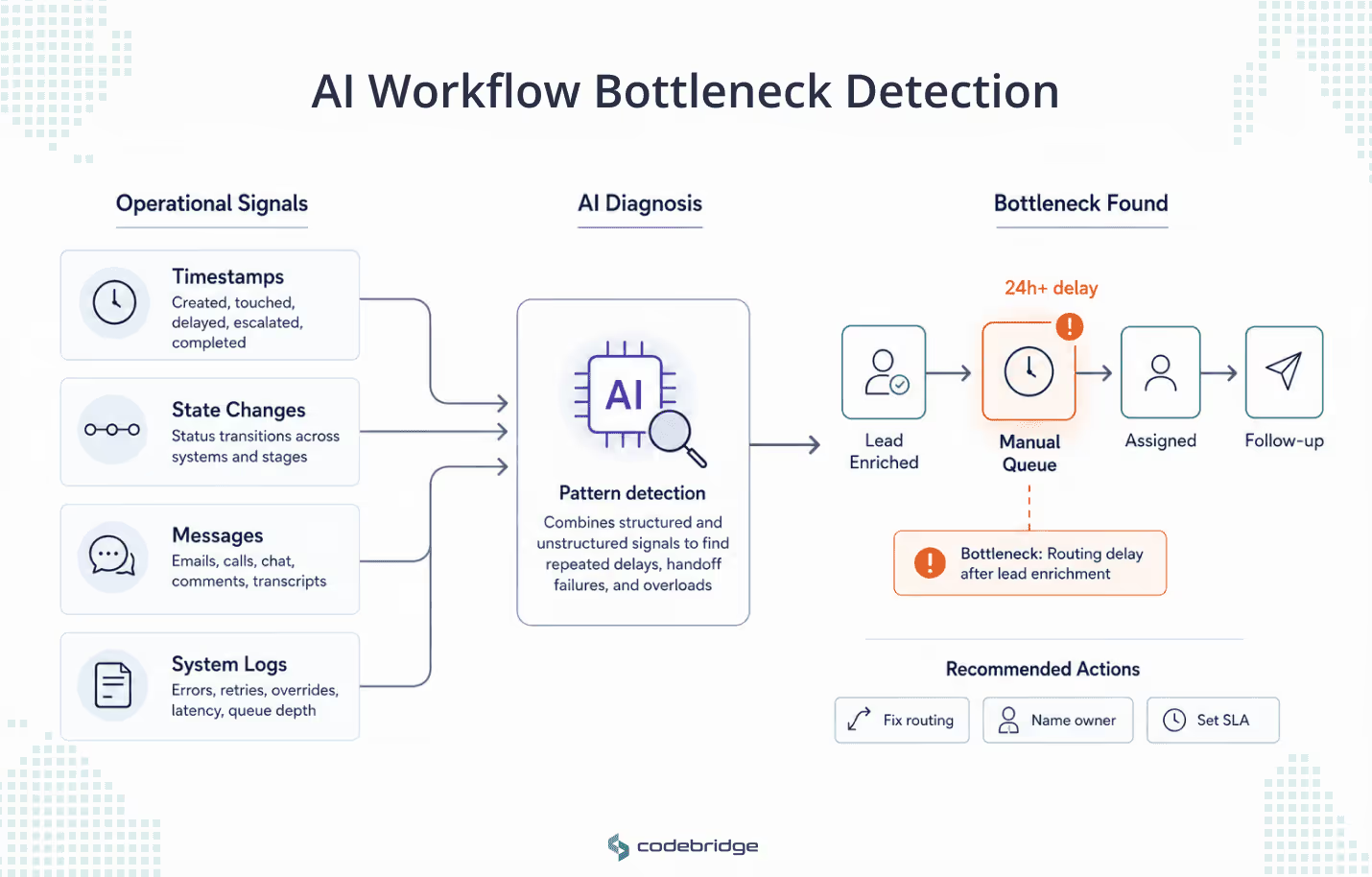
AI workflow bottleneck detection diagram showing four operational signals, timestamps, state changes, messages, and system logs, feeding into AI diagnosis and identifying a 24-hour delay in a manual queue.
AI agents detect workflow bottlenecks by combining operational signals instead of guessing. Timestamps, workflow states, messages, and system logs help identify where work gets stuck, why delays happen, and which operational fixes are needed.

Unfortunately, in a production environment, AI agents do not see bottlenecks through the lens of a manager walking an office floor. They detect patterns by analyzing a continuous stream of different operational signals. 

In our work with clients on AI automation projects, we usually see four signal categories carrying most of the diagnostic weight. They do not explain every operational problem, but they give agents enough evidence to move the conversation from “the process feels slow” to “this is where work gets stuck, this is how often it happens, and this is what it affects.”

  1. Event timestamps. When a task was created, touched, delayed, escalated, or completed.
  2. Workflow state changes. Status shifts across systems: CRM stages, order states, patient workflow states.
  3. Communication and context data. Unstructured signal from emails, call transcripts, Slack and Teams threads, CRM comments.
  4. System logs and usage data. API failures, retry patterns, manual overrides, queue latency.

By synthesizing these signals, agents can identify repeated waiting points, handoff failures, and overloaded roles that are invisible to manual audits. This process is deeply rooted in the discipline of process mining, which uses system event logs to reconstruct business processes. 

Process mining on its own gives a retrospective map, but agents extend it in two ways: they read unstructured signals that do not live in event logs (comments, transcripts, free-text fields), and they reason about state in close to real time.

Take a SalesTech case. Take a standard SalesTech scenario. A company may believe its primary bottleneck is sales rep activity. However, an AI agent reviewing CRM timestamps and email response timing might find that reps are actually performing well, but that qualified leads are sitting in an unassigned manual queue for more than 24 hours after enrichment. The bottleneck is the routing rule, not the people. The fix in this case is to redefine the routing logic, name an owner for the queue, and write the SLA that the queue should have had.

The diagnosis at that point is precise and defensible. Whether the company can act on it is a separate question. 

Why Most Companies Aren't Ready to Act on AI Agent Findings

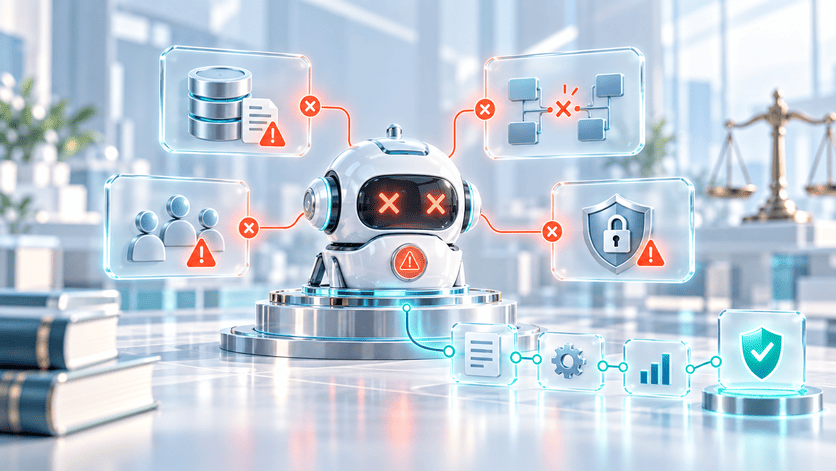
A pilot agent can be deployed in weeks, and the bottleneck can be found in one analysis. But acting on what it finds is harder, because the finding usually points to something the company has avoided fixing.

The agent may show that leads are delayed because marketing and sales do not share clear ownership. Or it may show that support tickets wait because the product context lives in scattered notes. At that point, the issue is not the agent, now it is the workflow around it.

This is why many companies are not ready to act. The agent can expose the bottleneck, but fixing it means changing responsibilities, integrations, approval rules, or team habits. Most companies are ready for the insight, but from our experience, fewer are ready for the operational change behind it.

Without that structure, the company can see the bottleneck more clearly, but nobody owns the decision that removes it.

Three problems usually sit underneath. Each can stop the company from acting, even when the agent is right.

1. The Workflow is Not Defined. 

The handbook version and the operating version are different processes. The real one lives in Slack threads, personal spreadsheets, and the institutional memory of two or three senior people. An agent will find dozens of variants. The company has no standard to call correct, so it has nothing to enforce. 

2. The Data is Not Decision-Grade.

Timestamps are inconsistent, status names mean different things in different systems, and ownership fields are missing or stale. When the same label carries different meanings across tools, the patterns the agent surfaces cannot be trusted for high-stakes decisions.

3. No One Owns the Bottleneck

The patterns sit between teams. Sales points at marketing, support points at product, product points at engineering. The agent confirms the pattern exists but does not assign it to anyone. Ownership is a human decision the company has to make first.

Without these three preconditions, there is nothing to build an action architecture on. With them, the architecture becomes possible: detection events route to a named owner, the agent acts within defined authority, humans approve what sits outside that authority, and the company can tell whether the intervention worked.

Building an AI Bottleneck Detection System: Five Components of Action Architecture

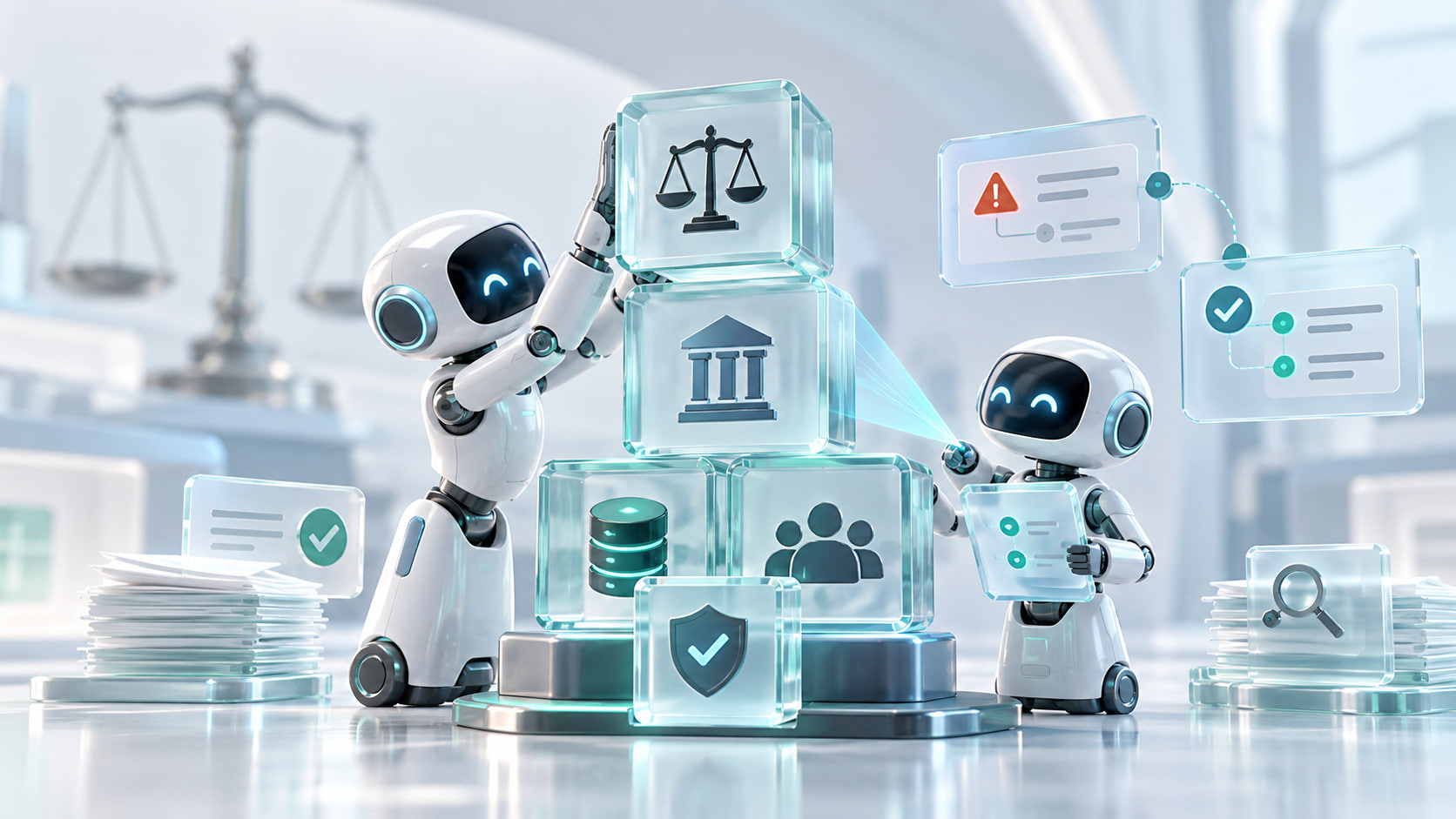
A useful bottleneck detection system is not just an AI agent sitting on top of company data. The agent needs a workflow intelligence layer around it. The map of how work actually moves, the signals that prove where it slows down, and the rules for what happens after a bottleneck is found. Here they are. 

Component What it means Why it matters
Reality-based workflow map A map built from actual system data, not only stakeholder interviews. It should show handoffs, decision points, waiting states, exception paths, and manual workarounds. The official process is often cleaner than the real one. Agents need the real workflow, not the version from a workshop slide.
Event and data instrumentation The system captures evidence such as queue time, reassignment frequency, manual overrides, escalation patterns, failed automations, and the cost or revenue impact of delays. Without instrumentation, the agent is guessing from fragments. With it, the company can prove where work gets stuck and how often it happens.
Agent reasoning layer The agent compares expected vs. actual flow, clusters similar exceptions, identifies repeated delay patterns, and explains confidence in its findings. Detection becomes useful only when the agent can explain the pattern, not just point to a slow step.
Human approval and authority boundaries Clear rules define what the agent can do automatically and what needs human approval. For example, it may trigger a low-risk notification, but changing a routing rule may require RevOps approval. Bottleneck detection often leads to operational changes. The company needs control over which changes are automated and which remain human decisions.
Observability and feedback loops The system tracks whether the intervention worked: cycle time, error rate, escalation volume, downstream delays, and business impact. A fix can move the bottleneck somewhere else. Observability shows whether the workflow actually improved or just changed shape.

Industry research on AI high performers points in the same direction. The report says that the companies seeing stronger results are more likely to redesign workflows and track KPIs around AI solutions. 

In practice, the most valuable work is designing the data flows, permissions, and feedback loops that let the agent’s diagnosis become a real operational improvement.

Where to Start: Running a 30-Day AI Agent Pilot

Start with one workflow. The pilot needs to be small enough to complete in 30 days, and consequential enough that the finding earns a budget conversation.

Strong first candidates, by industry:

  • SalesTech and CRM: lead qualification, routing delays, marketing-to-sales handoffs.
  • HealthTech: patient intake, diagnostic coordination, care team handoffs.
  • EdTech: learner onboarding, tutor matching, progress intervention.
  • SaaS and internal ops: support escalation, feature request triage, QA and release bottlenecks.

The 30-day Diagnostic Pilot

  1. Choose one workflow with a measurable business impact.
  2. Map the workflow from system data: timestamps, state transitions, and ownership records.
  3. Identify the top three recurring delay points.
  4. Validate the findings with the people running the process.
  5. Define one action the agent can handle: a notification, a routing trigger, a low-risk field update.
  6. Test the agent's authority under human review before any wider rollout.
  7. Measure cycle time and error rate against the baseline.

After the seven steps, the company has an instrumented workflow, a defined agent surface, a named owner for the bottleneck, and evidence that one intervention either worked or did not. That is the foundation an action architecture needs.

Companies that are not ready for autonomous agents should start with these four things: workflow visibility, decision-grade data, clear ownership, and the integration architecture that holds them together. That is the reliable path from diagnosis to action.

Assess one workflow before you automate at scale.

Book a domain-specific agent review

What is AI bottleneck detection?

AI bottleneck detection is the use of AI systems to identify where work slows down, stalls, or fails inside a business workflow by analyzing operational signals such as timestamps, state changes, communication patterns, and system logs.

How do AI agents detect workflow bottlenecks?

AI agents detect workflow bottlenecks by comparing expected flow against actual flow across systems. They look for repeated delays, waiting states, reassignment patterns, manual overrides, escalation frequency, and exception clusters that show where work gets stuck.

What data is needed for AI bottleneck detection?

The article points to four main signal categories: event timestamps, workflow state changes, communication and context data, and system logs or usage data. Together, these make the real workflow visible enough for the agent to analyze it.

Why is workflow visibility important for bottleneck detection?

Workflow visibility matters because agents can only analyze what the company makes visible in system data and workflow records. If the real process lives in side conversations, personal spreadsheets, or undocumented workarounds, the agent sees only part of the problem.

Can AI remove workflow bottlenecks automatically?

Not always. The article makes a clear distinction between detection and intervention. An AI system may identify the bottleneck accurately, but operational changes still depend on ownership, authority boundaries, approval rules, and the company’s willingness to redesign the workflow.

What should a production-ready AI bottleneck detection system include?

A production-ready system should include a reality-based workflow map, event and data instrumentation, an agent reasoning layer, human approval and authority boundaries, and observability with feedback loops to measure whether the intervention actually improved the workflow.

Why do companies fail to act on detected bottlenecks?

Companies often fail to act because the bottleneck sits inside a workflow with unclear ownership, weak data quality, missing approval logic, or no authority to change the process. In those cases, the AI can expose the problem, but the operating model is still too weak to fix it.

 How AI Agents Detect Workflow Bottlenecks, and Why Most Companies Are Not Ready to Act on Them

Heading 1

Heading 2

Heading 3

Heading 4

Heading 5
Heading 6

Lorem ipsum dolor sit amet, consectetur adipiscing elit, sed do eiusmod tempor incididunt ut labore et dolore magna aliqua. Ut enim ad minim veniam, quis nostrud exercitation ullamco laboris nisi ut aliquip ex ea commodo consequat. Duis aute irure dolor in reprehenderit in voluptate velit esse cillum dolore eu fugiat nulla pariatur.

Block quote

Ordered list

  1. Item 1
  2. Item 2
  3. Item 3

Unordered list

  • Item A
  • Item B
  • Item C

Text link

Bold text

Emphasis

Superscript

Subscript

AI
Rate this article!
Thank you! Your submission has been received!
Oops! Something went wrong while submitting the form.
32
ratings, average
4.6
out of 5
May 26, 2026
Share
text
Link copied icon

LATEST ARTICLES

Computer screen that shows the piece of code that is responsible for business AI automations
May 25, 2026
|
9
min read

AI Transformation Strategy: What to Fix Before You Automate Business Processes

Before AI can automate a business process, leaders need more than a use case. They need a clear workflow, trusted context, system integration, authority, and control.

by Konstantin Karpushin
AI
Read more
Read more
The AI Agent talks with a human employee
May 22, 2026
|
9
min read

AI Agents and Employees: Why Role Redesign Must Happen Before Agentic Automation Scales

When AI agents execute tasks, old job descriptions stop working. But it doesn't mean that they disappear entirely. This article explains the new roles employees must take before automation scales.

by Konstantin Karpushin
AI
Read more
Read more
Computer with a code next to the coffee cup
May 21, 2026
|
10
min read

AI Operating Model: How to Redesign Workflows, Systems, and Accountability for AI Agents

Learn how AI operating model design helps companies redesign workflows, systems, accountability, governance, and integration architecture before scaling AI agents.

by Konstantin Karpushin
AI
Read more
Read more
Business people building an AI orchestration workflow
May 20, 2026
|
10
min read

Agentic Orchestration: How to Coordinate AI Agents Without Creating Enterprise Chaos

Learn how agentic orchestration coordinates AI agents, tools, data, permissions, workflows, and human approvals so enterprise AI systems can operate reliably in production.

by Konstantin Karpushin
AI
Read more
Read more
A CEO of a company holding financial reports in his cabinet
May 19, 2026
|
11
min read

How to Measure ROI From AI Automation Before You Waste Budget on the Wrong Workflow

Understand how to evaluate AI automation ROI beyond the formula, including production costs, workflow maturity, risk, and payback. The article covers benefits, total cost, break-even volume, pilot validation, and automation risks.

by Konstantin Karpushin
AI
Read more
Read more
Business meeting in the conference room
May 15, 2026
|
13
min read

Top AI Agent Development Companies Serving Delaware in 2026

Compare the top 8 AI agent development companies serving Delaware in 2026. Learn how vendors fit by buyer type, project evidence, and where they fall short.

by Konstantin Karpushin
AI
Read more
Read more
Vector image of a woman comparing different business options
May 18, 2026
|
17
min read

Choosing a Multi-Agent Framework in 2026: LangGraph, CrewAI, Microsoft Agent Framework, or OpenAI Agents SDK?

Compare different multi-agent frameworks: LangGraph, CrewAI, Microsoft Agent Framework, and OpenAI Agents SDK by architecture, control, state, governance, and production fit.

by Konstantin Karpushin
Automation Tools
AI
Read more
Read more
Group of people, collegues are sitting around the table discussing agentic AI implementations in finance
May 14, 2026
|
18
min read

Agentic AI Case Studies in Financial Services: What Worked, What Changed, and What Leaders Should Learn

Explore 5 agentic AI case studies in financial services, from advisor support and fraud scoring to research workflows, compliance, and controlled autonomy.

by Konstantin Karpushin
Fintech
AI
Read more
Read more
May 13, 2026
|
12
min read

7 AI in Public Safety Case Studies: Problems, Solutions, Results, and Implementation Lessons

Explore 7 real artificial intelligence in public safety case studies with problems, solutions, measurable results, and implementation lessons for CEOs, CTOs, and decision-makers.

by Konstantin Karpushin
Public Safety
AI
Read more
Read more
AI organization
May 12, 2026
|
8
min read

Top AI Development Companies in Delaware for Scale-Ups in 2026

Compare top AI development companies in Delaware for startups, scale-ups, and enterprise teams building AI agents, LLM apps, automation, and artificial intelligence products.

by Konstantin Karpushin
AI
Read more
Read more
Logo Codebridge

Let’s collaborate

Have a project in mind?
Tell us everything about your project or product, we’ll be glad to help.
call icon
+1 302 688 70 80
email icon
business@codebridge.tech
Attach file
By submitting this form, you consent to the processing of your personal data uploaded through the contact form above, in accordance with the terms of Codebridge Technology, Inc.'s  Privacy Policy.

Thank you!

Your submission has been received!

What’s next?

1
Our experts will analyse your requirements and contact you within 1-2 business days.
2
Out team will collect all requirements for your project, and if needed, we will sign an NDA to ensure the highest level of privacy.
3
We will develop a comprehensive proposal and an action plan for your project with estimates, timelines, CVs, etc.
Oops! Something went wrong while submitting the form.