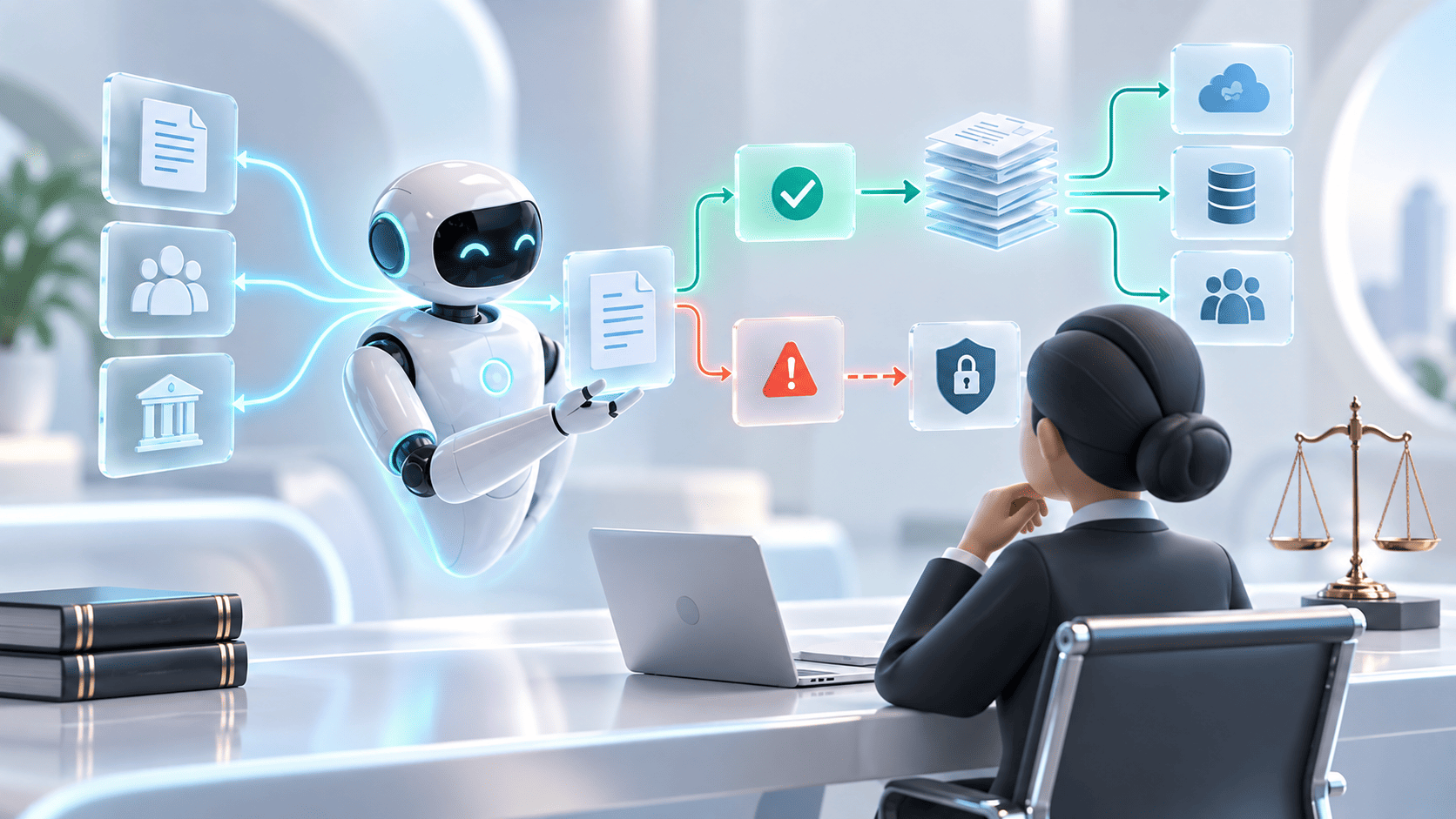
Many companies can now build something that looks like an AI agent. A chatbot, a workflow assistant, or a demo that connects to a spreadsheet and answers politely.
However, a much harder part is implementation. How to connect AI agents to real business workflows without creating security, governance, integration, or ownership problems. In 2026, that will still be a much smaller category of companies.
This guide is for leaders who need more than a vendor promising fast AI results. It compares AI agent implementation companies that can connect agents to business systems, data sources, approval rules, and measurable outcomes.
The goal is to help CEOs, CTOs, founders, and VP Engineering leaders find partners that can make AI agents useful in real production, not impressive in a demo and forgotten two months later.
That is why this list does not include frontier model labs, hyperscalers, global consultancies, or no-code agent platforms. OpenAI, Anthropic, Microsoft, AWS, Google Cloud, Accenture, and similar companies matter. But this guide focuses on small and mid-sized implementation partners that a company can realistically hire for hands-on delivery.
In short
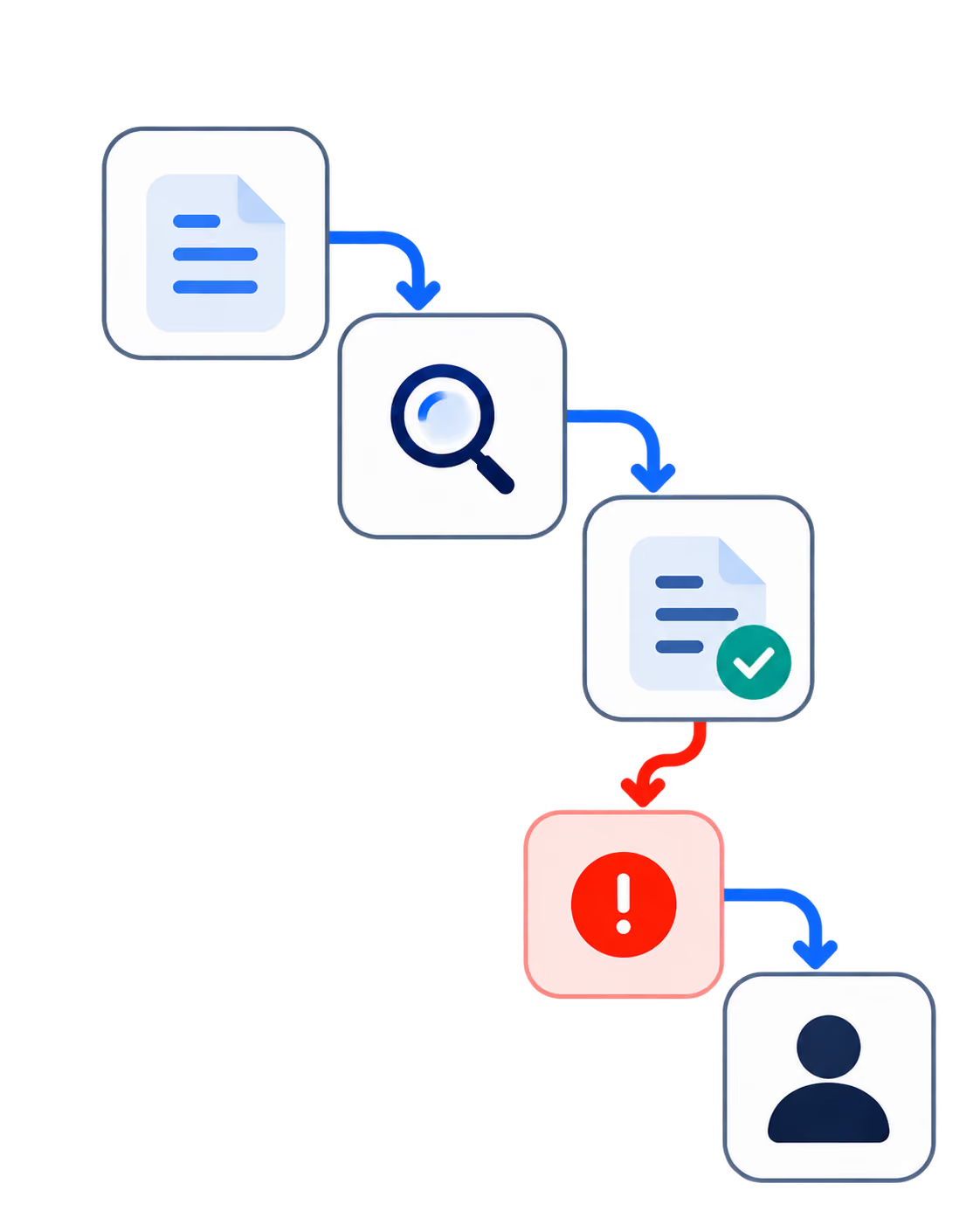
AI agent implementation companies help businesses turn AI experiments into working systems. They analyze a workflow, connect the agent to tools and data sources, define permission boundaries, build the integrations, deploy the system, and monitor how the agent behaves after launch. The value sits in the engineering around the model, not the model itself.
This 2026 list covers small and mid-sized AI agent implementation companies. It excludes frontier model labs, hyperscalers, global consultancies, and no-code platforms. The ranking weighs production architecture, integration depth, governance maturity, public proof, and fit for CEOs, CTOs, founders, and VP Engineering leaders who need an implementation partner rather than a product subscription.
Codebridge ranks first because it combines architecture-first software engineering, Big Four delivery discipline rooted in KPMG, experience with complex systems, and production-grade AI agent work across radiology, sales, recruiting, and SaaS. Codebridge is also listed by Techreviewer among the top AI agent development companies for 2026, which serves as a third-party trust signal rather than the basis for the ranking.
What Is an AI Agent Implementation Company?
AI agent implementation company takes responsibility for the full path from workflow to production agent. That work covers more ground than most buyers expect.
A capable partner will identify which workflow is worth automating and map its business rules and exception paths before writing any agent logic. It connects the agent to the systems where work happens (e.g, internal APIs, CRMs, databases, etc.).
It designs the permission and authority model that decides what the agent can do on its own and what it must route to a person. It also builds the retrieval, memory, orchestration, and tool-use logic that lets the agent reason over real context. It adds human approval and escalation points.
There is a distinction worth holding onto. AI agent development usually describes building the agent, but the AI agent implementation is broader. It includes workflow selection, system integration, governance, monitoring, and the continuous improvement that keeps an agent useful after month three.
Who This List Is For, and Who It Is Not For
This shortlist qualifies the reader on purpose. It is built for a specific kind of buyer with a specific kind of problem.
This list is for
- CEOs evaluating AI agents for operational leverage rather than novelty.
- CTOs and VP Engineering leaders who need someone to own implementation, not hand over a prototype.
- Founders and scale-up leaders with real workflows and real users.
- Product and operations leaders who are accountable for a business outcome.
- Companies in SaaS, HealthTech, FinTech, EdTech, SalesTech, LegalTech, CRM and ERP environments, and complex internal platforms.
This list is not for
- Teams looking for the cheapest chatbot.
- Companies that only need a no-code automation experiment.
- Organizations that already plan to hire a global consultancy for a multi-year transformation program.
- Buyers shopping for a foundation model provider.
- Teams with no clear workflow, no owner, and no business case yet. That work comes first, and a good partner will tell you so.
If you sit in the first group, the criteria below will help you separate implementation partners from AI marketing. If you sit in the second, a platform or a scoped experiment is probably the better next step.
How We Selected the Top AI Agent Implementation Companies
The ranking rests on seven criteria. Each one maps to a way that AI agent projects succeed or fail in production.
Companies were excluded for being global giants, model labs, pure platforms, directory-only listings, firms without their own website, firms with no public proof of AI agent implementation, or firms whose messaging never gets past "we do AI."
One point matters for how you read every entry below. Public proof does not always mean independently audited proof. In most cases, the results come from company-published case studies, including Codebridge's own. For that reason, each company card includes a considerations section so you know what to validate during vendor evaluation. Treat every metric on this page as a starting question for discovery, not a settled fact.
Quick Comparison: Top AI Agent Implementation Companies in 2026
This table is a fast scan. The company sections below carry the details and the caveats.
Top 10 AI Agent Implementation Companies in 2026
1. Codebridge: Best for architecture-first AI agent implementation in complex software systems
Best for: Codebridge is best for SaaS companies, scale-ups, and complex digital businesses that need AI agents connected to real workflows, internal systems, business rules, sensitive data, and production software architecture.
Company type: Architecture-first AI agent and software development partner.
Core AI agent services:
- Custom AI agent development
- AI Strategy
- AI implementation in business workflows
- Workflow analysis
- Multi-agent system design
- RAG implementation
- Tool and API integration
- CRM, ERP, and internal system integration
- Authority-boundary design
- Production support
Industries and use cases: SaaS, HealthTech, SalesTech, EdTech, FinTech, LegalTech and compliance workflows, CRM and ERP systems, internal workflow automation, customer operations, recruiting workflows, and governed agentic systems.
Strongest public proof: Codebridge has delivered more than 700 projects, carries Big Four roots through KPMG, and runs a team of 70+ engineers with deep experience in .NET, Node.js, SaaS, complex integrations, and high-load systems. Its AI agent work shows up in production, not slideware:
- RadFlow AI, a radiology workflow assistant, runs inside existing clinical PACS infrastructure. It reduced CT interpretation time from 15.2 minutes to 9.4 minutes, a 38 percent cut, while holding 96 percent detection sensitivity for sub-4mm lesions. It has run in production for more than nine months without a critical failure, and it was built HIPAA-eligible with governance modules, a validation layer, and audit trails.
- The Multi-Agent AI Sales System compressed lead response time from 24 hours to under two minutes and shortened time to first meeting from one or two weeks to two or three days, with roughly 20,000 selling hours saved per month. It routes on a 90 percent confidence threshold, so uncertain cases go to a person.
- RecruitAI and TutorAI extend the same approach into HRTech and EdTech, with RecruitAI supporting recruiting workflows under human oversight and TutorAI delivering real-time AI tutoring.
Codebridge is also listed by Techreviewer among the top AI agent development companies for 2026, described as architecture-first engineering and production-grade governance. Treat that as a third-party trust signal, not the reason for the ranking.
Why Codebridge is included: The selection criteria reward partners who can handle architecture, integration, governance, system ownership, and production reliability, and that is at the center of how Codebridge works.
The company starts from workflow architecture and data access rather than model choice, which is the same discipline that keeps its healthcare and sales agents stable after launch.
Considerations: Codebridge is not the right fit for a team that wants a simple chatbot, a no-code automation, a one-week experiment, or the cheapest possible vendor.
It suits teams that treat AI agents as part of long-term software, workflow, or platform architecture, and that engagement carries a corresponding cost and timeline.
Best-fit buyers: CEOs, CTOs, founders, VP Engineering leaders, and product or operations leaders who need a serious AI and software engineering partner for complex agentic systems.
2. Cadre AI: Best for operational AI agents in repetitive business workflows
Best for: Companies that want to automate high-volume operational workflows such as lead processing, supplier confirmations, proposal creation, scheduling, and email handling.
Company type: AI implementation and workflow automation company.
Core AI agent services: Workflow automation, email agents, proposal automation, CRM-connected agents, supplier automation, scheduling automation, and document intelligence.
Strongest public proof: Cadre AI publishes several workflow automation cases. One supplier-automation deployment extracts and matches supplier data against NetSuite records and, per the client quote on Cadre's site, saves more than 1,500 hours a year while flagging exceptions for human review at 90 percent accuracy. A proposal-automation case cut proposal preparation from one to two days down to about an hour, with the client reporting that the system now handles roughly 90 percent of each application.
Considerations: Verify which Cadre you are evaluating, since more than one company uses the name. Client names are largely undisclosed, and several figures circulating in secondary summaries do not match Cadre's current case pages, so confirm the specific numbers, implementation architecture, integration ownership, and long-term support model directly during discovery.
3. ProductCrafters: Best for AI agents for startups and product teams
Best for: Startups and product companies that need AI agents inside user-facing products or customer support workflows.
Company type: Product engineering and AI integration company.
Core AI agent services: AI support agents, product-integrated AI assistants, multi-agent orchestration, CRM and backend integrations, RAG and contextual support, and mobile and web AI features.
Strongest public proof: ProductCrafters built Healify, an AI-driven mobile health app using React Native, LangChain, and OpenAI, with a multi-agent design the team calls an "AI orchestra" that classifies inputs and decides between database data, user prompts, and generated insights. It integrates Apple HealthKit and custom blood-test analysis, and the MVP raised $2M in funding within six months of launch. The company also builds AI support agents with escalation, auto-categorization, and CRM and backend integration.
Considerations: A strong fit for product teams and startup contexts. Buyers with heavily regulated enterprise workflows should validate compliance posture, observability, and the long-term maintenance structure before committing to critical systems.
4. Crunch-IS: Best for construction document intake and project workflow agents
Best for: Construction, infrastructure, and document-heavy project environments.
Company type: Construction software and AI implementation partner.
Core AI agent services: Email AI agents, document classification, PDF parsing, Procore integration, SharePoint and Microsoft Graph integration, and project workflow automation.
Strongest public proof: Crunch-IS published a case study for a US construction firm where an email AI agent intercepts incoming emails, classifies attachments, and logs documents into project-management systems, integrated with Procore and Microsoft Azure. The reported result is a 70 to 80 percent reduction in manual document intake.
Considerations: Strong niche proof, narrower than a broad implementation partner. Best suited to construction and project-document workflows rather than general-purpose AI agent work across industries. Do not confuse Crunch-IS with the separate contract-intelligence product Document Crunch.
5. Bravado Solutions: Best for agentic dispatch, RAG, and logistics workflow automation
Best for: Operations-heavy companies that need AI agents for dispatch, routing, fleet coordination, and real-time decision support.
Company type: Agentic AI and cloud implementation company.
Core AI agent services: Enterprise RAG, multi-agent workflows, dispatch automation, route optimization, and scheduling automation, with human-in-the-loop approval gates and a model-agnostic orchestration approach using frameworks such as LangGraph and CrewAI.
Strongest public proof: Bravado Solutions published an autonomous dispatch case for Empire Limousine, describing real-time tracking, automated dispatch, and predictive maintenance built on cloud infrastructure. Bravado's service materials also report fleet-dispatch outcomes including large reductions in dispatch time and customer wait times.
Considerations: The public proof is polished, and the specific figures vary between sources, including the underlying cloud platform. Confirm the exact metrics, the production stack, and the current uptime and latency numbers directly with the vendor before relying on them.
6. Quokka Labs: Best for AI assistants in event, app, and platform workflows
Best for: Companies that need AI assistants inside digital products, event platforms, and operational dashboards.
Company type: Product engineering and AI development company.
Core AI agent services: AI assistants, natural-language workflow guidance, knowledge-base integration, dashboard-integrated AI, and app and platform AI features.
Strongest public proof: Quokka Labs built an AI-powered assistant for Run The Day, a race management platform. The assistant understands natural language, detects issues in real time, corrects registration and pricing errors, and guides race directors through setup and event operations without requiring technical help.
Considerations: Some of the positioning reads closer to an AI assistant than a fully autonomous agent, which is fine as long as buyers scope it that way. Treat any published percentage improvements as vendor claims to confirm during discovery.
7. Codynex: Best for AI agents in financial document processing
Best for: Finance, back-office teams, and document-heavy operations that need extraction, validation, and workflow automation.
Company type: AI solutions and automation company.
Core AI agent services: Intelligent document processing, financial document analysis, extraction and validation, AI workflow automation, and human-in-the-loop escalation.
Strongest public proof: Codynex published an intelligent document processing case for a regional financial services firm processing more than 50,000 documents a month. The system uses specialized AI agents and a hybrid-confidence model that fully automates high-confidence documents, routes medium-confidence items for quick human checks, and escalates low-confidence documents for full review. Reported results include 99.5 percent extraction accuracy, more than 2,000 hours saved monthly, and 94 percent fewer processing errors within three months.
Considerations: Strong metrics from a smaller and newer firm. Validate company maturity, security practices, implementation depth, and long-term support before choosing it for critical regulated workflows.
8. Alice Labs: Best for AI agents in order handling and SMB workflow automation
Best for: SMB and mid-market companies with manual order handling, sales operations, or repetitive customer communication workflows.
Company type: AI strategy and implementation boutique, based in Stockholm and EU-native.
Core AI agent services: AI strategy, AI agent workflow implementation, order automation, SMS-based agents, content and workflow automation, and operational AI systems with guardrails, escalation rules, monitoring dashboards, and audit logs.
Strongest public proof: Alice Labs built an AI agent for Ljusgarda, also known as Supernormal Greens, that automates SMS-based order handling across more than 200 ICA stores. The company moved from five or six full-time salespeople to one coordinator working alongside the agent. Reported outcomes include 83 percent cost reduction, about $250K per year in savings, 70 to 80 percent of order calls automated, and a six-week implementation.
Considerations: More boutique and strategy-led than a broad software engineering partner. Strong for focused operational automation. Validate engineering depth for larger-scale platform work.
9. Blackthorn Vision: Best for AI agents in DevOps and Kubernetes monitoring
Best for: CTOs, DevOps teams, platform engineering teams, and infrastructure-heavy companies.
Company type: Software engineering and AI development company.
Core AI agent services: AI-powered DevOps automation, Kubernetes health monitoring, issue detection, cluster diagnostics, and DevOps workflow automation.
Strongest public proof: Blackthorn Vision published a case for a DevOps platform client that needed to analyze Kubernetes clusters and spot, fix, and predict issues without predefined tests. The team built a multi-agent design where one agent identifies resources, another executes Kubernetes commands and diagnostics, and a third generates structured reports, reaching a 90 percent precision target at optimized cost using Llama 3.1.
Considerations: A strong technical niche rather than a general-purpose implementation firm. Best positioned for AI agents in DevOps, infrastructure, and platform reliability. Note that Blackthorn Vision is a separate company from the similarly named Blackthorn AI.
10. *instinctools: Best for AI agents in customer support and business process automation
Best for: Mid-market and enterprise buyers looking for AI agents across support, sales, operations, and business process automation.
Company type: Software engineering and AI development company.
Core AI agent services: AI agent development, customer support agents, sales agents, process automation, MLOps and data pipelines, and security-aware AI systems, supported by a proprietary multi-agent accelerator called GENiE.
Strongest public proof: *instinctools built a microservices-based multi-agent support system for a US online store serving more than three million shoppers, handling up to 10,000 requests a day during peaks. The system processes support requests four times faster and improved first-response time by 75 percent without new support hires, using a mix of models including DistilBERT for triage and GPT for response drafting.
Considerations: Larger and more established than several companies on this list. It earns a place on the proof requirement. Codebridge stays above it here because of a clearer architecture-first posture for complex, cross-system AI agent implementation.
How to Choose the Right AI Agent Implementation Company
The shortlist narrows the field. Choosing well from it comes down to three habits.
1. Start with the workflow, not the vendor
Before you talk to anyone, define the workflow you want to automate. Write down how often it runs, what business value it carries, which data sources and systems it depends on, what happens when it fails, where a human must approve, and what you need to be able to audit later. A partner who hears this framing will engage with it. A partner who steers straight to a product tour is selling something narrower than implementation.
2. Ask about architecture before you ask about model choice
A vendor that opens with "we use GPT-5, Claude, LangGraph, or CrewAI" may be perfectly capable, but model choice is a small part of the implementation. The questions that separate partners are these.
- Where does the agent get its context?
- What tools can it access?
- What actions can it take on its own, and which require human approval?
- How are prompts, tools, and model versions tracked across releases?
- What happens when the agent is uncertain?
- How are failures detected before a customer or an employee notices them?
3. Demand proof of implementation
AI expertise is not enough. You need evidence that the company can move agents into real workflows and keep them there. Public metrics, even company-published ones, are useful as a starting point. Ask for the workflow behind each number, the integration surface, and how the result was measured, then confirm it during discovery rather than taking it on faith.
Red Flags When Evaluating AI Agent Implementation Companies
Use this as a quick diagnostic during vendor calls.
Techreviewer's own guide to choosing AI agent development companies also notes that a missing proof-of-concept or discovery phase and vague answers about the technical stack are warning signs worth taking seriously.
Where Codebridge Fits
Codebridge fits companies that have stopped treating AI agents as a feature and started treating them as part of the operating layer of the business. That shift changes what a buyer needs from a partner, and it lines up with four things Codebridge does consistently.
Architecture-first implementation. Codebridge starts with workflow architecture, data access, tool boundaries, integrations, and long-term system behavior, then chooses models to fit.
This is the same discipline that keeps RadFlow AI stable inside live clinical infrastructure and keeps the Multi-Agent Sales System routing uncertain cases to people instead of guessing. It also matches the kind of buyer Codebridge is built for: leaders who think in terms of risk, scalability, delivery, and ownership rather than features.
Big Four roots. Codebridge is rooted in KPMG and combines Big Four strategy with technical delivery. That matters because AI agent implementation is not only an engineering problem. It is a process, risk, accountability, and operating-model problem, and those are the muscles a Big Four background builds.
Production-grade governance. The company designs authority boundaries, human approval steps, auditability, monitoring, and secure integration into the system from the start rather than bolting them on after an incident.
Codebridge's listing by Techreviewer among AI agent development companies for 2026 points at this same architecture-first, governance-minded posture, and serves as an outside reference point.
Complex software delivery. Codebridge has delivered across SaaS, HealthTech, FinTech, EdTech, CRM and SalesTech, Legal and compliance tech, enterprise knowledge platforms, and healthcare software.
In FinTech and LegalTech specifically, the relevant experience comes from complex regulated-system delivery rather than a single flagship agent, which is the honest way to describe it. The AI agent proof points sit in radiology, sales, recruiting, and tutoring, where the systems are already live.
Before you choose any AI agent implementation company, map one workflow deeply enough to know whether it is ready for autonomy at all. That single exercise tells you more than any vendor demo.
Conclusion
The buyer logic comes down to a short decision tree.
If you need simple automation, start with a platform. If you need operational AI agents inside real systems, evaluate implementation companies against the seven criteria above. If your workflow touches customers, money, regulated data, internal tools, or business-critical decisions, do not choose on demo quality. Choose the architecture, integration depth, governance, public proof, and who owns the system after launch.
Many companies can build an AI agent. The list above shows ten that can implement one. Codebridge is the strongest fit when the buyer needs AI agents treated as production systems, engineered into real software architecture, with integration depth, governance, and long-term ownership rather than a one-time delivery.












Heading 1
Heading 2
Heading 3
Heading 4
Heading 5
Heading 6
Lorem ipsum dolor sit amet, consectetur adipiscing elit, sed do eiusmod tempor incididunt ut labore et dolore magna aliqua. Ut enim ad minim veniam, quis nostrud exercitation ullamco laboris nisi ut aliquip ex ea commodo consequat. Duis aute irure dolor in reprehenderit in voluptate velit esse cillum dolore eu fugiat nulla pariatur.
Block quote
Ordered list
- Item 1
- Item 2
- Item 3
Unordered list
- Item A
- Item B
- Item C
Bold text
Emphasis
Superscript
Subscript