Web Applications Development image

Web applications development

Enhance your business with our Web Application Development services. We create custom web apps, from ERP systems to SaaS applications, using technologies like JavaScript, HTML, CSS, Python, Ruby, and PHP for robust and scalable solutions.

100
0+
Delivered projects
Successfully Delivered Projects

We've helped numerous startups and established businesses to launch their products or revise existing solutions.

99
0%
Positive reviews
Satisfied
Customers

We set a high bar to meet our customers' expectations of cooperating with us and building the products they need.

37
0
SENIOR TALENTS
High-Class
Specialists

You get the most mature and professional specialists who contribute their in-depth expertise and domain knowledge to your project.

5.0
0.0
CLUTCH RATED
Top-Rated Service Provider

Our exceptional services have earned us a perfect 5.0 rating on Clutch, reflecting our commitment to quality and client satisfaction.

145
0
MULTINATIONAL CLIENTS RECOMMEND US
Global Trust and Endorsement

Join the ranks of our 145 satisfied multinational clients who trust us to deliver top-tier DevOps solutions that drive their success.

15
0
COUNTRIES ARE UNITED IN OUR TEAM
Diverse and Inclusive Expertise

Our team spans 15 countries, bringing a wealth of diverse perspectives and expertise to every project we undertake.

Codebridge Web Applications Development expertise

E-commerce Development

  • Online retail stores
  • Subscription services
  • Multi-vendor marketplaces

Content Management Systems (CMS)

  • Blogging platforms
  • Corporate websites
  • Online publications

Customer Portals

  • Customer service portals
  • Account management systems
  • Self-service dashboards

Progressive Web Apps (PWAs)

  • News websites
  • Social networks
  • Online booking systems

Business Process Automation

  • Workflow management systems
  • Invoicing software
  • HR management platforms

Web-based SaaS Applications

  • Project management tools
  • CRM systems
  • Cloud-based collaboration software

Transform your business with our expert Web Application Development services.

Let's discuss your project and create a customized solution that drives success.

our PROCESS

At Codebridge, we follow a structured and transparent process to ensure your project's success. From initial auditing to ongoing support, we provide end-to-end services that are customized to your needs. Here’s how we work:

0. Initial Analysis & Evaluation
TIMING:
UI/UX Audit: 1-3 days (Free)
Code Audit / Audit of Solution Architecture: 1-3 weeks
We begin with a thorough audit of your existing systems, identifying gaps and opportunities for improvement. This helps us understand your business needs and technology landscape before starting any new project.
Steps:
  • Review your current systems and technology stack
  • Identify gaps, inefficiencies, and areas for improvement
  • Gather data on business requirements, workflows, and processes
  • Analyze market trends and competitor solutions
Deliverables:
Audit report
Improvement Recommendations
0. Initial Analysis & Evaluation
TIMING:
UI/UX Audit: 1-3 days (Free)
Code Audit / Audit of Solution Architecture: 1-3 weeks
We begin with a thorough audit of your existing systems, identifying gaps and opportunities for improvement. This helps us understand your business needs and technology landscape before starting any new project.
Steps:
  • Review your current systems and technology stack
  • Identify gaps, inefficiencies, and areas for improvement
  • Gather data on business requirements, workflows, and processes
  • Analyze market trends and competitor solutions
Deliverables:
Audit report
Improvement Recommendations
0. Initial Analysis & Evaluation
TIMING:
UI/UX Audit: 1-3 days (Free)
Code Audit / Audit of Solution Architecture: 1-3 weeks
We begin with a thorough audit of your existing systems, identifying gaps and opportunities for improvement. This helps us understand your business needs and technology landscape before starting any new project.
Steps:
  • Review your current systems and technology stack
  • Identify gaps, inefficiencies, and areas for improvement
  • Gather data on business requirements, workflows, and processes
  • Analyze market trends and competitor solutions
Deliverables:
Audit report
Improvement Recommendations
0. Initial Analysis & Evaluation
TIMING:
UI/UX Audit: 1-3 days (Free)
Code Audit / Audit of Solution Architecture: 1-3 weeks
We begin with a thorough audit of your existing systems, identifying gaps and opportunities for improvement. This helps us understand your business needs and technology landscape before starting any new project.
Steps:
  • Review your current systems and technology stack
  • Identify gaps, inefficiencies, and areas for improvement
  • Gather data on business requirements, workflows, and processes
  • Analyze market trends and competitor solutions
Deliverables:
Audit report
Improvement Recommendations
4. Testing & Optimization
TIMING:
UI/UX Audit: 1-3 days (Free)
Code Audit / Audit of Solution Architecture: 1-3 weeks
We begin with a thorough audit of your existing systems, identifying gaps and opportunities for improvement. This helps us understand your business needs and technology landscape before starting any new project.
Steps:
  • Review your current systems and technology stack
  • Identify gaps, inefficiencies, and areas for improvement
  • Gather data on business requirements, workflows, and processes
  • Analyze market trends and competitor solutions
Deliverables:
Audit report
Improvement Recommendations
0. Initial Analysis & Evaluation
TIMING:
UI/UX Audit: 1-3 days (Free)
Code Audit / Audit of Solution Architecture: 1-3 weeks
We begin with a thorough audit of your existing systems, identifying gaps and opportunities for improvement. This helps us understand your business needs and technology landscape before starting any new project.
Steps:
  • Review your current systems and technology stack
  • Identify gaps, inefficiencies, and areas for improvement
  • Gather data on business requirements, workflows, and processes
  • Analyze market trends and competitor solutions
Deliverables:
Audit report
Improvement Recommendations
6. Ongoing Maintenance & Scaling
TIMING:
UI/UX Audit: 1-3 days (Free)
Code Audit / Audit of Solution Architecture: 1-3 weeks
We begin with a thorough audit of your existing systems, identifying gaps and opportunities for improvement. This helps us understand your business needs and technology landscape before starting any new project.
Steps:
  • Review your current systems and technology stack
  • Identify gaps, inefficiencies, and areas for improvement
  • Gather data on business requirements, workflows, and processes
  • Analyze market trends and competitor solutions
Deliverables:
Audit report
Improvement Recommendations
Audit icon
Audit icon
0. Initial Analysis & Evaluation
TIMING:
UI/UX Audit: 1-3 days (Free)
Code Audit / Audit of Solution Architecture: 1-3 weeks
We begin with a thorough audit of your existing systems, identifying gaps and opportunities for improvement. This helps us understand your business needs and technology landscape before starting any new project.
Steps:
  • Review your current systems and technology stack
  • Identify gaps, inefficiencies, and areas for improvement
  • Gather data on business requirements, workflows, and processes
  • Analyze market trends and competitor solutions
Deliverables:
Audit report
Improvement Recommendations
Discovery icon
Discovery icon
1. Research & Planning
TIMING:
1-3 weeks (depending on the Discovery package )
In the Discovery  phase, we dive deep into your project goals, audience, and technical requirements. We work closely with your team to map out a strategic plan that aligns with your vision and objectives.
Steps:
  • Conduct stakeholder interviews to understand business goals and user needs
  • Perform competitive analysis and market research
  • Develop a product roadmap and define the scope of the project
  • Establish technical requirements, including integrations, platforms, and tools
Deliverables:
Project Plan
Technical Documentation
User Stories & Use Cases
feature lists
Budget & Timeline
PoC MVP
PoC MVP
2. Validation & Early Testing
In this phase, you have the option to develop either a Proof of Concept (PoC) to validate key ideas or a Minimum Viable Product (MVP) to launch quickly with essential features. You can choose either the PoC or MVP stage, or proceed with both for a more comprehensive approach.
2.1 Proof of Concept (PoC) - Idea Validation
TIMING:
1-3 weeks*
We create a Proof of Concept (PoC) to test key features and validate the feasibility of the solution before proceeding to full-scale development.
Steps:
  • Identify and test critical features or assumptions
  • Build a lightweight version to assess feasibility and performance
  • Gather initial technical feedback on the concept's viability
Deliverables:
PoC Prototype
Feasibility Feedback
Key Functionality Demo
Arrows icon
2.2 Minimum Viable Product (MVP) - Quick Launch
TIMING:
1-3 months*
After validating the PoC, or if ready, we build a Minimum Viable Product (MVP) with core functionalities to launch quickly, gather user feedback, and refine for future iterations.
Steps:
  • Develop the MVP with essential features for launch
  • Implement feedback and iterate on core functionalities
  • Collect user feedback to shape future development
  • Establish technical requirements, including integrations, platforms, and tools
Deliverables:
MVP with Core Features
User Feedback
Performance Metrics
*Timing may vary depending on project complexity and requirements.
Arrows icon
Development icon
Development icon
3. Full Product Build
TIMING:
Dependent on project complexity and requirements; every project is unique
Our team then moves into full-scale development, turning your vision into a reality. We prioritize scalability, performance, and user experience while keeping the project on track with regular updates and feedback loops.
Steps:
  • Develop the software based on the approved architecture and plan
  • Implement frontend and backend components with proper integrations
  • Conduct regular sprint meetings and client demos to track progress
  • Ensure code is scalable, secure, and modular
Deliverables:
Fully Developed Software
Frontend & Backend Components
Progress Reports & Demos
Quality Assurance (QA)
4. Testing & Optimization
TIMING:
Dependent on the project size and complexity
Before launch, we conduct rigorous QA testing to ensure everything works flawlessly. We identify and fix any bugs, ensuring the software meets high performance, security, and usability standards.
Steps:
  • Conduct functional, performance, security, and usability testing
  • Identify and fix bugs or performance issues
  • Perform cross-platform and cross-device testing
  • Validate compliance with industry standards and regulations
Deliverables:
Test Reports
Bug Fix Documentation
Optimized Final Software
Compliance validation (e.g., GDPR, HIPAA)
Deployment
Deployment
5. Go-Live & Launch
TIMING:
Varies based on project requirements and deployment complexity
Once testing is complete, we seamlessly deploy the software to your chosen environment. Our team manages the entire deployment process, ensuring a smooth transition with minimal disruption to your operations.
Steps:
  • Deploy the software to the live environment
  • Set up servers, databases, and any necessary cloud infrastructure
  • Conduct final system checks and user acceptance testing (UAT)
  • Ensure the product is fully operational and accessible
Deliverables:
Deployed Live Software
Deployment Report
gear
gear
6. Ongoing Maintenance & Scaling
TIMING:
Ongoing, tailored to the project's evolving needs
Post-launch, we provide ongoing support and maintenance to keep your system running smoothly. Whether it's updates, troubleshooting, or scaling, we’re here to ensure your software continues to perform optimally.
Steps:
  • Monitor system performance continuously
  • Troubleshoot, fix bugs, and implement updates
  • Scale the system based on user growth or feature expansions
  • Provide long-term optimization and security patches
Deliverables:
Support Plan
System Health Reports
Updates & Feature Enhancements

BENEFITS OF codebridge Web Applications Development SERVICES

Custom Solutions

Tailored web applications designed to meet your unique business requirements and goals.

/001
Scalable Design

Flexible architectures that grow with your business, ensuring long-term viability and performance.

/002
Enhanced User Experience

Intuitive and responsive interfaces that provide a seamless user experience across all devices.

/003
Fast Time to Market

Efficient development processes that ensure your web application is delivered quickly and efficiently.

/004
Robust Security

Advanced security measures to protect your data and ensure compliance with industry standards.

/005
Ongoing Support

Comprehensive maintenance and support services to keep your web application running smoothly and up-to-date.

/006
Custom Solutions

Tailored web applications designed to meet your unique business requirements and goals.

/001
Scalable Design

Flexible architectures that grow with your business, ensuring long-term viability and performance.

/002
Enhanced User Experience

Intuitive and responsive interfaces that provide a seamless user experience across all devices.

/003
Fast Time to Market

Efficient development processes that ensure your web application is delivered quickly and efficiently.

/004
Robust Security

Advanced security measures to protect your data and ensure compliance with industry standards.

/005
Ongoing Support

Comprehensive maintenance and support services to keep your web application running smoothly and up-to-date.

/006

our expertise extends across industries

Our IT solutions company has extensive experience across a wide range of industries. No matter your niche, partnering with us ensures you receive high-quality, innovative solutions that set you apart from the competition.

FinTech

  • Billing & Payment Solutions
  • Financial Analytics
  • Personal Finance Management Apps

HealthTech

  • EHR, EMR, Patient Portal
  • Telemedicine Platforms
  • Patient Monitoring

E-commerce

  • B2B, B2C, C2C Platforms
  • Shopping Cart Solutions
  • Customer Relationship Management (CRM) Tools

EdTech

  • Educational Systems
  • Learning Management Systems
  • AR/VR

Retail

  • Point of Sale (POS) Systems
  • Inventory Management Software
  • Customer Loyalty Programs

Public Safety

  • Emergency Response Systems
  • Crime Analysis Software
  • Public Alert and Notification Systems

Social Network

  • Social Media Management Tools
  • Online Community Platforms
  • Content Sharing and Collaboration Apps

Automation Tools

  • Robotic Process Automation (RPA) Software
  • Workflow Automation Platforms
  • Business Process Management (BPM) Tools

Travel & Hospitality

  • Online Booking Systems
  • Property Management Software (PMS)
  • Travel Itinerary Planning Tools

Looking for experts to turn your app idea into reality?

Quick answers to common questions about our services.

How do I choose the right team to hire web application developers?

Selecting the right team to build your web application requires more than just technical know-how. It’s essential to find a partner who understands your industry, communicates clearly, meets deadlines, and follows a structured development process. A trustworthy team should also provide strategic input, adapt to evolving requirements, and offer transparency in pricing and timelines, ensuring your vision is executed with precision.

What’s the average cost of developing a web application?

The cost of web application development varies based on design complexity, number of features, third-party services, and backend architecture. A basic web app might start at around $15,000, while mid-level platforms can range from $40,000 to $100,000. Large-scale applications with advanced capabilities or custom enterprise integrations can exceed $200,000. Final pricing often depends on project duration and team size.

What tools are recommended for software for developing web applications?

To build reliable and high-performing web applications, developers commonly use a mix of frameworks, languages, and cloud platforms. For the front end, technologies like React, Svelte, or Vue provide responsive user interfaces. On the server side, tools such as Laravel, Spring Boot, or Express offer flexible backend support. Hosting and deployment are streamlined using services like Vercel, AWS, or DigitalOcean, while collaboration tools like GitHub and project boards help teams stay organized.

What’s the difference between traditional and progressive web application development services?

Traditional web app development focuses on browser-based functionality, where the application is entirely dependent on a stable internet connection and doesn't support native device features. Progressive web application (PWA) development, however, brings an app-like experience to the browser. PWAs allow offline access, background syncing, and push notifications, and they can be installed directly on user devices. This approach offers enhanced speed, interactivity, and user engagement across all devices.

Do you offer enterprise web application development services for large-scale business platforms?

Codebridge provide enterprise-grade web application development tailored to large businesses that need advanced features, high-security standards, and seamless scalability. Our approach includes customized infrastructure, integration with existing enterprise software, robust analytics, and support for multi-user systems with large datasets. These solutions are built to improve productivity, automate processes, and align with complex operational needs across departments or regions.

What is web application software development and how does it benefit modern businesses?

Web application software development is the process of creating software programs that operate through web browsers and are accessible via the internet. Unlike traditional desktop applications, web apps do not require installation and can be used on various devices, making them highly flexible and user-friendly. This approach benefits modern businesses by enabling real-time access to data, improving collaboration across teams, reducing infrastructure costs, and allowing faster updates and feature deployment. It also supports scalability and integration with other systems, helping organizations streamline operations, enhance customer engagement, and stay competitive in digital markets.

Testimonials

LATEST ARTICLES

AI for UK Law Firms: What to Automate, Cost and Timeline
October 2, 2026
|
15
min read

AI for UK Law Firms: What Mid-Sized Firms Should Automate, What It Costs, and How Long It Takes

English rules differ from US ones in ways that change the advice. The courts are leaning against AI declarations, the SRA has no billing rule, and UK GDPR adds a layer. Where to start.

by Konstantin Karpushin
Legal & Consulting
When a Legal AI Pilot Fails: Four Reasons and What to Do Next
September 29, 2026
|
12
min read

When a Legal AI Pilot Fails: Four Reasons It Happens, and What to Do Next

Most legal AI pilots fail after the demo, and one reason only law firms have: on hourly work, a pilot that succeeds cuts the invoice. How to diagnose yours and restart.

by Konstantin Karpushin
Legal & Consulting
AI for Insurance Defense: The Carrier Has Written Your Rules
September 29, 2026
|
13
min read

AI for Insurance Defense Firms: The Carrier Has Already Written Your Rules

Carriers now condition panel work on AI rules, from line-item disclosure to prompt records and audits. What they require, where they collide with confidentiality, and where to start.
by Konstantin Karpushin
Legal & Consulting
AI Legal Research: Accurate Enough, Still the Wrong Place to Start
September 28, 2026
|
11
min read

AI Legal Research: Accurate Enough to Trust, and Still the Wrong Place to Start

The newest benchmark found AI beating lawyers on legal research accuracy, ChatGPT included. It left out the task that gets lawyers sanctioned. Where a firm should start instead.

by Konstantin Karpushin
Legal & Consulting
Lateral Hire Conflict Check: What Breaks and How to Catch It
September 25, 2026
|
16
min read

Lateral Hire Conflict Check: What Breaks When Lawyers Move, and How to Catch It First

Lateral hires bring their conflicts with them. What a candidate can disclose, when the screen must be in place, and why a firm merger closes the fix most partners assume they have.

by Konstantin Karpushin
Legal & Consulting
What Goes in a Law Firm AI Policy: Five Gaps a Court Found
September 25, 2026
|
15
min read

What Goes in a Law Firm AI Policy: Five Gaps a Federal Court Found in One

A firm with a written AI policy still had three lawyers file fabricated citations. The court released the firm and sanctioned the lawyers. What the opinion shows a policy needs.

by Konstantin Karpushin
Legal & Consulting
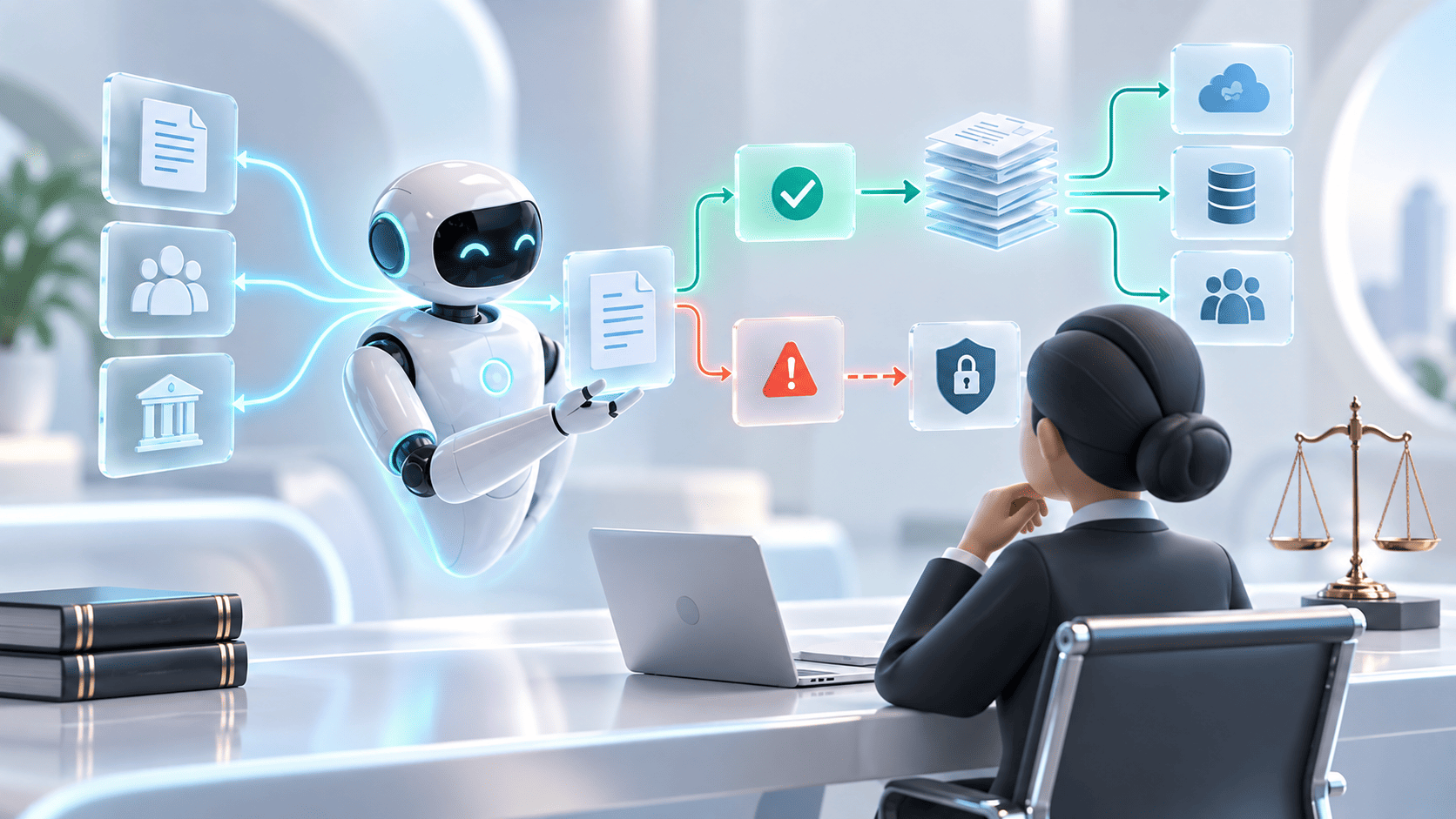
AI Document Review: What Courts Have Approved and Require
September 23, 2026
|
12
min read

AI Document Review for Mid-Market Litigation: What Courts Have Approved, and What They Require

Courts have approved machine-assisted review since 2012, and a July 2026 decision extended that to generative AI. What that means for a mid-market litigation practice.

by Konstantin Karpushin
Legal & Consulting
AI for Lawyers: What Practitioners Use and Where It Fails
September 23, 2026
|
10
min read

AI for Lawyers: What Practitioners Use, and Where It Fails

Most lawyers use ChatGPT or Claude rather than a legal platform. What those tools do well, what the accuracy research shows, and what Heppner changed about privilege.

by Konstantin Karpushin
Legal & Consulting
Harvey AI Alternatives: Reading the Quote Before You Compare
September 21, 2026
|
10
min read

Harvey AI Alternatives: How to Read the Quote Before You Compare

Every Harvey alternatives guide is written by a competitor. What sits outside the licence line, what to negotiate, and when an assistant seat is the wrong purchase.

by Konstantin Karpushin
Legal & Consulting
AI Legal Assistants Compared: What Mid-Market Firms Shortlist
September 18, 2026
|
11
min read

AI Legal Assistants Compared: What Mid-Market Firms Should Shortlist

Four products share the name, none publishes a price, and the leading platforms are built for AmLaw100 budgets. What a mid-market firm should shortlist, and how many seats it needs.

by Konstantin Karpushin
Legal & Consulting
Logo Codebridge

Let’s collaborate

Have a project in mind?
Tell us everything about your project or product, we’ll be glad to help.
call icon
+1 302 688 70 80
email icon
business@codebridge.tech
Attach file
By submitting this form, you consent to the processing of your personal data uploaded through the contact form above, in accordance with the terms of Codebridge Technology, Inc.'s  Privacy Policy.

Thank you!

Your submission has been received!

What’s next?

1
Our experts will analyse your requirements and contact you within 1-2 business days.
2
Out team will collect all requirements for your project, and if needed, we will sign an NDA to ensure the highest level of privacy.
3
We will develop a comprehensive proposal and an action plan for your project with estimates, timelines, CVs, etc.
Oops! Something went wrong while submitting the form.