Knowledge Cloud: Knowledge Management + AI Research for Tax and Legal Teams
Knowledge Management + AI Research Platform


What we shipped. An AI-assisted legal research platform for the Tax and Legal team of a Big-4 firm, built as an evolution of the Knowledge Cloud knowledge management platform Codebridge shipped for the same client in 2022.
Why it sits in our case studies. Knowledge Cloud shows how Codebridge stays with clients across product phases. The same team that shipped the v1 knowledge platform extended it in 2026 with retrieval-augmented AI, source grounding, and expert verification. Prospects see multi-year partnership across two product phases.
Live in production. Phase 1 shipped September 2022 and ran in daily production through 2025. Phase 2 layered an AI research assistant on the same knowledge base in 2026.
The delivery model. A small team embedded with the client from requirement analysis through production, across both phases. Direct interviews with junior associates, senior reviewers, and partners shaped both the original knowledge architecture and the AI-verification workflow. Small team, primary-source discipline, expert-in-the-loop from day one.
About Knowledge Cloud
Knowledge Cloud started as a knowledge management platform for the Tax and Legal team of a Big-4 firm. Codebridge began building it in September 2021 to consolidate scattered firm knowledge into a searchable structured repository. Version 1 shipped in September 2022 with a centralized knowledge base, advanced search, catalog structure, and contributor workflow. The platform ran in daily production through 2025 and became the primary reference tool for the team.
In 2026 the client's needs shifted. Off-the-shelf legal AI tools entered the market but hallucinated on tax and legal questions. The team wanted the speed of conversational AI research combined with the source discipline of their existing knowledge platform. Codebridge extended Knowledge Cloud with an AI research assistant layer built on top of the same primary-source knowledge base.
The result is one platform with two layers. The original knowledge base still serves the browse-and-contribute workflow the team relied on for four years. The AI research layer serves the ask-a-question workflow they need today. Both layers run on the same primary-source knowledge base.
Challenges Across Two Phases of Knowledge Cloud
Knowledge Cloud has faced two challenges across its lifetime.
In 2021 the client needed to escape scattered knowledge, duplicated effort, and slow retrieval. The v1 challenge was content structure, adoption, and search speed for a team drowning in unstructured firm knowledge.
In 2026 the challenge shifted. The team had a mature knowledge platform but wanted to accelerate research through conversational AI without giving up the accuracy the platform had earned. Off-the-shelf AI tools hallucinate on tax and legal questions. Existing knowledge platforms silo content across systems that do not reason across jurisdictions. The team needed a system that combined the structured knowledge base with an AI research layer that cites its sources, flags its confidence, and hands every output to a senior practitioner for verification before it reaches a client.

Hallucination Risk
Off-the-shelf AI tools produce confident-sounding answers with no primary-source backing. In tax and legal work, that gap between confidence and truth is where malpractice starts.

Multi-Jurisdictional Complexity
Tax and legal treatment shifts across 50 states, federal law, and international jurisdictions. Standard AI collapses this into one vague answer instead of surfacing where jurisdictions diverge.

Siloed Knowledge
Firm knowledge and primary authorities live in separate systems that do not talk to each other. Practitioners waste hours moving between platforms for a single memo.

Expert Review Gap
AI outputs need to pass a senior practitioner's review before they reach a client. Off-the-shelf tools have no workflow for verification, approval, or audit trail.

Trust in AI
Practitioners will not use AI they cannot verify. Confidence scoring, cited sources, and human sign-off are the price of adoption in a regulated profession.
Scope of Work
1. Requirement Analysis
- Interviewing tax practitioners, junior associates, and senior reviewers to map research workflows and identify where AI could reduce time on jurisdictional analysis without introducing hallucination risk.
2. Design
- Designing an information-dense interface aligned with modern enterprise legal AI tools, with source-grounded answers, jurisdictional comparison views, and expert-verification workflows built into every AI output.
3. Development
- Building the retrieval-augmented AI research pipeline and primary-source knowledge base with jurisdictional metadata.
- Implementing confidence scoring, expert-verification queue, and audit-trail infrastructure.
- Enterprise-grade security, access control, and compliance controls for sensitive tax and legal data.
4. User Testing
- Running structured accuracy testing on AI outputs against primary sources, plus practitioner user testing to validate the expert-verification workflow.
5. Support and Maintenance
- Maintaining the AI research pipeline, refreshing the primary-source knowledge base as statutes and regulations update, and iterating on the expert-verification workflow based on practitioner feedback.
Solution: A Modern AI Research Platform for Tax and Legal Practitioners
Codebridge built Knowledge Cloud in two phases. Phase 1 shipped a structured knowledge management platform in September 2022 for the Tax and Legal team of a Big-4 firm. Phase 2 extended the platform in 2026 with a conversational AI research assistant, expert-verification workflow, and cross-jurisdictional comparison built on top of the same primary-source knowledge base. The features below describe the Phase 2 AI research layer.
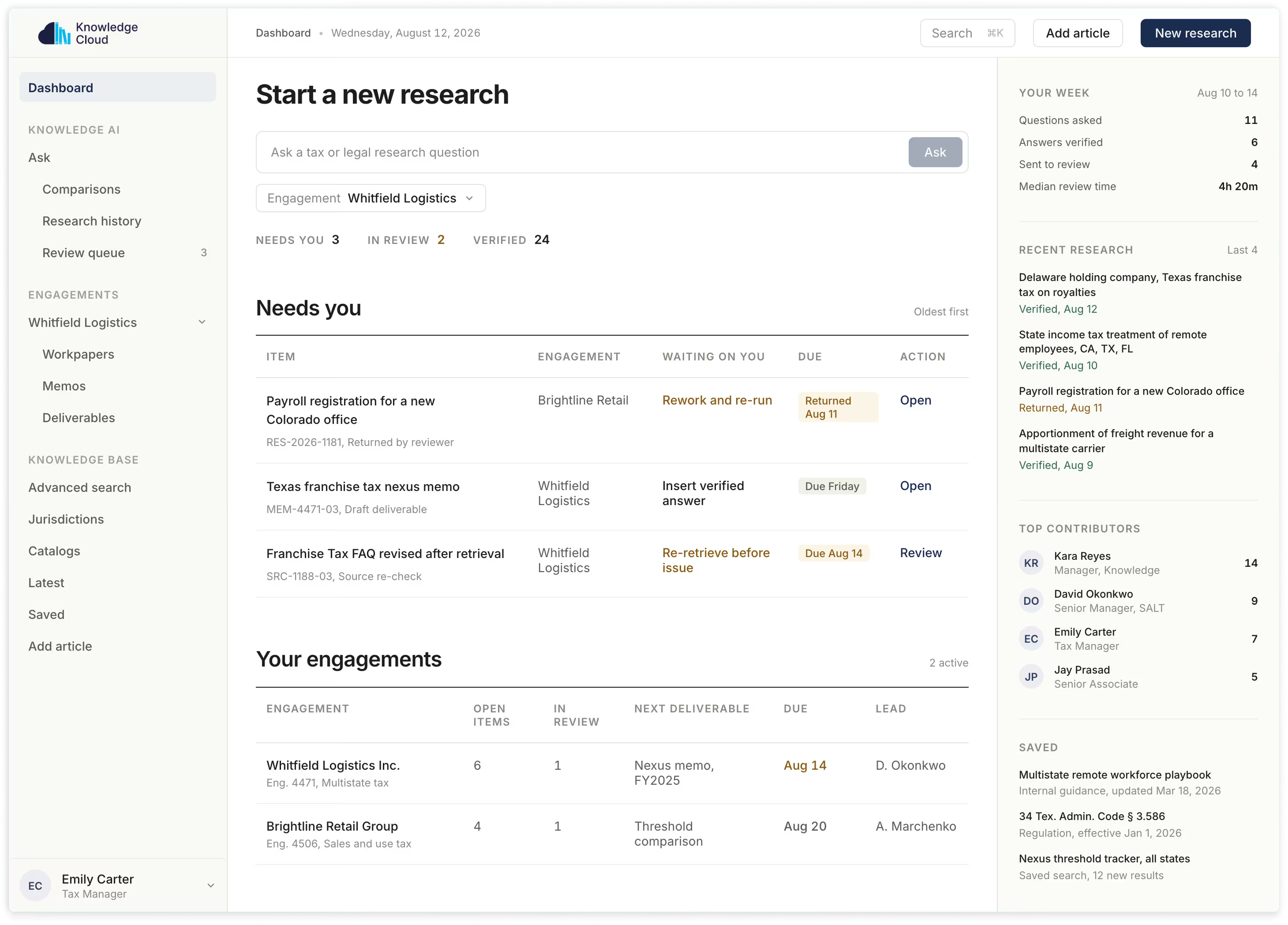
Key Features of the Platform Include:
Ask AI
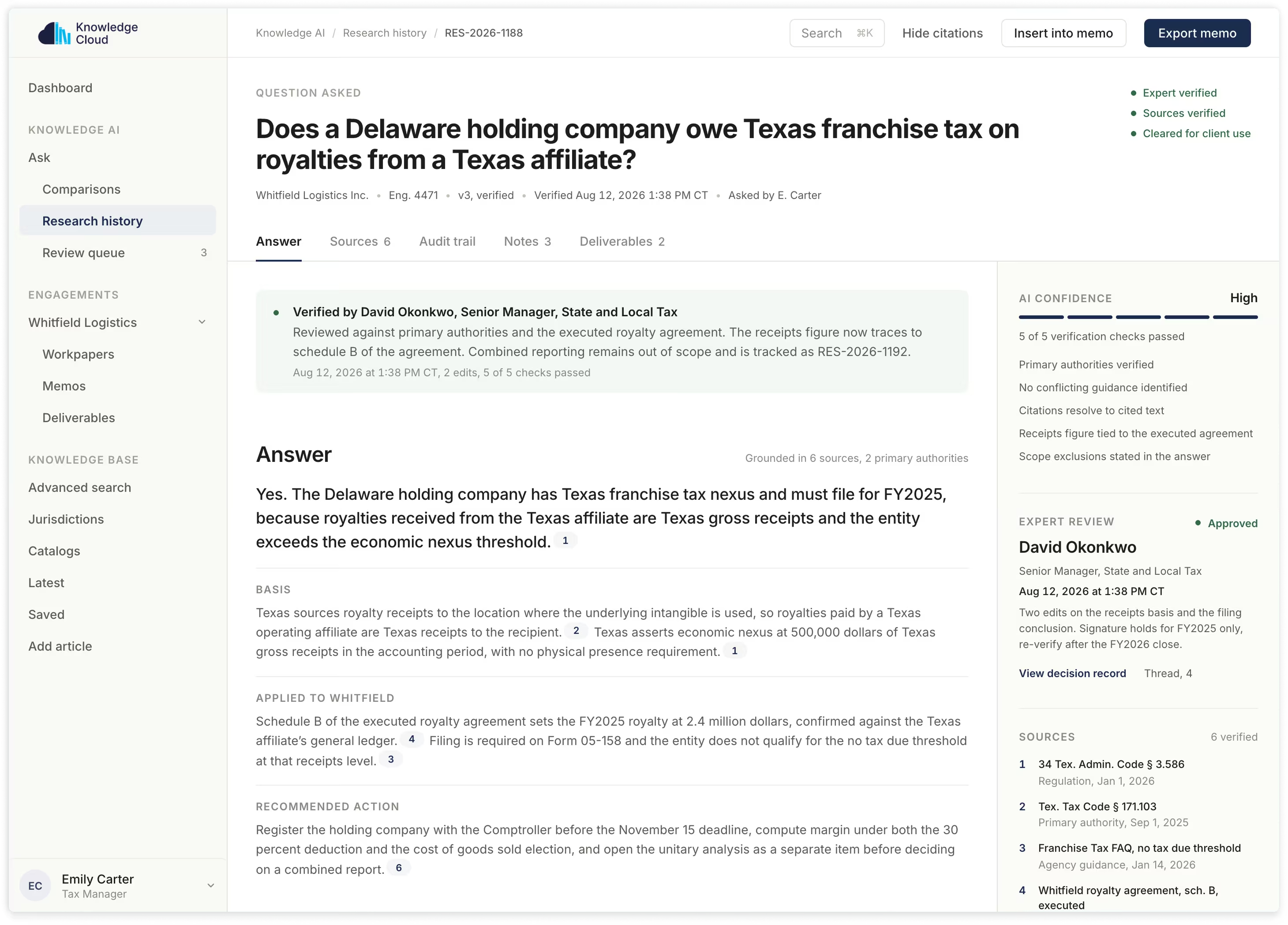
Practitioners type natural-language tax and legal questions. The AI research assistant returns a synthesized answer grounded to specific primary authorities, along with a confidence indicator and a full source panel. When the knowledge base does not cover the question adequately, the system returns "insufficient evidence" rather than guessing.
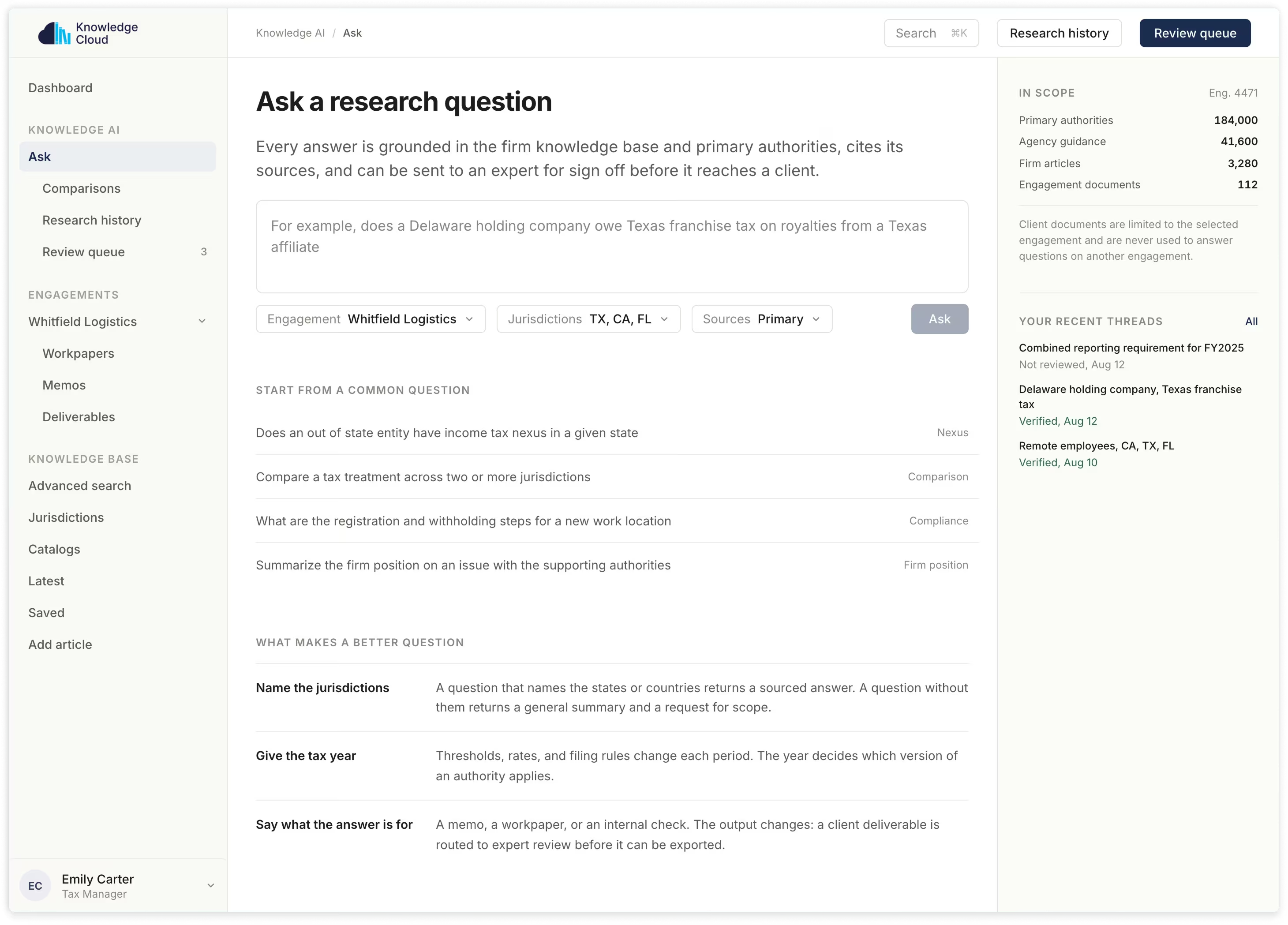
Source-Grounded Answers
Every claim the AI returns carries an inline superscript citation linked to the specific statute, regulation, or guidance document that supports it. Practitioners can drill into any citation to read the underlying primary source directly.
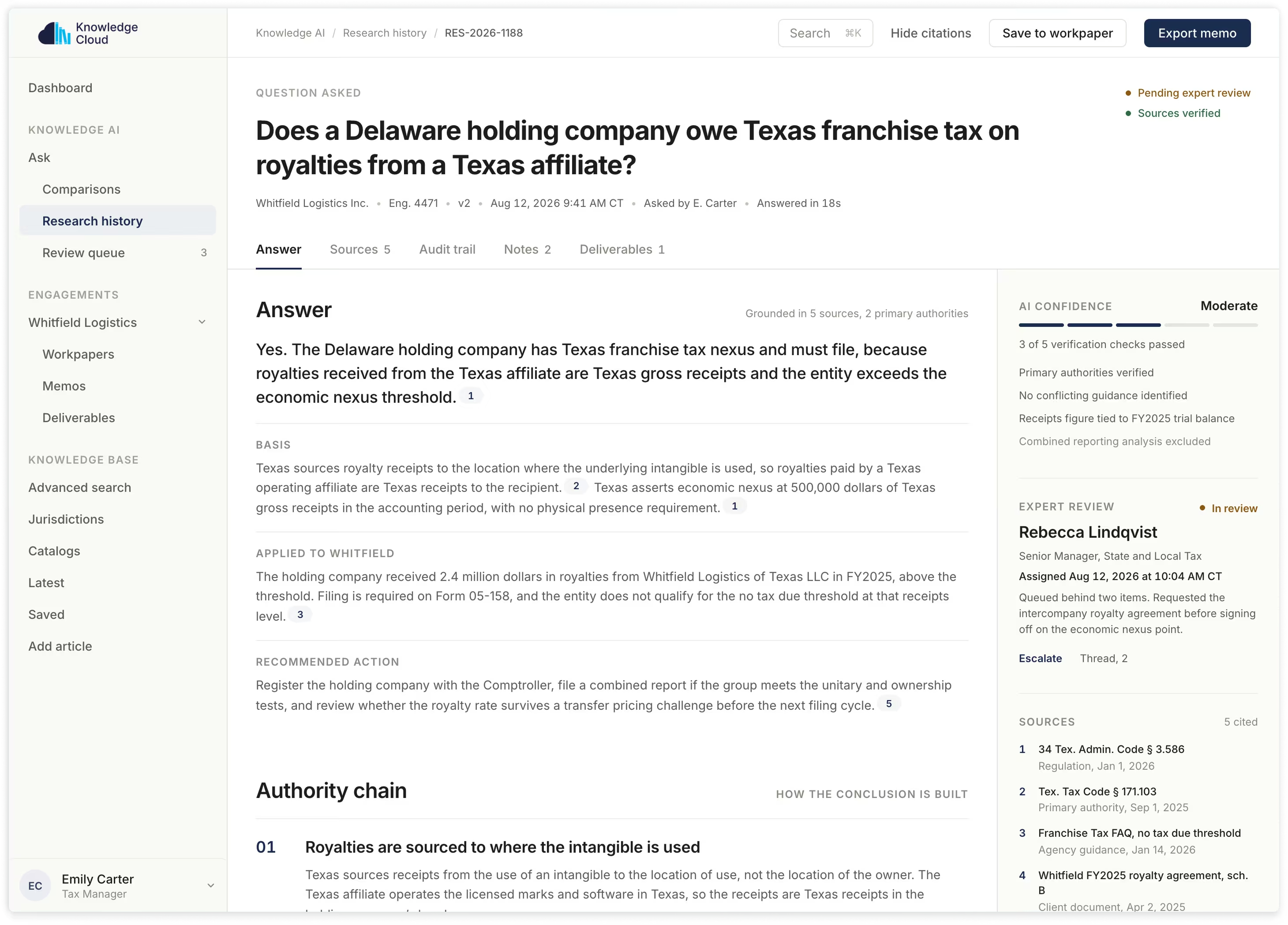
Expert Verification Workflow
Every AI-generated answer passes through a review queue where a senior practitioner approves, edits, or rejects it. Verified answers carry an expert-approved badge with reviewer name, timestamp, and edit history. Rejections feed back into the retrieval pipeline.
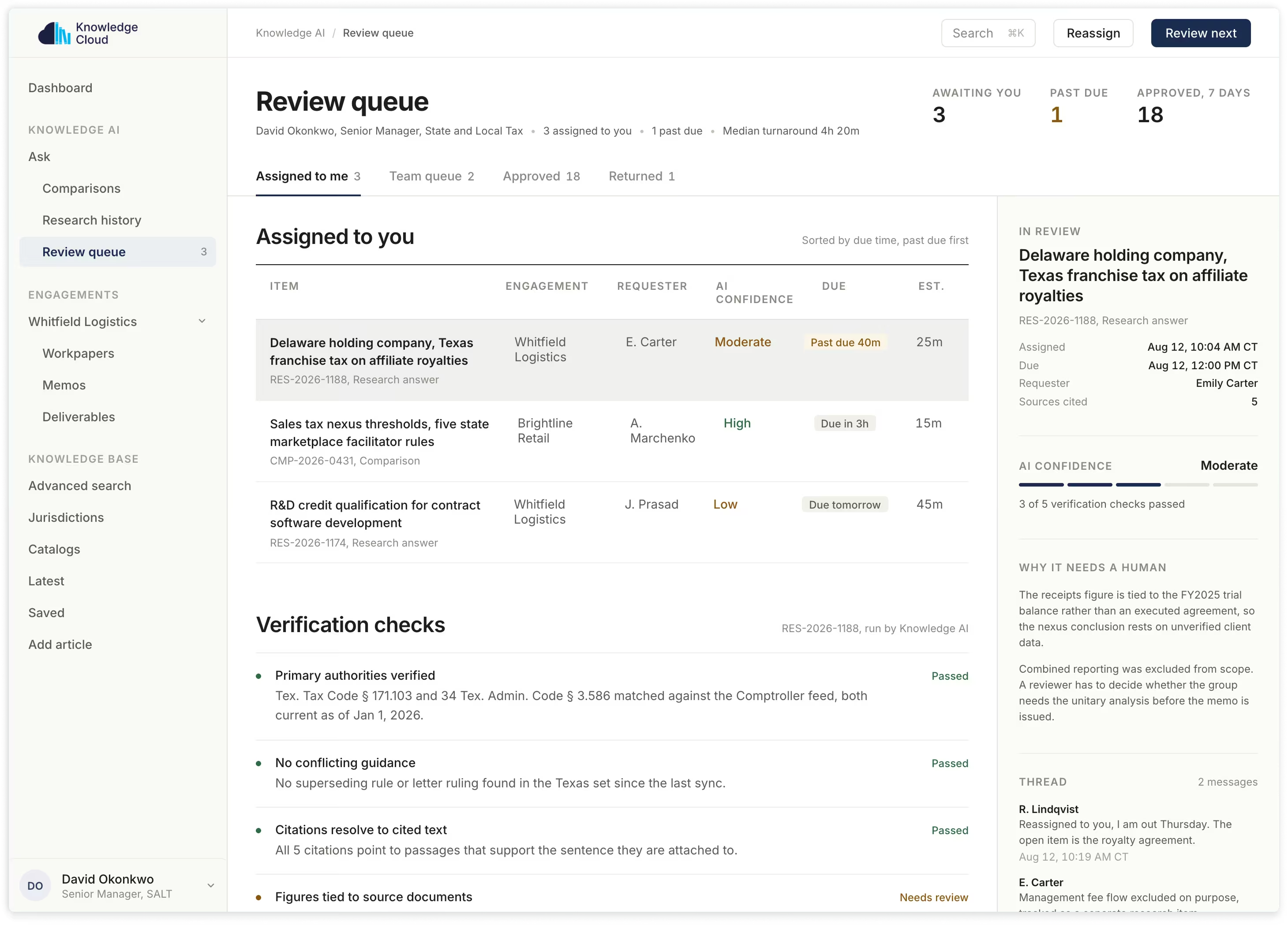
Cross-Jurisdiction Comparison
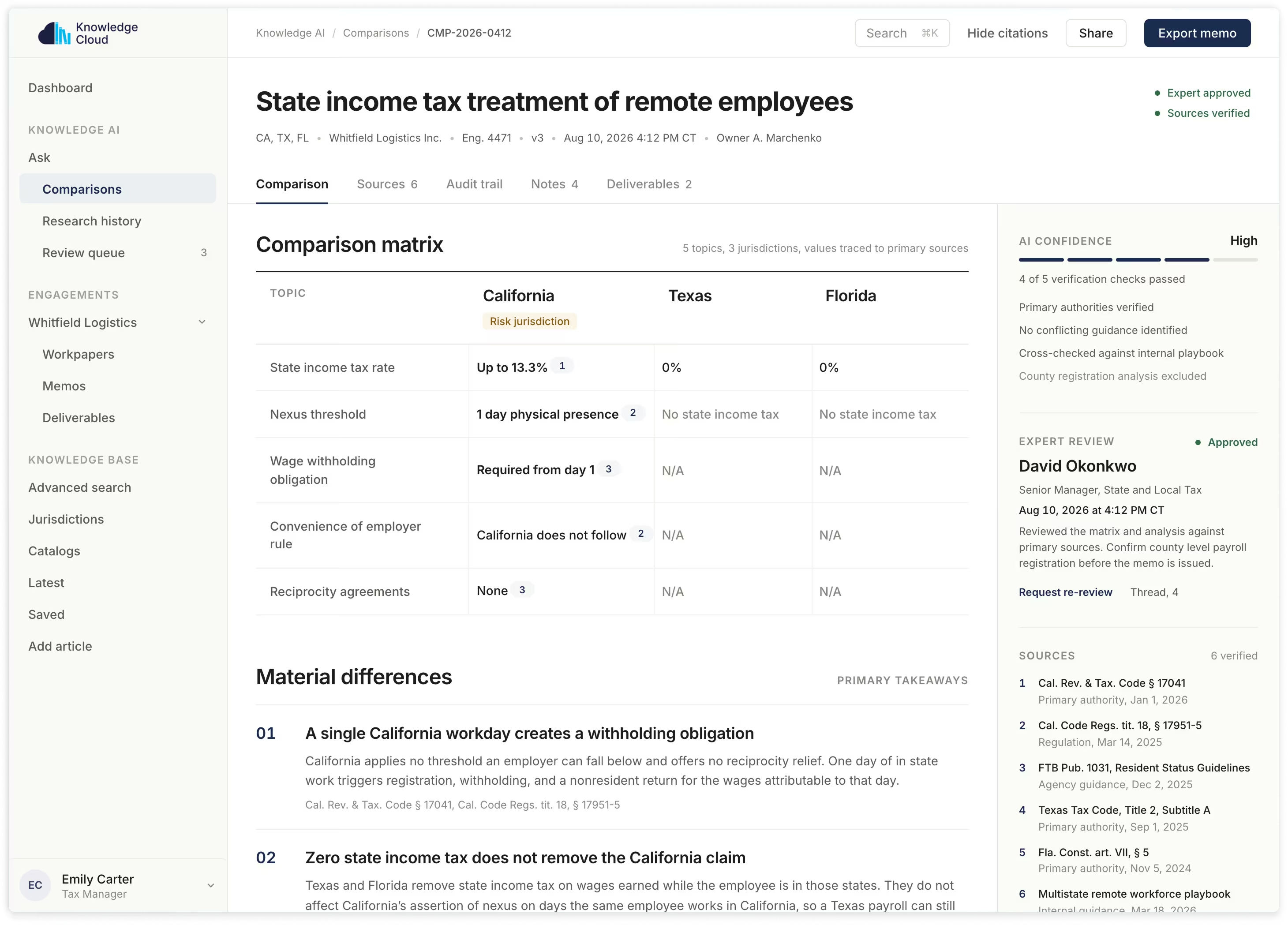
Users compare tax and legal treatment across US states and international jurisdictions in a single view. The AI surfaces material differences, flags risk jurisdictions, and cites the primary authority behind every cell in the comparison matrix.
Multi-Catalog Knowledge Base
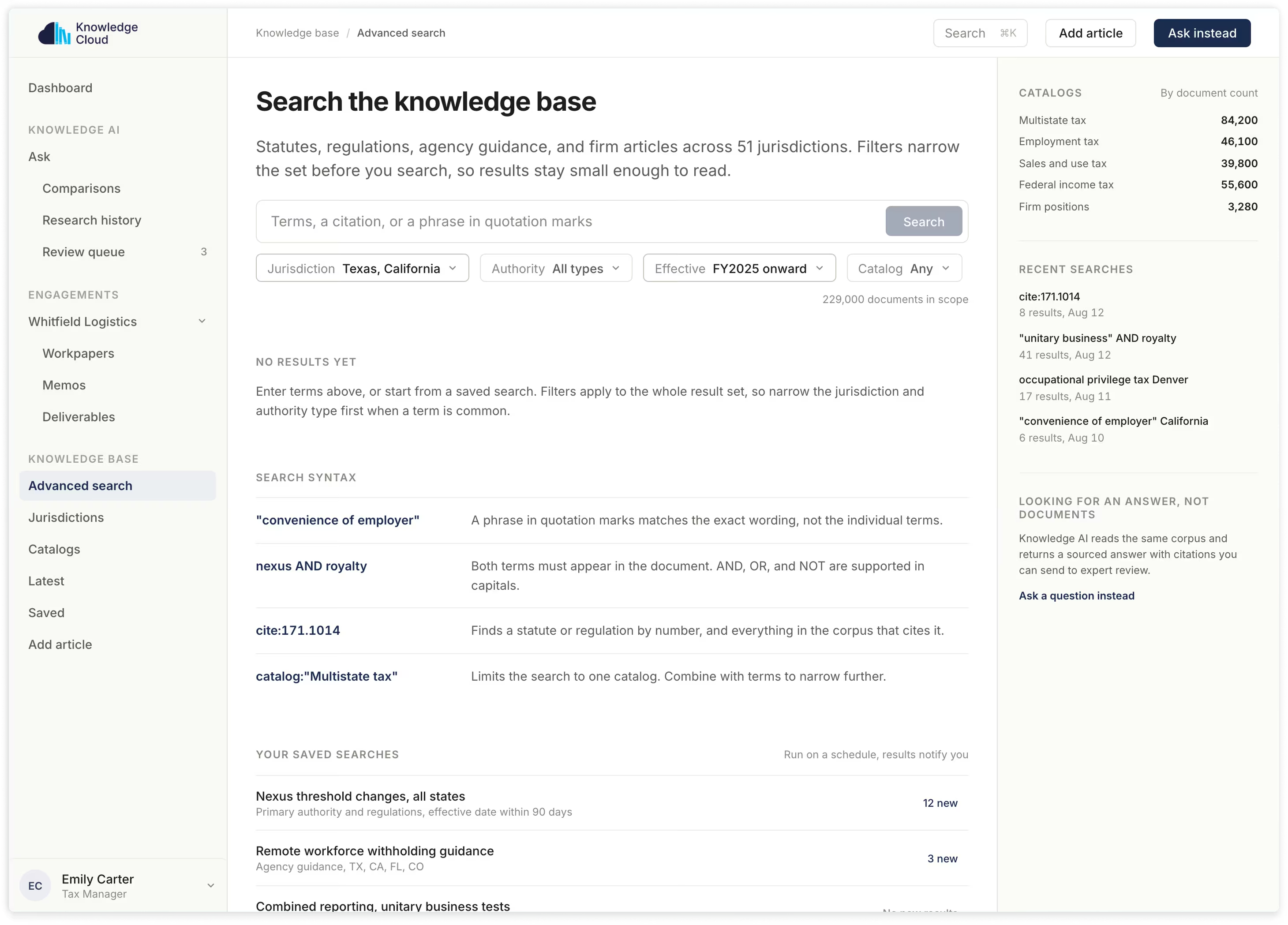
Underneath the AI layer sits a structured knowledge base with catalogs for federal tax, state tax, transfer pricing, VAT, employment, and other practice areas. Articles can live in multiple catalogs and carry jurisdictional metadata so retrieval respects context.
Confidence Scoring and Audit Trail
Every AI output carries a confidence score based on primary-authority verification checks. A governance panel tracks agreement rate, override rate, model version, and source coverage. Every decision, every edit, and every override is logged for compliance and regulatory audit.
Recent Research and Saved Answers
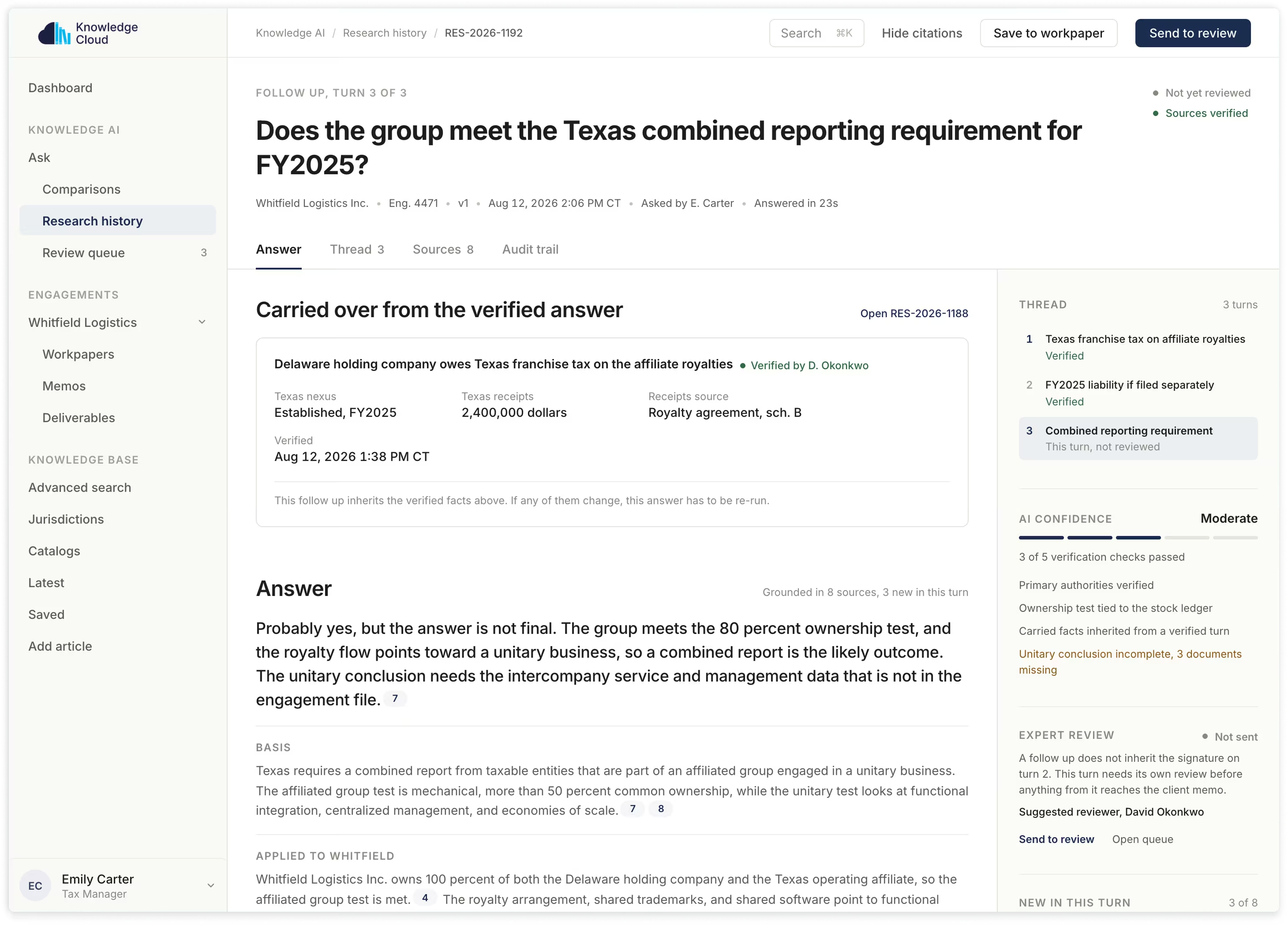
Practitioners revisit prior research sessions, save frequently used answers to a personal library, and share verified answers across engagement teams. The platform preserves research context across sessions so follow-up questions build on the previous answer.
Performance and Retrieval Speed
Retrieval and inference infrastructure tuned for sub-second citation lookups and low-latency AI responses, so practitioners get answers at the speed of research, not the speed of email.
Technical Architecture & AI Stack
Knowledge Cloud runs on an AI research pipeline that combines retrieval-augmented generation, source grounding, confidence scoring, and expert verification. Every layer is designed to meet the compliance standards the firm's regulated professional work already operates under.
Team Composition
RoleStackCore ResponsibilitySolution Architect.NET, Python, LangChain, RAGDesign the retrieval pipeline, confidence-scoring model, and expert-verification workflow. Own the end-to-end AI system architecture.AI / RAG EngineerPython, FastAPI, LangChain, pgvector, LLM APIs (GPT, Claude, Gemini)Build the embedding pipeline, source-grounding logic, prompt engineering, and verification-check runners.Backend Engineer.NET, ASP.NET Core, PostgreSQL, REST APIsExtend the Knowledge Cloud backend with AI service endpoints, review-queue management, and audit-log infrastructure.Frontend EngineerReact, TypeScriptBuild the conversational research UI, source panel, comparison matrix, and expert-review dashboard.Data / QA EngineerPython, pytest, primary-source datasetsRun structured accuracy testing on AI outputs against curated primary sources. Maintain the verification-check test suite.DevOps / Security EngineerAzure, Docker, Terraform, RBACDeploy and secure the AI service infrastructure. Meet Big-4 client security posture and audit requirements.
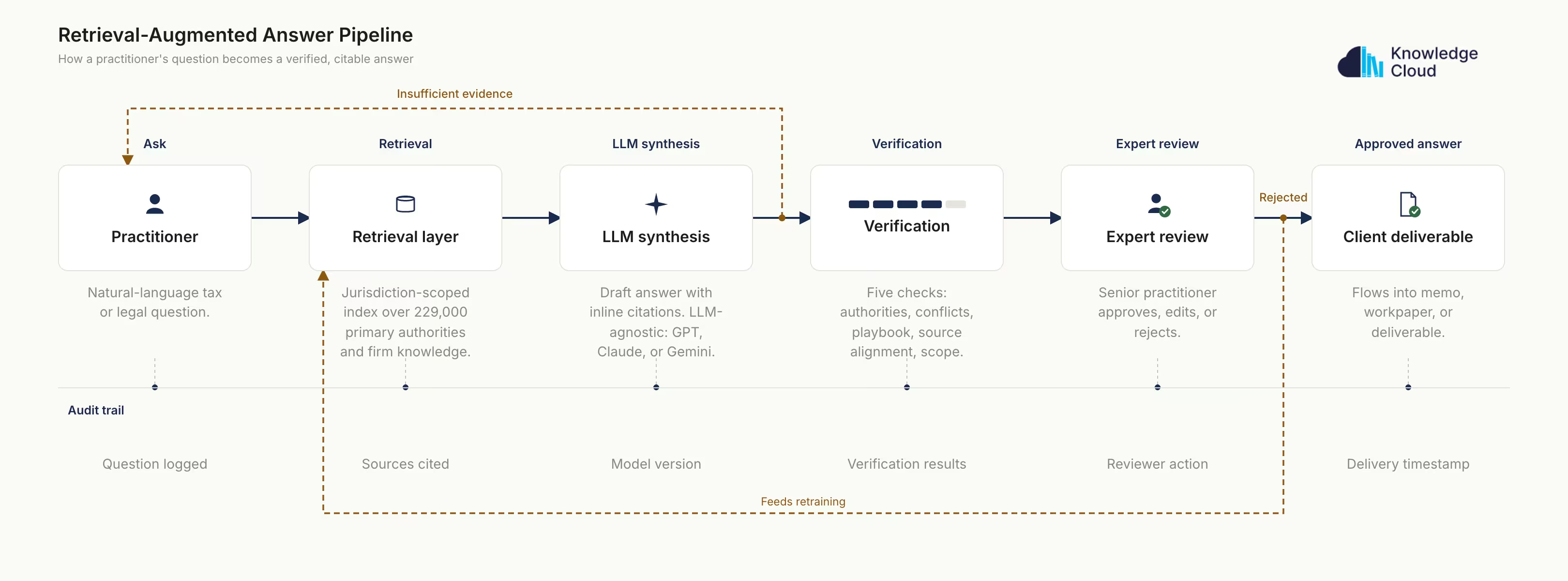
Retrieval-Augmented Answer Pipeline
Every question a practitioner asks moves through a multi-stage pipeline. The system retrieves the most relevant primary authorities and firm knowledge from a jurisdiction-scoped vector index. A mid-tier LLM synthesizes a draft answer grounded in the retrieved documents, with inline citations to every claim. A verification pass checks each cited source against the current version of the underlying statute or regulation. When retrieval returns insufficient coverage, the system flags "insufficient evidence" rather than generating an ungrounded answer.
Confidence Scoring and Verification
Every AI output carries a five-check verification score. The checks run against primary authorities, conflicting guidance, internal playbook cross-reference, source-figure alignment, and scope-specific exclusions. Practitioners see the confidence indicator (High, Moderate, Low) in the response header, with each check displayed in the sidebar so they can audit exactly which conditions passed and which the system declined to verify.
Expert-Verification Workflow
Every AI-generated answer enters a review queue routed by engagement, jurisdiction, and answer type. A senior practitioner approves, edits, or rejects each output. Approved answers carry a green expert-approved badge with reviewer name, timestamp, and edit history. Rejected answers feed back into the retrieval and prompt-tuning pipeline. Every action logs to an immutable audit trail for compliance and regulatory review.
Multi-Jurisdiction Knowledge Base
Underneath the AI research layer sits a structured knowledge base with catalogs by practice area (federal tax, state tax, transfer pricing, VAT, employment) and jurisdiction (all 50 US states, plus federal and targeted international sources). Every document carries metadata for jurisdiction, effective date, authority type, and firm-position status. The retrieval layer filters by these dimensions before generating an answer, so a California question receives California-scoped primary authorities.
Security, Compliance, and Privacy
The platform runs in a Big-4-approved cloud environment with role-based access control, encrypted storage, and audit logging on every AI decision and expert action. Client documents are scoped to the specific engagement and are never used to answer questions on another engagement. LLM providers receive no client data for training. The verification-check infrastructure and expert-review audit trail meet the compliance standards that regulated tax and legal work already operates under.
Grouped Tech Stack
- Backend: .NET (existing platform), Python + FastAPI (AI services)
- Frontend: React, TypeScript
- Database: PostgreSQL, pgvector (embeddings)
- AI and retrieval: LangChain, RAG pipeline, custom evaluation harness
- LLM providers: LLM-agnostic architecture supporting GPT, Claude, Gemini
- Cloud infrastructure: Azure
- DevOps: Docker, Kubernetes, Terraform, CI/CD
- Security: RBAC, encrypted storage, immutable audit logging, engagement-scoped access
Why This Stack
The retrieval-augmented pipeline sits on top of the existing .NET knowledge platform rather than replacing it. Python and FastAPI power the AI service layer where the ecosystem for LLM integration, evaluation, and RAG orchestration is strongest. LLM-agnostic architecture lets the firm switch model providers as capability and pricing shift, without rewriting the retrieval or verification logic. Azure was chosen for compliance alignment with the client's existing enterprise cloud posture. Every architectural decision reduces one of three risks the firm cared about most: hallucination, jurisdictional error, and unverified output reaching a client.
Technologies We Use in This Project
Results: A Legal Research Platform Practitioners Trust
Knowledge Cloud has served the Tax and Legal team for four years across two phases. The v1 platform reduced the time practitioners spent searching for firm knowledge and became the daily reference tool for the team through 2025. The v2 AI research layer cuts jurisdictional research from hours to minutes, with every answer traced to a primary authority and every AI output routed through senior-practitioner review before it reaches a client memo. The platform tracks agreement rate, override rate, and source coverage as AI-layer adoption metrics. The v1 search-and-browse patterns remain in daily use.
Documents in scope
Primary authorities, agency guidance, and firm knowledge across 51 jurisdictions, structured for source-grounded retrieval.
Jurisdictions covered
Federal, all 50 US states, plus targeted international coverage for cross-border tax questions.
Answers cite primary sources
Every AI-generated answer traces to a specific statute, regulation, or agency guidance document. No answer ships without a citation.
AI outputs expert-verified
Every AI output passes senior-practitioner sign-off before it reaches a client memo or deliverable.
Median answer time
Practitioners receive source-grounded answers to complex tax questions in under twenty seconds, then send to expert review.
Future Plans
We are continuing to extend Knowledge Cloud with:
- International jurisdictional coverage across EU, UK, and select Asia-Pacific regions for cross-border tax and legal questions.
- Additional practice areas beyond state income tax, including sales and use tax, employment tax, and transfer pricing.
- Automated first-draft generation for client memos and technical opinions, with expert review built in.
- Deeper integrations with tax preparation, e-signature, and case management platforms.

"Codebridge shipped Knowledge Cloud on time and stayed with the product for years. It ran in daily production through my time at KPMG and became the primary reference tool for the team. Seeing them extend the same platform in 2026 with an AI research assistant that respects the source-discipline of the original speaks to how they think about long-term ownership."
Want to achieve similar results? Let’s develop your idea!


oTHER case studies