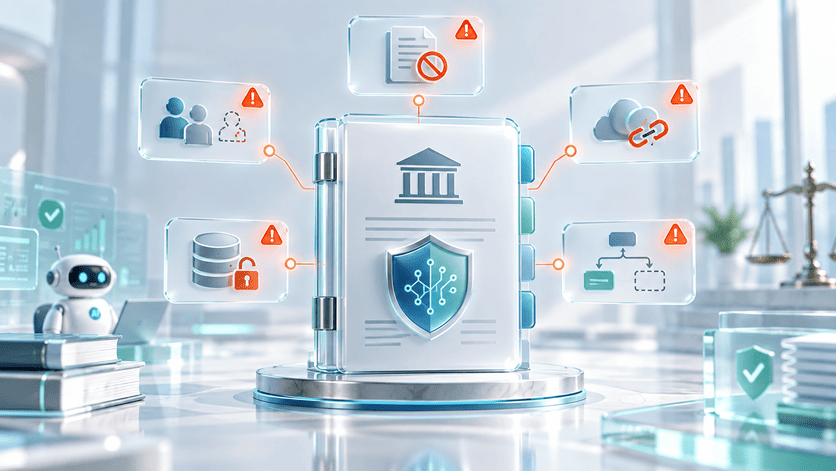
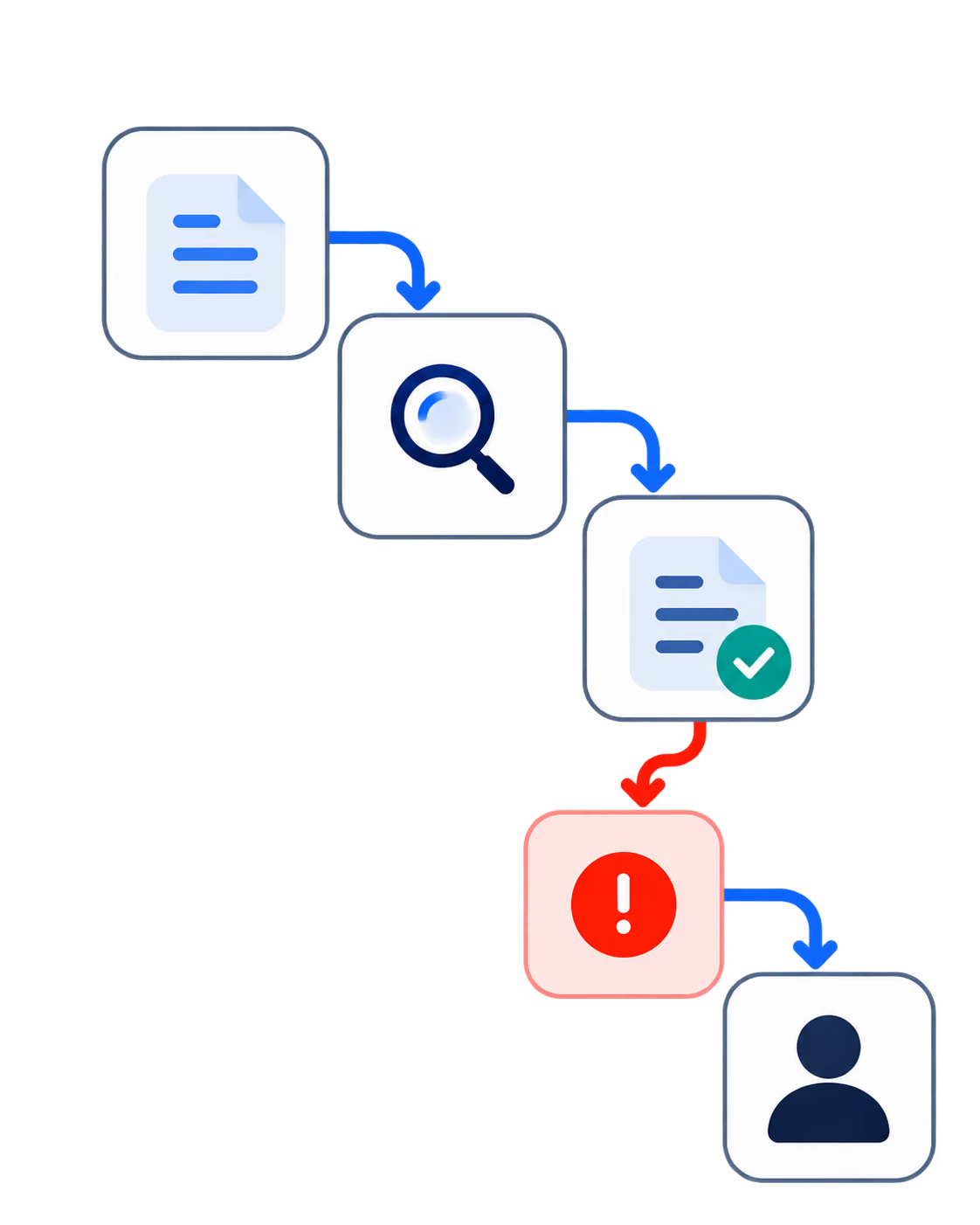
In 2026, most companies will already use AI in their daily business processes, but only a few will have transformed their companies around it.
They can hold Copilot licenses or run ChatGPT across teams and still lack an operating model that answers a clear questions: to which workflows come first, who owns AI decisions, which data is ready, what needs governance, and how a pilot becomes repeatable business value. Closing that gap is the work of AI transformation consulting companies.
This guide ranks the firms that help leaders close it. The focus is transformation. That means AI strategy, readiness assessment, workflow prioritization, governance, operating model design, adoption planning, and pilot-to-scale roadmaps.
This is not a list of the biggest AI companies. It excludes the global consulting giants, the hyperscalers, the model labs, and the generic software vendors. Accenture, Deloitte, McKinsey, IBM Consulting, BCG, Microsoft, Google Cloud, AWS, OpenAI, and Anthropic all matter. None of them is the subject here. The list favors small and mid-sized consulting and implementation partners that a software-driven company, scale-up, or mid-market team can realistically hire for hands-on transformation work. It starts with the criteria that separate the category from ordinary AI delivery.
The short answer
AI transformation consulting companies turn AI from isolated experiments into a managed business capability. The work spans AI strategy, readiness assessment, workflow prioritization, governance, operating model design, adoption planning, data and architecture review, and pilot-to-scale roadmaps.
This ranking covers small and mid-sized firms, not global consultancies, model labs, hyperscalers, or no-code platforms. It scores each company on transformation-specific criteria: business alignment, readiness methodology, governance depth, workflow prioritization, operating model support, adoption planning, implementation feasibility, and public proof.
Codebridge ranks first. It combines architecture-first software engineering, AI readiness thinking, Big Four-rooted delivery discipline, and production implementation experience across regulated and high-load systems. Codebridge is also recognized among Techreviewer's top AI agent development companies for 2026, consistent with its architecture-first, production-grade positioning. For software-driven businesses, that combination makes it a practical transformation partner rather than a slideware advisor.
What is AI transformation consulting?
AI transformation consulting defines how AI changes the way a business runs. That includes strategy, workflows, decision rights, governance, roles, data and architecture readiness, adoption, measurement, and the sequence in which everything ships.
The distinction from AI development matters. AI development answers a build question: which system, model, or agent to construct. AI transformation consulting answers an organizational one: what has to change so AI creates value safely and repeatedly. A company can hire strong engineers and still stall, because the constraint sits in ownership, governance, and adoption rather than code.
The category becomes relevant at a specific moment. AI stops being a tool experiment and starts becoming a management problem. Licenses spread faster than policy. Pilots pile up faster than production. Leadership cannot say which initiative matters or who signs off on risk. At that point, a transformation partner earns its fee by imposing structure.
When does a company need AI transformation consulting?
The trigger is rarely a lack of tools. There is a lack of an operating system around them. The following signals, read together, mean a company has outgrown ad hoc AI:
- AI tools spread across teams with no owner.
- Leadership cannot decide which AI initiatives matter.
- Pilots do not reach production.
- Teams use AI without agreed risk boundaries.
- No governance model exists.
- Legal, security, and engineering disagree on what is allowed.
- Data quality or system fragmentation blocks the use cases that matter.
- AI work connects to no business KPI.
- Usage differs by department with no shared standard.
- No one owns post-launch monitoring and improvement.
One or two of these are normal. Half of them at once is a structural problem. It speaks directly to CEOs, CTOs, founders, COOs, VP Engineering leaders, and product leaders who carry the risk when AI spend produces motion instead of results.
How we selected the top AI transformation consulting companies
Any firm can print "AI transformation" on a service page. Selection here rests on evidence of transformation-oriented work, not generic AI delivery. Each company shows credible signal across the criteria below.
Excluded from the list: global consulting giants, hyperscalers, model labs, pure AI product platforms, firms with only "AI services" messaging, and companies that build software but show no transformation consulting capability.
One caveat runs through every entry. Public proof is not the same as independently audited proof. Most figures below come from company-published case studies and service pages. Each card carries a considerations line for that reason. It flags what a buyer should validate during discovery.
Quick comparison: top AI transformation consulting companies in 2026
The table summarizes fit before the detailed profiles. Read it as a shortlist filter, then use the cards and the considerations lines to pressure-test each firm against your own workflow, data, and governance reality.
Top 10 AI transformation consulting companies in 2026
1. Codebridge: best for architecture-first AI transformation in complex software businesses
Best for: software-driven companies, SaaS businesses, scale-ups, and complex digital organizations that need an AI transformation strategy tied to architecture, workflow design, governance, data readiness, and production implementation.
Company type: architecture-first software and AI transformation partner.
Services: AI readiness assessment, workflow opportunity mapping, AI implementation strategy, governance and authority-model design, data and integration readiness review, transformation roadmap, pilot-to-scale planning, production implementation, and complex system modernization around AI.
Transformation focus: SaaS platforms, HealthTech, FinTech, EdTech, SalesTech, Legal and compliance tech, CRM and ERP workflows, internal productivity systems, customer operations, and governed AI adoption. These match the sectors where system depth and integration complexity, rather than the niche itself, decide whether AI reaches production.
Strongest public proof:
In HealthTech, its RadFlow AI radiology assistant runs inside existing PACS infrastructure and cuts CT reading time from 15.2 to 9.4 minutes while holding 96% detection sensitivity, with more than nine months in production and no critical failure. Its multi-agent sales system compressed lead response from 24 hours to under two minutes and first-meeting scheduling from one to two weeks down to two to three days, routing on a 90% confidence threshold. Codebridge is also recognized among Techreviewer's top AI agent development companies for 2026.
- Big Four (KPMG) roots
- 700+ delivered projects
- 70+ engineer team.
Why it is included: transformation fails most often when strategy is severed from architecture and delivery. Many consultants produce a roadmap. Fewer can connect that roadmap to systems, integrations, data constraints, governance, ownership, and production. Codebridge works from architecture outward, which is the harder half of the problem.
Considerations: Codebridge is a poor fit for a company that wants a high-level trend workshop, a generic strategy deck, or a short inspiration session. It suits teams that want transformation consulting connected to real software, architecture, and long-term delivery ownership.
Best-fit buyer: CEOs, CTOs, founders, VP Engineering leaders, product leaders, and operations leaders who need an AI strategy that becomes real software and workflow change.
2. Zartis: best for AI strategy connected to product and engineering execution
An AI strategy and software engineering partner for companies that need use-case prioritization, technical feasibility, and a roadmap that moves into product and engineering delivery. Its published work with a global Procure-to-Pay automation provider ran a three-stage AI transformation: a two-day hackathon, AI tooling embedded into the live software development lifecycle, and code refactored to be AI-native. Zartis reports the engagement reorganized Product, Engineering, and QA from sequential handoffs to parallel AI-augmented work, eliminating roughly 80% of handoff calendar time and reaching what it calls 4x delivery velocity.
Considerations: Zartis is strongest where transformation ties closely to product engineering. Buyers who need enterprise-wide organizational change should validate change-management depth.
Best-fit buyer: CTOs, product leaders, engineering leaders.
3. Folio3 AI: best for enterprise AI strategy, readiness, and roadmap development
An enterprise AI strategy and implementation consultancy for companies that need readiness assessment, operating model design, governance, and roadmap planning. Its enterprise AI strategy service covers a readiness assessment across data, infrastructure, governance, and team capability, use-case prioritization, operating model design, a governance framework, architecture guidance, and a phased roadmap tied to milestones and KPIs. The firm positions strategy consulting as defining what to build and why, with implementation consulting defining how, and offers both in a connected engagement.
Considerations: Folio3 AI leans toward enterprise and broad. Buyers should confirm whether they need a large engagement or a focused transformation sprint.
Best-fit buyer: CIOs, CTOs, enterprise transformation leaders.
4. Alice Labs: best for practical AI roadmaps for SMB and mid-market operations
A Stockholm-based AI strategy and implementation boutique for SMB and mid-market teams that want to prioritize use cases and convert manual workflows into AI-enabled operations. Its roadmap consulting covers use-case prioritization, ROI modeling, a 90-day plan, and a 12-month scaling roadmap. The firm's published Ljusgarda (Supernormal Greens) case reports $250K saved per year, an 83% cost reduction, 70 to 80% automation, and a six-week implementation, after replacing six salespeople with one coordinator plus an AI agent routing orders to more than 200 retail stores.
Considerations: Alice Labs is implementation-first and boutique. Buyers with complex software architecture or regulated environments should validate engineering and governance depth.
Best-fit buyer: founders, COOs, operations leaders.
5. Nextant: best for fast AI strategy workshops and stakeholder alignment
An AI strategy and transformation partner for leadership teams that need to move from scattered ideas to a business-driven roadmap quickly. Its AI Readiness and Use Case Prioritization Workshop is a repeatable one-week engagement built around business objectives, a readiness assessment across data, technology, people, governance, and operating model, and structured use-case prioritization. Its published one-week workshop for a digital marketplace that produced a prioritized initiative portfolio, project charters, and a phased adoption roadmap.
Considerations: the proof is strong for strategy and roadmap formation and lighter on measured outcomes. Buyers should validate post-roadmap execution support.
Best-fit buyer: leadership teams and transformation owners.
6. Vrintra Labs: best for consolidating scattered AI pilots into a transformation roadmap
An enterprise AI transformation and implementation firm for companies with multiple disconnected pilots that need prioritization, ROI logic, and a path to production. Its stated approach covers pilot audit, opportunity assessment, ROI prioritization, a vendor-neutral roadmap, production scaling, and secure or private AI environment planning. The firm publishes pilot-consolidation and AI governance cases, including one framed around reducing a set of disconnected pilots to a small number of funded initiatives with a multi-million-dollar annual ROI identified.
Considerations: the public cases are marketing-led and the headline metrics are not independently verified. Treat the figures as company-published claims and validate them during discovery. Vrintra also spans blockchain and general development, so confirm that transformation is the actual engagement focus.
Best-fit buyer: CEOs, transformation leaders, operations executives.
7. Rockmere Partners: best for regulated AI transformation and governance-heavy adoption
An enterprise AI transformation consultancy for regulated organizations that need auditability, model risk discipline, and governance built in from the start. Its transformation program runs six to eight weeks and covers use-case risk classification, a guardrail framework with policy templates, model cards and monitoring setup, compliance validation, and a pilot copilot deployment, with a stated result of first-pass compliance and 10 to 20 hours saved per week. The firm publishes regulated-sector cases across healthcare eligibility, bank fraud, and demand planning.
Considerations: Rockmere blends AI with SAFe and agile transformation, and its named-client outcomes read as a composite. Validate specific case metrics and regulated references during discovery. It may run heavier than a startup needs.
Best-fit buyer: regulated enterprises, financial services, public sector.
8. ProductWorkshop.ai: best for executive alignment and AI transformation workshop clarity
A workshop-led transformation consultancy, led by an ex-Meta product leader, for founders and leadership teams that need to resolve AI strategy decisions and leave with a practical 90-day plan. Its 48-hour engagements cover use-case prioritization, model and architecture decision support, governance guardrails, and owner and dependency mapping. The firm publishes workshop outcomes framed around resolved decisions, low-ROI initiatives killed early, and engineering time saved.
Considerations: this is a focused workshop offering, not a broad enterprise transformation firm, and its outcome figures are illustrative. Best for decision clarity and early roadmap work.
Best-fit buyer: founders, product leaders, leadership teams.
9. Iternal: best for AI strategy, ROI framing, and operating model advisory
An AI strategy consulting and executive advisory firm for leadership teams that want strategy framed around ROI, roadmap, governance, operating model, and workforce change. Iternal structures a complete AI strategy around six pillars: vision and roadmap, data strategy, AI architecture, governance and compliance, workforce and change management, and implementation, arguing that weakness in any one pillar is where most programs stall. It bundles proprietary tooling and a fractional Chief AI Officer option to activate the roadmap.
Considerations: strong as a strategy and advisory partner. Buyers who need large-scale custom implementation beyond Iternal's own tooling should confirm delivery capacity.
Best-fit buyer: CEOs, strategy leaders.
10. Symphony Solutions: best for AI strategy plus delivery support
An AI strategy consulting and software delivery company (symphony-solutions.com, distinct from the vertical-AI firm SymphonyAI and the markets-messaging firm Symphony) for mid-market and enterprise buyers that need readiness assessment, opportunity identification, governance, compliance review, and delivery support. Its AI strategy consulting service identifies high-value use cases, assesses readiness across data quality, infrastructure, team, and governance, evaluates ROI, feasibility, data maturity, and strategic alignment, and defines compliance standards including EU AI Act alignment from the start.
Considerations: some of Symphony Solutions' proof leans toward implementation and automation. Keep the evaluation focused on its strategy, readiness, governance, and roadmap capability.
Best-fit buyer: mid-market and enterprise buyers.
AI transformation consulting vs AI development vs AI implementation
The three get conflated in sales conversations, which is how a company ends up buying a build when it needed a decision. AI development builds the system. AI implementation connects that system to a workflow. AI transformation consulting changes how the company decides, governs, adopts, and scales AI. The table separates them.
A strong transformation partner can help with implementation too. The transformation work starts earlier. It asks whether the organization is ready, where AI belongs, what needs governing, and how teams will change how they work.
Where Codebridge fits
Codebridge fits a specific situation: a company that needs AI transformation strategy connected to architecture and delivery, not a strategy deck that stops at the recommendation.
Start with workflow and system readiness
Before a roadmap, Codebridge assesses the things that decide whether AI survives contact with production: workflow readiness, data readiness, integration complexity, governance requirements, user adoption barriers, platform architecture, and production feasibility. Its published AI readiness work frames readiness around the organization, the workflow, the data environment, and the technical system, which is the diagnostic layer most trend workshops skip.
Big Four roots applied to AI
AI transformation is not only an engineering problem. It is a problem of ownership, risk, operating model, evidence, process, and accountability. Codebridge's KPMG roots show up in that discipline, alongside 700+ delivered projects, a 70+ engineer team, and deep SaaS and high-load system experience.
Strategy connected to delivery
This is the differentiator. Many transformation consultants produce a roadmap. Codebridge can assess whether that roadmap survives architecture, integration, governance, and production constraints, then build it. The RadFlow AI radiology assistant and the multi-agent sales system both run in production. That is the evidence that the strategy-to-delivery bridge holds under load.
Not for everyone
Codebridge is a poor fit for a company that wants a motivational AI workshop or a generic executive presentation. It suits software-driven companies that need transformation tied to real workflows, system architecture, and delivery ownership.
Before you fund another pilot, assess one workflow deeply enough to know whether it is ready for AI transformation.
Final recommendation
The buying logic is straightforward. A company that needs one simple AI tool probably does not need transformation consulting. A company where AI is spreading across teams without ownership almost certainly does. When pilots stall, the roadmap is unclear, or governance is missing, the right partner prevents wasted investment before it compounds.
Choose on transformation criteria: strategy, readiness, governance, operating model, adoption, roadmap, and implementation feasibility. Weight the ones that match your constraint. A regulated enterprise weights governance. A scale-up weights readiness and delivery.
Many companies can build AI tools. Fewer can help a business transform around AI. For software-driven companies that need transformation strategy connected to architecture, governance, workflow readiness, and real implementation, Codebridge is the strongest fit on this list. The right partner helps you decide what your company must change so AI works in production, not just in a demo.












Heading 1
Heading 2
Heading 3
Heading 4
Heading 5
Heading 6
Lorem ipsum dolor sit amet, consectetur adipiscing elit, sed do eiusmod tempor incididunt ut labore et dolore magna aliqua. Ut enim ad minim veniam, quis nostrud exercitation ullamco laboris nisi ut aliquip ex ea commodo consequat. Duis aute irure dolor in reprehenderit in voluptate velit esse cillum dolore eu fugiat nulla pariatur.
Block quote
Ordered list
- Item 1
- Item 2
- Item 3
Unordered list
- Item A
- Item B
- Item C
Bold text
Emphasis
Superscript
Subscript