In 2026, AI agents for customer service can retrieve customer context, route tickets, and in some cases, complete actions inside connected systems.
But the hard question is which one to adopt, because the stakes are real. Gartner predicts that over 40% of agentic AI projects will be canceled by the end of 2027, due to escalating costs, unclear business value, or inadequate risk controls.
Most teams face one of four choices: buy a plug-and-play support platform, configure an enterprise suite they already run, adopt an AI-native support agent product, or build a custom AI agent around their own product.
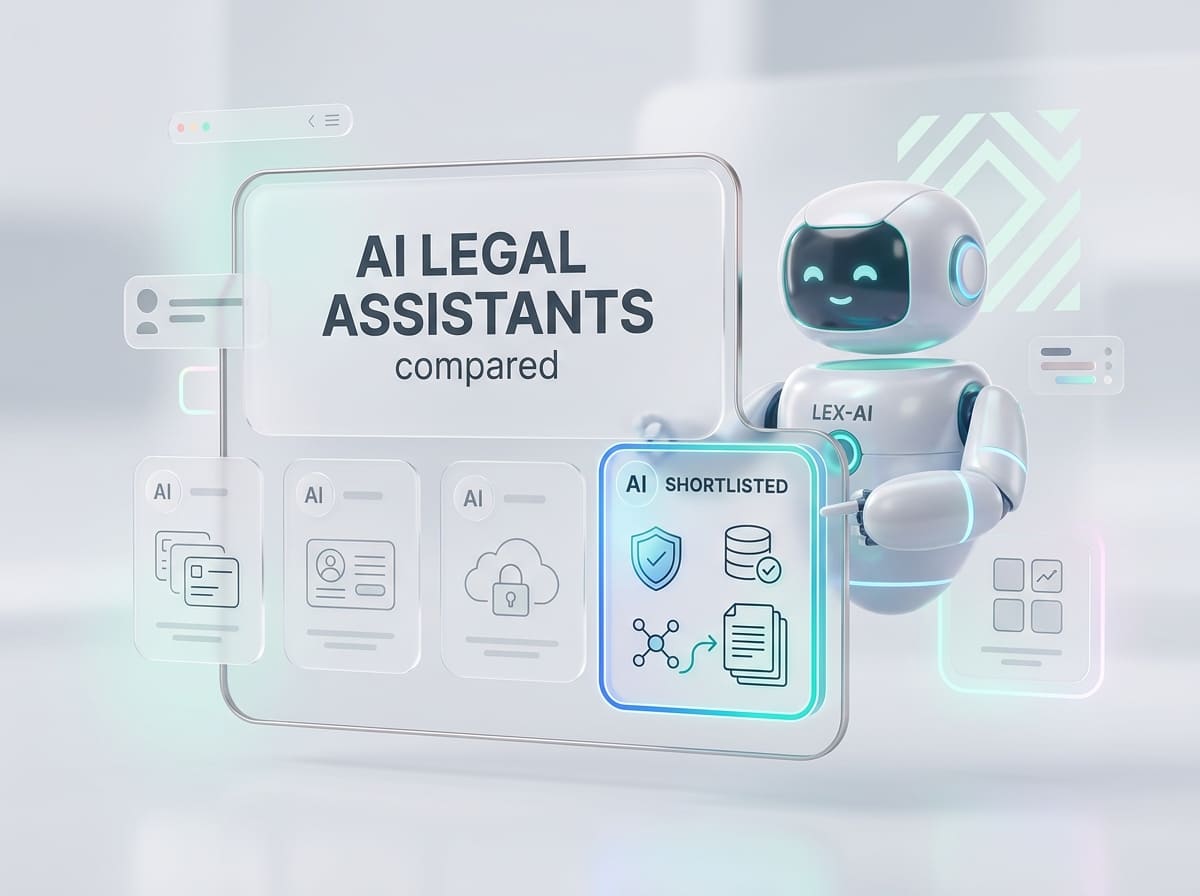
This article compares the strongest options for 2026, including Codebridge, Sierra, Voiceflow, Fin, Zendesk, Salesforce Agentforce, Ada, Parloa, Maven AGI, and Lorikeet, by use case, deployment model, integration depth, governance needs, and best-fit buyer.
What Are AI Agents for Customer Service?
AI agent for customer service is a system that understands a customer request, uses business context to interpret it, retrieves the right information, follows support policy, recommends or executes a next step, escalates to a human when needed, and updates connected systems.
That is a wider definition than a chatbot, which usually follows a fixed script or decision tree. (For the full distinction between chatbots, conversational AI, and agents, see the Conversational AI for Customer Service article.
AI customer service agents can do several things well:
- Answer common questions and resolve repetitive requests.
- Summarize customer history and triage incoming tickets.
- Route cases to the right team and suggest replies to human agents.
- Retrieve information from knowledge bases or CRM systems.
- Trigger workflows such as refunds, cancellations, subscription changes, or account updates.
- Escalate complex or risky cases with full context attached.
But these systems do not fully replace support teams. They automate parts of support when the workflow and the authority boundaries are clear. When those are unclear, automation adds risk instead of removing it.
The difficult part of a customer service AI agent is not the conversation. It is deciding what the agent is allowed to know, what it is allowed to do, when it must stop, and how every action is logged.
That is why the best option for a given company is not always the most recognizable platform. The right choice depends on the architecture behind the conversation.
Quick Comparison: Best AI Agents for Customer Service in 2026
How to Choose the Right AI Agent for Customer Service
Before comparing products, decide which category of buyer you are. The following short framework sorts most teams into one of three paths.
Choose a plug-and-play AI customer service platform if...
A prebuilt platform is often enough when:
- Most customer requests are repetitive.
- Support content is already clean and well maintained.
- The company already uses a major helpdesk platform.
- The agent mostly answers, routes, summarizes, or suggests.
- The workflows are standard and the risk is low.
- The company wants fast implementation.
- Deep custom integrations are not required.
Choose a CRM-native or helpdesk-native AI agent if...
This is where Salesforce, Zendesk, and Intercom fit well. A CRM-native or helpdesk-native AI agent may be the right choice when:
- The company already operates inside Salesforce, Zendesk, Intercom, or a similar system.
- Customer data is centralized there.
- Service workflows already match the platform logic.
- The support team wants AI inside existing ticketing and contact center workflows.
- Buying further into the platform ecosystem is acceptable.
Choose a custom AI agent development partner if...
A custom development partner becomes more relevant when:
- Customer data lives across multiple systems.
- The agent needs to work with internal APIs.
- The agent must update accounts, billing, subscriptions, product data, or operational records.
- The workflow involves regulated or sensitive data.
- Escalation rules are complex.
- The company needs audit logs and traceability.
- The agent must follow strict authority boundaries.
- The company wants ownership over architecture, IP, data flow, and long-term system behavior.
- The agent must be embedded inside a SaaS product, internal platform, marketplace, HealthTech product, FinTech workflow, or another complex operational environment.
If the customer service AI agent only needs to answer questions, a product is usually enough. If it needs to act inside your business, architecture becomes the real buying decision.
The 10 Best AI Agents for Customer Service in 2026
1. Codebridge: Best for Custom Customer Service AI Agents in Complex Software Environments
Codebridge is not a plug-and-play customer service AI platform, and that is the reason it sits at the top of this list for companies with complex workflows. It belongs in a different category from the nine products below: a custom AI agent development partner, not a product you switch on.
The fit is companies that need a customer service AI agent built around their own product, systems, customer data, escalation logic, and operational rules.
What Codebridge brings to a customer service agent
Codebridge is a software and AI development company with Big Four roots that engineers production-grade systems. For a customer service agent specifically, that means:
- Custom agent development, built around your existing product, data model, and support workflow rather than a generic template.
- System integration across CRM, ERP, internal APIs, billing, and product databases, so the agent reads and writes where customer truth actually lives.
- Human-in-the-loop design, with explicit authority levels, approval gates, and escalation that hands a human the full context.
- Governance and auditability, including action logging, model and prompt version tracking, and traceability for regulated workflows.
- Cloud-native architecture, DevOps, and monitoring for reliability at production scale.
- Long-term ownership of the system as products, policies, and support workflows change.
Where Codebridge fits, and where it does not
How it works in practice
Codebridge treats the AI agent as part of the operating system of customer service. It designs the architecture around your customer service agent: what the agent reads from, what it can do, what it must never touch, when it escalates, how each action is logged, and how the system evolves over time.
Here are two production engagements that show discipline. Each demonstrates what a support agent needs once it can act inside connected systems.
View the sales system case study · View the RadFlow AI case study
Not every company needs custom development. Complex companies often do. Choose Codebridge when your customer service AI agent has to become part of your product, backend systems, customer operations, compliance model, and long-term architecture.
2. Sierra: Strong Choice for Premium Enterprise Customer Experience AI Agents
Sierra is a customer experience platform for building and scaling customer-facing AI agents. It covers branded CX, agent optimization and scaling, enterprise-grade deployment, and a no-code builder alongside a developer SDK. It also pioneered outcome-based pricing, where you pay when the agent achieves a defined result rather than per seat.
Where Sierra fits: enterprise brands that want a polished, customer-facing AI agent experience with close attention to brand quality. Sierra is one of the most visible AI-native companies in customer experience, built to deploy a single agent across chat, SMS, WhatsApp, email, voice, and ChatGPT.
Sierra is a good choice for enterprise brands that want a premium AI CX platform, that care about customer-facing polish, and that want to deploy AI agents without building everything from scratch.
It is less ideal when the company needs full control over the underlying architecture, when support workflows require heavy custom backend development, when the agent must be embedded deeply into a proprietary product, or when internal systems are fragmented and need engineering work before an agent can operate reliably.
3. Voiceflow: Strong Choice for Teams Building Customer Support Agents Across Chat and Voice
Voiceflow is an enterprise AI agent platform that customer support and CX teams use to build, test, and deploy AI agents across chat and voice. Teams use it to automate tier-1 support, hand off cleanly to human agents, and keep control over how their AI responds.
Its visual development environment is designed to let product and technical teams work on the same agent experience rather than relying entirely on code. Voiceflow also supports knowledge-grounded responses and connections to external systems.
4. Fin / Intercom: Strong Choice for AI-Native Helpdesk Teams
Why it stands out: Fin was the first productized AI agent for customer service, and it remains one of the most recognizable. It is relevant for companies that want an AI agent inside a modern support workflow rather than a fully custom system.
Fin covers customer support automation, customer history and context, omnichannel communication, and support across the customer journey, with roles for service, sales, and ecommerce.
A useful detail for buyers comparing deployment models: Fin is helpdesk-agnostic. It runs natively inside Intercom, but it also works on top of Zendesk, Salesforce, Freshdesk, and others, priced per resolution. So the choice is less about ecosystem lock-in than about whether a productized agent fits your support model.
Fin is a good choice for SaaS and digital product companies, teams that want a fast deployment, and organizations that prefer a productized AI agent over custom development. It is less ideal when support workflows do not fit a helpdesk-first model, when the agent must operate deep inside a proprietary product experience, or when data is spread across many systems that require engineering integration before an agent can act reliably.
5. Zendesk AI Agents: Strong Choice for Zendesk-Native Support Teams
Zendesk is one of the most established customer service platforms in the market, and its AI agents are most relevant for companies that already run support on Zendesk. The platform covers helpdesk and ticketing, knowledge base, support analytics, agent assist, omnichannel service, and resolution-focused automation, with a no-code Agent Builder and outcome-based pricing tied to verified resolutions.
This is one of the natural forks in the buying decision. Zendesk is powerful when Zendesk is already the operating center of support. The harder situation is when there is no single clean center yet, when customer context lives across a product database, a billing system, a CRM, and internal tools at once. That is an integration and architecture problem first, and a tool selection problem second, which is where a custom build enters the conversation.
6. Salesforce Agentforce: Strong Choice for Salesforce-Native Enterprise Service Operations
Best for enterprises that already run customer operations inside Salesforce. Agentforce is the natural option when service, sales, marketing, customer data, and CRM workflows are already centralized in the Salesforce ecosystem.
Agentforce covers autonomous AI agents, CRM-native customer service, Service Cloud and contact center use cases, customer history and business data, 24/7 support, and actions taken inside Salesforce workflows. Its Atlas Reasoning Engine plans and executes actions, and agents are defined by topics, actions, and guardrails, grounded in unified customer data through Data 360. Agents escalate to humans with full transcript and history attached.
This is the second natural fork. Salesforce is strong when Salesforce is the operating core. When a customer service system has to work across Salesforce, custom internal tools, product databases, billing systems, user accounts, and third-party APIs without being designed around one platform first, a vendor-neutral custom build becomes the more relevant path.
7. Ada: Strong Choice for Omnichannel Customer Service Automation
Where Ada fits: support teams with high volumes of repetitive requests that want automated resolution across many channels. Ada describes itself as agentic customer experience and sits on top of an existing helpdesk rather than replacing it.
Ada covers AI customer service agents, omnichannel automation across chat, email, voice, and messaging, generative AI for CX, issue resolution, and a coaching loop for continuous improvement, in more than 50 languages. Its Reasoning Engine and Playbooks run multi-step service workflows using real-time data.
Ada is a good choice for support teams with high volumes of repetitive requests, companies that want omnichannel automation, and organizations focused on automated resolution with clear workflows. It is less ideal when the company needs a heavily custom-built support agent, when support workflows require deep internal software engineering, when business logic changes frequently and must be owned internally, or when the agent must be embedded into a proprietary SaaS product.
8. Parloa: Strong Choice for High-Volume Voice and Contact Center Automation
Best for enterprises running high-volume contact centers, especially voice-heavy operations. Parloa is an enterprise AI agent management platform built around telephony, designed to run AI agents safely on live customer calls where errors are costly.
Parloa covers AI agents for contact centers across voice, chat, and messaging, agent assist for human reps, and a full lifecycle to design, test, deploy, monitor, and improve agents, with built-in simulations, evaluations, and runtime guardrails. It integrates with CCaaS systems and CRMs, and supports a wide range of languages with real-time translation.
Parloa is a good choice for organizations with large contact centers, voice-first service operations, and regulated environments where call volume and reliability are central. It is less ideal when the support problem is primarily digital and ticket-based, when the company needs a custom-built agent embedded in a proprietary product, or when the surrounding architecture, not the contact center, is the main blocker.
9. Maven AGI: Strong Choice for Enterprise AI Agents Across the Customer Journey
Why it stands out: Maven AGI focuses on customer service AI that supports customers across the journey rather than only deflecting isolated tickets, which makes it relevant for companies that want one AI agent layer across multiple service interactions.
Maven AGI covers AI-powered customer service across chat, email, voice, and web, unified knowledge across channels, routine and mid-complexity task automation, plan, billing, and eligibility support, next-step actions, and escalation with context. It runs on a single reasoning engine and grounds responses in live system data rather than cached summaries to reduce hallucination and stale answers.
Maven AGI is a good choice for enterprise support teams, customer service leaders who want a unified AI agent layer, and companies with high-volume service workflows across multiple touchpoints. It is less ideal when the company wants a fully custom-built internal system, when the surrounding architecture is the main blocker, or when integration, observability, and data governance need to be designed from scratch.
10. Lorikeet: Strong Choice for Complex Support in Regulated or High-Context Sectors
Good choice for fintech and healthtech support teams with complex, high-consequence tickets. Lorikeet is a specialized AI customer concierge built for regulated companies, where support conversations carry higher risk and demand careful escalation.
Lorikeet covers complex support automation across chat, email, SMS, WhatsApp, and voice, multi-step action chains, audit trails, and human escalation, with deep relevance to fintech and healthtech. Its architecture orchestrates multiple agents to run regulated workflows end to end, and it sits on top of an existing helpdesk such as Zendesk rather than replacing it.
Lorikeet is the closest comparison to Codebridge on this list, which makes the distinction worth stating plainly. Lorikeet is a productized concierge layer for complex support, configured on top of your helpdesk. Codebridge becomes the stronger fit when the company needs to design and build the whole system around the agent, including backend architecture, integrations, compliance logic, human review flows, and long-term product evolution.
AI Customer Service Agent Comparison by Use Case
"Best" depends on context. The table is meant to help you locate your own situation, not to rank the tools against each other.
When a Prebuilt AI Customer Service Platform Is Enough
A prebuilt platform is often the right choice, and it is worth saying so directly. When the support workflow is standard, documentation is clean, customer requests are repetitive, and the company already works inside a mature helpdesk or CRM, building a custom system adds cost and time without adding much value.
A prebuilt AI platform may be enough when:
- Most questions can be answered from the knowledge base.
- Support actions are low risk.
- The agent does not need to touch many backend systems.
- Human escalation is simple.
- The company wants fast deployment.
- The team already uses Zendesk, Intercom, Salesforce, or a similar platform.
- Deep customization is not a priority.
If the AI agent mostly needs to answer, summarize, route, and escalate, buying a platform is usually more practical than building a custom system.
When You Should Build a Custom Customer Service AI Agent
A custom AI agent becomes worth considering when customer service stops being only a support function and becomes part of the product, operations, compliance model, or customer journey.
Build custom when:
- Customer context lives across several systems.
- The agent needs to retrieve or update product data.
- The agent must trigger actions through internal APIs.
- Billing, subscription, account, healthcare, financial, legal, or compliance data is involved.
- Customer issues require multi-step workflows.
- Escalation must preserve full context.
- The agent needs different authority levels for different tasks.
- Every action must be logged.
- The company wants ownership over architecture, infrastructure, and IP.
- The agent must operate inside a proprietary SaaS product or internal platform.
At this level, the AI agent is no longer a tool selection. It becomes a system design decision. The moment an agent can affect customer accounts, billing, subscriptions, clinical data, financial records, or product state, the question moves from "which tool should we buy?" to "what architecture can we trust when the agent acts?"
A Diagnostic Before You Commit
If your customer service workflow is too complex for a plug-and-play AI tool, Codebridge can help you assess whether a custom AI agent is worth building. We look at your systems, data, escalation rules, compliance requirements, and support workflow before recommending what to automate.











Heading 1
Heading 2
Heading 3
Heading 4
Heading 5
Heading 6
Lorem ipsum dolor sit amet, consectetur adipiscing elit, sed do eiusmod tempor incididunt ut labore et dolore magna aliqua. Ut enim ad minim veniam, quis nostrud exercitation ullamco laboris nisi ut aliquip ex ea commodo consequat. Duis aute irure dolor in reprehenderit in voluptate velit esse cillum dolore eu fugiat nulla pariatur.
Block quote
Ordered list
- Item 1
- Item 2
- Item 3
Unordered list
- Item A
- Item B
- Item C
Bold text
Emphasis
Superscript
Subscript