Logo Codebridge
AI

Human Judgment in the Age of AI: What Companies Still Need People to Own

Konstantin Karpushin
July 6, 2026
|
5
min read
Share
text
Link copied icon
table of content
Man with short brown hair and beard wearing a white collared shirt against a dark background.
Myroslav Budzanivskyi
Co-Founder & CTO

Get your project estimation!

AI is not removing people from work as cleanly as many companies expected. It is moving them into different parts of the workflow.

An AI system can now do a lot of human work. It drafts emails, summarizes accounts, and, in a growing number of cases, triggers the next action on its own. Teams move faster, but speed exposes a problem: when AI takes over part of the work, responsibility for the outcome does not go with it.

For the leaders deploying these systems, the question has changed. It used to be whether AI could do a task. Now, it is who is responsible for the result once AI sits inside the workflow.

KEY TAKEAWAYS

Judgment shifts location, AI moves execution into the system while people remain responsible for context, trade-offs, exceptions, quality, and outcomes.

Responsibility stays human, when AI takes over part of the work, accountability for the result does not move with it.

Alignment controls adoption, teams need agreement on what AI can do, what humans review, what quality means, and who answers when something goes wrong.

Oversight needs design, human judgment should be built into permission boundaries, escalation paths, review points, audit trails, and decision rights.

AI Changes Where Judgment Sits

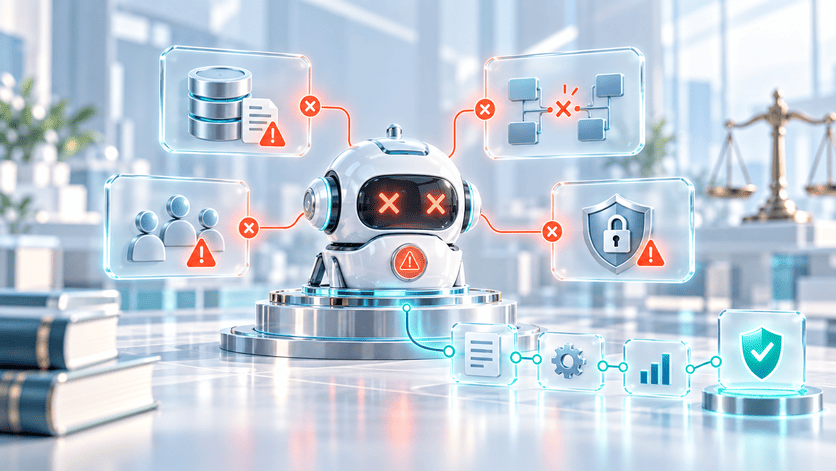
Before-and-after workflow diagram showing how AI shifts execution into the system while human judgment remains at control points before action, escalation, and accountability.
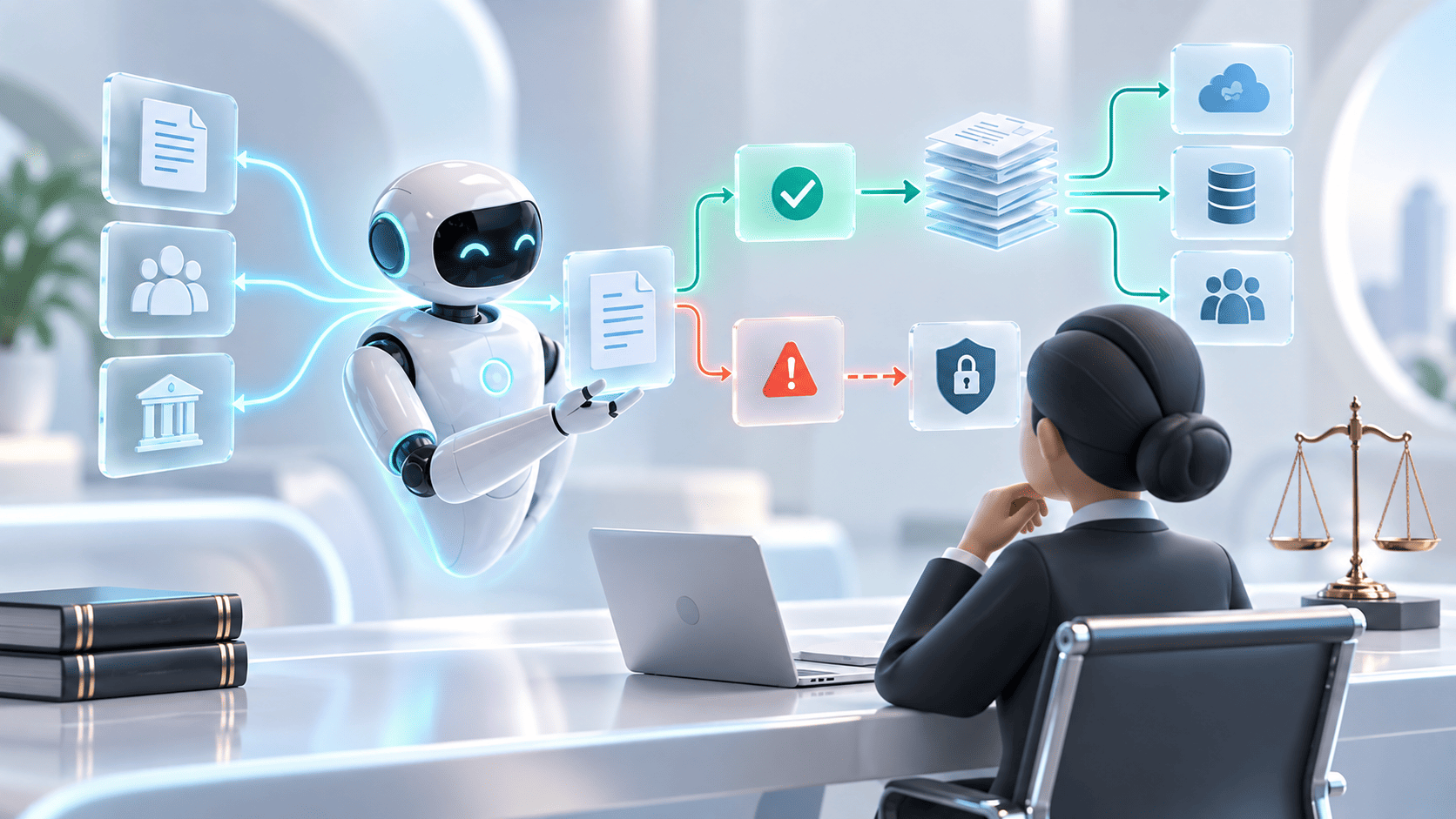
AI does not remove human judgment. It moves judgment into operational control points around the workflow, where people define context, review exceptions, and remain accountable for business impact.

Before AI, judgment usually happened inside the task. A person wrote the reply, read the customer's history, decided how to classify the request, and checked the code before it shipped. The thinking and the doing sat in the same pair of hands.

Now, AI splits them. Execution moves into the system, and the judgment to the decisions around it. These decisions are the ones that happen before the system acts, at the moment something needs to escalate, and after the output reaches a customer, a product, or a financial call.

Here, leaders should draw a plain line between responsibilities. AI handles first drafts, summaries, classification, recommendations, and structured preparation. However, people still own context, trade-offs, exceptions, sensitive decisions, how policy gets interpreted, what counts as good enough, and the result.

To make it clearer, imagine an AI agent that can draft a refund reply, pull the customer's full history, and check the request against policy. It handles these tasks faster and sometimes even better than a human. At the early stages of AI adoption, the system may be able to do this work, but it should not be expected to decide what happens when a customer is worth six figures a year, the policy language is ambiguous, the wrong tone could damage the relationship, or a refund creates legal exposure. Someone has to make that call, and someone has to answer for it.

So treat judgment as an operational control, not a personal trait. It is most valuable when you place it around the AI system before it acts and after its output starts to matter.

The Labor Market Is Already Asking for More Judgment

Hiring data also points in the same direction. PwC's 2026 Global AI Jobs Barometer, built on more than a billion job ads across six continents, found that AI is raising demand for human skills like judgment, creativity, and leadership, not lowering it.

PwC also reports that the entry-level roles most exposed to AI are now seven times more likely to ask for skills that used to count as senior, including leadership and strategic thinking. That number describes a new mechanism.

Routine preparation work used to be how people earned seniority slowly. You did the grunt research, the first-pass analysis, the basic drafts, and over a few years, you built the judgment to handle harder calls. AI absorbs that preparation layer. The junior person does not become senior overnight, but the work left for them turns senior in nature, and it arrives earlier than their experience would normally allow.

That changes what leaders have to build. If AI removes the slow apprenticeship, you have to replace it with something deliberate, or you end up with people making senior-level decisions without the reps that used to come first.

7x Entry-level roles most exposed to AI are seven times more likely to ask for skills that used to count as senior, including leadership and strategic thinking. Source: PwC 2026 Global AI Jobs Barometer.

Leadership Alignment Is Now an AI Bottleneck

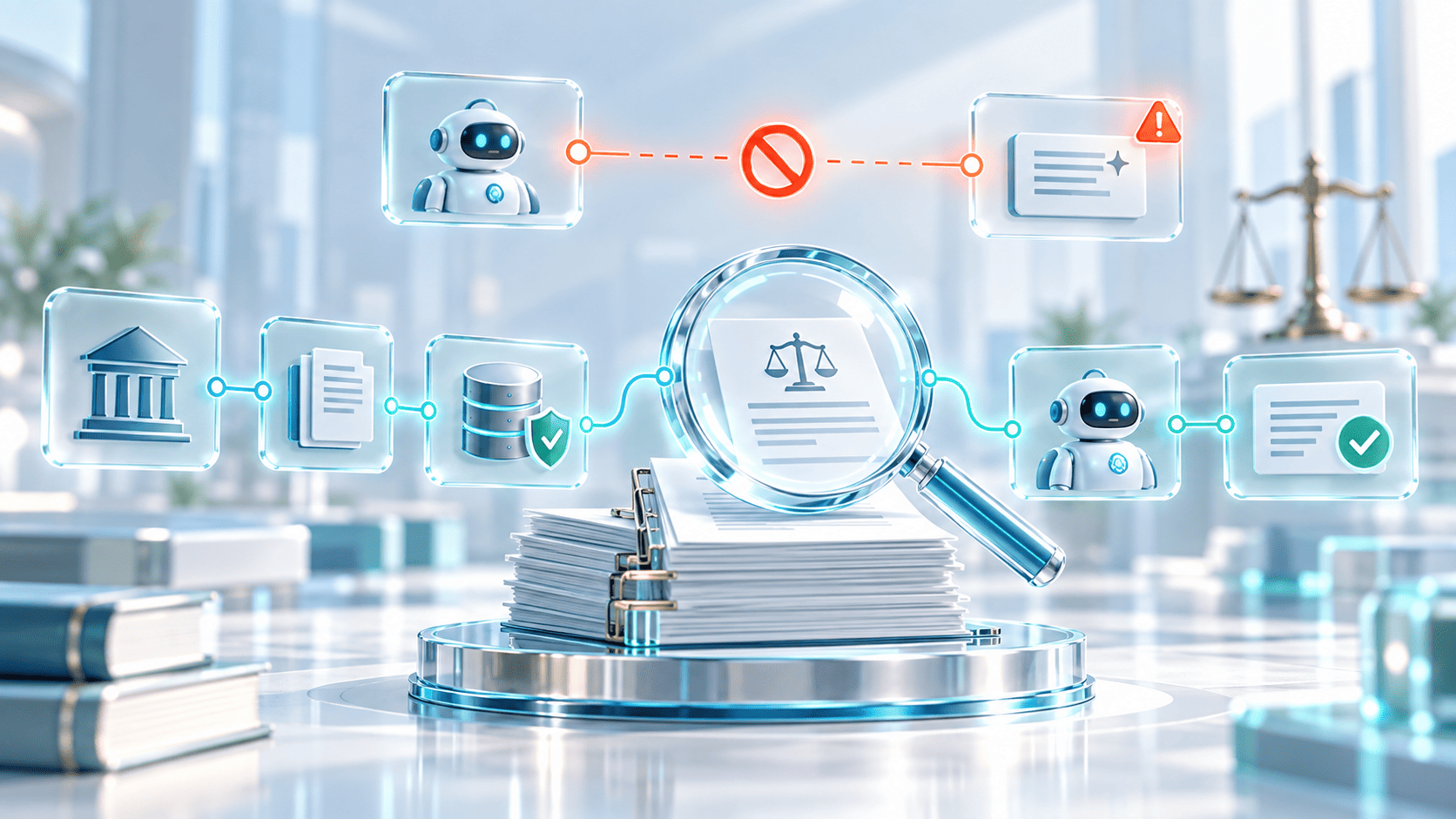
Diagram showing fragmented AI access flowing into a leadership alignment gate before becoming a controlled AI operating model with rules, review, metrics, and ownership.
AI adoption is not blocked only by tools or licenses. It slows when leaders have not aligned on allowed actions, human review, quality standards, risk limits, and ownership.

Most companies treat AI adoption as access to tools. They hand out ChatGPT, Copilot, or the AI features baked into their SaaS stack, then count license numbers. The harder constraint is whether leadership agrees on what AI is allowed to do, what a human has to review, what a good outcome looks like, and who answers when something goes wrong.

Microsoft's 2026 Work Trend Index put a number on reporting only 26 percent of AI users saying their leadership is clearly and consistently aligned on AI. Three out of four work without that clarity.

26% Only 26 percent of AI users reported that leadership is clearly and consistently aligned on AI. Source: Microsoft 2026 Work Trend Index.

When this alignment is missing, the effects are predictable. Teams start to use AI inconsistently, shadow workflows spread, quality swings by department, and people guess at what is allowed. 

None of this is easy to notice in real time because AI adoption fails quietly, especially when the tool moves faster than the company's decision-making processes.

Managers Become the Quality Layer Between AI Output and Business Action

As AI produces more of the raw output, the manager's job also shifts. Managers spend less time checking whether work was completed and more time running the quality system around work that AI has partly produced.

Microsoft's data supports the shift from two directions. Asked which human skills matter most as AI takes on more work, users named quality control of AI output first, at 50 percent, ahead of critical thinking. And the teams furthest along, the ones Microsoft calls frontier professionals, are the most likely to have documented, repeatable agent workflows, defined human handoffs, and written quality standards. The mature teams are not the ones using AI the most. They are the ones who designed how humans and AI hand work back and forth.

That gives managers a concrete set to own: what AI output is acceptable, what needs human review, what has to be escalated, what gets logged, what can be automated safely, and what stays human.

Picture a sales manager running an AI outreach assistant. The agent enriches accounts, drafts messages, and suggests who to prioritize. The manager still defines what makes an account qualified, which claims the outreach can never make, when a human has to personalize before anything is sent, and what signals should stop a sequence cold. The manager is not policing the AI. The manager owns the workflow.

Human Judgment Has to Be Designed Into the Workflow

The common mistake is to build the AI system first and add human oversight later, once something has gone wrong. By then, the workflow has been set, and review becomes a patch instead of a structure. Judgment belongs in the design from the start.

A simple way to do it is to walk every AI capability back to the human question it raises:

What AI does The ownership question it raises
AI prepares Who checks that the input context is complete?
AI suggests Who decides whether the recommendation fits the actual business situation?
AI classifies Who owns the cost of a misclassification?
AI routes Who catches the urgent case sent down the wrong path?
AI executes Which actions need approval before they happen?
AI escalates Who receives the exception, and how fast?

Answer those six questions, and human judgment stops being a vague reassurance. It becomes part of the system architecture: permission boundaries, escalation paths, review points, audit trails, and decision rights. In a production AI system, those are design decisions you make on purpose, the same way you decide on a database schema or an API contract.

This is why AI adoption is a workflow problem before it is a tools problem. McKinsey's research on people, agents, and robots makes the same point at the level of the whole organization: the value comes from redesigning workflows around people and machines working together, not from automating isolated tasks.

The companies that get real leverage from AI will not be the ones that strip humans out of every workflow. They will be the ones who know exactly where a human has to stay accountable, and who build the accountability into the system instead of hoping someone remembers to check.

The New Leadership Question Is Ownership

"Do people still matter in the age of AI?" is the wrong question. It is too broad to act on, and the answer is yes. The usable version is narrower: once AI does real work inside the business, what do people still need to own?

The list is short and worth making explicit for every AI-enabled workflow you run. Who owns the context? Who owns the exceptions? Who owns the quality bar? Who owns escalation? Who owns final accountability? Who owns the business result?

AI raises the value of human judgment because more decisions now get made around AI outputs, AI recommendations, and AI-driven steps. The work gets more automated. The responsibility does not.

For companies building production AI systems, this is where architecture and leadership meet.
Need to clarify who owns judgment in an AI-enabled workflow?

Book an AI agent architecture review.

Does AI remove the need for human judgment?

No. The article argues that AI changes where judgment sits in the workflow. AI can handle execution, preparation, summaries, classification, and recommendations, but people still own context, exceptions, trade-offs, quality, and the result.

What do people still need to own when AI does part of the work?

People still need to own context, sensitive decisions, policy interpretation, exceptions, escalation, the quality bar, final accountability, and the business result.

Why is leadership alignment important for AI adoption?

Leadership alignment matters because teams need clear agreement on what AI is allowed to do, what humans must review, what a good outcome looks like, and who answers when something goes wrong.

What happens when companies give teams AI tools without clear ownership?

Teams may use AI inconsistently, shadow workflows can spread, quality can vary by department, and people may guess at what is allowed.

How does AI change the role of managers?

Managers become responsible for the quality system around AI-assisted work. They define what output is acceptable, what needs review, what must be escalated, what gets logged, and what can be automated safely.

Why should human oversight be designed into the workflow from the start?

When oversight is added after the AI system is built, review becomes a patch instead of part of the structure. The article argues that judgment should be built into permission boundaries, escalation paths, review points, audit trails, and decision rights.

What is the main ownership question companies should ask about AI?

The main question is what people still need to own once AI does real work inside the business. The article frames this through ownership of context, exceptions, quality, escalation, accountability, and the business result.

Human Judgment in the Age of AI: What Companies Still Need People to Own

Heading 1

Heading 2

Heading 3

Heading 4

Heading 5
Heading 6

Lorem ipsum dolor sit amet, consectetur adipiscing elit, sed do eiusmod tempor incididunt ut labore et dolore magna aliqua. Ut enim ad minim veniam, quis nostrud exercitation ullamco laboris nisi ut aliquip ex ea commodo consequat. Duis aute irure dolor in reprehenderit in voluptate velit esse cillum dolore eu fugiat nulla pariatur.

Block quote

Ordered list

  1. Item 1
  2. Item 2
  3. Item 3

Unordered list

  • Item A
  • Item B
  • Item C

Text link

Bold text

Emphasis

Superscript

Subscript

AI
Konstantin Karpushin
Rate this article!
Thank you! Your submission has been received!
Oops! Something went wrong while submitting the form.
23
ratings, average
4.7
out of 5
July 6, 2026
Share
text
Link copied icon

LATEST ARTICLES

AI Sprawl: How Companies Can Control AI Sprawl Before It Controls Them
July 3, 2026
|
12
min read

AI Sprawl: How Companies Can Control AI Sprawl Before It Controls Them

AI sprawl is more than tool chaos. Learn how scattered AI tools, prompts, agents, and workflows become architectural debt, and how companies can control AI sprawl before it creates risk.

by Konstantin Karpushin
AI
Read more
Read more
Who Should Own AI in a Company? CEO, CTO, Product, Operations, and the AI Ownership Model
June 30, 2026
|
7
min read

Who Should Own AI in a Company? CEO, CTO, Product, Operations, and the AI Ownership Model

Who should own AI in a company: CEO, CTO, Product, or Operations? Learn a practical AI ownership model based on decision rights, business outcomes, technical architecture, workflow adoption, product value, governance, and accountability before AI reaches production.

by Konstantin Karpushin
AI
Read more
Read more
How to Prepare Your Team for AI Implementation: Strategy, Policies, and Adoption
June 29, 2026
|
8
min read

How to Prepare Your Team for AI Implementation: Strategy, Policies, and Adoption

AI implementation often fails when companies give teams access to tools before preparing workflows, policies, and adoption habits. Learn how CEOs and CTOs can prepare teams for AI with a practical strategy covering workflow selection, AI usage rules, and a 90-day adoption rhythm.

by Konstantin Karpushin
AI
Read more
Read more
AI Governance Checklist for Software Companies: How to Prepare AI Systems for Production, EU AI Act Risk, US Controls, and Regulated Domains
June 26, 2026
|
15
min read

AI Governance Checklist for Software Companies: How to Prepare AI Systems for Production, EU AI Act Risk, US Controls, and Regulated Domains

Building AI into software is easy to start and hard to govern. Use this AI governance checklist to assess production readiness, EU AI Act risk, US controls, data governance, human oversight, and domain-specific requirements for HealthTech, FinTech, and regulated SaaS.

by Konstantin Karpushin
AI
Read more
Read more
Best AI Agents for Customer Service in 2026: Top Platforms and Custom AI Agent Development Partners Compared
June 26, 2026
|
15
min read

Best AI Agents for Customer Service in 2026: Top Platforms and Custom AI Agent Development Partners Compared

A practical 2026 guide to the best AI agents for customer service, built for CEOs, CTOs, founders, and support leaders. Compare top platforms and custom development partners by use case, integration depth, governance, scalability, and production readiness

by Konstantin Karpushin
Read more
Read more
Conversational AI for Customer Service: Where Chatbots End and AI Agents Begin
June 25, 2026
|
14
min read

Conversational AI for Customer Service: Where Chatbots End and AI Agents Begin

Conversational AI, chatbots, and AI agents are not the same thing. See where each fits in customer service and what moves a system from response to resolution.

by Konstantin Karpushin
AI
Read more
Read more
Customer Service AI Agents: Implementation, Workflows, Guardrails, and ROI
June 24, 2026
|
18
min read

Customer Service AI Agents: Implementation, Workflows, Guardrails, and ROI

Customer service AI agents can reduce support workload, but only if they understand workflows, follow guardrails, escalate safely, and prove ROI. Learn how to implement them without breaking customer trust.

by Konstantin Karpushin
AI
Read more
Read more
Codebridge Featured on Selective Industry List of Top AI Agent Development Companies in 2026, Honoring Architecture-First Engineering and Production-Grade Governance
June 17, 2026
|
3
min read

Codebridge Featured on Selective Industry List of Top AI Agent Development Companies in 2026, Honoring Architecture-First Engineering and Production-Grade Governance

Codebridge was recognized by Techreviewer among the top AI agent development companies in 2026 for architecture-first engineering and production-grade governance.

by Konstantin Karpushin
AI
Read more
Read more
Prompt Management for Production AI: How to Version, Test, and Control Prompts Before They Break Your Workflow
June 22, 2026
|
14
min read

Prompt Management for Production AI: How to Version, Test, and Control Prompts Before They Break Your Workflow

Prompt management is release management for AI behavior. Learn how to version, test, deploy, monitor, and roll back production prompts before they break things.

by Konstantin Karpushin
AI
Read more
Read more
AI Readiness Assessment Framework: 8 Layers That Decide Whether AI Can Survive Production
June 19, 2026
|
21
min read

AI Readiness Assessment Framework: 8 Layers That Decide Whether AI Can Survive Production

Most AI readiness frameworks stay too theoretical. Learn an 8-layer framework to assess one real workflow, ask better questions, find production gaps, and decide whether to build, pilot, fix first, or stop.

by Konstantin Karpushin
AI
Read more
Read more
Logo Codebridge

Let’s collaborate

Have a project in mind?
Tell us everything about your project or product, we’ll be glad to help.
call icon
+1 302 688 70 80
email icon
business@codebridge.tech
Attach file
By submitting this form, you consent to the processing of your personal data uploaded through the contact form above, in accordance with the terms of Codebridge Technology, Inc.'s  Privacy Policy.

Thank you!

Your submission has been received!

What’s next?

1
Our experts will analyse your requirements and contact you within 1-2 business days.
2
Out team will collect all requirements for your project, and if needed, we will sign an NDA to ensure the highest level of privacy.
3
We will develop a comprehensive proposal and an action plan for your project with estimates, timelines, CVs, etc.
Oops! Something went wrong while submitting the form.