As we all know, now AI agents can use tools, access systems, or trigger workflows. They are very convenient and can speed up many manual processes in business. But with speed comes risk that starts when software is allowed to act inside the business.
That is why AI agent risk management cannot be treated as a policy document added after development and has to be designed into the system itself.
Companies need to know what the agent can access, what requires approval, how actions are logged, and who owns the outcome when something goes wrong before it deletes your important document or account.
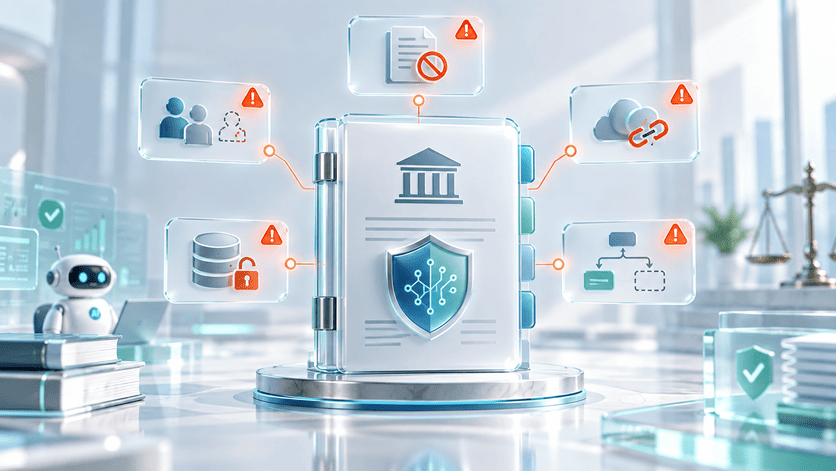
This risk becomes more visible when IBM’s 2025 Cost of a Data Breach Report found that 97% of organizations reporting an AI-related security incident lacked proper AI access controls. And also 63% lacked AI governance policies to manage AI or prevent shadow AI.
In this article, “AI agent” means an AI system that can plan, use tools, and execute multi-step actions inside a workflow, not just answer questions.
This is not a broad list of AI risks. It focuses on one practical question: how much authority should an AI agent have, and how should that authority be controlled before the system reaches production? That is where safe automation starts.
The Agent Authority Model

Before a company deploys an AI agent, it has to answer a very simple question: What is this system allowed to do?
But not what model it uses, and not how impressive the demo looks. The real design problem is authority.
An AI agent becomes risky when it receives permission to act on its own. That authority has to be designed before the agent reaches production.
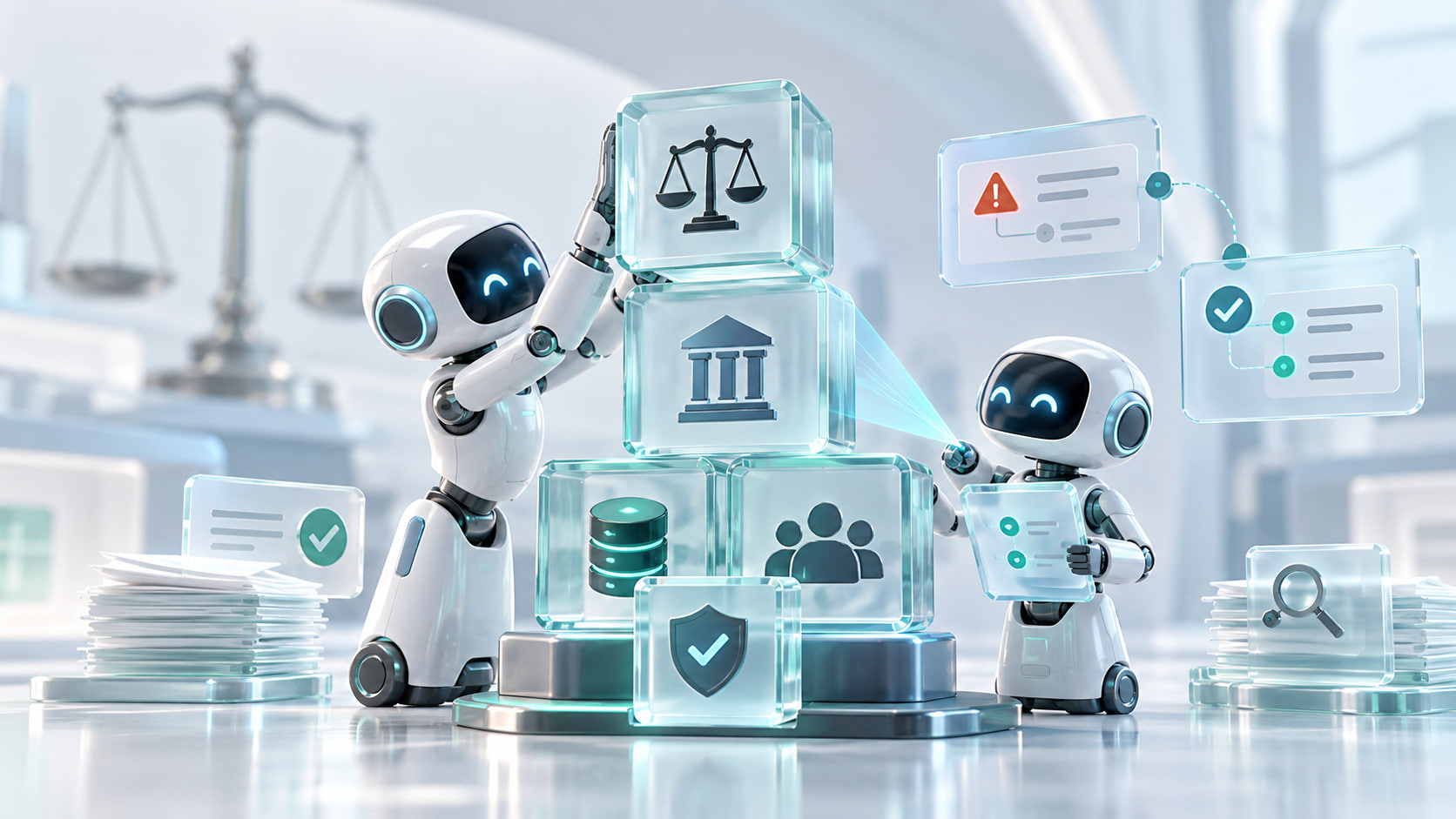
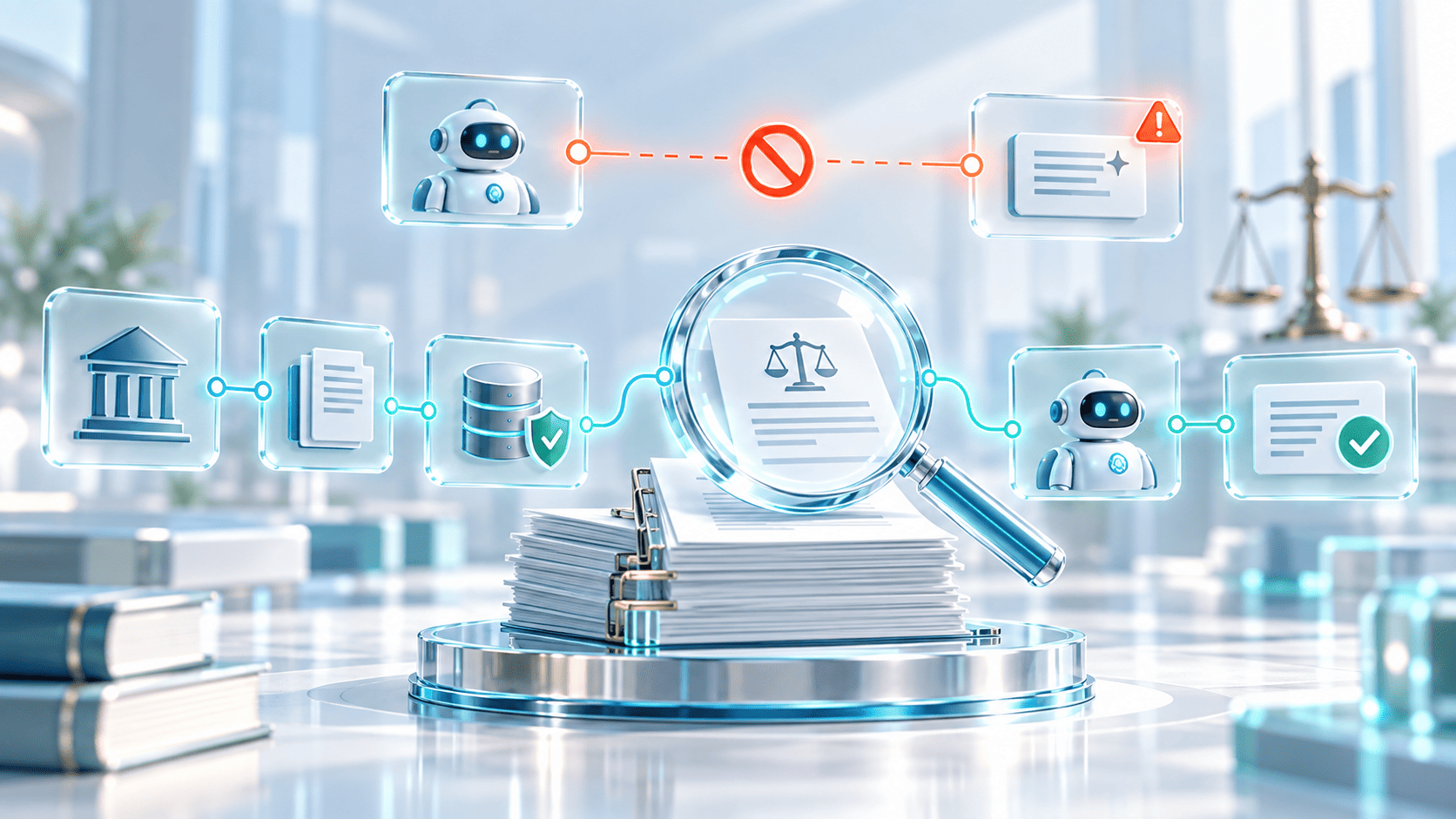
Our Agent Authority Model breaks that design into five layers, which should not be treated as separate governance boxes. They are connected. If an agent can read too much, execute without approval, and operate without an owner, the company has not built safe automation.
Layer 1: Data Access Authority
Many agent designs fail because the agent is given broad access to company data instead of the specific data required for one workflow. That may feel convenient during development, but it increases the blast radius very fast.
For example, an AI sales assistant does not need the same visibility as a sales director, or a healthcare workflow agent should not see patient data outside the task it is supporting.
A practical access model in production should define:
Remember that agents should receive workflow-specific access, not role-level access.
A human manager may need a broad context because humans apply judgment across situations. An agent should be narrower. If its job is lead prioritization, it may need lead profile, source, recent interactions, and account owner. It probably does not need full revenue forecasts or internal compensation data.
For executives, this is important because data access decisions define future incident scope. A narrow agent can fail inside a narrow boundary. A broadly connected agent can turn a small mistake into a company-wide security or customer-trust issue.
Layer 2: Tool Authority
A tool is a business permission, and when the team says, “We connected the agent to email.” In reality, they gave the software permission to communicate with customers.
Tool authority defines which business actions the agent can request through connected systems.
Examples:
- A CRM update tool changes commercial records.
- An email tool communicates externally.
- A calendar tool books someone’s time.
- A payment or refund tool affects money.
- A healthcare integration may affect clinical workflow priority.
- An LMS or EdTech integration may affect a learner’s path or assessment flow.
The architecture mistake is exposing tools that are too broad.
This, at first glance, subtle difference matters as a broad tool gives the model room to improvise. A narrow tool forces the system to stay inside the workflow boundary.
Good tool authority design should define:
- what the tool can do;
- which parameters are allowed;
- which records it can affect;
- what validation happens before execution;
- whether approval is required;
- what gets logged;
- what happens when the request violates policy.
The model can suggest an action. It should not be allowed to invent its own operating rights.
This is especially important because agents fail when a correct-sounding request passes through a tool that is too powerful. A vague update_customer_record tool may be convenient for engineering. It is also a large permission surface.
Layer 3: Decision Authority
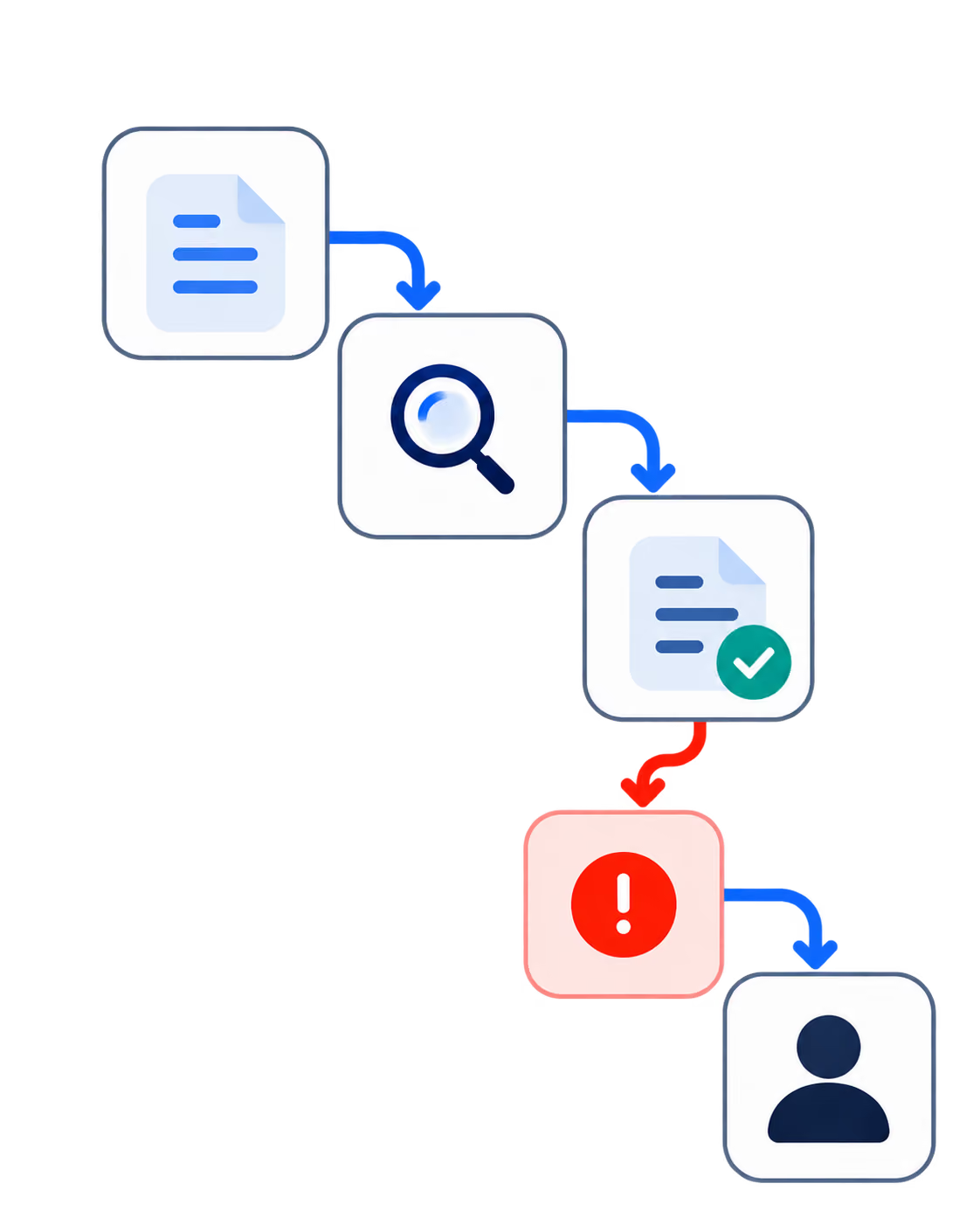
Decision authority defines what the agent can decide without human approval. This should be based on business impact, reversibility, and risk exposure.
A weak system says that humans will review important things and call it human-in-the-loop. But a strong system should include a definition of what “important” means: in code, workflow rules, approval queues, and operating procedures.
For every decision category, the architecture should define:
- which events require review;
- who reviews them;
- what context the reviewer receives;
- how long the reviewer has to respond;
- what happens if no one responds;
- whether the action is blocked, escalated, or downgraded;
- how the decision and review are logged.
This matters because human review can easily become unreliable. If the reviewer receives a vague AI recommendation with no evidence and no clear approval criteria, the system just transferred confusion to a human.
For executives, this is the point where the decision authority is an operating model. It defines where automation ends, and accountable human judgment begins.
Layer 4: Execution Authority
Execution authority is the line between advice and action. It defines what the agent is allowed to actually do inside business systems.
An agent that recommends a refund is one type of system, but an agent that issues the refund is another.
This layer should be designed around four questions:
- Can the action be reversed? A draft can be deleted. A sent email cannot be unsent in any meaningful business sense.
- Who or what does the action affect? Internal task routing is different from customer communication, payment movement, candidate rejection, or clinical prioritization.
- What is the cost of a wrong action? Some errors create inconvenience. Others create legal, financial, safety, or reputational exposure.
- Does the action change the system state? Reading and summarizing are lower-risk. Writing, deleting, approving, publishing, escalating, or triggering downstream workflows are higher-risk.
Execution authority should be the narrowest where actions are external-facing, hard to reverse, regulated, or financially sensitive.
Examples:
The safest agent is the one whose execution rights match the business risk of the workflow.
This is where architecture-first thinking matters most. In serious SaaS, HealthTech, SalesTech, EdTech, FinTech, or compliance-heavy workflows, the execution boundary should be treated like any other production boundary. It needs permissions, validation, approval gates, and incident response.
Layer 5: Accountability Authority
The final layer is ownership. If nobody owns the agent’s actions, the company has deployed an accountability gap.
This layer answers the questions that usually appear too late:
- Who approves the agent before deployment?
- Who owns the workflow the agent operates inside?
- Who reviews failure patterns?
- Who can disable the agent?
- Who approves new tools or permissions?
- Who reviews escalations?
- Who owns the incident if the agent acts correctly according to instructions but incorrectly according to business context?
- Who decides whether the agent can move from draft mode to execution mode?
Accountability authority is crucial because AI agents are not static software features. Their prompts, tools, and data sources change. A serious accountability model should separate four responsibilities:
In smaller companies, one person may cover more than one role. That is fine. What is not fine is having no one explicitly responsible.
Accountability authority should also define change control. If the agent needs a new tool, broader data access, higher execution rights, or lower approval thresholds, that should not happen casually inside a sprint. It should trigger a review because every new permission changes the risk profile of the system.
This is the layer that turns AI agent risk management from a policy conversation into an operating discipline.
A production AI agent needs a human owner, a technical boundary, an approval path, an incident process, and a way to be stopped. Without those pieces, the organization is asking automation to create value while leaving responsibility undefined.
Checklist: AI Agent Risk Management Readiness
Workflow and Business Fit
- Is the workflow clearly defined, including inputs, decisions, actions, exceptions, and handoffs?
- Is the business outcome measurable?
- Is the agent solving a real bottleneck, or is it adding AI to a process that does not need it?
- Is the workflow repeatable enough for automation?
- Are known exceptions documented?
- Has the workflow been redesigned for agentic automation, not just copied from the current human process?
If the workflow itself is unclear, the agent will not make it more mature. It will only make the confusion faster.
Data Access
- Does the agent access only the data required for this specific workflow?
- Are sensitive fields masked, restricted, or excluded where possible?
- Are tenant, customer, patient, or account boundaries enforced?
- Are data retention rules defined?
- Is every access event logged?
- Can the company explain why each data source is necessary?
The agent should not inherit broad access because it is technically easier. Access should be justified by the workflow.
Tool Use
- Does every tool have a clear business purpose?
- Are tools narrow and task-specific rather than open-ended?
- Are dangerous tools such as “run command,” “query anything,” or “update any record” avoided or strictly isolated?
- Are tool inputs validated before execution?
- Are tool permissions based on least privilege?
- Are all tool calls logged and reviewable?
A tool is not a feature. It is permission for the agent to affect the business.
Decision and Execution Rights
- Are agent actions classified by business impact?
- Are low-risk actions separated from financial, legal, clinical, compliance-sensitive, or external-facing actions?
- Are high-impact actions gated by mandatory human approval?
- Are external-facing communications controlled through approved templates, schemas, or review rules?
- Is it technically impossible for the agent to expand its own authority?
- Are irreversible or hard-to-reverse actions treated differently from reversible actions?
The system should not rely on the model to “know” when it is allowed to act. That boundary has to exist outside the model.
Human Control and Accountability
- Is there a business owner for the agent’s workflow?
- Is there a technical owner for reliability, permissions, integrations, and monitoring?
- Are review owners assigned for approval queues?
- Are escalation paths defined?
- Is there a documented incident response process?
- Is there a kill switch?
- Are new tools, permissions, or execution rights reviewed before being added?
If nobody owns the agent’s behavior, the company has not automated a workflow. It has created an accountability gap.
Monitoring and Improvement
- Are tool calls, failed actions, blocked actions, approvals, overrides, and escalations monitored?
- Are permission violations or unusual access patterns reviewed?
- Are repeated uncertainty, repeated human correction, or repeated business exceptions tracked?
- Is the system measured against both time saved and errors introduced?
- Are risk thresholds adjusted based on production behavior?
- Is the agent periodically revalidated as workflows, data, and business rules change?
Conclusion
AI agent risk management is about designing the system, so trust is not doing the heavy lifting. A safe agent architecture defines what the agent can access, which tools it can call, what it can decide, what it can execute, when a human must approve, how every action is logged, and who owns the outcome when something breaks.
This is what separates useful automation from uncontrolled delegation.
Executives do not need to choose between moving fast with agents and avoiding them because they are risky. The better option is to make authority explicit. Give the agent enough permission to create value, but not enough freedom to quietly create damage.
The companies that benefit most from AI agents will not be the ones that give agents the most freedom. They will be the ones who give agents the right amount of authority for the workflow, the risk, and the business outcome.
That is where AI agent risk management stops being a governance exercise and becomes software architecture.














Heading 1
Heading 2
Heading 3
Heading 4
Heading 5
Heading 6
Lorem ipsum dolor sit amet, consectetur adipiscing elit, sed do eiusmod tempor incididunt ut labore et dolore magna aliqua. Ut enim ad minim veniam, quis nostrud exercitation ullamco laboris nisi ut aliquip ex ea commodo consequat. Duis aute irure dolor in reprehenderit in voluptate velit esse cillum dolore eu fugiat nulla pariatur.
Block quote
Ordered list
- Item 1
- Item 2
- Item 3
Unordered list
- Item A
- Item B
- Item C
Bold text
Emphasis
Superscript
Subscript