KI-Agenten entwickeln sich schnell von experimentellen Pilotprojekten zu zentralen Geschäftsprozessen. Infolgedessen stellen viele Organisationen fest, dass der schwierigste Teil nicht der Aufbau ist, sondern ihre Zuverlässigkeit im Produktionsbetrieb zu gewährleisten.
Frühe Prototypen lassen sich schnell erstellen, oft von kleinen Teams, die mit Prompts und Orchestrierungs-Frameworks experimentieren. Wenn diese Systeme jedoch mit echten Kunden oder Finanzdaten interagieren, werden Schwachstellen in ihrer Architektur sichtbar. Anfangs mögen die Modelle wie eine funktionierende Lösung aussehen, doch im Produktionsbetrieb entwickeln sie sich zu einem fragilen System, das schwer zu skalieren, zu prüfen oder abzusichern ist.
Gartner prognostiziert, dass über 40 % der KI-Agenten-Projekte bis Ende 2027 eingestellt werden. Die Ursache liegt oft nicht in der Technologie selbst, sondern in der Art und Weise, wie das System konzipiert wurde. Viele Organisationen wählen Entwicklungspartner aufgrund ihrer Fähigkeit aus, beeindruckende Demos oder schnelle Prototypen zu erstellen. In der Praxis lassen sich diese Fähigkeiten jedoch nicht unbedingt in die Fähigkeit übersetzen, eine zuverlässige Produktionsinfrastruktur zu entwerfen.
Wenn dies geschieht, häuft sich technische Schuld schnell an. KI-Agenten-Systeme können schwer zu überwachen, teuer im Betrieb und riskant in regulierten Umgebungen einzusetzen sein. Da Organisationen für die Entscheidungen und Ergebnisse ihrer KI-Systeme verantwortlich bleiben, führen diese architektonischen Schwachstellen oft direkt zu operativen und rechtlichen Risiken.
Daher geht es bei der Wahl des richtigen KI-Entwicklungspartners weniger darum, wer einen Agenten am schnellsten bauen kann, sondern vielmehr darum, wer Systeme entwerfen kann, die beim Skalieren stabil und steuerbar bleiben.
Was technische Schuld in KI-Agenten-Systemen bedeutet
Im Kontext autonomer KI ist technische Schuld nicht auf unsauberen Code beschränkt. Sie kann sich über mehrere Systemebenen hinweg ansammeln, oft lange bevor Teams das Risiko erkennen.
Prompt- und Richtlinien-Schuld
Viele KI-Agenten-Frameworks basieren auf High-Level-Abstraktionen, die wichtiges Systemverhalten verbergen. Prompts oder Tool-Regeln können über Orchestrierungsebenen, Konfigurationsdateien und Framework-Standardeinstellungen verteilt sein.
Dies führt zu einer anfälligen Systemlogik, bei der kritische Verhaltensweisen nicht explizit definiert oder dokumentiert sind. Teams entdecken das Problem oft erst nach dem Start, wenn kleine Änderungen an Prompts oder Workflows unerwartete Ergebnisse liefern. Zu diesem Zeitpunkt müssen Teams Wochen nach dem Start teure Umschreibungen in einfachere, explizite Implementierungen vornehmen.
Evaluierungs-Schuld
Große Sprachmodelle (LLMs) sind probabilistische Systeme. Derselbe Prompt kann je nach Kontext oder Modellaktualisierungen unterschiedliche Ausgaben erzeugen.
Ohne ein strukturiertes Evaluierungs-Framework, wie z. B. Gold-Datensätze, adversarische Testfälle und Tool-Call-Vertragstests, können Organisationen Leistungsrückgänge nicht zuverlässig erkennen. Jede Modellaktualisierung, Prompt-Änderung oder Wissensbasis-Modifikation birgt das Risiko einer schleichenden Verschlechterung.
Im Laufe der Zeit häufen Organisationen Evaluierungs-Schuld an, da die Systeme weiterlaufen, aber niemand überprüfen kann, ob sich die Qualität verbessert oder langsam verschlechtert.
Sicherheits- und Compliance-Schuld
KI-Agenten interagieren oft mit externen Tools und internen Datenbanken. Wird keine angemessene Architektur für Protokollierung, Datenaufbewahrungsrichtlinien und Grenzkontrollen geschaffen, wird ein Agent zu einer erheblichen rechtlichen Haftung.
Sicherheitsforscher haben bereits gezeigt, dass agentische Architekturen indirekte Prompt-Injektionen und unbefugten Zugriff auf Tools ermöglichen können. In einigen Fällen können bösartige Eingaben, die in externen Inhalten eingebettet sind, unbeabsichtigte Aktionen oder Datenlecks auslösen. Schwachstellen wie CVE-2025-32711 zeigen, wie nicht vertrauenswürdige Eingaben genutzt werden können, um sensible Informationen aus KI-Assistenten für Unternehmen zu extrahieren.
Ohne angemessene Schutzmaßnahmen können sich diese architektonischen Schwachstellen schnell von technischen Problemen zu Compliance- und Rechtsrisiken entwickeln.
Für Unternehmen, die Agenten entwickeln, die in kritischen Geschäftsprozessen eingesetzt werden, stellt sich nicht mehr die Frage, ob maßgeschneiderte Systeme entwickelt werden sollen, sondern ob der Entwicklungspartner versteht, wie man sie für langfristige Zuverlässigkeit und Kontrolle konzipiert.
So bewerten Sie Unternehmen für die Entwicklung von KI-Agenten
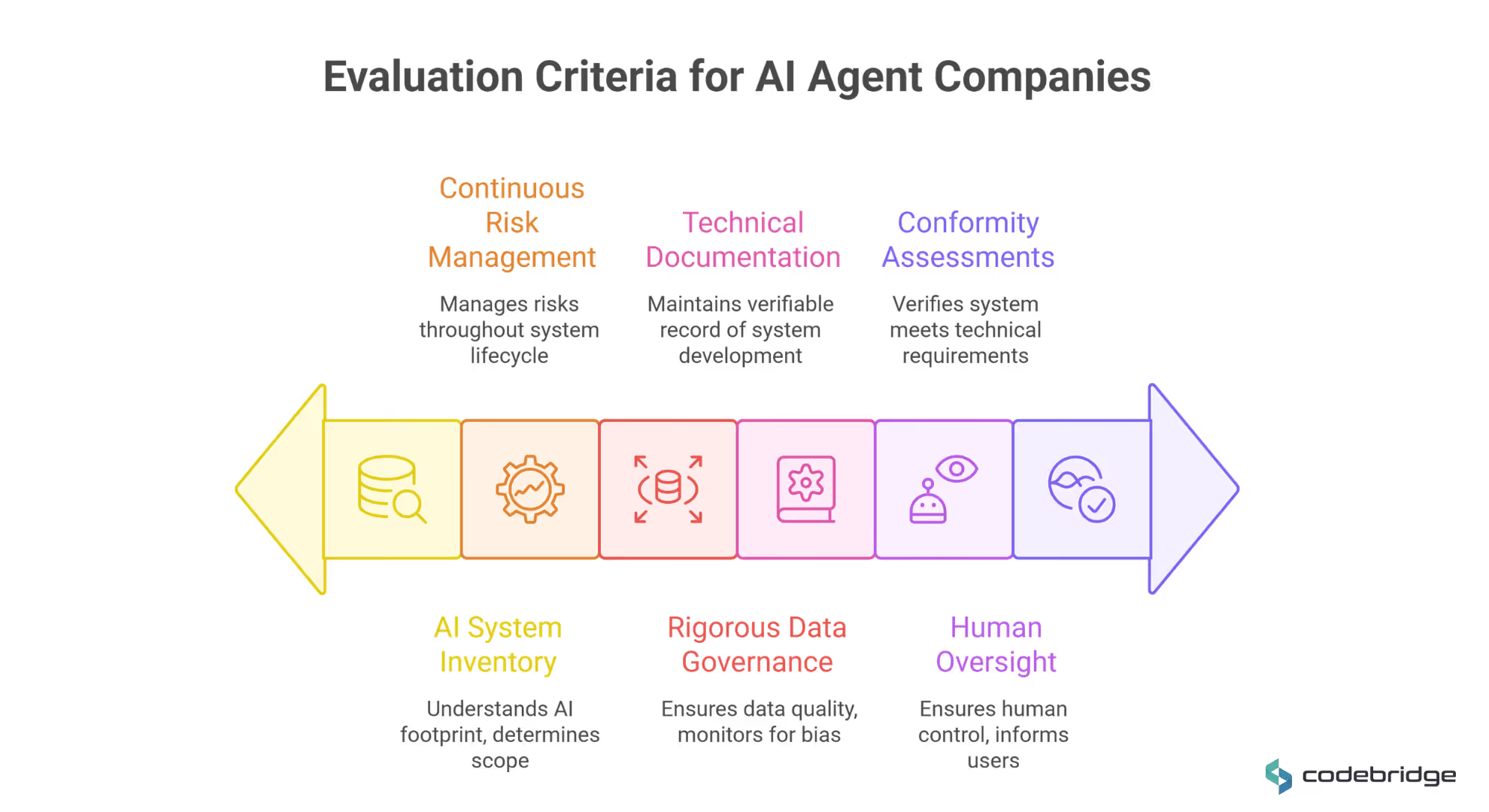
Bei der Auswahl eines Entwicklungspartners für ein KI-Agenten-System sollten Unternehmen die Auswahl nicht als typische Softwareanbieter-Evaluierung betrachten. Viele Anbieter können beeindruckende Demonstrationen erstellen. Deutlich weniger können jedoch Systeme entwerfen, die zuverlässig und wartbar bleiben, sobald sie mit echten Benutzern und der Unternehmensinfrastruktur interagieren.
Da KI-Agenten über mehrere Tools und Workflows hinweg agieren und auf probabilistischen Modellen basieren, haben frühe architektonische Entscheidungen langfristige Konsequenzen.
Die folgenden sieben Kriterien definieren das Profil eines hochreifen Entwicklungspartners, der in der Lage ist, eine skalierbare, schuldenfreie Agenten-Infrastruktur aufzubauen.
1. Fachwissen vor allgemeiner KI-Kompetenz
Starke KI-Engineering-Fähigkeiten allein sind selten ausreichend. Effektive KI-Agenten müssen innerhalb der operativen Realitäten einer spezifischen Branche agieren.
Ein Entwickler mag einen funktionsfähigen Diagnoseassistenten bauen, aber wenn ihm die HealthTech-Erfahrung fehlt, kann er die Implementierung der IEC 62304 Software-Lebenszyklusanforderungen oder HIPAA-vorgeschriebene Daten-De-Identifizierung die für den klinischen Einsatz notwendig sind.
Wenn dies geschieht, reichen die Konsequenzen über einen technischen Defekt hinaus. Krankenhäuser und Gesundheitsdienstleister können gezwungen sein, die Nutzung des Systems sofort auszusetzen. Regulierungsbehörden können formelle Untersuchungen anordnen, ob geschützte Gesundheitsinformationen offengelegt oder unsachgemäß verarbeitet wurden, und Organisationen können mit erheblichen finanziellen Strafen oder rechtlicher Haftung konfrontiert werden, wenn der Patientendatenschutz verletzt wurde.
Die Checkliste zur Domänenreife:
Um zu beurteilen, ob ein Entwicklungsunternehmen einen produktionsreifen Agenten liefern kann, sollten Führungskräfte Folgendes überprüfen:
- Branchenspezifische Fallstudien: Verfügt der Partner über eine umfassende Erfahrung in Ihrem Sektor (z. B. FinTech, HealthTech oder LegalTech) mit messbaren Ergebnissen wie ROI oder TAT?
- Regulatorische Kompetenz: Können sie beschreiben, wie ihre Architektur Rahmenwerke wie den EU AI Act, die DSGVO, HIPAA oder SOX proaktiv integriert, anstatt sie als nachträglichen „Papierkram“ zu behandeln?
- Fehlermodus-Identifikation: Können sie domänenspezifische Risiken identifizieren, wie RAG-Poisoning in juristischen Datensätzen, voreingenommene Ergebnisse bei der automatisierten Personalbeschaffung oder selbstsichere Halluzinationen in klinischen Umgebungen?
- Workflow-Integration: Verstehen sie die Funktionsweise Ihrer Branche, wie die Integration von Agenten in bestehende Unternehmenssysteme wie PACS/VNA im Gesundheitswesen oder spezifische CRMs und ERPs in Vertrieb und Logistik?
Die Wahl eines Partners, der diese architektonische Disziplin schätzt, stellt sicher, dass Ihre KI-Implementierung als nachhaltiger Wettbewerbsvorteil fungiert und nicht als unkontrollierbares Risiko.
2. Nachweisliche Ergebnisse vs. theoretische Prototypen
KI-Anbieter präsentieren oft konversationelle Demos oder Proof-of-Concept-Schnittstellen. Obwohl diese Demonstrationen visuell beeindruckend sein können, spiegeln sie selten die Komplexität realer Produktionsumgebungen wider.
Unternehmen sollten Fallstudien betrachten, die messbare Geschäftsergebnisse hervorheben, wie ROI, Reduzierungen der Bearbeitungszeit (TAT) oder Personaleinsparungen, anstatt sich auf abstrakte Innovationsversprechen zu verlassen.
Im Kontext von KI-Agenten wird Erfolg nicht an der Fähigkeit gemessen, Text zu generieren, sondern an der Fähigkeit des Systems, Aufgaben zuverlässig innerhalb realer Geschäftsprozesse auszuführen.
Um reale Ergebnisse zu bewerten, können Unternehmen die folgenden Maßnahmen ergreifen:
- Langfristige Beständigkeit: Fragen Sie, ob die genannten Lösungen noch in Produktion sind und Monate nach der ersten Einführung noch Wert generieren.
- Die Post-Mortem-Analyse: Fordern Sie eine Aufschlüsselung dessen an, was beim ersten Mal nicht funktioniert hat. Ein Partner, der eine makellose erste Implementierung behauptet, hat wahrscheinlich nicht die Erfahrung, um mit der nicht-deterministischen Natur von KI umzugehen.
- Quantifizierbare ROI-Metriken: Fordern Sie spezifische Daten zu Effizienzsteigerungen (z. B. eingesparte Stunden, verkürzte Bearbeitungszeiten) oder Umsatzsteigerungen (z. B. mehr qualifizierte Meetings) an.
- Haftungs-Stresstests: Bitten Sie den Anbieter, darzulegen, wie seine bestehenden Designs hochkarätige Haftungsszenarien, wie z. B. die Falschinformationen durch den Air Canada Chatbot oder die Ungenauigkeiten des Bots für Kleinunternehmen in New York City.
- Operative Integration: Sicherstellen, dass das Ergebnis ein System war, das in einen bestehenden Workflow integriert wurde (z. B. CRM- oder PACS-Integration), und nicht ein eigenständiges Experiment, das ein neues Datensilo schuf.
Praktische Beispiele nachweislicher Ergebnisse:
- Gesundheitstechnologie (RadFlow AI): Das Unternehmen entwickelte einen Arbeitsbereich, der Computer Vision direkt in bestehende PACS integrierte. Da das Team die kognitive Belastung und die Unterbrechungswissenschaft speziell für Radiologen verstand, entwickelten sie eine „Human-in-the-Loop“-Plattform, die die CT-Befundungszeit um 38 % reduzierte, wobei die FDA-Richtlinien für Software als Medizinprodukt (SaMD) der Klasse II eingehalten wurden.
- HR & Rekrutierung (RecruitAI): Für ein Unternehmen mit über 1.000 Mitarbeitern bestand die Herausforderung in der Automatisierung der technischen Validierung. Der Partner entwickelte ein System, das auf den internen Einstellungsstandards des Kunden basierte und RAG nutzte, wodurch monatlich 200–300 Ingenieurstunden eingespart wurden, indem KI-Halluzinationsmuster in Bewerbungen erkannt wurden.
3. Architektur für Veränderungen konzipiert
Technische Schulden entstehen oft bei der Wahl von Orchestrierungs-Frameworks. Hochwertige Partner vermeiden „Black-Box“-Plattformen, die Geschäftsprozesse in starre Zwänge pressen;
Stattdessen nutzen sie moderne Multi-Agenten-Orchestrierungsebenen wie LangGraph, AutoGen oder CrewAI, damit Komponenten aktualisiert werden können, ohne das gesamte System neu schreiben zu müssen.
Die Architektur muss trennen, was der Agent tun darf, von den zugrunde liegenden Modellen und Tools, um sicherzustellen, dass das System portabel und leicht zu aktualisieren bleibt, wenn sich Modellkosten und -fähigkeiten ändern.
Partner, die modulare Architekturen entwerfen, stellen auch sicher, dass Organisationen nicht dauerhaft an einen einzigen Modell-Anbieter oder ein Orchestrierungs-Framework gebunden sind. Die Systemportabilität wird entscheidend, wenn neue Modelle aufkommen und sich die Betriebskosten im Laufe der Zeit ändern.
Die Checkliste für architektonische Sorgfalt:
- Verwendet der Partner Frameworks für mehrstufiges Schlussfolgern, um sicherzustellen, dass der Agent planen und sich selbst korrigieren kann?
- Ist das System containerisiert, um skalierbare, Cloud-native oder On-Premise-Bereitstellungen zu unterstützen?
- Gibt es eine klare Abstraktionsschicht, die den Wechsel zwischen LLM-Anbietern (z. B. von OpenAI zu Anthropic) ermöglicht, ohne die Kernlogik neu schreiben zu müssen?
4. Sicherheit und Compliance als vorrangiges Anliegen
Wenn KI-Agenten mit Unternehmenssystemen interagieren, erweitern sie die potenzielle Angriffsfläche des Unternehmens, da ein fehlerhaftes Agenten-Design eine einfache Text-Schwachstelle in unbefugten Tool-Zugriff oder Datenlecks im gesamten Unternehmen umwandeln kann.
Deshalb müssen erfahrene Entwicklungspartner über generische Sicherheits-Slogans hinausgehen und einen Security-by-Design-Ansatz implementieren, der diese neuartigen Risiken proaktiv mindert.
Praktische Beispiele für eine sicherheitsorientierte Implementierung
- Vermeidung von verketteten Schwachstellen: In einem Multi-Agenten-System entwirft ein sicherheitsbewusster Partner strenge Autorisierungsgrenzen, sodass ein Agent mit geringeren Berechtigungen einen Agenten mit höheren Berechtigungen nicht dazu verleiten kann, sensible Aktionen auszuführen. Dieses Muster ist auch bekannt als Prompt-Injection zweiter Ordnung.
- Datensouveränität für regulierte Branchen: Erfahrene Partner unterstützen Führungskräfte bei der Bewältigung komplexer Bereitstellungsentscheidungen, wie der Wahl zwischen öffentlichen APIs, VPCs oder On-Premise-Implementierungen, um geistiges Eigentum zu schützen und sicherzustellen, dass proprietäre Daten niemals zum Trainieren öffentlicher Modelle verwendet werden.
Um die Sicherheitsreife eines Partners zu bewerten, sollten Unternehmen die folgenden Fähigkeiten überprüfen:
- Framework-Konformität: Kann der Partner eine strikte Einhaltung von globalen und branchenspezifischen Standards wie SOC 2, HIPAA, DSGVO und dem aufkommenden EU AI Act nachweisen?.
- Bedrohungsmodellierung für LLMs: Umfasst ihr Prozess spezifische Maßnahmen zur Minderung LLM-spezifischer Schwachstellen, wie indirekte Prompt-Injection und unsichere Ausgabebehandlung?.
- Begrenzte Autonomie: Können sie eine schriftliche "Richtlinie zur begrenzten Autonomie" vorlegen, die explizit definiert, was dem Agenten unter keinen Umständen strengstens untersagt ist?.
- Unveränderliche Audit-Trails: Wird das System detaillierte Protokolle von jeder Aktion, jedem Tool-Aufruf und jeder Entscheidung generieren, die sicher gespeichert werden und so konzipiert sind, dass sie keine PII preisgeben?.
5. Eine Partner-Denkweise, keine Projekt-Denkweise
In der traditionellen Softwareentwicklung wird die Bereitstellung oft als Ziellinie betrachtet. Doch für autonome KI-Agenten ist die Bereitstellung nur die Startlinie. KI-Agenten-Projekte sind einzigartig riskant, da sie nicht-deterministisch sind. Das bedeutet, dass derselbe Prompt unterschiedliche Ausgaben liefern kann und die Leistung im Laufe der Zeit unbemerkt nachlassen kann.
Ein Entwicklungsunternehmen mit einem Projekt-Mindset liefert einen festen Leistungsumfang und zieht sich zurück, wobei der Kunde ein System verwalten muss, das unweigerlich einem Leistungsabfall ausgesetzt sein wird, da sich Datenquellen, Nutzerverhalten und Modellfähigkeiten weiterentwickeln.
Im Gegensatz dazu erkennt ein Partner-Mindset an, dass KI ein kontinuierlicher Lebenszyklus ist, der ständige Verfeinerung, Neuanpassung und Skalierung erfordert.
Ohne einen langfristigen Plan sehen sich Organisationen bei jeder Änderung einer Modellversion mit einer Verschlechterung konfrontiert.
Eine effektive Wartung kostet typischerweise jährlich zwischen 15 % und 30 % der ursprünglichen Entwicklungsinvestition. Dieses Budget deckt das erneute Training von Modellen (oft alle 3–6 Monate erforderlich), Sicherheitspatches und die Anpassung an sich ändernde regulatorische Anforderungen wie den EU AI Act ab.
Praktische Beispiele für die Umsetzung des Partner-Mindsets:
- Umgang mit Model Drift: Ein Vertriebsagent, der heute Leads effektiv qualifiziert, könnte in sechs Monaten seinen Vorsprung verlieren, wenn sich Marktsprache oder Wettbewerbstaktiken ändern. Ein Partner-Mindset beinhaltet die Einrichtung kontinuierlicher Feedback-Schleifen, bei denen Produktionsfehler mit einem einzigen Klick in versionierte Testdatensätze überführt werden, um sicherzustellen, dass das System aus seinen Fehlern lernt.
- Infrastruktur-Optimierung: Wenn ein Agent von 50 internen Nutzern auf 5.000 Endnutzer skaliert, können die Token-Kosten explodieren. Ein langfristiger Partner verwaltet diese Gesamtbetriebskosten (TCO) aktiv, indem er Caching-Schichten und Token-Limits implementiert und Routineaufgaben an kleinere, kostengünstige Modelle weiterleitet, während Premium-Modelle für komplexe Schlussfolgerungen reserviert werden.
- Strategische Anpassungsfähigkeit: Wenn ein großer Modell-Anbieter (wie OpenAI oder Anthropic) ein wichtiges Update veröffentlicht, ermöglicht eine partnergeführte Architektur „Modelltausch“-Übungen. Dies stellt sicher, dass der Agent portabel bleibt und nicht an die Roadmap oder Preisstruktur eines einzelnen Anbieters gebunden ist.
Checkliste für das Partner-Mindset:
- Expliziter Lebenszyklusplan: Gibt es einen strukturierten Ansatz für die Neuanpassung von Modellen und die Datenaktualisierung, wenn sich Geschäftsregeln ändern?
- Incident Response: Können sie beantworten: „Wie lautet das Protokoll um 3:00 Uhr morgens, wenn ein Tool eine Zeitüberschreitung hat und kritische Geschäftsbenutzer blockiert sind?“
- Leistungs-Benchmarking: Gibt es einen Prozess für Zeitreise-Sitzungswiederholungen, um genau zu bestimmen, wo ein Argumentationspfad vom beabsichtigten Ziel abgewichen ist?
- Verantwortung für die Regressionstest-Suite: Werden sie ein wiederholbares Testgerüst (Goldene Datensätze, Adversarial Tests) liefern, damit Sie zukünftige Modellaktualisierungen ohne deren Eingreifen validieren können?
6. Bewertungs- und Zuverlässigkeits-Frameworks
Da große Sprachmodelle probabilistische Ausgaben erzeugen, reicht eine manuelle Überprüfung der Antworten nicht aus, um die Zuverlässigkeit zu gewährleisten. Produktionsreife Systeme verlassen sich auf strukturierte Bewertungs-Pipelines, die das Systemverhalten in verschiedenen Szenarien testen.
Diese Frameworks messen Faktoren wie faktische Genauigkeit, Aufgabenabschlussraten und Konsistenz über verschiedene Eingaben hinweg. In Umgebungen mit höherem Risiko werden häufig menschliche Überwachungsmechanismen in das System integriert.
Der quantitative Bewertungs-Stack
Entscheidungsträger sollten nach Partnern suchen, die semantische Bewertungsmetriken verwenden, um die Leistung in drei Hauptdimensionen zu quantifizieren:
- Abrufqualität: Dies umfasst die Kontextpräzision (Überprüfung, ob abgerufene Dokumente relevant sind) und den Kontext-Recall (Sicherstellung, dass der Agent alle zur korrekten Beantwortung benötigten Informationen abgerufen hat).
- Generierungs-Integrität: Dies misst die Treue (Sicherstellung, dass die Antwort auf den bereitgestellten Daten basiert und keine Halluzinationen enthält) und die Antwortrelevanz (Überprüfung, ob die Antwort tatsächlich die Absicht des Benutzers trifft).
- Agentische Ausführung: Dies verfolgt den Aufgabenabschluss (ob der Agent das Ziel erfolgreich erreicht hat) und die Schritteffizienz (Sicherstellung, dass der Agent keine Umwege genommen oder in Endlosschleifen geraten ist).
Human-in-the-Loop (HITL) als Zuverlässigkeitsanforderung
Für geschäftskritische Unternehmensanwendungen ist die vollständige Autonomie des Agenten oft eher eine Belastung als ein Vorteil. Ein produktionsreifer Partner wird explizite Human-in-the-Loop (HITL)-Muster entwerfen, um Risiken zu managen und sicherzustellen, dass KI als Erweiterung und nicht als unkontrollierter Ersatz fungiert.
Führungskräfte sollten von ihrem Partner erwarten, klare Autonomie-Grenzen und Eskalationsprotokolle zu definieren. Gängige Muster sind:
- Human-in-the-Loop (HITL): Der Agent pausiert an vordefinierten Prüfpunkten, um menschliche Genehmigung anzufordern, bevor er sensible Aktionen ausführt, wie die Bearbeitung einer Zahlung oder das Löschen einer Datei.
- Human-on-the-Loop (HOTL): Der Agent agiert autonom, aber ein Mensch überwacht ein Supervisor-Dashboard und greift asynchron bei Ausnahmen oder zur Verfeinerung ein.
- Konfidenzbasiertes Routing: Das System führt Aufgaben automatisch nur dann aus, wenn der Konfidenzwert des Modells einen hohen Schwellenwert (z. B. 90 %) überschreitet.
Ein Partner, der die Ausführungsrealitäten von produktiver KI versteht, wird in der Lage sein, die folgenden Verifizierungsartefakte bereitzustellen, bevor Sie einen Vertrag unterzeichnen:
- Goldene Testdatensätze: Verfügt der Partner über einen kuratierten Datensatz repräsentativer Eingaben und „Goldstandard“-Ausgaben, um die Leistung über Modellaktualisierungen hinweg zu messen?
- Adversarielles Testen: Umfasst der Evaluierungsplan des Partners „Red Teaming“ für Prompt-Injections und Grenzfälle, die darauf ausgelegt sind, das System zu überwinden?
- Regressions-Gates: Gibt es eine automatisierte Pipeline, die verhindert, dass eine neue Prompt- oder Modellversion bereitgestellt wird, wenn ihr Qualitätswert unter einen festgelegten Schwellenwert fällt?
- Rückverfolgbarkeitsprotokolle: Wird das System nicht nur die endgültige Ausgabe aufzeichnen, sondern auch den „internen Monolog“ – die Denkprozesse, Tool-Aufrufe und den abgerufenen Kontext, die zur Entscheidung führten?
Der strategische Vorteil der Wahl des richtigen Partners
Der Übergang zu agentischer KI ist eine grundlegende Geschäftsveränderung. Mit dieser Transformation bietet ein Partner mit hoher Reife zwei primäre strategische Vorteile: den Schutz von Kapitalinvestitionen und die Optimierung der Gesamtbetriebskosten des Systems.
Schutz Ihrer Investition
Der Markt ist derzeit gesättigt mit Agenten-Schönfärberei, wo Anbieter Prototypen verkaufen, die auf einfachen Prompts statt auf rigoroser Systemtechnik basieren. Die Zusammenarbeit mit einem auf Engineering spezialisierten Unternehmen verhindert, dass Budgets für generische Standardlösungen verschwendet werden, denen die nötige Tiefe fehlt, um die Komplexität von Unternehmen zu bewältigen.
Ein versierter Partner stellt sicher, dass Ihre KI-Implementierung ein nachhaltiger Unternehmenswert ist, indem er:
- Für Skalierbarkeit entwickeln: KI-Agenten als produktionsreife Unternehmensinfrastruktur behandeln, anstatt als experimentelle Funktionen.
- Sicherung des geistigen Eigentums: Klarstellen, dass der Kunde den benutzerdefinierten Code, die Prompts, Richtlinien und Bewertungsressourcen besitzt, was die Unabhängigkeit vom Anbieter ermöglicht.
- Rechtliche Risiken minimieren: Entwicklung für „begrenzte Autonomie“, um Haftungsszenarien zu vermeiden, in denen ein Agent falsche Ratschläge gibt oder unbefugte Handlungen vornimmt.
Prototyp vs. Produktions-KI-Systeme
Optimierung der Gesamtbetriebskosten (TCO)
Die anfänglichen Kosten für die Entwicklung eines KI-Agenten sind oft nur ein kleiner Teil der Gesamtinvestition. Ohne Architekten, die die operativen Realitäten von Produktions-KI verstehen, stoßen Unternehmen nach der Bereitstellung häufig auf steigende Kosten.
Ein kompetenter Partner antizipiert diese versteckten Kostentreiber, vom Infrastrukturverbrauch über Monitoring bis hin zu Modellaktualisierungen, und entwirft Systeme, die langfristig effizient bleiben.
Wichtige TCO-Optimierungsfaktoren sind:
- Token- und API-Management: Die Nutzung im Unternehmen kann leicht Millionen von Tokens pro Monat verbrauchen; ineffiziente Prompts oder fehlendes Memory-Caching können dazu führen, dass API-Gebühren explodieren. Ein erfahrener Partner implementiert Caching-Schichten und Token-Limits, um diese Ausgaben zu kontrollieren.
- Cloud-Infrastruktur: Hosting, Datenbanken und Vektorspeicher skalieren mit der Nutzung; ein Partner, der Cloud-native Architekturen und reservierte Instanzen nutzt, kann die Entwicklungs- und Betriebskosten senken.
- Reduzierung der stillen Degradation: Durch die Bereitstellung eines wiederholbaren Test-Frameworks (Golden Sets und Regression Gates) verhindert ein Partner kostspielige Ausfälle, die auftreten, wenn Modelle oder Retrieval-Indizes ohne ordnungsgemäße Validierung aktualisiert werden.
Fazit
Das Aufkommen von KI-Agenten erfordert eine Neuausrichtung der Denkweise von Organisationen in Bezug auf die Systemüberwachung. Herkömmliches Infrastruktur-Monitoring reicht nicht mehr aus. Teams müssen nun auch überwachen, wie Agenten argumentieren, Entscheidungen treffen und mit Unternehmenssystemen interagieren.
Um technische Schulden in diesen Umgebungen zu vermeiden, ist architektonische Disziplin entscheidend. Organisationen benötigen Entwicklungspartner, die ein klares Systemdesign und eine robuste Daten-Governance in den Vordergrund stellen, anstatt auf schnelle Prototypen oder kurzfristige Experimente zu setzen.
Letztlich geht es bei der Auswahl eines Entwicklungspartners für KI-Agenten weniger um das Outsourcing eines Projekts, sondern vielmehr darum, wie das System im Laufe der Zeit konzipiert, entwickelt und gewartet wird. Organisationen, die diese Entscheidung mit architektonischer Strenge treffen, reduzieren das Risiko, technische Schulden anzuhäufen, erheblich, während sich ihre KI-Fähigkeiten erweitern.









Heading 1
Heading 2
Heading 3
Heading 4
Heading 5
Heading 6
Lorem ipsum dolor sit amet, consectetur adipiscing elit, sed do eiusmod tempor incididunt ut labore et dolore magna aliqua. Ut enim ad minim veniam, quis nostrud exercitation ullamco laboris nisi ut aliquip ex ea commodo consequat. Duis aute irure dolor in reprehenderit in voluptate velit esse cillum dolore eu fugiat nulla pariatur.
Block quote
Ordered list
- Item 1
- Item 2
- Item 3
Unordered list
- Item A
- Item B
- Item C
Bold text
Emphasis
Superscript
Subscript