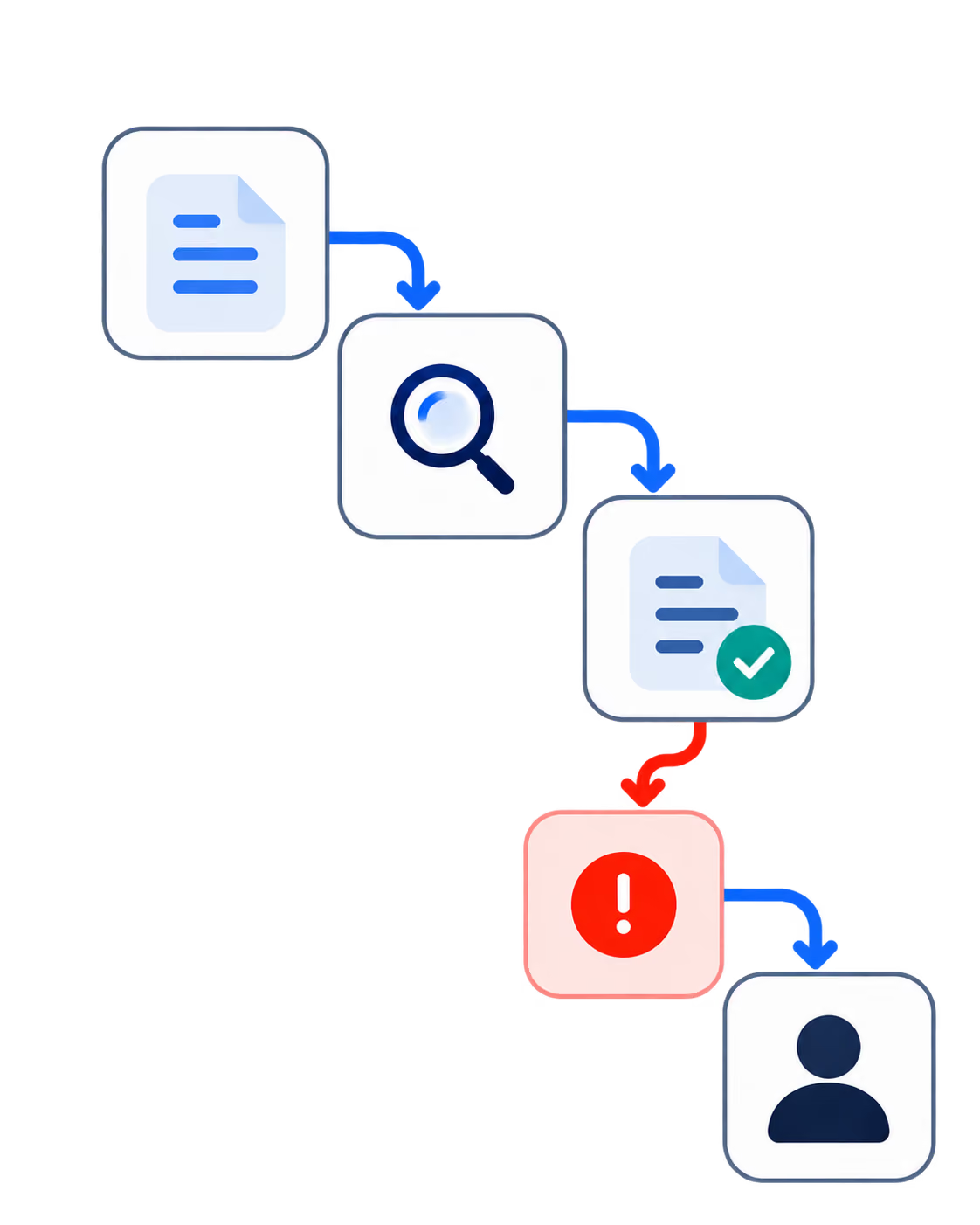
In den letzten zwei Jahren haben sich große Sprachmodelle von der Generierung von Text hin zu etwas Operativerem entwickelt. Anstatt einfach nur Fragen zu beantworten, können KI-Agenten jetzt Aufgaben planen, Entscheidungen treffen und mit externen Systemen interagieren. In Unternehmensumgebungen beginnen sie, Workflows über Repositorys, Browser, APIs und interne Tools hinweg auszuführen.
Der Übergang vom Prototyp zur Produktion hat sich jedoch als weitaus schwieriger erwiesen, als es frühe Demos vermuten ließen. Während ungefähr 62% der Unternehmen geben an, mit KI-Agenten zu experimentieren, weit weniger haben sie erfolgreich in stabile, skalierbare Systeme skaliert. Die eigentliche Herausforderung besteht darin, unter Produktionsbedingungen eine wiederholbare Zuverlässigkeit zu erreichen.
Bei dieser Lücke geht es in erster Linie um Bewertung. Viele Teams messen, ob ein Agent eine Aufgabe einmal unter idealen Bedingungen erledigt. Weit weniger beurteilen, ob sie dies unter bestimmten Bedingungen wiederholt tun können, ohne dass Sicherheitsrisiken, Instabilität oder schwankende Kosten entstehen.
Für Technologieführer stellt sich nicht mehr die Frage, ob ein Agent in einer Demo ein Ergebnis erzielen kann. Die eigentliche Frage ist nun, ob es innerhalb von Produktionssystemen zuverlässig funktionieren kann. Ohne strukturierte Tests birgt die Skalierung finanzielle, sicherheitstechnische und zuverlässige Risiken.
Was ist die Bewertung von AI-Agenten?
Bewertung von KI-Agenten ist der systematische Prozess zur Messung und Validierung der Leistung, Zuverlässigkeit und Ausrichtung autonomer Systeme anhand von drei Kerndimensionen: technische Leistungsfähigkeit, Autonomie und geschäftliche Auswirkungen.
Im Gegensatz zur Standard-LLM-Modellbewertung, bei der in der Regel getestet wird, wie gut ein Modell auf eine einzelne Aufforderung reagiert, befasst sich die Bewertung von Agenten mit einem fortlaufenden Prozess.
Ein KI-Agent muss den Kontext im Laufe der Zeit aufrechterhalten, mit externen Tools und APIs interagieren und mit unerwarteten Fehlern oder sich ändernden Bedingungen umgehen. Die Bewertung eines solchen Systems erfordert mehr als nur die Überprüfung, ob eine Antwort richtig ist — es erfordert ein Verständnis dafür, wie sich das System in einem gesamten Arbeitsablauf verhält.
Beispiele aus der Branche
In der Praxis sieht die Bewertung von Agenten je nach Domain sehr unterschiedlich aus. Was in einer Umgebung als gute Leistung gilt, kann in einer anderen inakzeptabel sein.
- Kundensupport
Achten Sie in den Kundenserviceteams auf die Lösungsquoten, darauf, ob der Mitarbeiter ein Problem vollständig ohne menschliche Eskalation lösen kann und ob die Antworten innerhalb der genehmigten Richtlinien und Compliance-Grenzen bleiben. Bei einer fehlgeschlagenen Bewertung könnte ein Mitarbeiter identifiziert werden, der zwar vertrauensvolle, aber illegale Ratschläge erteilt, z. B. Kunden falsch über behördliche Rechte informiert. In diesem Zusammenhang muss die Bewertung nicht nur die Qualität der Konversation, sondern auch die Überprüfung der Einhaltung der Richtlinien und szenariobasierte Tests umfassen.
- Programmierassistenten
Für Codierungsagenten umfasst die Bewertung in der Regel das Bestehen von Komponententests, erfolgreiche Builds und Regressionsprüfungen. Die schwerwiegenderen Risiken treten jedoch auf, wenn ein Agent die angeforderte Aufgabe abschließt, dabei aber versteckte Probleme mit sich bringt — wie etwa die Schwächung der Authentifizierungslogik, das Aufdecken von Geheimnissen oder das Ändern von Produktionskonfigurationen trotz ausdrücklicher Einschränkungen. Teams stellen oft fest, dass eine erfolgreiche, isolierte Codegenerierung zu nachgelagerter Instabilität führen kann. Daher umfasst eine solide Bewertung Sicherheitsscans, Vergleichsprüfungen und die Überprüfung von Einschränkungen.
- Finanz- und Unternehmensdienstleistungen:
Bei Finanzoperationen, der Beschaffung oder internen Unternehmensabläufen ist die Fehlertoleranz extrem gering. Die Mitarbeiter werden hauptsächlich anhand der Datengenauigkeit, der Prüfprotokolle, der Rückverfolgbarkeit von Entscheidungen und strengen rollenbasierten Zugriffskontrollen bewertet. Eine geringfügige Verbesserung der Aufgabengeschwindigkeit oder gar Genauigkeit ist nicht sinnvoll, wenn dadurch die API-Kosten unvorhersehbar steigen oder die Gefahr besteht, dass sensible Daten offengelegt werden. In diesen Umgebungen überwiegen Zuverlässigkeit und Governance geringfügige Leistungssteigerungen.
In allen drei Bereichen geht es bei der Bewertung nicht darum, ob der Agent eine Aufgabe einmal ausführen kann. Es geht darum, ob es innerhalb der realen betrieblichen Einschränkungen sicher, vorhersehbar und wirtschaftlich arbeiten kann.
Bewertung des Prototyps im Vergleich zur Produktion
Warum sollten Sie einen KI-Agenten evaluieren?
Einer der Hauptgründe, warum Unternehmen in KI-Agenten investieren, ist Produktivität. In einem kürzlich erschienenen Branchenbericht wurden ungefähr 80% der Praktiker gaben an, ihr Hauptziel seien messbare Effizienzsteigerungenund 72% nannten die Reduzierung der Arbeitsstunden für Menschen als Haupttreiber. Von den Mitarbeitern wird erwartet, dass sie den Betriebsaufwand senken und Arbeitsabläufe beschleunigen.
Ohne strenge Bewertung werden diese Gewinne jedoch oft durch die Tatsache zunichte gemacht, dass ein Agent zwar beim ersten Versuch erfolgreich ist, in der Produktion aber in drei von vier Fällen scheitert.
Vertrauen aufbauen und aufrechterhalten
Ein weiterer wichtiger Grund für die Bewertung von KI-Agenten ist Vertrauen. Wenn ein System mit begrenzter menschlicher Aufsicht arbeitet, wird Vertrauen durch Beweise aufgebaut, nicht nur durch Behauptungen.
Eine strukturierte Bewertung deckt Varianzspitzen, Fehlfunktionen von Tools, übertriebene Entscheidungen und Kostenschwankungen auf, bevor sie die Kunden erreichen. Es testet, ob sich das System bei wiederholten Durchläufen, mehrdeutigen Eingaben und Werkzeuginteraktionen vorhersehbar verhält. Ohne dieses Maß an Kontrolle schwindet das Vertrauen in das System schnell, insbesondere nach dem ersten sichtbaren Fehler.
Ressourcen- und Kostenmanagement
KI-Agenten verbrauchen durch iterative Argumentationsschleifen und erweiterte Kontextfenster deutlich mehr Rechenressourcen als herkömmliche Modelle. Die Evaluierung ermöglicht es Teams, Ineffizienzen in den Argumentationsketten zu identifizieren, die Token-Nutzung zu optimieren und die „Kommunikationssteuer“ zu bewältigen, die sowohl die Latenz als auch die Kosten erhöht.
Beispielsweise können komplexe Architekturen wie „Reflexion“ zu geringfügigen Genauigkeitsgewinnen führen, während kostet 5,12 mal mehr als ausgewogene Alternativen, eine sinkende Rendite, die erst durch eine kostennormalisierte Bewertung sichtbar wird.
Schnelle Iteration ermöglichen
Im Gegensatz zu Modellen mit nur einer Antwort laufen Agenten oft in Schleifen ab. Sie planen, reflektieren, verwenden Tools, überprüfen die Ergebnisse erneut und wiederholen den Prozess manchmal mehrmals, bevor ein Ergebnis erzielt wird. Jeder Schritt verbraucht Token, API-Aufrufe und Rechenzeit. Und wenn Workflows komplexer werden, erweitern sich die Kontextfenster und die Latenz nimmt zu.
Die datengestützte Bewertung ermöglicht es Teams, Modellvariationen zu vergleichen, architektonische Änderungen zu testen und Entwicklungszyklen zu beschleunigen, indem das Rätselraten reduziert wird. Wenn leistungsfähigere Modelle veröffentlicht werden, können Teams mit etablierten Evaluierungspaketen zudem innerhalb weniger Tage ein Upgrade durchführen, während diejenigen, die keine Vergleichbarkeit haben, wochenlang manuell überprüft werden müssen, um sicherzustellen, dass neue Modelle nicht gegen bestehende Arbeitsabläufe verstoßen haben.
Mehr als Genauigkeit: Die Zuverlässigkeitslücke
Es hat sich eine kritische Diskrepanz zwischen Laborleistung und Produktionsbereitschaft herausgestellt. Eine hohe Genauigkeit bei Standard-Benchmarks bedeutet nicht Zuverlässigkeit. In Anlehnung an sicherheitskritische Konstruktionen sollte Zuverlässigkeit in vier Dimensionen unterteilt werden: Beständigkeit, Robustheit, Vorhersagbarkeit und Sicherheit.
1. Konsistenz: Verwaltung der Varianzhaftung
Die Konsistenz misst, ob sich ein Agent identisch verhält, wenn er mehrmals mit derselben Anfrage konfrontiert wird. Da LLM-basierte Agenten auf probabilistischen Stichproben basieren, sind Abweichungen unvermeidlich. In Unternehmen wird eine hohe Varianz jedoch zu einem betrieblichen Risiko. Ein Agent, der einmal erfolgreich ist, aber beim nächsten Mal unter identischen Bedingungen ausfällt, kann nicht geprüft, prognostiziert oder sicher automatisiert werden.
Untersuchungen zeigen eine erhebliche Konsistenzlücke: Systeme, die in einem einzigen Durchlauf einen Erfolg von 60% erzielen, bieten möglicherweise nur eine vollständige Konsistenz von 25% bei wiederholten Versuchen.
In der Praxis bewerten Teams die Konsistenz auf drei Ebenen:
- Konsistenz der Ergebnisse: Trifft der Agent dieselbe endgültige Entscheidung? Eine Rückerstattung sollte nicht bei einem Durchlauf genehmigt und bei der nächsten identischen Anfrage verweigert werden.
- Konstanz der Flugbahn: Folgt es einem stabilen Argumentationspfad? Viele Agenten wählen geeignete Tools aus, variieren jedoch die Ausführungsreihenfolge, was zu Planungsinstabilität führt.
- Konsistenz der Ressourcen: Verbraucht es vorhersehbare Ressourcen? Identische Anfragen, die 50-fache Schwankungen bei der Token-Nutzung oder API-Aufrufen auslösen, führen zu Kostenschwankungen und Risiken in Bezug auf Ratenbegrenzungen.
Bei unternehmenskritischen Bereitstellungen verlassen sich Praktiker zunehmend auf pass^k (alle Versuche sind erfolgreich) statt auf pass @k (mindestens einer ist erfolgreich), da Benutzer in der Produktion jedes Mal Erfolg erwarten, nicht gelegentlich.
2. Robustheit: Stabilität bei Störungen
Die Robustheit bewertet die Fähigkeit eines Agenten, das Leistungsniveau aufrechtzuerhalten, wenn er mit Schwankungen der Eingabe oder der Umgebung konfrontiert wird. In der Produktion arbeiten Agenten selten unter den idealen Bedingungen, die in Trainingssets herrschen.
Die Robustheit wird anhand von drei Hauptkategorien bewertet:
- Fehlerrobustheit: Wie der Agent mit Infrastrukturproblemen wie Toolabstürzen oder fehlerhaften Antworten umgeht. Ein ausgereiftes System versucht es erneut, eskaliert oder fällt zurück. Ein unreifes System halluziniert oder versagt.
- Robustheit der Umgebung: Stabilität, wenn sich die Schnittstellendetails ändern — umbenannte Parameter, geänderte Datumsformate oder geänderte Feldreihenfolge. Wenn man sich zu sehr auf Oberflächenkonventionen verlässt, kommt es oft zu oberflächlichen Kenntnissen über Werkzeuge.
- Schnelle Robustheit: Empfindlichkeit gegenüber semantisch äquivalenten Umformulierungen. Studien zeigen Die Genauigkeit sinkt um 11— 19%, wenn Anweisungen lediglich neu geschrieben werdenund zeigt, wie fragil viele Agenten immer noch sind.
3. Vorhersagbarkeit: Charakterisierung von Ausfallursachen
Die Vorhersagbarkeit misst, ob ein Agent wahrscheinliche Ausfälle erkennen und Fehlverhalten vermeiden kann. Ein System, das auf bekannte und erwartete Weise ausfällt, ist oft einem System vorzuziehen, das selten, aber unvorhersehbar ausfällt.
In vielen Unternehmenskontexten ist ein System, das sich weigert zu handeln, einem System vorzuziehen, das selbstbewusst und falsch handelt. Der Schlüssel liegt in der Kalibrierung — der Abgleich zwischen dem gemeldeten Vertrauen und der tatsächlichen Leistung.
Die Messung der Vorhersagbarkeit beinhaltet:
- Kalibrierung: Die Übereinstimmung zwischen dem vom Agenten angegebenen Vertrauen und seiner tatsächlichen empirischen Erfolgsrate. Wenn ein Agent einen Bericht erstattet 90% Vertrauen, aber nur 55% Manchmal ist es systematisch zu selbstbewusst, wodurch automatisierte Entscheidungsschwellen (wie das automatische Blockieren von Zusammenführungen in einer CI-Pipeline) nutzlos werden.
- Diskriminierung: Die Fähigkeit von Konfidenzwerten, auf individueller Basis zwischen erfolgreichen und fehlgeschlagenen Aufgaben zu unterscheiden. Ein Agent ist zwar im Durchschnitt gut kalibriert, kann aber nicht die einzelnen Aufgaben kennzeichnen, die ihn zum Scheitern bringen könnten.
- Kurzer Punktestand: Eine ganzheitliche Metrik, die Fehlkalibrierungen und schlechte Diskriminierung gemeinsam bestraft und eine einheitliche Ansicht der Prognosequalität bietet.
Obwohl sich die Kalibrierung in den letzten Modellgenerationen verbessert hat, ist die Diskriminierung zwischen den Benchmarks nach wie vor inkonsistent, was bedeutet, dass die Akteure ihren Gesamterfolg besser einschätzen können, aber nicht besser darin, ihre spezifischen bevorstehenden Misserfolge zu identifizieren.
4. Sicherheit: Schweregrad des Grenzfehlers
Sicherheit unterscheidet sich von Genauigkeit, da nicht alle Fehler gleich sind. Ein Formatierungsfehler und eine destruktive Systemaktion sollten nicht gleichwertig behandelt werden. Die Sicherheitsbewertung konzentriert sich auf die Häufigkeit und Schwere von Verstößen gegen betriebliche oder ethische Auflagen.
Zu den Sicherheitsmetriken gehören:
- Einhaltung: Der Prozentsatz der Läufe, bei denen Richtlinienverstöße wie unbefugter Datenzugriff oder unbeabsichtigte Systemänderungen vermieden werden.
- Schweregrad des Schadens: Die gewichteten Auswirkungen von Ausfällen. Das Löschen von Produktionsdokumenten unterscheidet sich grundlegend vom Verlegen einer Datei.
Für Unternehmen sind Sicherheitsprobleme ein großes Risiko. Ein Wirkstoff, der sich in 99% der Fälle sicher verhält, aber in 1% der Fälle katastrophale Schäden verursacht, ist oft ein inakzeptables Risiko. Daher sollten Sicherheitskennzahlen als strenge Beschränkungen und nicht als kontinuierliche Durchschnittswerte angegeben werden, die dann gegen andere Dimensionen abgewogen werden.
5. Infrastruktur und Kostenstabilität: Schutz des ROI
Die Messung von Konsistenz, Robustheit, Berechenbarkeit und Sicherheit ist nur der erste Schritt. In Produktionssystemen werden diese Eigenschaften nicht nur vom Modell, sondern auch von der umgebenden Infrastruktur geprägt. Orchestrierungsrichtlinien, z. B. wie viele Modellaufrufe zulässig sind, wann Tools aufgerufen werden, ob Überprüfungsschleifen ausgelöst werden, wirken sich direkt auf Varianz und Kostenverhalten aus.
Mit anderen Worten, die Zuverlässigkeit hängt von Orchestrierungsgrenzen, Toolrichtlinien, Wiederholungsversuchen, Überwachung und Kostenkontrolle ab — nicht nur vom Modell.
Trace-First-Beobachtbarkeit
Um die Zuverlässigkeit zu bewerten und zu verbessern, benötigen Teams Einblick in die tatsächliche Arbeitsweise der Agenten. Die Grundlage für diese Sichtbarkeit ist die Ablaufverfolgung: eine vollständige Aufzeichnung eines einzelnen Durchlaufs, einschließlich Zwischenschritten zum Denken, Aufrufen von Tools, Wiederholungsversuchen und Feedback zur Umgebung.
In agentischen Systemen steckt ein Großteil der praktischen Logik in diesen Spuren und nicht in statischem Code. Observability-Plattformen wie LangSmith, AgentOps oder MLFlow ermöglichen es Teams, nicht nur schwere Ausfälle zu analysieren, sondern auch Fälle, in denen der Agent technisch erfolgreich ist, aber einem ineffizienten oder riskanten Pfad folgt. Ohne Transparenz auf Trace-Ebene bleiben Probleme wie Ressourceninkonsistenz oder versteckte Stabilitätslücken unsichtbar, bis die Kosten steigen oder es zu Zwischenfällen kommt.
Schutz der Einheit Ökonomie
Disziplin in der Infrastruktur ist auch für den Schutz des ROI unerlässlich.
Der Geschäftswert eines Agenten muss anhand seiner gesamten Betriebskosten bewertet werden: Modellnutzung, Tool-Aufrufe, Latenzstrafen, menschliche Überwachung und Behebung bei Ausfällen. Ältere Teams messen nicht mehr die Kosten pro Nachricht, sondern Kosten pro erfolgreichem Ergebnis. Dieses ergebnisorientierte Kostenmodell deckt Situationen auf, in denen der Agent umfangreiche Zwischenüberlegungen durchzieht, ohne die Aufgabe sinnvoll voranzubringen.
Bewährte Methoden für die Infrastruktur
Um das Risiko zu minimieren und gleichzeitig den ROI zu maximieren, sollten Unternehmen Folgendes einführen:
- Sandboxen: Das Ausführen von Agenten in isolierten Umgebungen verhindert, dass destruktive Aktionen — wie das Löschen von Dateien oder die Ausführung von Code — sich direkt auf Produktionssysteme auswirken.
- Leistungsschalter: Automatisierte Schwellenwerte, die sich wiederholende oder schädliche Aktionsschleifen stoppen, schützen vor unkontrolliertem Verhalten.
- Rollenbasierte Zugriffskontrolle (RBAC): Agenten sollten mit denselben Berechtigungsgrenzen arbeiten wie der menschliche Benutzer, den sie repräsentieren, um Rechteausweitungen und unbefugten Zugriff zu verhindern.
Diese Kontrollen operationalisieren die zuvor erörterten Sicherheits- und Robustheitsprinzipien. Sie stellen sicher, dass die Folgen eingedämmt werden, wenn Agenten ausfallen.
Praktischer Rahmen: Wie man den Agenten richtig bewertet
Für Gründer und CTOs ist der Übergang von einem funktionierenden Prototyp zu einem skalierbaren Agenten keine lineare Skalierung der Rechenleistung, sondern ein Übergang zu einer rigorosen Zuverlässigkeitstechnik. Für eine erfolgreiche Bereitstellung ist ein vielschichtiges Evaluierungsframework erforderlich, das über vibebasierte Tests hinaus zu einer strukturierten, datengesteuerten Disziplin übergeht.
1. Strategische Zusammensetzung des Datensatzes
Die Bewertung beginnt mit der Definition des Umfangs. Bevor Metriken, Grader oder Automatisierungspipelines eingeführt werden, müssen Unternehmen definieren, wie Fehler in ihrem Betriebskontext tatsächlich aussehen. Bei einer Testsuite sollte es sich nicht um eine zufällige Sammlung von Aufforderungen handeln, sondern um eine gezielte Darstellung der realen Risikooberfläche des Systems.
Um Konsistenz, Robustheit, Vorhersagbarkeit und Sicherheit aussagekräftig beurteilen zu können, muss der Bewertungsdatensatz sowohl gängige Arbeitsabläufe als auch schwerwiegende Randbedingungen umfassen. Eine ausgewogene Testarchitektur umfasst in der Regel:
- Goldener Datensatz (20%): Repräsentative Szenarien, die das typische Nutzerverhalten und die erwarteten „Happy Path“ -Ergebnisse widerspiegeln. Diese validieren die grundlegende Funktionalität und den Geschäftswert.
- Edge-Hüllen (30%): Randbedingungen und seltene Eingaben — wie ungewöhnlich lange Nachrichten, mehrdeutige Anweisungen oder unvollständige Daten —, die das Denken und die Orchestrierung von Tools spröde machen.
- Gegnerische Tests (20%): Vorsätzlich böswillige oder stressauslösende Eingaben, die Halluzinationen auslösen, Sicherheitskontrollen umgehen oder schnelle Injektionen ausführen sollen.
- Regressionstests (30%): Ein lebendiges Archiv zuvor identifizierter Fehler, das sicherstellt, dass behobene Fehler nach Aufforderungen, Modell- oder Infrastrukturaktualisierungen nicht unbemerkt wieder auftauchen.
Zusammen stellen diese Kategorien sicher, dass die Bewertung die betriebliche Realität und nicht idealisierte Szenarien widerspiegelt. Die Definition, was getestet werden soll, ist jedoch nur der Anfang. Im nächsten Schritt wird festgelegt, wie jedes Szenario verifiziert werden soll, und nicht alle Ergebnisse können auf die gleiche Weise beurteilt werden.
2. Mehrstufige Überprüfung: Auswahl der richtigen Korrektoren
Sobald der Bewertungsdatensatz definiert ist, wird im nächsten Schritt festgelegt, wie die Ergebnisse überprüft werden. Jede Kategorie von Testfällen — Goldene Pfade, kontradiktorische Eingaben oder Fehlschläge bei der Regression — erfordert einen geeigneten Bewertungsmechanismus. Ohne zuverlässige Grader kann selbst ein gut konstruierter Datensatz keine umsetzbaren Signale liefern.
Eine effektive Überprüfung erfordert die Kombination verschiedener Methoden, sodass Fehler, die durch eine Schicht hindurchrutschen, von einer anderen abgefangen werden.
- Deterministische codebasierte Grader: Dies sollte die Standardeinstellung für objektive Kriterien sein. Sie überprüfen Zustandsänderungen (z. B. „Wurde der Datensatz in der Datenbank aktualisiert?“), Syntaxvalidität und Einhaltung des Tool-Call-Schemas. Sie sind billig, schnell und reproduzierbar, aber es fehlt ihnen an der Nuance, um subjektive Eigenschaften zu beurteilen.
- Modellbasierte Korrektoren (Agent-as-a-Judge): Setzen Sie für subjektive Dimensionen wie Tonfall, Empathie oder Klarheit spezialisierte LLM-Juroren ein. Fortgeschrittene „Agent-as-a-Judge“ -Frameworks (AAAJ) können proaktiv Beweise sammeln, indem sie Dateien öffnen oder Skripte ausführen, um die Arbeit des Agenten zu überprüfen. So erreichen Sie eine Abstimmungsrate von bis zu 90% mit Menschen. Diese Methode reduziert die Bewertungskosten im Vergleich zu menschlichen Expertengremien um über 97%
- Der Mensch im Kreis (HITL): Die menschliche Überprüfung ist nach wie vor der „Goldstandard“ für anspruchsvolle, ethisch sensible oder mehrdeutige Aufgaben. Experten liefern die Fakten, die erforderlich sind, um automatische Richter zu kalibrieren und Randfälle zu identifizieren, die Maschinen möglicherweise übersehen. In der Produktion sollten Menschen bei Vorgängen mit hohem Risiko wie Finanztransaktionen oder Datenlöschungen als „Genehmiger“ fungieren.
3. Die 70/30-Ressourcenzuweisung
Angesichts der vorhandenen Datensätze und Bewertungsmechanismen stellt sich als Nächstes die Frage, wie der technische Aufwand verteilt werden soll. Nicht alle Evaluierungsebenen verdienen die gleichen Investitionen.
Eine wichtige strategische Entscheidung ist die Verteilung der Bewertungsbemühungen zwischen ganzheitlichen und granularen Tests.
- Komplettbewertung (E2E) (70%): Der Großteil der Bemühungen muss sich auf die Validierung des allgemeinen Geschäftswerts und der tatsächlichen Zuverlässigkeit konzentrieren. E2E-Tests bestätigen, ob die Triade „Modell, Gerüst und Werkzeuge“ in der Umgebung erfolgreich das gewünschte Ergebnis erzielt. Dies ist das Haupttor für die Produktionsbereitschaft.
- Bewertung auf Komponentenebene (30%): Granulare Tests werden verwendet, um bestimmte Subsysteme zu optimieren. Dazu gehören die Messung der Klassifizierungsgenauigkeit von Routern, der Abrufgenauigkeit von RAG-Systemen und der Qualität der Parameterextraktion von Werkzeugschnittstellen. Antworten auf Komponententests warum ein System fällt aus, während E2E-Tests dies bestätigen Das es scheitert.
4. Fahrplan für die schrittweise Umsetzung
Die oben genannten Strukturkomponenten — Datensätze, Grader und E2E-Priorisierung — sollten nicht auf einmal erstellt werden. Ihre Implementierung muss sich parallel zur Systemreife weiterentwickeln.
30-Tage-Schnellstart (Sichtbarkeit):
- Richten Sie eine grundlegende Protokollierung für alle Modellaufrufe, Fehlercodes und Tool-Aufrufe ein.
- Erstellen Sie einen ersten goldenen Datensatz (als erste Teilmenge der umfassenderen Evaluationssuite) mit 10—20 hochwertigen Szenarien, die aus frühem Nutzerfeedback oder manuellen Tests abgeleitet wurden.
- Legen Sie Basismetriken für Latenz und Erfolgsraten fest, um ein „Frühwarnsystem“ für Regressionen zu erstellen.
60-Tage-Fundament (Automatisierung):
- Stellen Sie automatisierte Test-Pipelines bereit, die bei jedem Code-Commit ausgeführt werden.
- Führen Sie eine Bewertung auf Komponentenebene ein, um Leistungsengpässe in den LLM-, Retriever- und Toolschnittstellen zu identifizieren.
- Implementieren Sie A/B-Test-Frameworks, um verschiedene Prompt-Strategien oder Modellversionen in kontrollierten Umgebungen zu vergleichen.
90-Tage-Laufzeit (kontinuierliche Optimierung):
- Gehen Sie zur kontinuierlichen Bewertung mit Live-Produktionsdaten über.
- Integrieren Sie vollständige Observability-Plattformen, um Argumentationsspuren zu analysieren und „weiche Fehler“ zu identifizieren, bei denen der Agent auf einem ineffizienten oder riskanten Weg erfolgreich ist.
- Automatisieren Sie Feedback-Schleifen, die Produktionsausfälle in neue Testfälle für die Regressionssuite umwandeln.
5. Betriebsdisziplin: Spuren als Code
Da die Evaluierung vom Projekt zur institutionellen Praxis übergeht, werden Beobachtbarkeit und Isolierung zu nicht verhandelbaren Infrastrukturanforderungen.
Beim Agent Engineering wird die Logik der Anwendung in Ausführungs- „Traces“ dokumentiert, nicht nur im Code. CTOs müssen die Trace-First-Observability als zentrale Infrastrukturanforderung vorschreiben.
Jede Studie muss in einer sauberen Umgebung — z. B. einer Sandbox-VM oder einem Container — isoliert werden, um zu verhindern, dass Shared State die Ergebnisse verfälscht oder Sicherheitslücken entstehen. Und schließlich müssen Testsuiten als versionierte Artefakte behandelt werden, wobei in regelmäßigen Abständen eine zeitliche Neubewertung vorgenommen wird, um sicherzustellen, dass die Zuverlässigkeit des Agenten erhalten bleibt, auch wenn die zugrunde liegenden APIs, Datenschemas und Modellverhalten in der realen Welt unbemerkt abdriften.
In der Praxis folgt die Bewertung eines KI-Agenten einer disziplinierten Schleife. Definieren Sie Szenarien, weisen Sie Benotern zu, führen Sie wiederholte E2E-Versuche durch, diagnostizieren Sie Fehler, wandeln Sie sie in Regressionstests um und befördern Sie sie erst, wenn die Zuverlässigkeitsschwellenwerte erreicht sind.
Dieser Zyklus endet nicht mit der Bereitstellung — er setzt sich in der Produktion durch kontinuierliche Überwachung und Drift-Erkennung fort.
Fazit
Die Bewertung von KI-Agenten ist zu einer Kerndisziplin der Zuverlässigkeitstechnik für Unternehmen geworden, die autonome Systeme in der Produktion einsetzen.
Leistungsstarke Modell-Backbones — ob Sprache oder Visionssprache — sind nur eine Komponente des Gesamtbildes. Alleine bieten sie nicht die Grundlage, Stabilität oder Fehlerbehebungsmechanismen, die für einen zuverlässigen digitalen Betrieb erforderlich sind. Die Lücke zwischen einer beeindruckenden Demo und einem produktionsbereiten Agenten wird tatsächlich durch Disziplin auf Systemebene geschlossen.
Unternehmen, die die Evaluierung direkt in die technischen Arbeitsabläufe einbetten, vermeiden die Prototypenfalle, die viele Agenteninitiativen zum Erliegen gebracht hat. Noch wichtiger ist, dass sie Systeme entwickeln, die konsistent funktionieren, sich problemlos wiederherstellen lassen und sich an die geschäftlichen Einschränkungen anpassen. In dieser Verlagerung vom Experimentieren zum Engineering liegt der Unterschied zwischen kurzlebigen Pilotprojekten und einem dauerhaften, unternehmensgerechten Mehrwert.









Heading 1
Heading 2
Heading 3
Heading 4
Heading 5
Heading 6
Lorem ipsum dolor sit amet, consectetur adipiscing elit, sed do eiusmod tempor incididunt ut labore et dolore magna aliqua. Ut enim ad minim veniam, quis nostrud exercitation ullamco laboris nisi ut aliquip ex ea commodo consequat. Duis aute irure dolor in reprehenderit in voluptate velit esse cillum dolore eu fugiat nulla pariatur.
Block quote
Ordered list
- Item 1
- Item 2
- Item 3
Unordered list
- Item A
- Item B
- Item C
Bold text
Emphasis
Superscript
Subscript