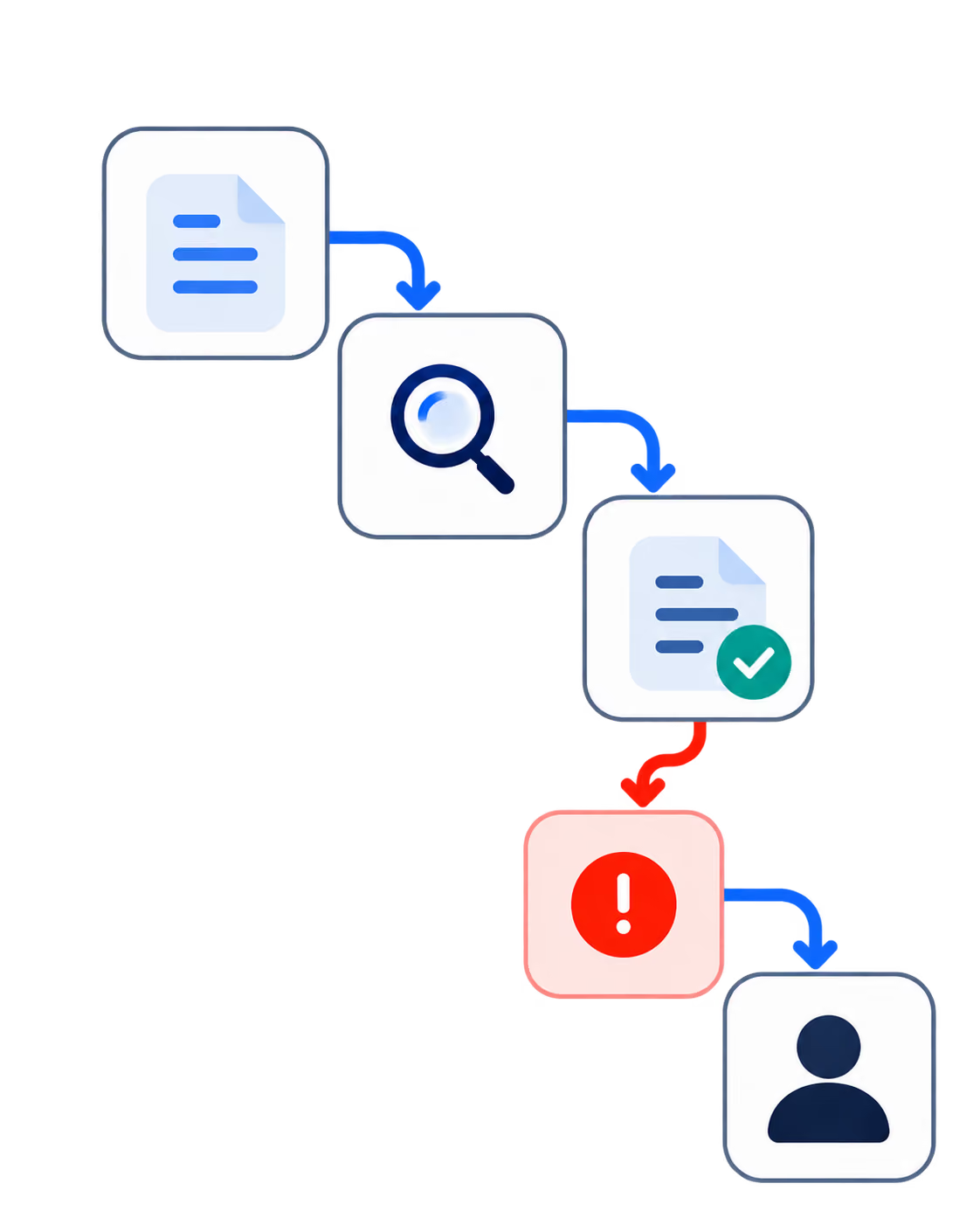
Die Entwicklung von KI-Produkten in oder für Europa ohne Compliance-Plan ist kein strategisches Risiko mehr, sondern wird zu einer rechtlichen Haftung. Das EU-Gesetz über künstliche Intelligenz, das im August 2024 in Kraft trat, schafft den ersten umfassenden Rechtsrahmen für die Entwicklung, den Einsatz und den Betrieb künstlicher Intelligenz.
Für die meisten Organisationen ist das kritische Datum 2. August 2026, wenn die Kernverpflichtungen des Gesetzes für die meisten KI-Systeme durchsetzbar werden. Teile der Verordnung sind jedoch bereits aktiv. Verpflichtungen für Allzweck-KI-Modelle (GPAI), einschließlich großer Sprachmodelle und anderer grundlegender Systeme, sind seitdem in Kraft 2. August 2025. Zusätzliche Bestimmungen, wie etwa das Verbot bestimmter risikoreicher KI-Praktiken und Anforderungen in Bezug auf die KI-Kenntnisse der Mitarbeiter, wurden am 2. Februar 2025.
Die Zeitpläne des EU-KI-Gesetzes verändern den operativen Kontext der KI-Entwicklung. Die Einhaltung der Vorschriften beschränkt sich nicht mehr auf Rechtsauslegungen oder politische Dokumente. Unternehmen, die KI-Systeme entwickeln, müssen nun nachweisen, wie Modelle gesteuert, überwacht und in die Produktion eingeführt werden.
Für CTOs und technische Führungskräfte verlagert dies die Einhaltung des EU-KI-Gesetzes in den Bereich der Softwarearchitektur und Betriebskontrolle. Evidenzgenerierung, Systemeigentum und Release-Governance müssen zu integrierten Bestandteilen des Softwareentwicklungszyklus werden.
Was das EU AI Act eigentlich ist
Das EU-Gesetz über künstliche Intelligenz ist eine Verordnung, die rechtliche Anforderungen für die Entwicklung, den Einsatz und den Einsatz künstlicher Intelligenzsysteme in der Europäischen Union festlegt.
Das EU-Gesetz über künstliche Intelligenz regelt künstliche Intelligenz nicht als eine einzige Kategorie. Stattdessen werden KI-Systeme nach ihrem Potenzial, Gesundheit, Sicherheit oder Grundrechte zu schädigen, kategorisiert und der regulatorische Aufwand so skaliert, dass er dem bewerteten Risikoniveau entspricht.
Um das angemessene Maß an Aufsicht zu bestimmen, klassifiziert das Gesetz KI-Systeme in vier Risikokategorien. Je höher die potenziellen Auswirkungen auf Sicherheit, Rechte oder kritische Dienste sind, desto strenger sind die regulatorischen Verpflichtungen.
- Inakzeptables Risiko: Diese Systeme stellen eine klare Bedrohung der Grundrechte dar und sind strikt verboten. Zu den verbotenen Praktiken gehören Praktiken wie kognitive Verhaltensmanipulation, staatliche oder betriebliche Sozialbewertung und bestimmte Formen der biometrischen Identifizierung in Echtzeit im öffentlichen Raum.
- Hohes Risiko: Diese Kategorie stellt den Kern der Verordnung dar. Sie umfasst KI-Systeme, die in Bereichen wie kritischer Infrastruktur, Medizintechnik, Rekrutierung, Bildung und Zugang zu grundlegenden Dienstleistungen eingesetzt werden. Diese Systeme müssen strenge Verpflichtungen in Bezug auf Datenverwaltung, Dokumentation, menschliche Aufsicht und Überwachung erfüllen, bevor sie auf den Markt gebracht werden können.
- Eingeschränktes Risiko: Diese Systeme bergen hauptsächlich Transparenzrisiken. Die Hauptpflicht besteht darin, sicherzustellen, dass die Nutzer darüber informiert werden, dass sie mit einem KI-System wie einem Chatbot interagieren oder auf KI-generierte synthetische Medien stoßen.
- Minimales oder kein Risiko: Die überwiegende Mehrheit der alltäglichen KI-Anwendungen wie Spamfilter oder KI-gestützte Videospiele fallen in diese Kategorie. Für diese Systeme bestehen nach dem Gesetz praktisch keine verbindlichen Verpflichtungen, obwohl freiwillige Compliance-Richtlinien gelten können.
Allzweck-KI-Modelle (GPAI) wie GPT-5 oder Claude werden unabhängig von den darauf aufbauenden Anwendungen reguliert. Anbieter müssen eine ausführliche technische Dokumentation führen, Zusammenfassungen der Schulungsdaten veröffentlichen und Richtlinien umsetzen, um das EU-Urheberrecht einzuhalten. Modelle, die bestimmte Rechenschwellen überschreiten (über 10²+5 FLOPs), werden als leistungsfähig eingestuft systemisches Risiko.
Wen das betrifft und warum Sie sich nicht abmelden können
Ein weit verbreitetes Missverständnis unter außereuropäischen Technologieunternehmen ist, dass das EU-KI-Gesetz nur für Unternehmen gilt, die physisch in der Europäischen Union ansässig sind. In Wirklichkeit hat die Verordnung einen extraterritorialen Geltungsbereich. Ähnlich dem Ansatz, der im Rahmen der DSGVO, das Das Gesetz gilt je nachdem, wo ein KI-System eingesetzt wird und wo seine Auswirkungen auftreten, nicht dort, wo der Anbieter seinen Hauptsitz hat.
In der Praxis bedeutet dies, dass die Verordnung jede Organisation betrifft, die entwickelt, implementiert oder liefert KI-Systeme, die in der EU verwendet werden, auch wenn das Unternehmen selbst außerhalb der Region tätig ist.
Die Verordnung gilt unmittelbar für:
- Unternehmen mit Sitz in der EU: Jede Organisation, die KI-Systeme innerhalb der Union entwickelt oder einsetzt.
- Unternehmen außerhalb der EU: Anbieter, die KI-Systeme oder GPAI-Modelle auf dem EU-Markt anbieten, unabhängig von ihrem geografischen Standort.
- Anbieter und Nutzer in Drittländern: Organisationen mit Sitz in den USA, Großbritannien oder anderen Ländern müssen die Vorschriften einhalten, wenn die von ihrem KI-System erzeugten Ergebnisse innerhalb der Union genutzt werden.
- Importeure und Händler: Jedes Unternehmen, das KI-Systeme auf dem europäischen Markt verfügbar macht.
Wenn die Ausgabe des KI-Systems den europäischen Markt berührt, auch wenn die Verarbeitung auf Servern in Kalifornien oder Tel Aviv erfolgt, gilt diese Regelung.
Was das EU-KI-Gesetz für Unternehmen bedeutet
Das EU-Gesetz über künstliche Intelligenz ändert, wie Unternehmen mit KI-Systemen umgehen müssen, da die Einhaltung der Vorschriften nicht mehr auf rechtliche Überprüfungen oder gelegentliche Audits beschränkt ist. Jetzt müssen Unternehmen KI-Systeme über den gesamten Systemlebenszyklus hinweg — von der Entwicklung und Erprobung bis hin zur Bereitstellung und Überwachung — kontinuierlich verwalten.
KI wird zu einer regulierten Produktkategorie
Gemäß dem Gesetz müssen viele KI-Systeme als regulierte Produkte behandelt werden. Das bedeutet, dass Unternehmen überprüfbare Nachweise vorlegen müssen, aus denen hervorgeht, wie Systeme entworfen, getestet und betrieben werden.
Für Systeme, die klassifiziert sind als hohes Risiko, Anbieter müssen eine umfangreiche Dokumentation führen. Dazu gehören technische Beschreibungen der Systemarchitektur, Aufzeichnungen zum Risikomanagement, Leistungsbewertungen und Betriebsprotokolle. Diese Dokumentation soll es den Aufsichtsbehörden ermöglichen, vor und während seiner Einführung zu überprüfen, ob das System die Anforderungen des Gesetzes erfüllt.
Finanzielle und betriebliche Folgen
Das EU-Gesetz über künstliche Intelligenz sieht erhebliche Strafen für Verstöße vor, die ähnlich wie die DSGVO strukturiert sind.
Abgesehen von diesen finanziellen Sanktionen sind die Aufsichtsbehörden befugt, die sofortige Rücknahme nicht konformer KI-Systeme vom Markt anzuordnen. Für Unternehmen, die in Europa tätig sind, führt ein solcher Rückzug zu sofortigen Umsatzverlusten, erheblichem Reputationsschaden und dem potenziellen Verlust des Zugangs zu EU-Markt mit 450 Millionen Menschen.
Eine neue Kategorie von operationellen Risiken
Die Verordnung ändert auch, wie Haftung entstehen kann. Unternehmen, die KI-Systeme von Drittanbietern integrieren, sind nicht automatisch vor der Verantwortung geschützt. Wenn ein Unternehmen ein System erheblich verändert oder es unter seiner eigenen Marke auf den Markt bringt, kann es gemäß dem Gesetz rechtlich zum Anbieter dieses Systems werden.
Das bedeutet, dass Unternehmen ihre KI-Lieferketten, internen Kontrollen und Entwicklungsprozesse überprüfen müssen, um sicherzustellen, dass die regulatorischen Verpflichtungen eingehalten werden. Ohne diese Kontrollen können KI-Systeme schnell zu einer Quelle rechtlicher und operativer Risiken und nicht zu einem Innovationstreiber werden.
Die Checkliste zur Einhaltung des EU-KI-Gesetzes
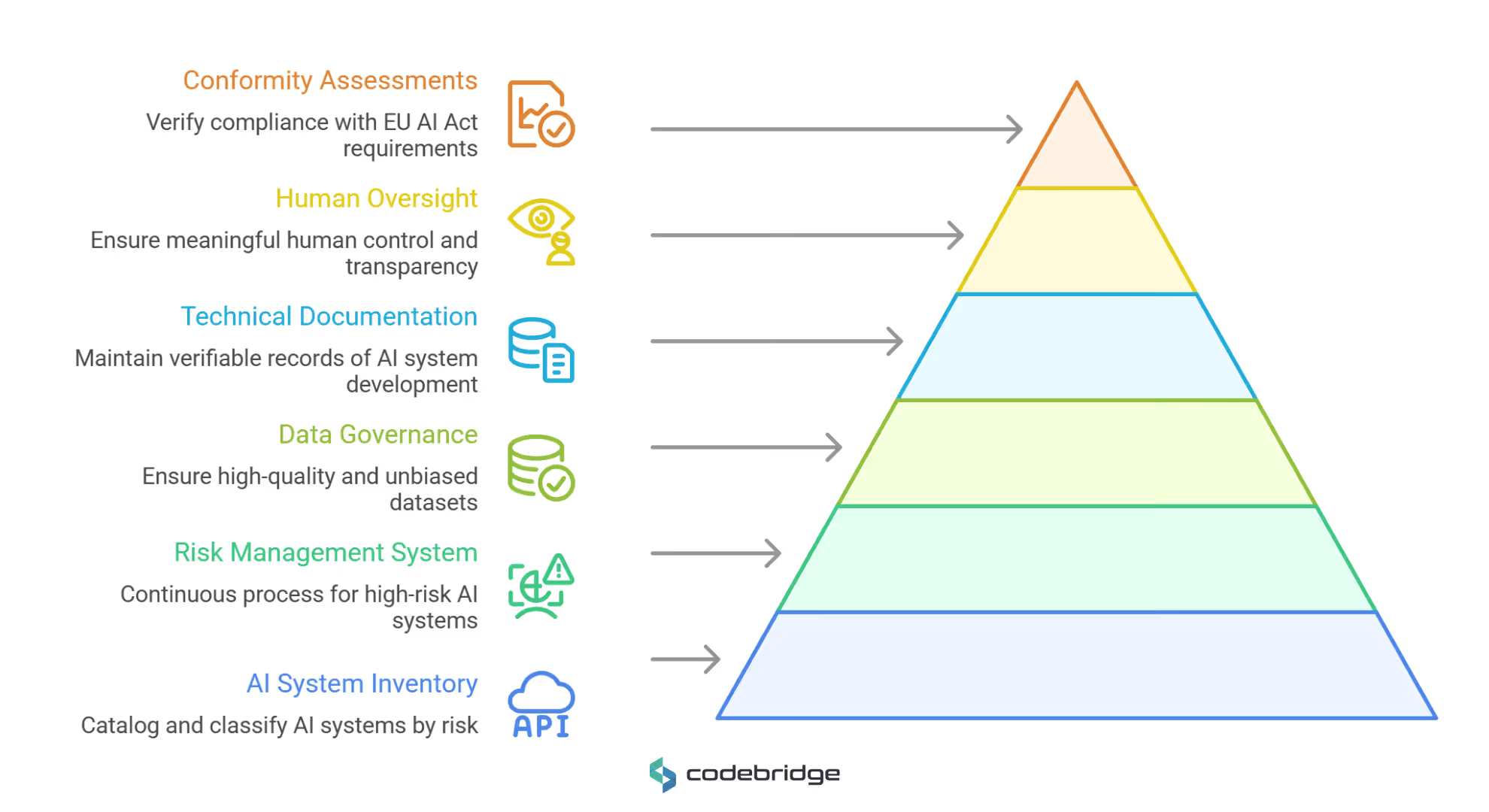
Die Einhaltung des EU-Gesetzes über künstliche Intelligenz kann keine rechtliche Abstraktion bleiben. Sie muss in technische Artefakte, Betriebskontrollen und geregelte Produktprozesse umgesetzt werden, da die Aufsichtsbehörden Absichten oder interne Richtlinien nicht alleine beurteilen werden. Sie werden prüfen, ob Unternehmen die Einhaltung der Vorschriften anhand dokumentierter Systeme und Betriebskontrollen nachweisen können.
Die folgende Checkliste beschreibt die praktischen Anforderungen, die Unternehmen umsetzen müssen, um sicherzustellen, dass ihre KI-Systeme auf die vollständige Durchsetzung vorbereitet sind.
1. Erstellen Sie ein KI-Systeminventar und klassifizieren Sie das Risiko
Die Grundlage für die Einhaltung von Vorschriften ist ein umfassendes Verständnis des KI-Fußabdrucks des Unternehmens, um den regulatorischen Umfang und die damit verbundenen Verpflichtungen zu bestimmen.
- Erstellen Sie ein Systeminventar: Katalogisieren Sie jedes KI-System, das derzeit verwendet wird, sich in der Entwicklung befindet oder von Drittanbietern bezogen wird, einschließlich eingebetteter KI und cloudbasierter Dienste.
- Verwendungszweck des Dokuments: Notieren Sie für jedes System eine klare Beschreibung seines Verwendungszwecks, einschließlich des Kontextes, der Nutzungsbedingungen und der spezifischen Entscheidungen, die es informiert oder trifft.
- Karte gegen Risikostufen: Klassifizieren Sie jedes System in eine der vier im Gesetz definierten Risikokategorien: Inakzeptables Risiko (verboten), hohes Risiko, begrenztes Risiko (Transparenzverpflichtungen) oder Minimales Risiko.
- Identifizieren Anlage III Anwendungsfälle: Achten Sie besonders auf Systeme, die in den Bereichen kritische Infrastruktur, Bildung, Beschäftigung, grundlegende Dienste, Strafverfolgung und Migration eingesetzt werden, da diese ausdrücklich als risikoreich eingestuft werden.
- Dokumentieren Sie Entscheidungen, die kein hohes Risiko darstellen: Fällt ein KI-System unter eine Anhang-III-Kategorie, gilt aber als nicht risikobehaftet (z. B. führt es nur vorbereitende Aufgaben durch), muss der Anbieter diese Bewertung gründlich dokumentieren, bevor das System auf den Markt gebracht wird.
Sobald die KI-Systeme der Organisation inventarisiert und klassifiziert wurden, besteht der nächste Schritt darin, die Verwaltung für die Systeme, die in den regulatorischen Geltungsbereich des Gesetzes fallen, zu operationalisieren.
2. Implementieren Sie ein kontinuierliches Risikomanagementsystem (RMS)
Bei KI-Systemen mit hohem Risiko muss das Risikomanagementsystem (RMS) während des gesamten Lebenszyklus des Systems als kontinuierlicher Prozess funktionieren. Die Identifizierung, Bewertung und Minderung von Risiken muss während des Entwurfs, der Entwicklung, der Bereitstellung und des laufenden Betriebs erfolgen, um sicherzustellen, dass neu auftretende Risiken erkannt und behoben werden.
- Risiken identifizieren und analysieren: Einrichtung eines strukturierten Prozesses zur Identifizierung bekannter Risiken für Gesundheit, Sicherheit und Grundrechte, die sich aus der bestimmungsgemäßen Verwendung des Systems sowie aus vernünftigerweise vorhersehbarem Missbrauch ergeben.
- Implementieren Sie Maßnahmen zur Schadensbegrenzung: Halten Sie sich an eine strenge Minderungshierarchie: Erstens, eliminieren oder reduzieren Sie Risiken durch das Systemdesign; zweitens implementieren Sie technischen Schutz für Restrisiken und drittens bieten Sie den Benutzern angemessene Informationen und Schulungen.
- Richten Sie ein Testregime ein: Testen Sie Systeme anhand definierter Kennzahlen, um sicherzustellen, dass sie unter realen Bedingungen innerhalb akzeptabler Risikoschwellenwerte bleiben.
- Iterieren Sie nach der Markteinführung: Kontinuierliche Aktualisierung des Risikomanagementprozesses auf der Grundlage von Daten, die aus Überwachungssystemen nach Markteinführung und Vorfallberichten gesammelt wurden.
3. Strenge Datenverwaltung
Systeme mit hohem Risiko müssen unter Verwendung hochwertiger Datensätze entwickelt werden, um die Genauigkeit zu gewährleisten und das Risiko diskriminierender Ergebnisse zu minimieren.
- Durchsetzung von Datenqualitätsstandards: Stellen Sie sicher, dass die Schulungs-, Validierungs- und Testdatensätze relevant, repräsentativ und so vollständig und genau wie möglich sind. Hochwertige Daten sind unerlässlich, um zuverlässige Ergebnisse zu erzielen und die Wahrscheinlichkeit eines schädlichen oder irreführenden Systemverhaltens zu verringern.
- Statistische Eigenschaften überprüfen: Bestätigen Sie, dass die Datensätze über angemessene statistische Eigenschaften in Bezug auf die Personen oder Personengruppen verfügen, für die das System verwendet werden soll. Ohne diese Überprüfung können Modelle systematisch zu ungenauen Ergebnissen führen, wenn sie in realen Kontexten angewendet werden.
- Monitor für Verzerrungen: Umsetzung aktiver Maßnahmen zur Aufdeckung, Vorbeugung und Abschwächung potenzieller Vorurteile, die zu verbotener Diskriminierung nach dem Unionsrecht führen könnten. Dies ist besonders wichtig, wenn KI-Systeme in Bereichen wie mieten, Kreditvergabe oder Zugang zu grundlegenden Dienstleistungen, bei denen voreingenommene Ergebnisse die Grundrechte verletzen können.
- Herkunft der Dokumentdaten: Führen Sie detaillierte Aufzeichnungen über die Datenbeschaffung, Erfassung, Aufbereitung (z. B. Kennzeichnung, Reinigung) und über alle Annahmen, die darüber getroffen wurden, was mit den Daten gemessen werden soll. Dank dieser Transparenz können Unternehmen nachweisen, dass die Datensätze verantwortungsbewusst ausgewählt und aufbereitet wurden.
Die Datenqualität allein belegt jedoch nicht die Einhaltung der Vorschriften. Die Aufsichtsbehörden müssen auch in der Lage sein, zu überprüfen, wie ein System konzipiert und betrieben wurde. Dies erfordert eine formelle Dokumentation und rückverfolgbare Systemaufzeichnungen.
4. Funktionen für technische Dokumentation und Protokollierung
Um die Anforderungen des EU-KI-Gesetzes zu erfüllen, müssen Unternehmen nachprüfbare Aufzeichnungen darüber führen, wie ihre KI-Systeme entwickelt werden. Dokumentation und Protokollierung liefern die erforderlichen Nachweise, um die Einhaltung der Vorschriften bei Audits oder behördlichen Überprüfungen nachzuweisen.
- Pflege der technischen Dossiers: Bereite eine ausführliche Dokumentation vor (Anlage IV), das die Architektur, die algorithmische Logik, die Zusammenfassungen der Trainingsdaten und die Leistungskennzahlen des Systems beschreibt.
- Automatisierte Ereignisprotokollierung aktivieren: Entwickeln Sie Systeme mit hohem Risiko, um während ihrer gesamten Betriebsdauer automatisch Protokolle zu generieren. Die Protokollierung stellt sicher, dass Entscheidungen, Ergebnisse und das Systemverhalten zurückverfolgt und überprüft werden können, wenn Fragen oder Vorfälle auftreten.
- Halten Sie sich an die Aufbewahrungspflichten: Stellen Sie für Bereitsteller sicher, dass vom System generierte Protokolle mindestens sechs Monate lang aufbewahrt werden (oder länger, falls dies aufgrund anderer Gesetze erforderlich ist). Diese Aufzeichnungen unterstützen Untersuchungen von Systemausfällen oder unerwarteten Ergebnissen.
- Dokumentation zu Änderungen aktualisieren: Stellen Sie sicher, dass die technische Dokumentation auf dem neuesten Stand ist und alle wesentlichen Änderungen berücksichtigt, die nach der Bereitstellung am System vorgenommen wurden.
Das EU-Gesetz über künstliche Intelligenz verpflichtet Unternehmen außerdem, dafür zu sorgen, dass automatisierte Entscheidungen weiterhin einer sinnvollen menschlichen Kontrolle unterliegen. Daher erstreckt sich die Einhaltung der Vorschriften nicht nur auf technische Aufzeichnungen, sondern auch auf die Gestaltung von Systemen, die es Menschen ermöglichen, sie zu verstehen und bei Bedarf einzugreifen.
5. Menschliche Aufsicht und Transparenz
Das EU-Gesetz über künstliche Intelligenz verpflichtet Organisationen sicherzustellen, dass automatisierte Systeme nicht ohne nennenswerte menschliche Kontrolle funktionieren und dass Personen, die mit KI interagieren, klar über ihre Verwendung informiert werden.
- Design für Interpretierbarkeit: Stellen Sie sicher, dass die Kapazitäten und Einschränkungen des Systems für menschliche Aufseher vollständig verständlich sind, sodass sie den Betrieb effektiv überwachen können.
- Implementieren Sie „Stop-Button“ -Mechanismen: Stellen Sie technische Mittel bereit, mit denen menschliche Aufseher die Ausgänge übersteuern oder das System im Falle einer Anomalie oder eines Risikos sicher abschalten können.
Beispielsweise kann ein KI-Dienst, der hinter einem API-Gateway bereitgestellt wird, eine Verwaltungssteuerung enthalten, die den Modellendpunkt sofort deaktiviert oder Anfragen an eine sichere Fallback-Antwort weiterleitet (Rückgabe einer Standardnachricht oder Umstellung auf manuelle Verarbeitung).
- Benutzeranweisungen bereitstellen: Stellen Sie den Bereitstellern klare, umfassende Anweisungen zur sicheren Verwendung zur Verfügung, einschließlich der erwarteten Genauigkeit, Robustheit und Cybersicherheit.
- Transparenzangaben durchsetzen: Stellen Sie sicher, dass Systeme, die direkt mit Menschen interagieren (z. B. Chatbots) oder synthetische Medien erzeugen (z. B. Deepfakes), die Benutzer darüber informieren, dass sie mit einem KI-System interagieren.
6. Konformitätsbewertungen und Überwachung nach dem Inverkehrbringen
Bevor ein KI-System mit hohem Risiko auf den europäischen Markt gebracht werden kann, müssen die Anbieter überprüfen, ob es die technischen und Sicherheitsanforderungen des EU-KI-Gesetzes erfüllt.
- Vollständige Konformitätsbewertungen: Führen Sie je nach Systemkategorie entweder eine interne Selbstbewertung (Modul A) oder eine Bewertung durch Dritte (Modul B+C) durch eine akkreditierte benannte Stelle durch.
- Konformitätserklärung ausstellen: Erstelle ein formelles EU-Konformitätserklärung und bringen Sie die obligatorische CE-Kennzeichnung an, um anzuzeigen, dass das System alle Anforderungen erfüllt.
- Pipelines für die Meldung von Vorfällen einrichten: Einrichtung von Mechanismen, um die Marktüberwachungsbehörden innerhalb von 15 Tagen (oder 10 Tagen im Todesfall) nach Bekanntwerden des Vorfalls über schwerwiegende Zwischenfälle oder Störungen zu informieren.
- In der EU-Datenbank registrieren: Anbieter von Systemen mit hohem Risiko nach Anhang III müssen sich und ihre Systeme vor dem Inverkehrbringen in der zentralen EU-Datenbank registrieren.
- Führen Sie bei Bedarf FRIAs durch: Bestimmte Betreiber — darunter Behörden und Finanzinstitute, die Kredit- oder Versicherungsunternehmen prüfen — müssen vor der Einführung eines Hochrisikosystems eine Grundrechts-Folgenabschätzung durchführen.
Durch die Umsetzung dieser Checkliste schaffen Organisationen einen vollständigen betrieblichen Compliance-Rahmen für KI-Systeme gemäß dem EU-Gesetz über künstliche Intelligenz. Dazu gehören eine klare Bestandsaufnahme der KI-Systeme, strukturierte Risikomanagementprozesse, regulierte Datensätze, überprüfbare Dokumentation, menschliche Aufsichtsmechanismen und validierte Marktzulassungsverfahren.
In der Praxis schützt dieser Rahmen Unternehmen vor behördlichen Sanktionen und stellt sicher, dass ihre KI-Produkte legal auf dem europäischen Markt bleiben können.
Führungsaufgaben: Eigentum, Beweisführung und Freigabekontrolle
Der Übergang von einmaligen Compliance-Maßnahmen zu einer kontinuierlichen Unternehmensführung erfordert klare Führungsaufgaben in drei Bereichen: Verantwortung, Nachweis und Freigabekontrolle.
A. Eigentum
Effektive Regierungsführung erfordert eine klare Rechenschaftspflicht. Unternehmen sollten die Verantwortung für die Einhaltung der KI-Vorschriften einem benannten Leiter oder einer funktionsübergreifenden Führungsgruppe übertragen, der technische, juristische und Produktleiter angehören. Zu dieser Verantwortung gehört auch die Pflege des KI-Inventars und die Sicherstellung, dass jedes System über eine klare Rechenschaftsstruktur verfügt.
Führungskräfte müssen auch verstehen, wie sich die regulatorischen Rollen ändern können. Ein Unternehmen, das ein hochriskantes KI-System eines Drittanbieters integriert und eine wesentliche Änderung vornimmt oder es unter seiner eigenen Marke auf den Markt bringt, kann legal zum Anbieter dieses Systems werden. In solchen Fällen erbt die Organisation alle regulatorischen Verpflichtungen, die im AI-Gesetz der EU festgelegt sind.
B. Beweise
Die Einhaltung gesetzlicher Vorschriften hängt von überprüfbaren Nachweisen ab. Aus diesem Grund sollten technische Unterlagen, Systemprotokolle und Betriebsaufzeichnungen als primäre technische Artefakte behandelt werden.
Unternehmen müssen eine Dokumentation führen, in der die Systemarchitektur, Zusammenfassungen der Trainingsdaten, das Modellverhalten und die Leistungsmerkmale beschrieben werden. Protokollierungssysteme sollten relevante Betriebsereignisse erfassen, damit das Systemverhalten rekonstruiert und überprüft werden kann, falls es zu Zwischenfällen kommt.
Bei der Verwendung von KI-Systemen von Drittanbietern, z. B. bei der Integration großer Sprachmodelle über APIs, müssen Unternehmen auch ausreichende Unterlagen von Anbietern einholen. Das EU-Gesetz über künstliche Intelligenz verlangt eine vertraglicher Informationsaustausch zwischen Anbietern und Organisationen, die ihre Komponenten integrieren, um sicherzustellen, dass die Compliance-Verpflichtungen erfüllt werden können. Bei Bereitstellungen, die auf GPAI basieren, müssen Unternehmen überprüfen, ob ihre Verträge den bereits geltenden Transparenz- und Urheberrechtsanforderungen entsprechen.
C. Freigabekontrolle
Die Einhaltung der Vorschriften muss im Rahmen des Produktfreigabeprozesses eine harte Aufgabe sein. KI-Funktionen sollten erst eingesetzt werden, wenn die Risikoklassifizierung abgeschlossen ist und die erforderliche Dokumentation verfügbar ist.
Die Release-Governance muss sich auch damit befassen wesentliche Änderungen. Wird ein eingesetztes System auf eine Weise verändert, die in der ursprünglichen technischen Dokumentation nicht vorgesehen war, kann die Änderung eine erneute Konformitätsbewertung erfordern, bevor das System auf dem Markt bleiben kann.
Bei Systemen, die nach der Bereitstellung ständig dazulernen, sollten Unternehmen im Voraus definieren, welche Arten von Updates erwartet und dokumentiert werden. Änderungen außerhalb dieser Grenzen sollten eine Versionspause und eine neue Konformitätsprüfung nach sich ziehen.
Prozesse zur Überwachung nach dem Inverkehrbringen müssen ebenfalls in den Systembetrieb integriert werden. Sie müssen Mechanismen beinhalten, mit denen Benutzer KI-gestützte Entscheidungen anfechten können, und die Versionskontrolle muss sich auf Modelle und ihre spezifischen Konfigurationen erstrecken, um die Rückverfolgbarkeit zu gewährleisten.
Fazit
Die KI-Regulierung in Europa hat sich von einer politischen Diskussion zu einer operativen Anforderung entwickelt. Organisationen, die KI-Systeme entwickeln oder einsetzen, müssen nun die Einhaltung der Vorschriften durch dokumentierte Prozesse und überprüfbare technische Kontrollen nachweisen.
Unternehmen, die diese Kontrollen frühzeitig in ihre technischen Arbeitsabläufe integrieren, vermeiden die Unterbrechungen und den technischen Aufwand, der mit nachträglichen Compliance-Nachrüstungen einhergeht. Verfahren wie technische Dokumentation, Nachverfolgung der Datenherkunft und Rückverfolgbarkeit des Systems sind nicht mehr optional. Heute sind sie grundlegende Bestandteile einer zuverlässigen Systemtechnik.
Für Führungskräfte im Ingenieurwesen ist die Compliance-Infrastruktur zunehmend nicht mehr von guter technischer Disziplin zu unterscheiden. Auf Führungsebene ist KI-Governance zu einem strategischen Thema geworden, das sich auf Unternehmenspartnerschaften, Investitionsentscheidungen und den langfristigen Zugang zum europäischen Markt auswirkt.










Heading 1
Heading 2
Heading 3
Heading 4
Heading 5
Heading 6
Lorem ipsum dolor sit amet, consectetur adipiscing elit, sed do eiusmod tempor incididunt ut labore et dolore magna aliqua. Ut enim ad minim veniam, quis nostrud exercitation ullamco laboris nisi ut aliquip ex ea commodo consequat. Duis aute irure dolor in reprehenderit in voluptate velit esse cillum dolore eu fugiat nulla pariatur.
Block quote
Ordered list
- Item 1
- Item 2
- Item 3
Unordered list
- Item A
- Item B
- Item C
Bold text
Emphasis
Superscript
Subscript