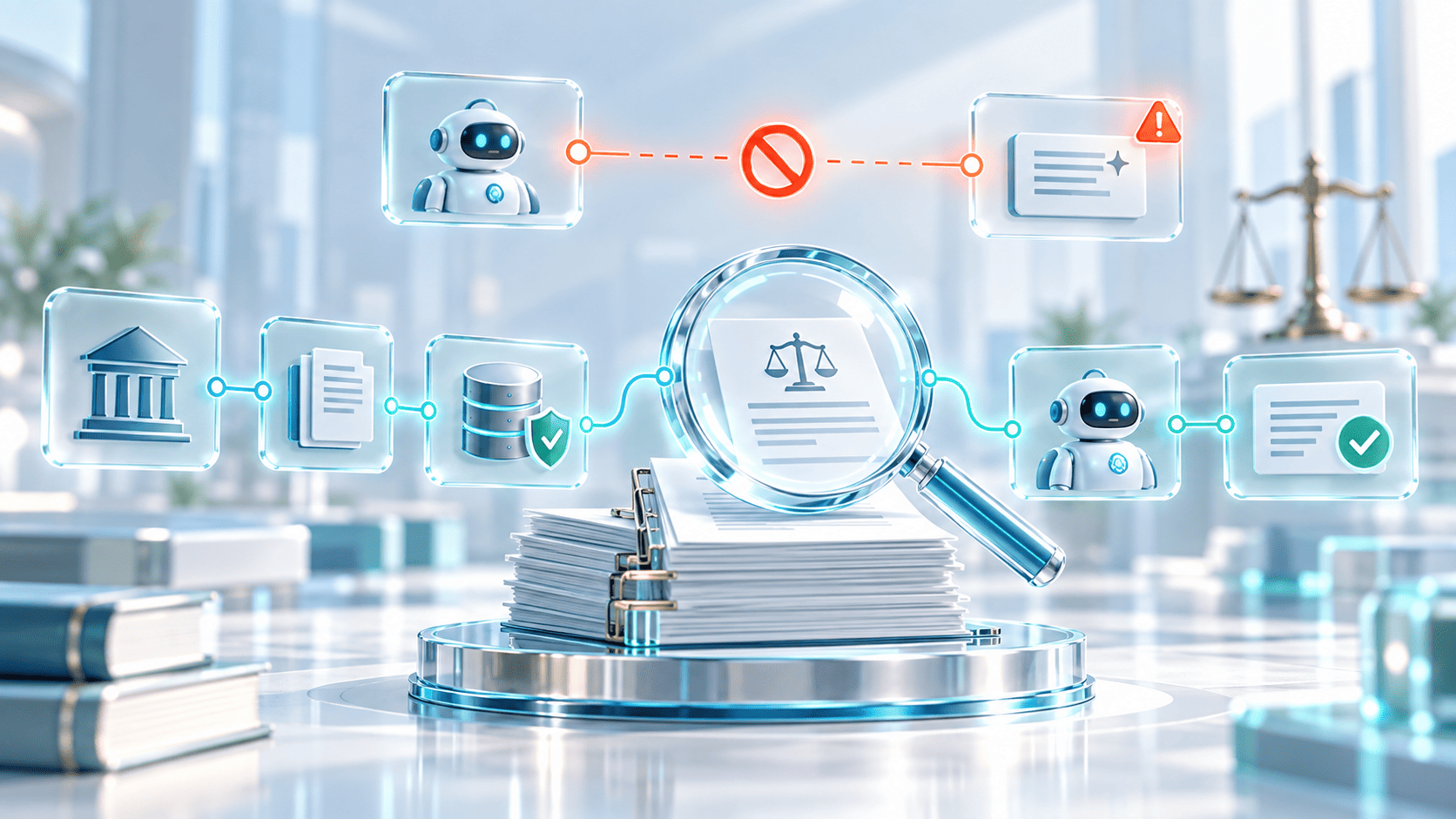
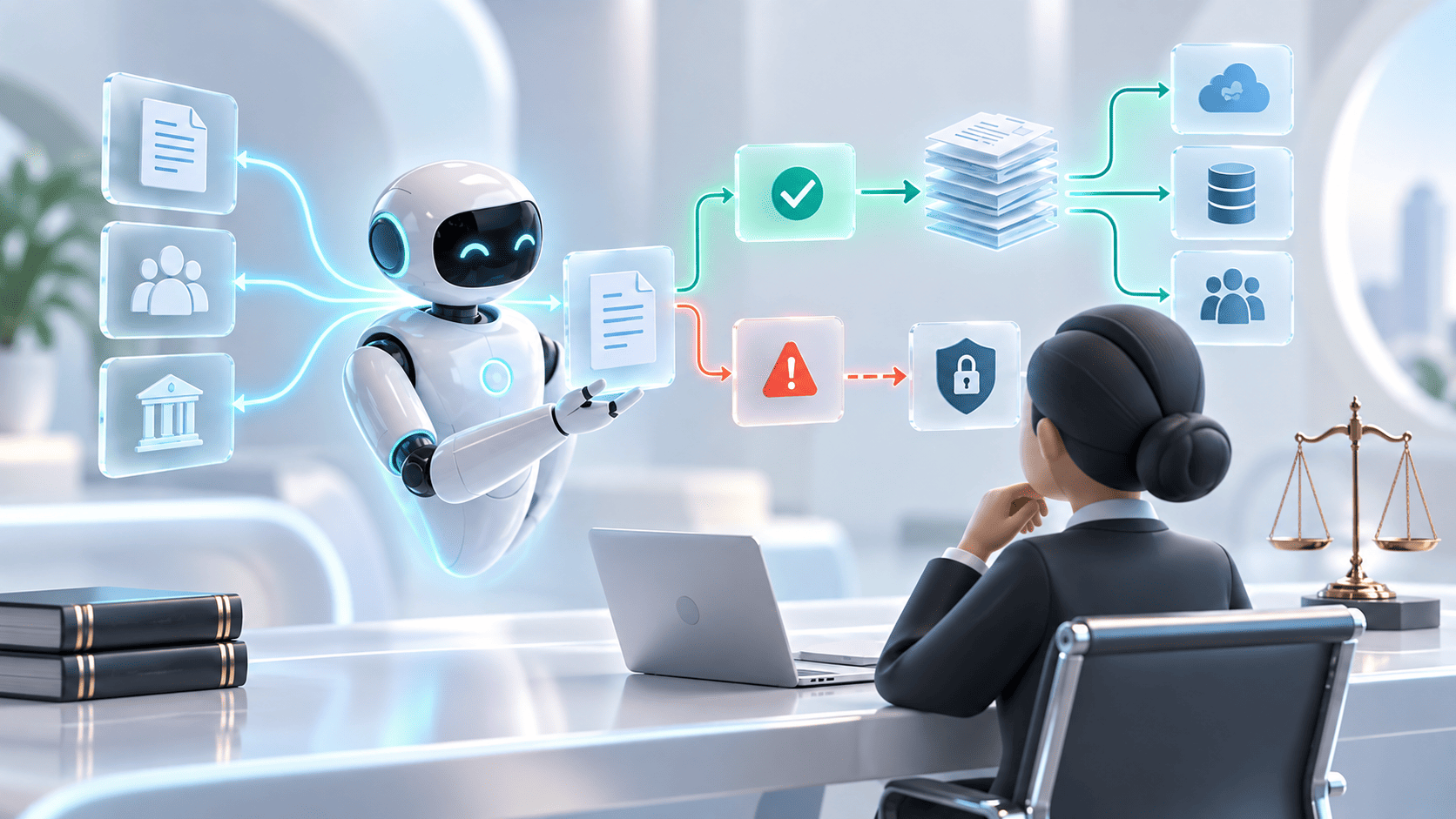
The market is full of agencies, consultancies, and software firms that now claim to build AI products. However, for founders and technology leaders, the harder question is who can deliver a system that works in production, fits the business, and holds up as requirements evolve.
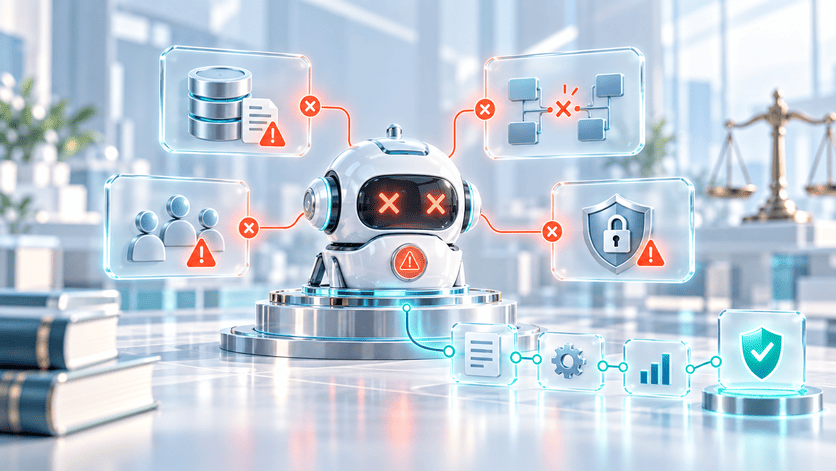
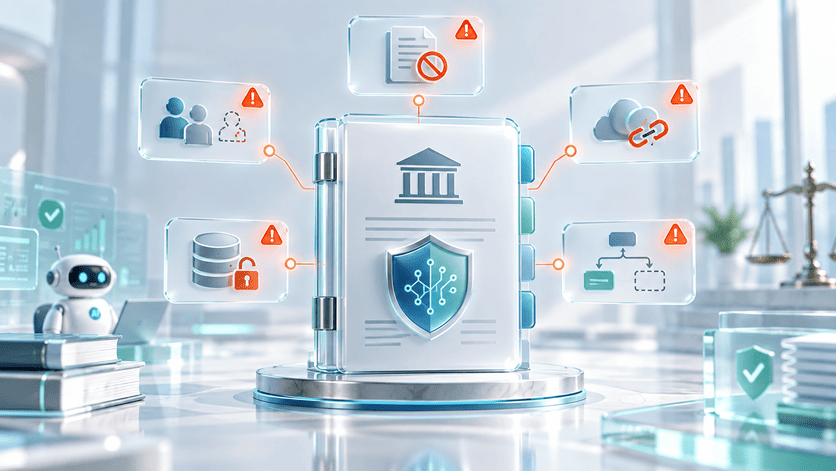
Many AI initiatives fail not because the model is weak, but because workflow design, integration, governance, and delivery discipline were treated as secondary problems. In AI projects, vendor choice carries more weight than in conventional software development because architecture and operational constraints shape the outcome from the start.
This analysis identifies small and mid-size AI development companies in the United States that provide deep implementation support rather than high-level strategy slides.
How We Selected These Companies
To ensure this list provides practical utility for growth-stage and mid-market buyers, firms were evaluated against five specific criteria:
- US Market Relevance: Firms with a significant presence and understanding of the US regulatory and business landscape.
- Visible AI Development Capability: A demonstrated focus on specialized AI engineering rather than generic digital services.
- Target Market Fit: Positioning suitable for buyers who require high-touch, hands-on delivery support.
- Evidence of Delivery: Verified case studies and service clarity that demonstrate successful production deployments.
- Implementation Depth: A focus on building production-ready systems that solve complex organizational challenges.
Very large global firms were intentionally excluded to focus on partners who offer accessible, architecture-level ownership of the development process.
Comparison of Leading AI Development Partners
The Top 10 AI Development Companies
1. Codebridge
Clutch rating: 5.0
Pricing tier: Mid
Headcount: 75+
Codebridge positions itself as an architecture-first software and AI systems engineering partner, specifically targeting technology companies that require high-performance, production-grade solutions. Founded by experts with roots in KPMG consulting, the firm brings a business-forward methodology to technical delivery, focusing on strategic vision alongside implementation depth.
The Architecture-First Philosophy
For senior leaders, the primary value of Codebridge lies in their refusal to treat AI as a superficial feature layer. Instead, they treat AI and agentic orchestration as foundational components of the software stack. This approach is designed to prevent the common failure mode where AI projects stall after the pilot phase due to poor data readiness or an inability to scale within complex legacy infrastructures.
Their proprietary Agentic Development Lifecycle (ADLC) incorporates cognitive control loops and human-in-the-loop (HITL) governance, ensuring that autonomous systems operate within defined legal and technical boundaries. This is a critical requirement for organizations in regulated domains such as HealthTech, FinTech, and LegalTech, where unmonitored agent actions carry significant liability.
Core Capabilities and Service Depth
Codebridge provides full-cycle engineering ownership, covering the entire product lifecycle from initial audit and discovery to deployment and long-term scaling.
- Engineering AI Agents & Multi-Agent Systems: Specialized in multi-tenant architectures and production-grade AI orchestration designed for real-world scale.
- Multi-Agent Orchestration: Designing systems where specialized agents coordinate to complete end-to-end processes.
- RAG-Compliant Architectures: Grounding agents in verified, company-specific knowledge to prevent hallucinations and generic outputs.
- Agentic AI Integration into Legacy Systems: Embedding autonomous agents into complex, pre-existing infrastructures without disrupting core operations.
- Custom Software Development: High-level, standard-compliant custom software across web and mobile platforms.
- ML / LLM Development: Designing and optimizing custom models for fraud detection and recommendation engines.
Performance Benchmarks
Codebridge’s track record includes over 700 successfully delivered projects, with several high-impact AI implementations that demonstrate their ability to solve deep operational bottlenecks.
RadFlow AI: High-Stakes HealthTech Integration
Codebridge engineered a HIPAA-compliant, AI-augmented radiology workspace for a diagnostic imaging network facing rising scan volumes and radiologist burnout.
- Outcome: Reduced average CT interpretation time by 38% (from 15.2 to 9.4 minutes).
- Technical Achievement: Maintained 96% nodule detection sensitivity while reducing false positives by 90% (from 4.1 to 0.4 per scan).
- Compliance: Architected in alignment with FDA Software as a Medical Device (SaMD) Class II regulatory pathways.
RecruitAI: Multi-Agent HR Automation
For a US-based enterprise, they delivered a platform to automate early-stage screening and technical validation for 1,500–3,000 monthly engineering applications.
- Outcome: Reduced full-cycle hiring time from 24 days to 10–12 days.
- Operational Impact: Saved 200–300 senior engineering hours per month by automating technical test reviews.
- Governance: Implemented a 90% confidence threshold for autonomous decisions, ensuring all borderline cases were escalated to human recruiters.
Best-Fit Clients
Codebridge is a logical choice for tech startups, scale-ups, and enterprises that prioritize architectural integrity and governed autonomy. Their model is best suited for leaders who need a partner to take full ownership of complex, integration-heavy delivery rather than providing fractional or strategy-only support.
2. ThirdEye Data
Clutch rating: 4.6
Pricing tier: Mid
Headcount: 50 - 249
ThirdEye Data is an engineering partner that prioritizes "engineering that ships" over experimental prototypes. With over 15 years as a direct Microsoft vendor, they specialize in building AI systems that reason with organizational data and run reliably at scale. Their business-first methodology focuses on achieving measurable outcomes at the lowest Total Cost of Ownership without vendor lock-in. The firm is ISO and SOC2 certified, ensuring the rigorous data governance and security frameworks required by global enterprises.
Main services:
- GenAI & Conversational Solutions: Production-grade assistants and copilots grounded in organizational data.
- AI Agents: Intelligent agents designed to monitor and coordinate complex manual workflows.
- Computer Vision: Turning visual data into operational signals for quality control and safety inspection.
- Predictive AI: Models for aircraft component failure analysis, fraud detection, and demand forecasting.
ThirdEye Data is a reliabile choice for enterprises within the Microsoft ecosystem requiring durable, production-level AI operations.
3. Space-O AI
Clutch rating: 4.8
Pricing tier: Low
Headcount: 50-249
Space-O AI is a custom development company with 15 years of experience and a track record of over 500 successful AI projects. They handle the entire AI lifecycle, from strategic consulting and data preparation to model development and post-launch optimization. Their specialized teams utilize GPT-based LLMs, vector databases, and modern MLOps pipelines to build systems that integrate smoothly with existing workflows. Space-O follows strict quality standards and secure development practices aligned with ISO processes.
Main services:
- Custom AI Software Development: Engineering production-ready applications with Python, TensorFlow, and PyTorch.
- AI MVP & POC Development: Rapidly prototyping concepts to validate technical feasibility and business viability.
- Generative AI Services: Building solutions powered by GPT-5, Claude, and LLaMA, including RAG and fine-tuning.
- Intelligent Process Automation: Automating complex workflows through machine learning and cloud-based infrastructure.
Space-O AI is a reliable choice for organizations seeking end-to-end lifecycle support and flexible engagement models for AI engineering.
4. WiserBrand
Clutch rating: 4.9
Pricing tier: Mid/High
Headcount: 180+
WiserBrand acts as a strategic partner, providing fractional AI strategy and advanced software development for growth-focused companies. With over a decade of experience, they focus on helping businesses work smarter by unlocking potential through expert consulting and custom AI transformations. They are noted for their ability to integrate AI into existing business workflows to move KPIs in the right direction.
Main services:
- Data & AI Advisory: Strategic consulting, roadmap creation, and data readiness assessments.
- Fractional CTO Services: Providing high-level technology leadership and organizational design support.
- AI Product Engineering: Building custom software, MVPs, and modernizing legacy applications.
- Customer Experience: Leveraging AI for digital marketing, support, and UI/UX improvements.
WiserBrand is the preferred partner for mid-market companies seeking Fractional CTO-level guidance and business-aligned AI engineering.
5. Caliberfocus
Pricing tier: Mid
Headcount: 50 - 249
Caliberfocus delivers AI-First solutions by integrating intelligence into every layer of enterprise technology, from automation to decision support. They emphasize a "True Partnership Model," collaborating closely with clients to ensure solutions move KPIs in the right direction. They prioritize building secure, resilient, and scalable architectures that deliver measurable impact from day one.
Main services:
- AI Agent Development: Driving efficiency through adaptive intelligence and autonomous RCM agents.
- Data & AI Analytics: Transforming raw data into predictive insights and automated business reporting.
- Intelligent Automation: Delivering ML solutions that automate processes and enhance enterprise decision-making.
- AI-Enhanced Dynamics 365: Optimizing CRM/ERP workflows through predictive customer insights.
Caliberfocus is optimal for enterprises seeking to embed deep intelligence into their Microsoft-based business applications and data systems.
6. Amia AI
Clutch rating: Verified
Pricing tier: Low/Mid
Amia AI develops domain-trained AI specifically for the life sciences sector, focusing on accelerating regulatory workflows and improving submission readiness.
They serve pharmaceutical innovators, biotech firms, and CROs, transforming complex clinical data into compliant documentation. Their approach combines technical AI expertise with specialized regulatory consultancy to ensure fast ROI in high-stakes environments.
Main services:
- Regulatory Documentation Automation: Generating ICH E3-compliant Clinical Study Reports in hours rather than weeks.
- MedNova Platform: An AI copilot designed for drafting and reviewing NDA, IND, and CMC documents.
- BioPharmLLM: A specialized language model trained on clinical terminology and regulatory guidance.
- Gap Analysis Tool: Automatically identifying missing data or structural issues in regulatory filings.
7. Karini AI
AWS Partner
Pricing tier: Mid
Headcount: 10-49
Karini AI provides an end-to-end foundation platform designed to democratize Agentic AI for enterprise production. They enable business and technical teams to build, deploy, and monitor generative AI applications with a focus on governance, security, and business-level controls. Led by veterans from AWS and Databricks, the platform aims to reduce development time from months to minutes using intuitive no-code interfaces.
Main services:
- No-Code Recipes: Rapid deployment of multi-agent systems, generative BI, and RAG workflows.
- Unified Model Hub: Seamless access to cutting-edge models from Amazon Bedrock, Azure OpenAI, and Google Vertex.
- AI Observability: Built-in tracing of all conversations to analyze performance and cost trends.
- Prompt Management: Tools to create, evaluate, and optimize agentic prompts across different models.
Karini AI is optimal for organizations seeking to scale autonomous AI workflows with maximum governance and minimal custom engineering.
8. Hop Labs
Founded: 2014
Pricing tier: Mid/High
Headcount: 10-49
Hop Labs helps applied AI teams deliver reproducible research and scalable systems. They focus on translating research-grade innovations into scalable, real-world impact for early-stage startups, research institutions, and large pharmaceutical companies. By prioritizing planning and focus, they help clients navigate the complexity and unpredictability inherent in high-value AI projects.
Main services:
- AI Research & Engineering: Translating research innovations into production-ready software systems.
- ML Operations (MLOps): Ensuring machine learning models are reproducible, scalable, and manageable.
- AI & ML Strategy: Working backward from organizational goals to define effective technical roadmaps.
- AI Engineering: Designing and building the core infrastructure necessary to support advanced AI models.
9. PixelBrainy
Pricing tier: Low/Mid
Headcount: 10 - 49
PixelBrainy focuses on real-world adoption by integrating UX strategy with intelligent automation. They approach AI development by breaking down complexity before building, ensuring that products are intuitive and reliable for end users. With over 10 years of experience, they have delivered more than 500 digital products where UX strategy and architecture come together to drive business impact.
Main services:
- AI Product Development: End-to-end engineering of AI-powered web and mobile products from concept to scale.
- AI Agent Development: Designing autonomous workflows and agents that integrate reliably into real-world environments.
- UX Design for AI: Specialized UI/UX focused on clarity and trust to help users adopt intelligent systems.
- AI Strategy Consulting: Identifying use cases and data readiness before development begins.
PixelBrainy is a great choice for organizations building user-facing AI products where high adoption rates and intuitive experiences are critical.
10. Markovate
Clutch rating: 5.0
Pricing tier: Mid/High
Headcount: 50 - 249
Markovate focuses on delivering measurable ROI by applying AI to cut delays, eliminate mistakes, and improve efficiency in specialized workflows. They specialize in heavy industries like manufacturing, construction, and healthcare, where precision and speed are essential. Markovate emphasizes end-to-end delivery, handling everything from data preparation to production monitoring while ensuring regulatory compliance with HIPAA, GDPR, and SOC2.
Main services:
- Agentic AI Development: Creating autonomous digital teammates for scheduling, approvals, and process management.
- Generative AI Development: Designing applications that automate critical workflows and accelerate innovation.
- Computer Vision: Turning visual data into actionable insights for automated inspections and quality checks.
How to Choose the Right AI Development Partner
Choosing an AI development partner is a decision about delivery risk, system ownership, and long-term scalability. The strongest vendors are the ones that can explain how the system will work in production and how it will be governed once it starts making or influencing decisions.
When evaluating vendors, leadership teams should pressure-test six areas:
1. Can they build beyond the demo?
Many firms can produce a convincing prototype. Far fewer can deliver systems that remain reliable under production traffic, changing data, and real operational constraints.
2. Do they understand the workflow, not just the model?
A vendor should be able to explain how AI fits into the actual business process, where human review is needed, and where orchestration matters more than model sophistication.
3. Do they know when not to use AI?
Strong partners do not force an LLM into every step. They can clearly distinguish between tasks that need probabilistic reasoning and tasks that should remain in deterministic code, rules, or standard software logic.
4. Can they handle integration, control, and governance?
If the product touches multiple systems, regulated data, or high-stakes decisions, the vendor should show experience with integrations, permissions, auditability, and human-in-the-loop controls.
5. Can they work within your real environment?
The right partner should adapt to your stack, data model, cloud environment, and internal constraints rather than introducing avoidable complexity or technical debt.
6. What happens after launch?
AI systems require iteration after release. Buyers should understand who maintains the system, how performance is monitored, how changes are handled, and whether the vendor will challenge weak requirements before they become expensive mistakes.
Conclusion
The best AI development partner is rarely the one with the loudest market presence. It is the one that can take an AI idea and turn it into a system that fits real workflows, works under production constraints, and remains maintainable as the product evolves. For founders and CTOs, the real distinction is not who can build a demo fastest, but who can design the right architecture, integrate it into the business, and take responsibility for what happens after launch. In AI projects, that difference often determines whether the investment becomes a durable product advantage or another stalled experiment.












Heading 1
Heading 2
Heading 3
Heading 4
Heading 5
Heading 6
Lorem ipsum dolor sit amet, consectetur adipiscing elit, sed do eiusmod tempor incididunt ut labore et dolore magna aliqua. Ut enim ad minim veniam, quis nostrud exercitation ullamco laboris nisi ut aliquip ex ea commodo consequat. Duis aute irure dolor in reprehenderit in voluptate velit esse cillum dolore eu fugiat nulla pariatur.
Block quote
Ordered list
- Item 1
- Item 2
- Item 3
Unordered list
- Item A
- Item B
- Item C
Bold text
Emphasis
Superscript
Subscript