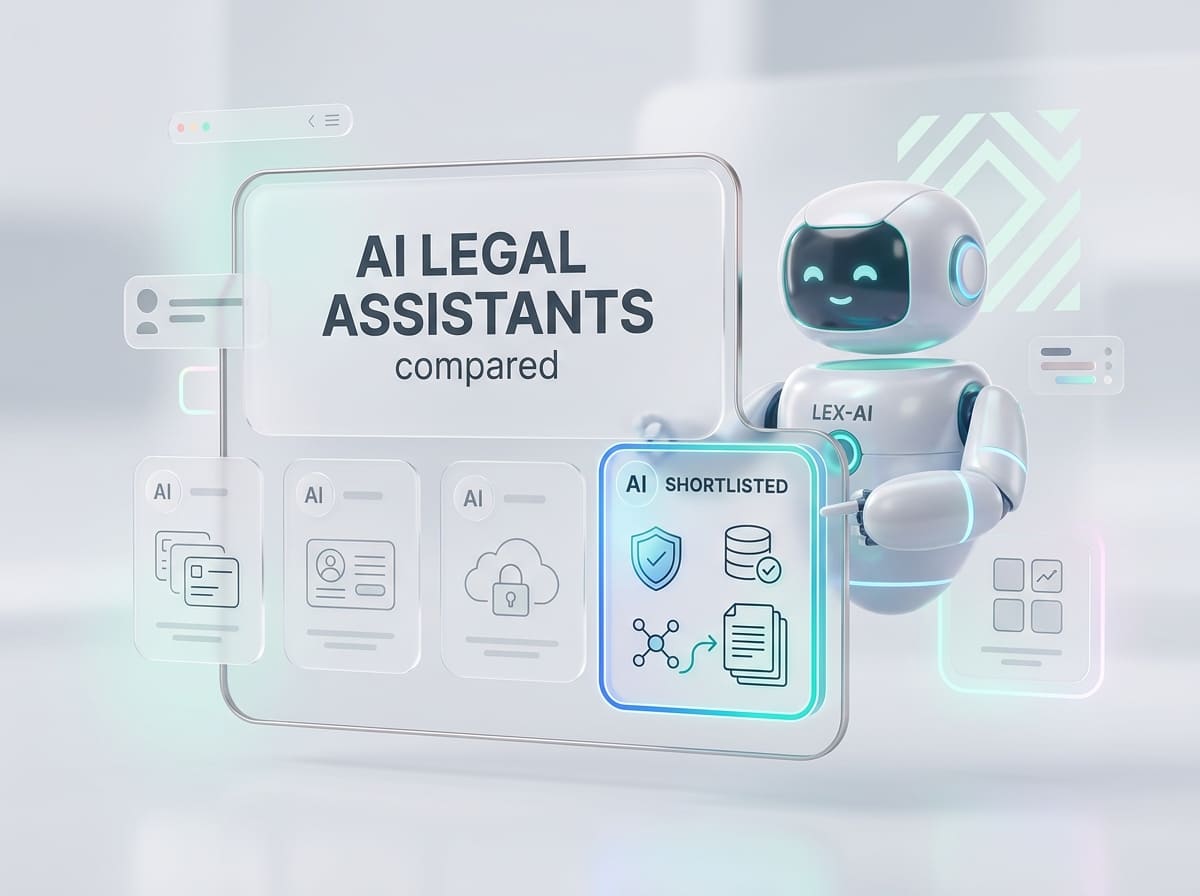
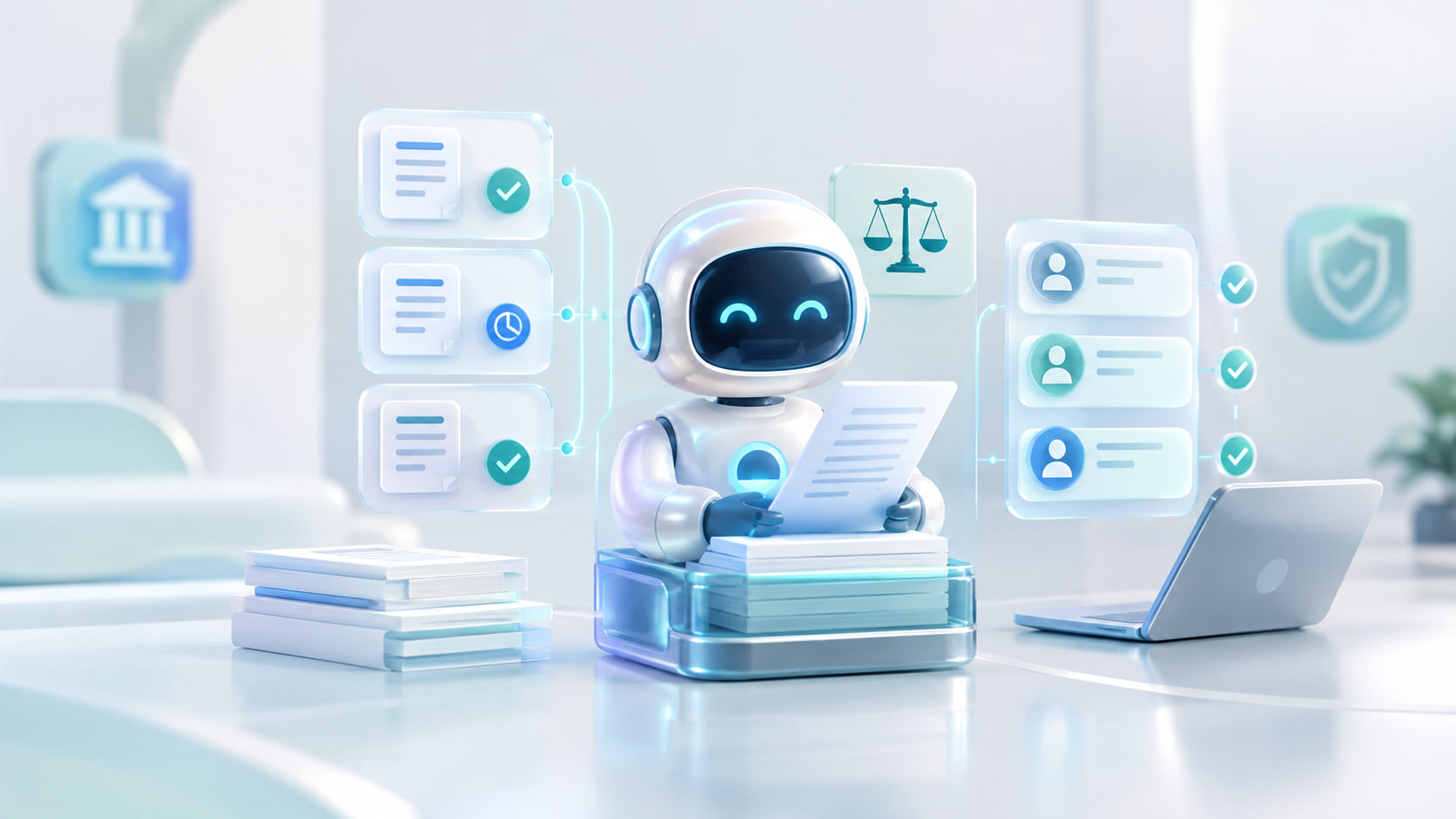
If you're evaluating an AI agent partner for a Delaware operation in 2026, the question isn't which firm can wire up an LLM. Almost any team can. The question is which firm can put an agent into production inside a regulated workflow, keep it observable, and stay accountable when it misbehaves.
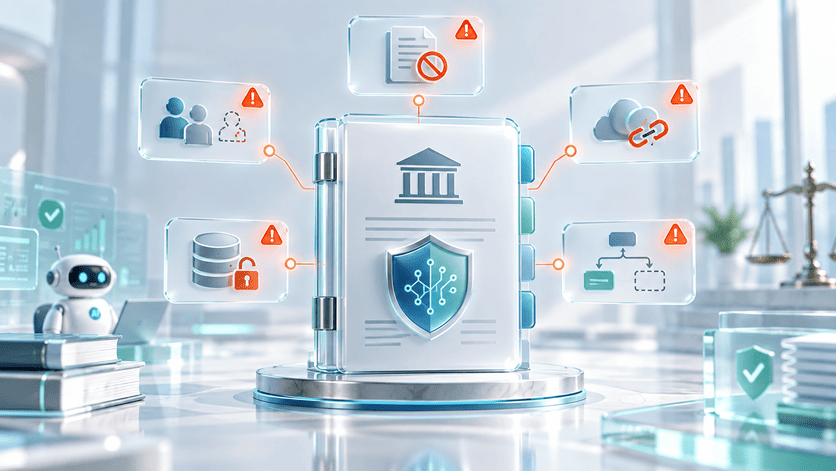
Most failure modes in agent deployments live in the engineering layer above the model. Runaway tool calls, broken state, unrecoverable retries, audit gaps, and integration drift against systems the business runs on. The limiting factors often become memory design, tool contracts, retry semantics, human-in-the-loop gates, and how the agent fails when its environment changes.
This evaluation looks at firms against that operational reality, with a Delaware buyer in mind: healthcare groups bound by HIPAA, financial services teams with audit obligations, legal operations under privilege constraints, and SaaS companies embedding agents inside products they intend to own for years.
How We Evaluated AI Agent Development Companies
Selecting a development partner in 2026 requires moving beyond generic AI directories. Traditional benchmarks like MMLU or HumanEval measure model capability, but they fail to capture agentic utility: how well a system handles tool selection, state tracking, and long-horizon recovery. Consequently, this evaluation focuses on harnessing the operational infrastructure that transforms a language model into a reliable autonomous actor.
Our evaluation framework for the Delaware market centers on six critical pillars:
- Agent-Specific Positioning: Does the company explicitly distinguish between chatbot development and agentic engineering? We look for evidence of capabilities in autonomous workflow agents, copilots, and multi-agent orchestration.
- Workflow and System Integration: A useful agent must operate within real business systems. We prioritize firms with demonstrated success connecting agents to CRMs, ERPs, HRIS, PACS (for healthcare), and internal databases through protocols like the Model Context Protocol (MCP).
- Orchestration Maturity: We evaluate the use of advanced frameworks such as LangGraph, CrewAI, and AutoGen, alongside sophisticated patterns like hierarchical planning (ReAcTree) and "Code as Action".
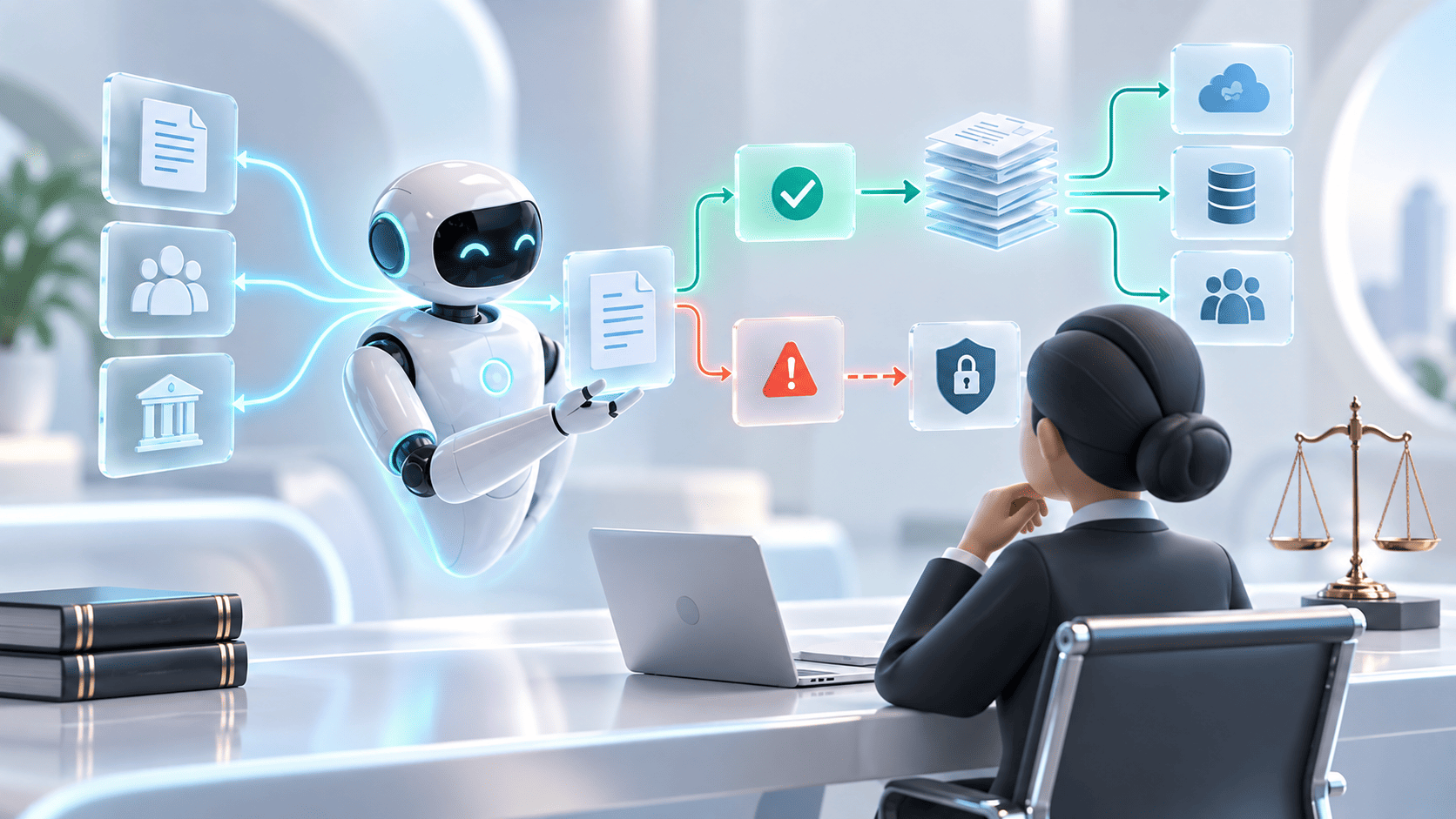
- Production-Readiness and Governance: This includes the implementation of "CLASSic" evaluation dimensions: Cost, Latency, Accuracy, Security, and Stability. We prioritize companies that treat security and human-in-the-loop (HITL) gates as inseparable from the architecture.
- Delaware Buyer Relevance: We identify companies with a local Wilmington presence, Delaware corporate registration, or a proven track record of serving the North American enterprise market.
- Accessibility for Implementation: While platform giants offer the raw tools, we focus on partners accessible for practical, custom implementation work for mid-size and specialized technology firms.
Comparison Table
1. Codebridge: Architecture-First AI Systems Engineering
Codebridge stands out for production-grade AI agent development, where the agent is not a standalone chatbot but a component of a larger operational system. Their methodology emphasizes that intelligence in 2026 is a property of system architecture, state, control flow, and interfaces, rather than just the underlying model.
Portfolio Evidence and Execution Realities
Codebridge has established a direct track record in building systems designed to survive real-world scale and regulatory constraints.
RadFlow AI, a HIPAA-compliant radiology workflow assistant, integrates into existing PACS infrastructure rather than replacing it. Average CT interpretation time fell from 15.2 to 9.4 minutes (a 38% reduction) while sensitivity for small lesions held at 96%. The design constraint that mattered most wasn't model accuracy. It was that the system had to slot into how radiologists already read, with human-in-the-loop gates on every diagnostic suggestion. Replacing the workflow would have failed clinical adoption regardless of how accurate the model was.
The Multi-Agent AI System for Sales Pipeline Automation uses a hybrid LLM architecture: Google Gemini for high-volume lead analysis, Claude Opus 4.5 for deep reasoning on qualified prospects, coordinated by a central orchestrator. Routing by reasoning depth keeps cost predictable at scale and lets us enforce a 90% confidence threshold on autonomous decisions, with anything below that routed to human review. The system runs at sub-two-minute response time and produced a 30% increase in qualified meetings without unbounded model spend.
RecruitAI handles automated technical screening with 90% agreement against senior engineer assessments. The integration question that drove the design was how to surface model uncertainty back into the recruiter's existing review queue rather than build a parallel tool the team wouldn't adopt.
Fit by Buyer Type
2. Ahex Technologies: Broad Framework-Based Agent Development
Ahex Technologies positions itself as a specialized vendor for companies seeking to leverage the latest open-source and commercial agent frameworks. They address the fundamental tension in 2026: foundation models provide broad capabilities but lack the specific procedural knowledge required for niche workflows.
Framework and Tooling Sophistication
Ahex explicitly offers development using the frameworks that buyers are increasingly requesting in 2026, including LangGraph, CrewAI, and AutoGen. Their service list covers the full agent lifecycle, from AI feasibility studies and data readiness assessments to MLOps and persistent agent deployment. They emphasize the development of Agentic RAG systems, which go beyond simple document retrieval to include source-cited AI answers grounded in real-time enterprise data.
Domain Specialization
- Supply Chain and Logistics: Route optimization and predictive demand forecasting agents.
- Energy and Infrastructure: Smart energy management systems and predictive maintenance agents for resource monitoring.
- Enterprise Resource Planning (ERP): As a certified Silver Odoo partner, Ahex is well-positioned to build agents that operate within ERP and CRM ecosystems.
3. SECL Group: Software Engineering with a Delaware Presence
SECL Group provides a pragmatic fit for Delaware-based organizations that require an AI agent partner who is also a broad-spectrum software engineering firm. With an office located on Silverside Road in Wilmington, they offer high-touch service for local buyers.
Engineering Breadth and Integration
Most AI agents in 2026 do not operate in isolation; they must interact with complex legacy systems, dashboards, and databases. SECL Group emphasizes this integration, arguing that AI agents must work as a part of existing systems rather than independently. They specialize in developing enterprise-grade software for Fortune 500 clients, including PepsiCo and Danone, which gives them the necessary experience to handle high-load system development and complex data migrations.
Strategic Advantage
Their seniority level is notable, with 82% of the team comprising senior engineers. This is critical for agent development because the failure modes in 2026 are often implementation-heavy, such as incorrect tool parameterization or flawed error-recovery logic. SECL's ability to handle the "non-model" part of the stack—databases, UI, and backend microservices – makes them a strong partner for long-term modernization projects.
Fit by Buyer Type
4. B EYE: Data, Analytics, and EPM-Connected Agents
For data-heavy organizations, B EYE represents a specialized consultancy that applies agentic AI to financial planning, budgeting, and forecasting. Their Delaware office is situated on Delaware Avenue in Wilmington.
The Data Differentiator
B EYE's core strength lies in connecting autonomous AI agents to Enterprise Performance Management (EPM) and modern data architectures. They focus on building "Intelligent Agent Systems" that handle discovery, data preparation, and LLM fine-tuning to drive measurable ROI in back-office tasks. Their portfolio includes conversational AI assistants that have reduced call-center wait times by 50% and automated 80% of back-office tasks for global logistics groups.
Best-Fit Use Cases
- Analytics Agents: Dashboards and reporting assistants that turn business data into actionable insights.
- Decision-Support Agents: Real-time insights for sales and marketing analytics.
- Financial Automation: Budgeting and forecasting agents built on platforms like Anaplan.
5. Phaedra Solutions: AI Automation and Task Management
Phaedra works across Fintech, healthcare, and e-commerce, with a service catalog focused on task-level agents: KYC and identity verification, fraud detection, document validation, route planning, and reminders/notifications systems. They also offer voice agent development for customer support workflows. Reported development timeline reductions are in the 40–50% range, attributed to reusable tooling.
The breadth of stated use cases, from Fintech trading agents to esports tournament management, points to a generalist shop rather than a specialist. For buyers who know exactly which task they want automated and need a vendor that can ship a working agent on a defined scope, that's a reasonable match. For buyers whose problem requires architectural judgment about whether agentic execution is the right call, the breadth becomes a signal to ask harder questions in discovery.
The voice agent practice and the Fintech-specific work (KYC, fraud) are the most defensible specializations within the broader catalog.
Fit by Buyer Type
6. SoluteLabs: AI-Native Product Engineering
SoluteLabs fits the 2026 market as a product engineering partner for companies that want AI agents embedded directly into SaaS or consumer-facing digital products.
Orchestration and ROI
They emphasize building domain-specific AI agents that collaborate across teams and systems. Their approach is focused on ROI rather than hype; they explicitly state that if a no-code Zapier flow solves a problem faster than a complex LLM agent, they will recommend the simpler path. This pragmatism is vital for founders and CTOs who must balance innovation with capital efficiency.
Technical Specialization
- SaaS Copilots: Embedded agents that enhance user experience within a software product.
- Internal Operations Agents: Automation of data entry, report generation, and internal departmental workflows.
- Marine and Sports Analytics: Niche applications in route planning for the marine industry and personalized training regimens for sports and fitness.
7. Superagentic AI: Agentic AI Infrastructure
Superagentic AI is not a traditional services agency but an infrastructure company focused on the "invisible infrastructure" powering agentic systems. Based in Dover, Delaware, they serve technical teams that are building their own agents but need specialized development and evaluation tools.
The Infrastructure Stack
Their work is built on five pillars: Agent Engineering, Agent Experience (AX), Agentic DevOps, Agentic Co-Intelligence (multi-agent collaboration with humans), and Quantum AI research. They offer products like SuperOptiX for performance optimization and SpecMem for memory management, alongside open-source tools like Agentnetes and TurboAgents.
Ideal Collaboration
- Engineering-Led Teams: In-house technical teams that need to optimize and scale their own agentic systems.
- Evaluation and Observability: Firms needing structured, testable infrastructure for AI agents that require embedded reasoning.
8. MyChatBot: Regional Discovery Candidate
MyChatBot is listed on Clutch as a Dover-based provider with a service mix weighted 65% toward AI agents, a team of 50–249, and a launch date of 2023. Stated minimum project size is $1,000. As of this writing the firm has no third-party reviews on the major directories that would normally support a recommendation.
For organizations testing the water with a small chatbot-to-agent transition or a budget-constrained pilot, MyChatBot is a reasonable discovery candidate worth a direct conversation. We're including them here for completeness rather than recommendation. Verify references, request architecture documentation for at least two prior agent deployments, and treat the engagement as a pilot before committing to anything load-bearing.
Fit by Buyer Type
Buyer Checklist: Before Hiring an AI Agent Development Partner
Use this as a discovery call agenda. If a vendor can't answer at least four of these clearly with reference to a working system, the engagement is a research project, not a delivery.
Final Recommendation
The right partner depends on three questions: how regulated the workflow is, how much of the surrounding system the vendor needs to handle, and whether you're hiring a delivery firm or buying infrastructure for a team you've already built.
For regulated, integration-heavy workflows where the agent has to live inside HIPAA, SOC2, or audit-bound systems from day one, choose Codebridge. The architecture-first delivery model is overhead for simpler work, but it's the right overhead when the workflow can't tolerate cascading errors.
For framework-led builds where the architectural call is already made and you need delivery against LangGraph, CrewAI, AutoGen, or an Odoo-bound ERP integration, choose Ahex Technologies. Ask for named project references in your specific domain before committing — the public evidence is service-positioning rather than outcomes.
For Delaware-based modernization programs where the agent is one workstream alongside backend, database, and dashboard work, choose SECL Group. The senior engineering bench is the relevant asset; the agent-specific compliance posture should be verified in discovery.
For finance, FP&A, and analytics teams running on EPM platforms, choose B EYE. Specialist fit, narrow but deep. Outside that profile, the fit drops fast.
For SaaS product teams embedding agents into a software product they own, choose SoluteLabs. The willingness to recommend simpler tooling when agents aren't justified is the relevant filter.
For narrow, well-scoped task automation — KYC, fraud detection, voice agents, document validation, choose Phaedra Solutions. Treat the engagement as a defined-scope build rather than an architectural partnership.
For in-house engineering teams that already operate agents at scale and need optimization or observability tooling, choose Superagentic AI. Wrong layer of the stack for everyone else.
MyChatBot is included as a discovery candidate for low-budget chatbot-to-agent pilots. Verify references and request architecture documentation before treating any engagement as load-bearing.
The pattern across all of these recommendations is the same. The agent is rarely the hard part. The integration surface, the recovery logic, the audit posture, and the operating model around the agent are what determine whether the system survives a year in production. That's the criterion to evaluate every vendor on, including the ones in this article.








Heading 1
Heading 2
Heading 3
Heading 4
Heading 5
Heading 6
Lorem ipsum dolor sit amet, consectetur adipiscing elit, sed do eiusmod tempor incididunt ut labore et dolore magna aliqua. Ut enim ad minim veniam, quis nostrud exercitation ullamco laboris nisi ut aliquip ex ea commodo consequat. Duis aute irure dolor in reprehenderit in voluptate velit esse cillum dolore eu fugiat nulla pariatur.
Block quote
Ordered list
- Item 1
- Item 2
- Item 3
Unordered list
- Item A
- Item B
- Item C
Bold text
Emphasis
Superscript
Subscript