Last month a non-technical CEO posted to r/startups about something he'd just found out about his solo technical cofounder — who'd been working unpaid for six months on an equity handshake. Prod and beta were running on the same database. Testing was happening exclusively on admin accounts. When the CEO pushed back, the cofounder defended it as "the only way to truly test a true environment."
If you've been an early-stage founder-CTO — or worked next to one — you recognize this. The cofounder isn't wrong because he lacks skill. He's wrong because he's alone, overloaded, and self-authoring engineering standards he doesn't have time to follow. That's the actual shape of pre-seed engineering, and most "CTO playbook" advice doesn't survive contact with it.
KEY TAKEAWAYS
Engineering hygiene is the first 90-day deliverable, not a strategic vision document. Separate environments and deploy discipline come before architecture diagrams.
AI tooling raised the velocity floor, not the team's capability ceiling. Time saved by Copilot has to be explicitly redirected — to junior fundamentals and senior scope expansion — or it leaks back into Slack and meetings.
Zombie roadmap items are the largest hidden cost on lean teams. A new CTO's job in month one is killing what stopped serving the business, not adding new bets.
Code-quality complaints and product-strategy complaints sound identical from churned users; categorization is a prerequisite to staffing engineers against the symptom.
Fractional CTO leadership is now a credible bridge to ~$1M ARR. For many seed-stage teams, the full-time hire belongs after the technical bet is validated, not before.
The Lean-Team Math Has Changed
The pressure on early-stage SaaS leadership is structurally different in 2026 than it was three years ago. Monthly burn for a seed-stage B2B SaaS team with 5-10 engineers easily runs into the hundreds of thousands of dollars. At the same time, 73% of engineering leaders are using AI for code generation and testing, per the Stack Overflow Developer Survey 2025. The deployment-frequency gap between elite and low-performing engineering teams continues to widen — and elite teams are getting there with leaner headcount, not bigger.
What that math says: the cost of one wrong hire is now an entire quarter of runway. And the cost of not having an engineering operating system — environments, testing discipline, deploy hygiene — is the weekend bug that takes prod down for a paying customer you spent four months acquiring.
Three Patterns From the Field
The Reddit case isn't an outlier. Three other patterns show up repeatedly in early-stage SaaS engineering conversations, and they share a structural cause.
Pattern 1 — Code or strategy?
On dev.to, a power-user-feedback writeup framed the question that comes up at every seed-stage SaaS that's starting to leak users:
Churn complaints fall into two buckets: "it was slow, it kept crashing, the data was wrong" (code) and "I didn't really need this, I went back to spreadsheets" (strategy). Lean teams burn entire quarters trying to engineer their way out of bucket two. Before adding an engineer or rewriting the stack, categorize the last 20 churn conversations. If more than half are bucket two, the bottleneck isn't your engineering team.
Pattern 2 — Juniors shipping, juniors stalling
A 2026 tech-lead writeup captured what's happening on AI-augmented teams right now:
The AI productivity story (73% adoption, per Stack Overflow 2025) hides a second-order effect: time savings don't automatically become capability gains. Juniors ship working code without building the mental models that turn them into seniors. Seniors get hours back and coast on tasks they already know how to do. A lean team running this for two quarters looks healthy by output, and is hollowing out by capability.
Pattern 3 — One overloaded technical cofounder
We worked with a ~6-person B2B SaaS team — vertical: workflow automation for ops teams, stack genre: Python/Postgres on a managed platform — on a 4-month engagement during their seed raise. The before-state: prod and staging shared a Postgres instance, deploys were git-push-to-main, and the technical cofounder was also handling Stripe integrations and SOC 2 prep alone. The after-state, 4 months in: three-environment setup with branch deploys, staging seeded from a redacted prod snapshot, deploy time down from "however long it takes" to under 12 minutes, and the cofounder reclaimed roughly 1.5 days/week for product work. Nothing here was novel engineering — it was a hygiene baseline that a single founder could not author alone while also shipping features.
The Pattern: Hygiene Before Vision
The 90-day CTO myth says you walk in with a strategy deck. The actual job at this stage is smaller and harder: ship 2-3 visible operational improvements and make one architectural call the team feels for a year. The repeated lesson from operators who've done this across multiple SaaS companies: ambitious plans burn out lean teams, and the first 90 days are best treated like a startup inside the startup.
The funding-side view lines up. For many seed-stage founders, fractional or part-time technical leadership is enough to validate the bet — the full-time CTO commitment can wait until after that validation, not before. Bessemer's State of the Cloud 2024 reports median private SaaS ARR growth at 32%, with the top quartile clearing 50%. What that data implies is that top-quartile growth correlates with leaner team structures than the median — not with bigger ones. Our reading: capital efficiency on lean teams comes from defending what gets cut, not from optimizing what gets added.
From our work with SaaS / B2B Software teams: The pattern we see most often is founders treating engineering hygiene as something they'll "get to once we have product-market fit." Then a paying customer hits a data bug caused by the shared-database setup, and three weeks vanish into incident response. The hygiene work itself is small — usually 1-2 weeks of structured effort with the right outside perspective. The cost of skipping it is measured in lost paying customers and senior-engineer attention you can't recover.
The Lean-Team CTO Playbook (5 Steps)
What follows is the sequence. Steps build on each other — don't pull them out of order. The comparison below contrasts the typical seed-stage default against the playbook approach:
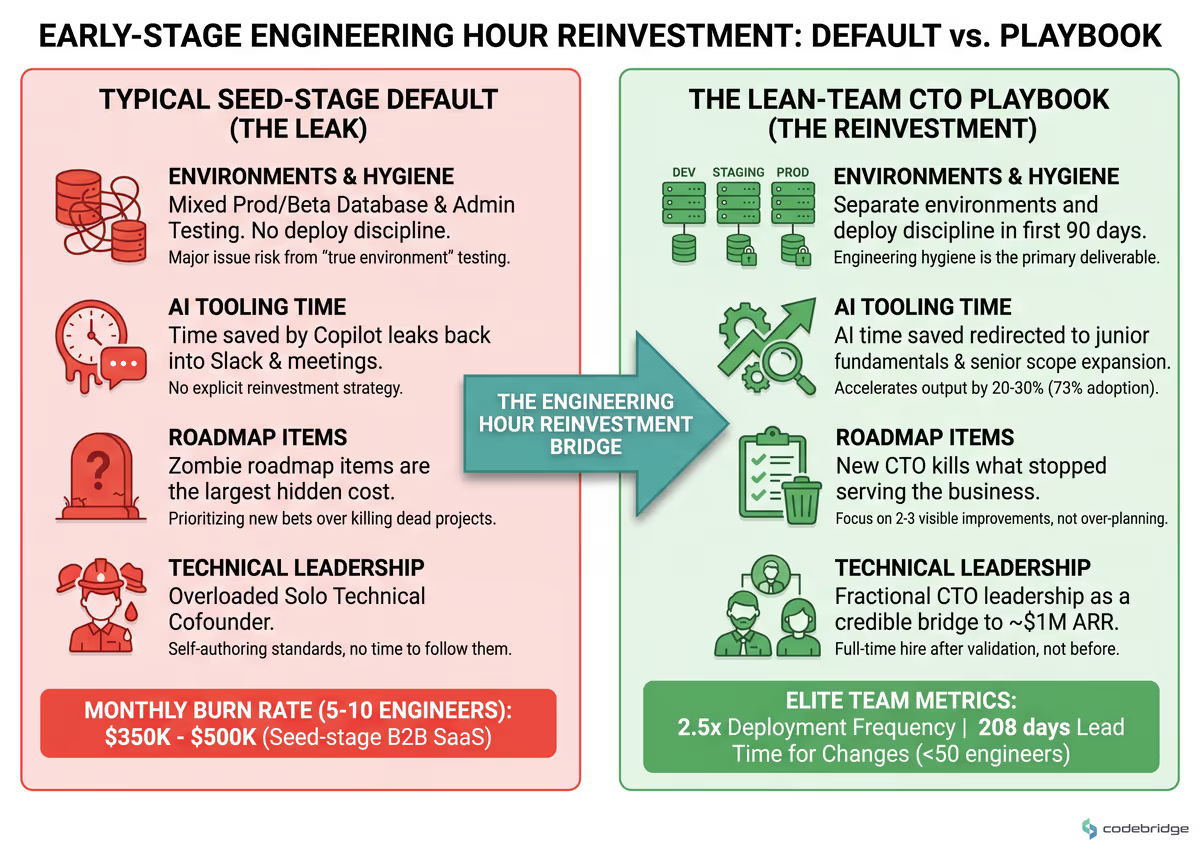
The right column shows where lean teams reinvest engineering hours — and where typical seed-stage setups quietly leak them.
Step 1 — Separate environments in week one
What to do: Three environments — dev, staging, prod — with isolated databases, isolated credentials, and staging seeded from a redacted prod snapshot on a schedule (weekly is enough at seed). No testing on admin accounts in prod. Ever.
What good looks like: An engineer pushes to a branch, sees it deployed to a preview URL within 10 minutes, and runs full tests without touching real customer data.
Common failure mode: "We'll do it once we have time." You won't. You'll do it before your second paying customer, or you'll do it under incident pressure with a churn risk on the line.
Threshold signal: If your last bug got debugged in production with print statements, you're already past the point where this work has positive ROI.
Step 2 — Audit the inherited roadmap in week two
What to do: Walk every in-flight engineering commitment against current business value. Four mechanical questions: who asked for this, when, what evidence supported it, what does completing it unlock now? Anything that fails three of four gets sunset — not paused, sunset.
What good looks like: The roadmap shrinks 20-40% in the first audit. Senior engineers stop working on projects that were draining them last quarter.
Common failure mode: Defaulting to continuity. The most expensive zombie projects are the ones where stopping feels disrespectful to the engineers who started them. Sunset them anyway.
Worked example: A 6-engineer team with one staff engineer spending 60% of his time on a rewrite no longer tied to the GTM motion is burning roughly $15K/month of fully-loaded comp on a sunk-cost project. Killing it frees that capacity for work that actually moves ARR.
Step 3 — Categorize churn before staffing against it
What to do: Pull the last 20 churn conversations or cancellation emails. Tag each as code (slow, crashy, wrong data) or strategy (didn't need it, didn't fit the workflow). If >50% are strategy, do not add an engineer or rebuild a service — the bottleneck is product, not engineering capacity. The quadrant below shows where most seed-stage teams actually land vs. where they assume they are:
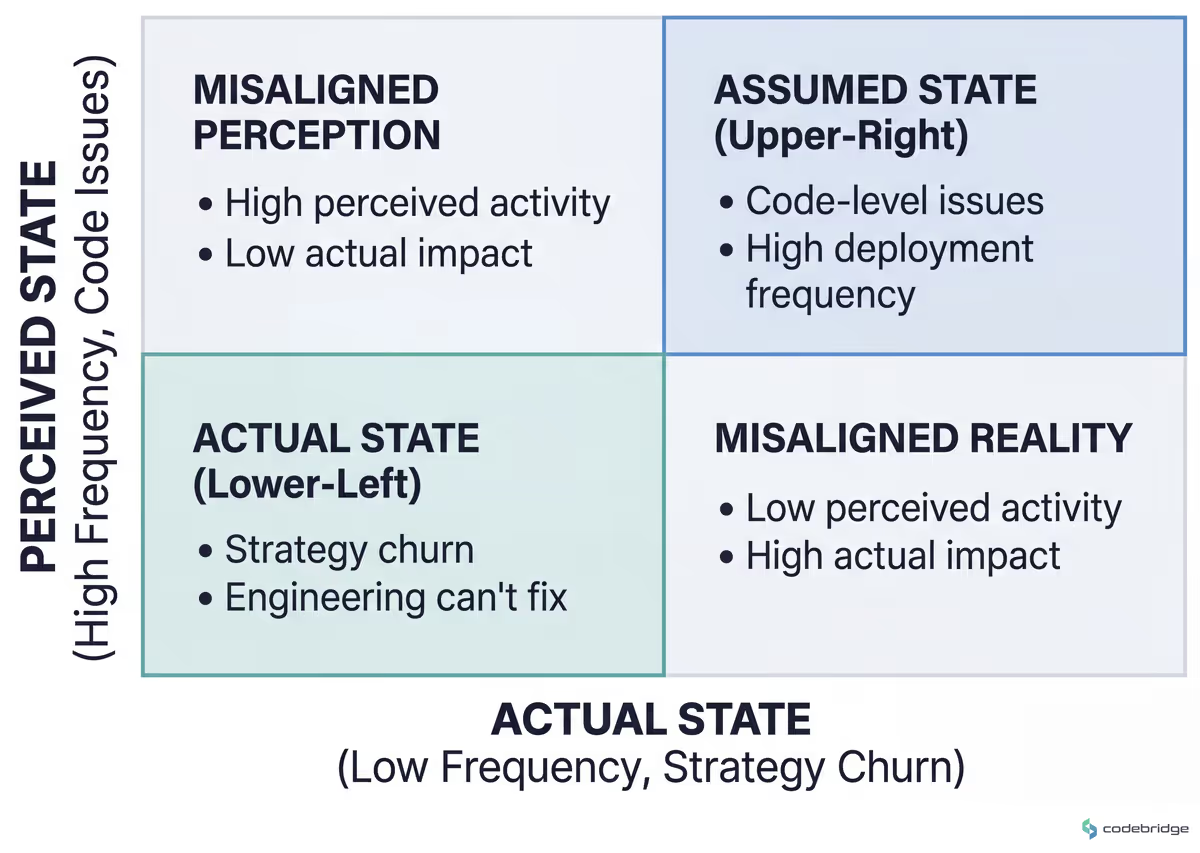
Most lean teams assume they're in the upper-right (code issues, high frequency). Roughly half are actually in the lower-left — strategy churn that engineering can't fix.
Common failure mode: Asking the engineers what's wrong. They'll tell you, accurately, what's wrong with the code. They cannot tell you what's wrong with the positioning. Different inputs.
Step 4 — Redirect the AI time savings explicitly
What to do: Assume Copilot and Claude give you back 20-30% of engineering hours. Reinvest with intent: juniors get 2-3 hours/week of fundamentals work without AI assist (debugging, system design, code-review writeups). Seniors take on one cross-team scope expansion per quarter (mentorship, architecture, incident command).
What good looks like: Six months in, your junior engineers can debug a production issue without AI assist, full. Your seniors are owning more surface area than they were when they joined.
Common failure mode: Letting the time savings dissolve into Slack and meetings. Velocity looks the same, capability degrades silently, and the senior bench is one resignation away from a crisis before anyone notices.
Step 5 — Embed SOC 2 only if your ICP requires it
What to do: If your target customer is a 500+ employee company, start the SOC 2 work in month two — SSO, MFA, automated user lifecycle, audit logging. If your ICP is SMB or self-serve, defer. Per Bain's SaaS Growth Imperative, formalized technical roadmaps and architecture audits drive 15-20% gross dollar retention improvement for B2B SaaS — but only when they reflect actual buyer requirements.
What good looks like: Compliance work sits on the roadmap as a customer-acquisition unlock, not a cost center. Enterprise sales cycles get shorter, not longer.
Common failure mode: Pursuing SOC 2 because "we should" before any enterprise buyer has asked. That's compliance theater funded out of feature velocity.
!
The five steps look small individually. Compounded, they are the difference between a team that hits 32% ARR growth on lean headcount and a team that adds engineers every quarter to fight the same fires.
What To Do This Week
The Reddit founder we opened with was looking at a structural overload problem, not a skill problem. His cofounder didn't need a lecture on engineering best practices — he needed someone to install a lightweight framework around him so he could keep building without authoring the framework himself. That's the actual job of early-stage technical leadership, whether fractional or full-time, equity or salary. The timeline below anchors the first three moves to specific days:
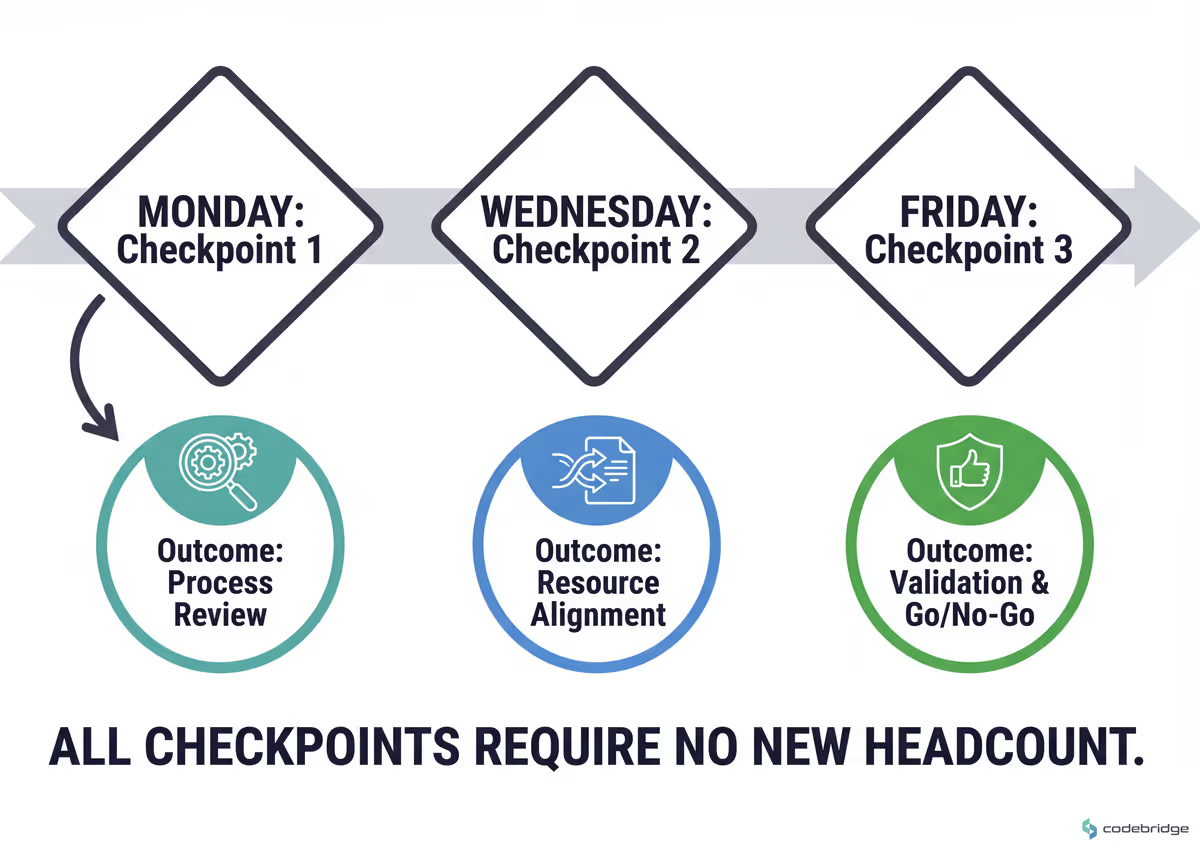
Three concrete checkpoints between Monday and Friday — none of them require new headcount.
- Tomorrow morning: Open your repo and check whether staging and prod share any infrastructure — database, credentials, third-party API keys. If yes, that's your first ticket. Block 90 minutes Wednesday to scope the separation.
- Wednesday: Pull your last 20 churned-user conversations into a single doc. Tag each as "code" or "strategy". Don't try to fix anything yet — just look at the distribution.
- By Friday: Schedule a 60-minute roadmap audit with your senior engineers. Bring the four-question filter from Step 2. Sunset at least one item before the meeting ends.
If you're a founder without a technical cofounder — or your cofounder is the one running prod and beta on the same database — the 30-minute artifact you can produce today is a written list of every environment-related risk you can name from memory. That list, in front of an advisor or fractional CTO next week, is the cheapest version of this entire playbook.
Working through this and want a second set of eyes?
Talk to our team about a 90-day engineering hygiene engagement.
Diagnostic Checklist
Run these against your team this week. Three or more "Yes" answers means the playbook above is overdue, not optional.
Could you, right now, name which database your last bug was reproduced against — and was it production? Yes / No
Is there an engineering project on your current sprint where, if you sunset it tomorrow, no customer or revenue line would notice within 30 days? Yes / No
Of your last 20 churn conversations, can you say with confidence whether more than half were strategy-driven vs. code-driven? No counts as a Yes — it means you haven't categorized.
Has any junior engineer on your team debugged a production incident full in the last 60 days, without AI assistance? No counts as a Yes — capability is degrading silently.
If your most senior engineer resigned next month, would your incident response degrade by more than 50%? Yes / No
Is SOC 2 (or equivalent compliance) on your roadmap without a named enterprise prospect who has actually asked for it? Yes / No
Has your engineering headcount grown in the last two quarters without lead-time-to-change or deploy frequency improving in the same window? Yes / No
REFERENCES
IDC Worldwide SaaS and Cloud Software Forecast, 2024
Bessemer Venture Partners — State of the Cloud 2024
Stack Overflow Developer Survey 2025
Reddit r/startups — Early-stage founder struggling with CTO structure










Heading 1
Heading 2
Heading 3
Heading 4
Heading 5
Heading 6
Lorem ipsum dolor sit amet, consectetur adipiscing elit, sed do eiusmod tempor incididunt ut labore et dolore magna aliqua. Ut enim ad minim veniam, quis nostrud exercitation ullamco laboris nisi ut aliquip ex ea commodo consequat. Duis aute irure dolor in reprehenderit in voluptate velit esse cillum dolore eu fugiat nulla pariatur.
Block quote
Ordered list
- Item 1
- Item 2
- Item 3
Unordered list
- Item A
- Item B
- Item C
Bold text
Emphasis
Superscript
Subscript