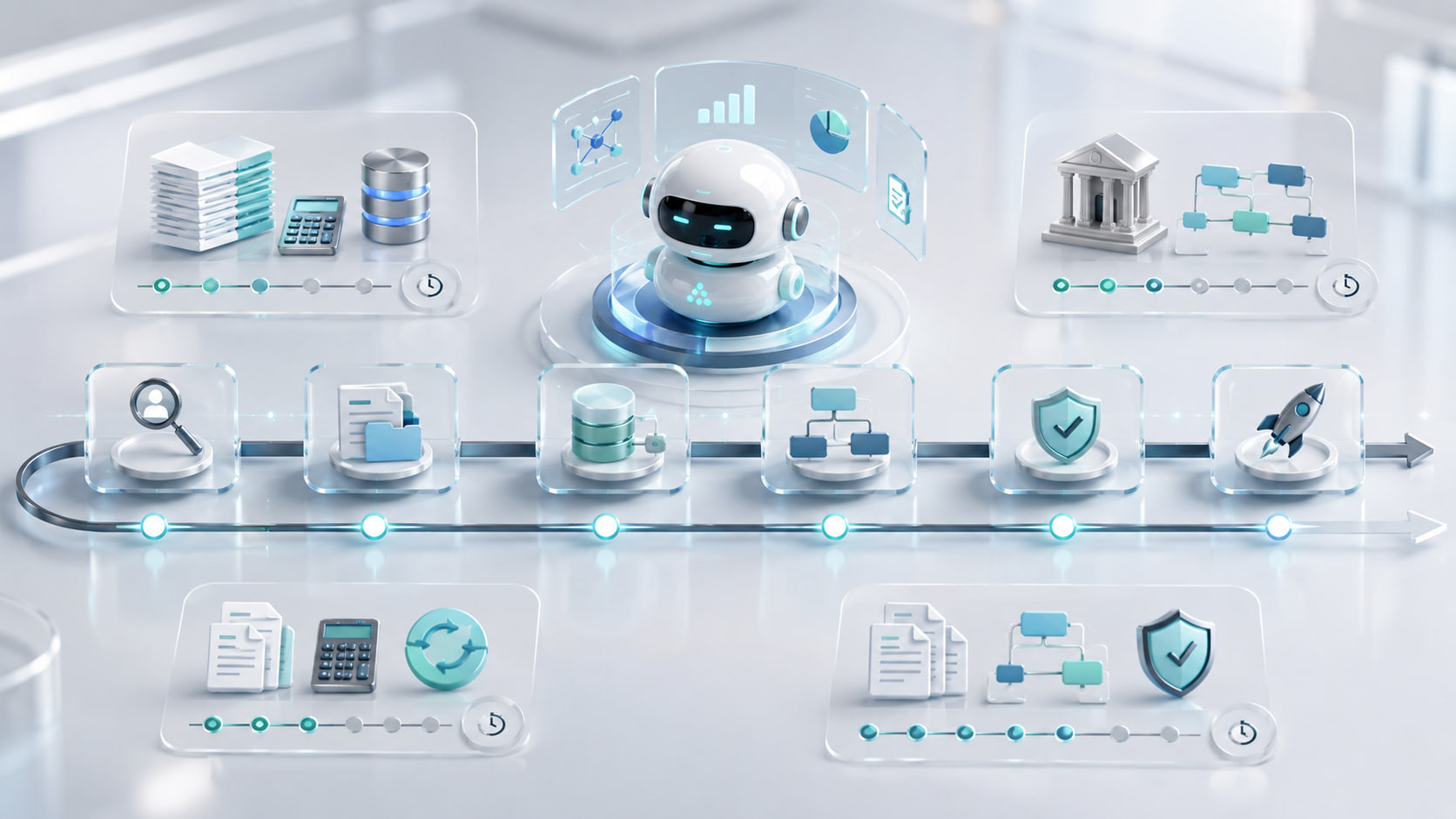
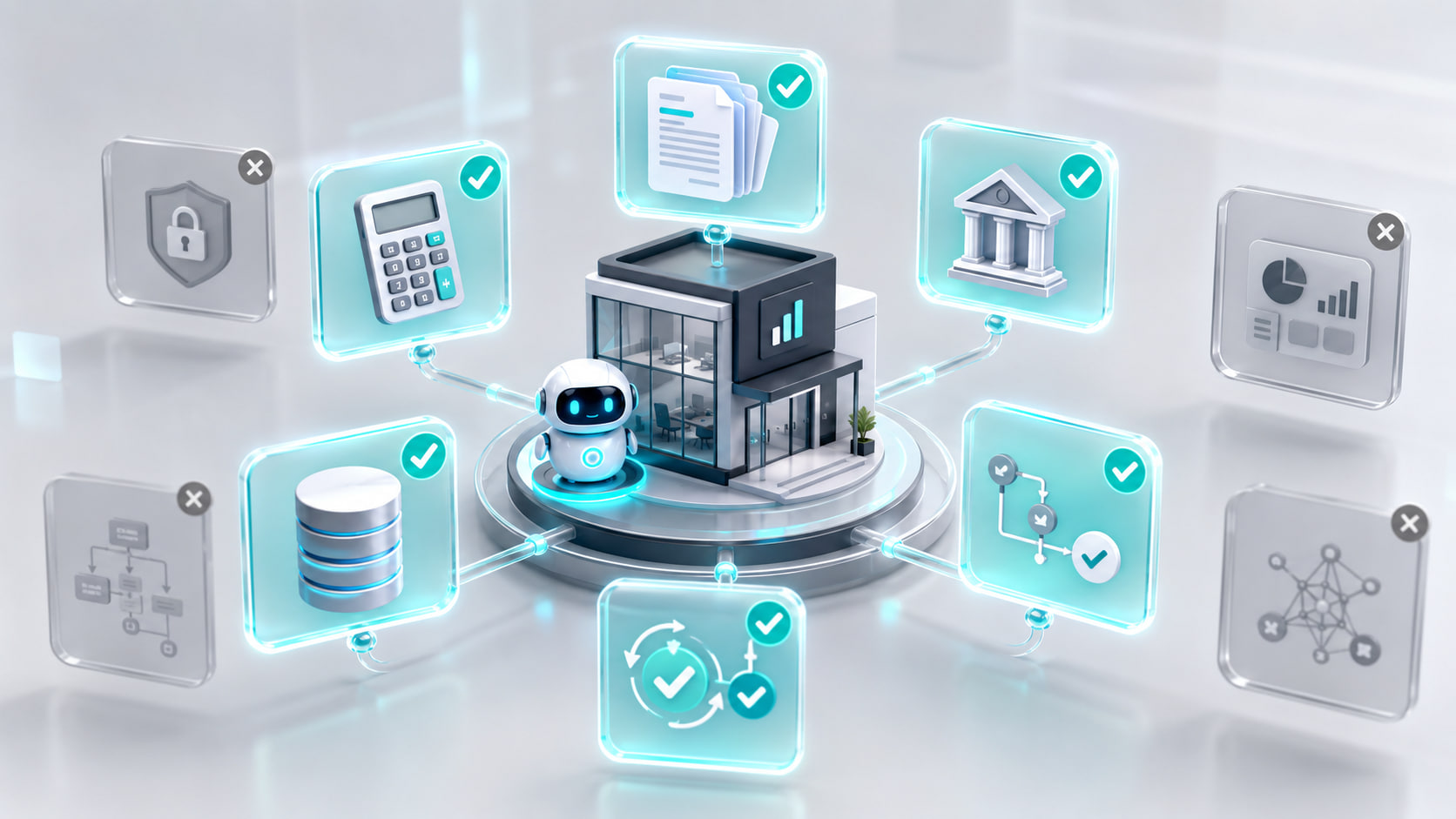
More companies are putting AI into their daily operations, and the reason is simple. The results are real. Work that took hours takes minutes, a model takes the first pass at decisions that used to wait on a person, and the team spends its attention on what needs judgment.
The companies that see durable AI results prepare their data before AI enters the workflow, so they are not forced to fix missing context and broken data pipelines after deployment.
Gartner shows the cost of skipping that step by expecting organizations to abandon 60% of AI projects through 2026 when the data underneath them is not ready. At the same time, IBM finds that only 29% of technology leaders are confident their data is ready to scale generative AI. It demonstrates that the real blocker is data.
This article goes beyond the recommendation to clean your data. It treats data readiness as a strategic framework: a way to decide, one use case at a time, whether the right data can support the specific AI job you want to build.
What Is Data Readiness For AI?
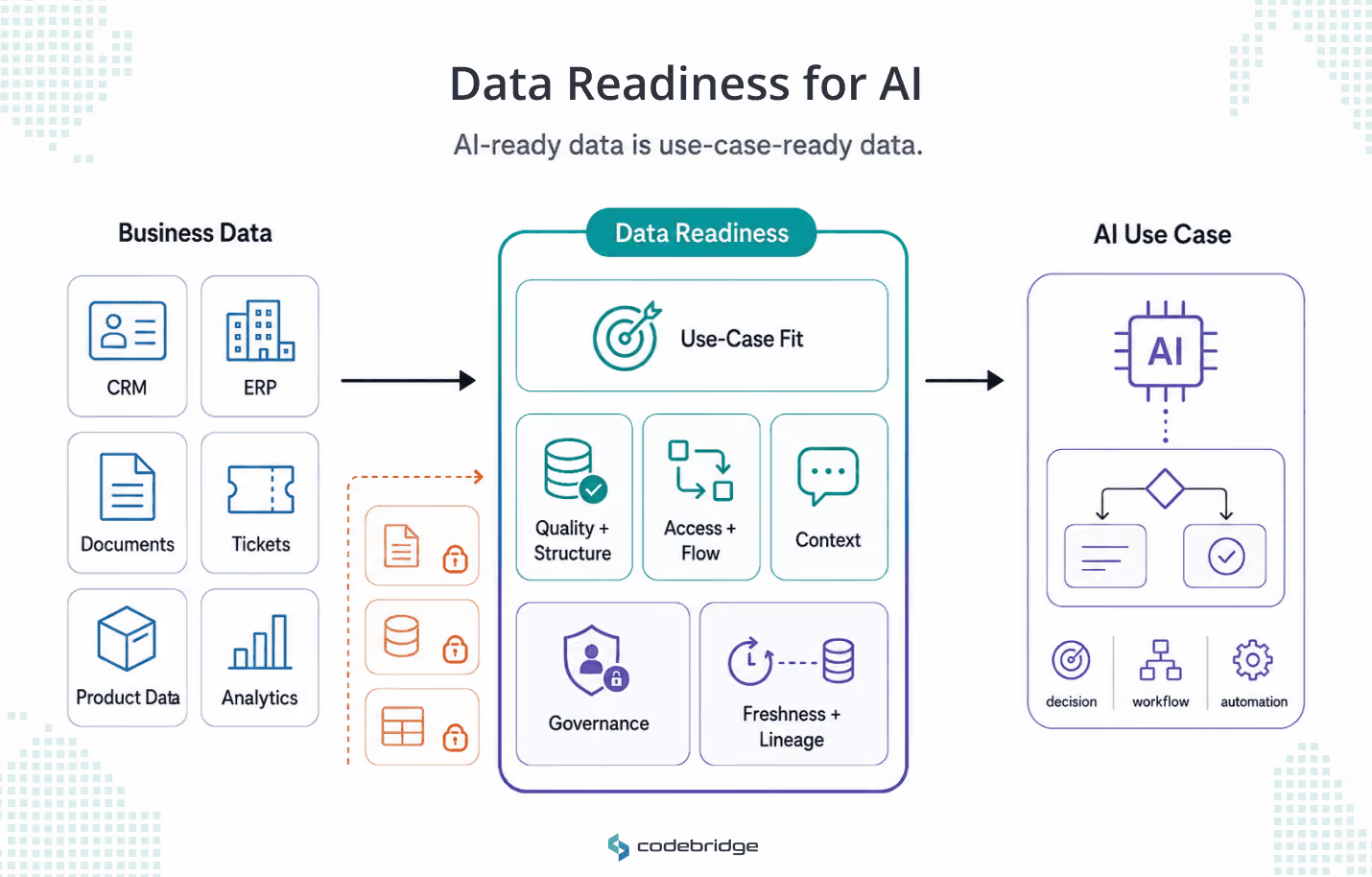
Data readiness for AI is the condition where your data is accurate enough, accessible enough, governed enough, contextual enough, and connected enough to support a specific AI use case in production.
Read that sentence again and notice the load-bearing word enough. Readiness is relative to a job, and it is not an absolute score you earn once.
The Core Components of AI Data Readiness
Why Readiness Is Use-Case-Specific
The main reason is that the same dataset is ready for one AI job and unsafe for another.
Your customer table might be ready to generate a monthly revenue summary and unready to drive real-time pricing recommendations, because pricing needs freshness and edge-case coverage that the summary never required.
Data becomes AI-ready when it can support a defined decision, under a defined level of risk, inside a defined workflow. Without a clear use case, you are auditing data in the abstract, which usually means cleaning everything and preparing nothing.
Why Ordinary Data Quality Checks Are Not Enough
Traditional data quality work is real work, and it matters. It covers accuracy, completeness, consistency, deduplication, missing values, formatting, schema validity, and validation rules. If your data fails these, nothing downstream will save it. Treat it as the floor.
However, production AI asks for more than a clean table. It needs representative examples, including the errors and exceptions the model will meet in the wild. It needs business context, so a technically correct record means the right thing. It needs source traceability, so an output can be tied back to where it came from. It needs permission rules the system can enforce, freshness that matches the decision, feedback loops, and monitoring that continues after launch.
Clean data can still be bad AI data. For instance, a CRM can be spotless and carry no signal about buying intent or a support knowledge base can be complete and six months out of date.
In short, clean data is the minimum. AI-ready data should also know where it came from, who is allowed to use it, what it represents, when it expires, and what happens when the model is wrong.
The Eight-Gate Data Readiness Audit

Here is the framework we use at Codebridge to answer the readiness questions for our clients. We call it the Eight-Gate Data Readiness Audit.
Think of it less as a scorecard and more as eight gates your data has to clear before it reaches a production AI system.
Each gate returns one of three readings:
- Open: meaning the data clears it
- Conditional: meaning it clears only with limits
- Closed: meaning building on it would create real risk
Those readings roll up into a single go, pilot, or stop decision at the end.
The gates run in rough order because the early ones change how you read the later ones.
Gate 1. Use-case fit
Before you audit a single field, define the job. The use case decides which data matters, what good output means, and how much can go wrong before someone gets hurt. Everything in the seven gates after this one inherits the answer, which is why a clear use case is the cheapest risk control you will ever apply.
The task type alone changes what the data has to do:
Lock these before you move on:
- The business problem the AI solves, in one sentence.
- The decision or workflow it supports.
- What good output looks like, in concrete terms.
- What data does the job need, and which data is risky to include?
If you skip this gate, you audit data with no reference point. That may turn into cleaning the whole warehouse and preparing none of it for the thing you are building.
Gate 2. Source system readiness
Once you know the job, find out where the data lives and whether you can trust it. Projects can fail here without anyone noticing, because the model gets wired to a source that looks useful but is not authoritative. The answer comes back plausible and quietly wrong, which is the most expensive kind of wrong.
For every source feeding this use case (CRM, ERP, EHR, billing, product database, support desk, warehouse, third-party API), confirm:
- It is the system of record, not a stale copy.
- No other source contradicts it on the same fact.
- Someone owns it by name.
- It is stable enough to connect to without breaking every quarter.
When two sources disagree, resolve the conflict yourself before the model resolves it for you. That resolution is integration and architecture work, not cleanup, and it is where a model earns or loses its trustworthiness.
Gate 3. Data quality and integrity
This is the gate everyone already knows, so the work here is to keep it in its place. Run the standard checks, then make the one adjustment that catches most teams off guard.
The adjustment matters because analytics and AI want opposite things from an outlier. Analytics removes it to give a person a clean trend. A fraud model or a maintenance model reads that same outlier as the signal. Strip it, and you train the system to miss the event you built it to catch.
Hold this gate to the floor, not the finish line. A dataset can pass every quality rule and still fail the seven other gates. Treating quality as the whole job is the single most common reason a confident team ships an AI system that does not work.
Gate 4. Context and metadata readiness
A record can be correct and still useless because the AI cannot tell what it means. This gate decides whether the system reasons about meaning or pattern-matches on strings.
The test is short. Can you answer yes to all four?
- A human can explain what each critical field represents without guessing.
- The system can tell a draft from an approved version from a deprecated version.
- Business definitions, labels, and taxonomies are written down, not tribal knowledge.
- Timestamps, ownership, and lineage travel with the data.
Any no leaves you with context debt: the gap between data that exists and data anyone can explain well enough for an AI to rely on.
Context debt is invisible on a dashboard and expensive in production because the model fills the gap with a confident assumption, and nobody catches it until the assumption is wrong.
Gate 5. Access, permissions, and security readiness
AI does not get a pass on permissions. For agents, copilots, and retrieval systems, access control is part of the architecture, not a legal formality added at the end. OWASP's 2025 risk list for LLM applications ranks sensitive information disclosure near the top, next to supply-chain and data-poisoning risks from compromised datasets and components.
Run four tests against the real workflow:
- Can the AI enforce the same permission rules your application already enforces?
- Can it stop one user from seeing another user's data, even through a clever prompt?
- Can sensitive and regulated data be detected, classified, and protected before it reaches the model?
- Can every access be logged and audited?
If any test fails, fence that data off from the AI layer until it passes. A retrieval system that ignores permission boundaries does not leak slowly. It leaks at machine speed. The rule underneath all four: the AI inherits the permission boundaries of the workflow, and never invents looser ones.
Gate 6. Freshness, latency, and availability
So audit freshness against the job, not in the abstract: update frequency, pipeline reliability, sync delays, stale-data risk, and whether you can even see an outage when one happens.
This is a production-behavior gate, which is why planning skips it and incidents reveal it. Readiness is not a property you certify once. The data has to hold it every time the pipeline runs, for as long as the system is live.
Gate 7. Unstructured data readiness
Most generative AI systems lean on documents more than tables, and that is where readiness gets heavy. IBM notes that the vast majority of enterprise data is unstructured and treats the failure to make it usable as a serious barrier to scaling AI.
For the document set behind this use case (PDFs, contracts, emails, transcripts, tickets, clinical notes, policies, knowledge base articles), confirm each one:
- Documents can be parsed reliably.
- Duplicates are controlled and outdated versions are removed.
- Content is chunked sensibly for retrieval.
- The system can cite the source it answered from.
- Confidential sections are protected.
- A real process keeps the knowledge base current.
Every enterprise search tool, support copilot, legal assistant, and sales-enablement agent stands or falls here. Clean tables will not rescue a retrieval base full of stale PDFs.
Gate 8. Monitoring, observability, and feedback readiness
Readiness does not end at launch. Data drifts, schemas change, and sources go quiet. Gartner is direct that AI-ready data is a continuous practice, not a one-time task, and this gate is what makes that real.
Once the system is live, confirm the team can do all four. The right column is what it costs you when they cannot.
A system that was ready in March can stop being ready by June without anyone deciding it should. If you cannot observe what the data and the model are doing, you are not running an AI system. You are hoping.
How to Evaluate Data Readiness Against a Real AI Use Case
Start With One Workflow
Run the audit against one workflow. Score each gate the same way: a low-readiness signal or a high-readiness signal. Keep it honest and specific.
A Readiness Scoring Table
Define a Go, Pilot, or Stop Decision
Then make one of three calls and say it out loud.
Go: The data clears the gates that matter for this use case. Build the pilot.
Pilot with limits: The data is usable, but only inside a narrow scope, with human review on the output and a short list of known gaps you are watching. Most real projects start here, and that is fine.
Stop: One or more gates are closed in a way that creates unacceptable risk. A permission boundary the system cannot enforce or a source nobody trusts.
Fix the gate before you build. Building anyway moves the discovery of risk to production, in front of users.
Two Real Cases: What Data Readiness Changes In Production
Two Codebridge builds show these 8 gates at work. In both cases, the result came from preparing the data and the integration.
SalesTech: A Multi-Agent Sales System
A B2B professional-services firm had hit a scaling wall. Its team ran outreach by hand across more than 100 LinkedIn and email accounts, average response time sat at 24 hours, and lead context was scattered across platforms, so personalization broke down at volume.
Codebridge built a modular multi-agent system around a central orchestrator, and the readiness work is what made it run. Lead context was consolidated into something the agents could trust instead of a hundred fragmented inboxes (source-system and context gates).
A real-time research step pulled current market signals, so outreach referenced today's conditions rather than a stale template (freshness gate). And a conservative confidence threshold routed any low-certainty lead to a human SDR instead of letting the system act on a guess (observability and human review).
The result a CEO cares about: response time dropped from 24 hours to under two minutes, time to first meeting fell from one or two weeks to two or three days, and the system saved an estimated 20,000 hours of selling time a month while sending over 500,000 personalized messages without tripping spam filters.
HealthTech: A Clinical Workflow Assistant (RadFlow AI)
A Tier-1 diagnostic imaging network was running into the wall every growing health system hits: scan volume climbing 22% a year, radiologist headcount flat, turnaround slipping past contractual SLAs, and accuracy degrading on late shifts. Pointing another standalone AI tool at the problem would have made the workflow more fragmented, not less.
Codebridge built RadFlow AI, a HIPAA-compliant diagnostic workspace, and the data-readiness decisions are what let it reach clinical use. It integrated with the existing PACS through DICOM and HL7 instead of becoming a separate system radiologists had to reconcile by hand (source-system and interoperability gates).
Regulated patient data stayed inside enforced permission boundaries (permissions gate). And every output ran through a human-in-the-loop design, validated in an independent double-blind study across 2,400 scans before anyone trusted it in production (observability and human review).
The result: average CT reading time fell from 15.2 to 9.4 minutes, a 38% gain, with 96% detection sensitivity on sub-4mm nodules and sub-second rendering even over the satellite connections at rural sites. It has run in production for over nine months without a critical failure.
How Data Readiness Fits Into the Broader AI Readiness Assessment
Data Readiness is One Layer of AI Readiness
Data readiness on its own it is not sufficient. It is one layer of a broader AI readiness assessment that also covers the business case, the workflow, the architecture, the integrations, governance, security, team and ownership, monitoring, and change management. Clean, well-governed data will not rescue a use case nobody defined or a workflow nobody mapped.
Why Data Cannot Be Assessed in Isolation
Data only has value in relation to something else: the workflow it feeds, the user who acts on it, the decision it supports, the risk level it carries, the architecture it moves through, the human review that catches its mistakes, and the feedback loop that improves it. Audit the data alone, and you can pass every gate and still build the wrong system well.
Data Readiness Checklist Before Starting an AI Project
Run this before the first model call, against one use case at a time.
Use case
- The AI use case is clearly defined.
- The business decision or workflow is mapped.
- You know what good output means.
- You know where human review is required.
Data sources
- You know where the required data lives.
- There is one clear system of record.
- Source conflicts are resolved.
- Third-party data dependencies are understood.
Quality and integrity
- Required fields are complete and reliable.
- Duplicates and inconsistencies are understood.
- Historical corrections are traceable.
- Outliers and exceptions are represented, not scrubbed.
Context and metadata
- Business definitions are documented.
- Metadata is available.
- The AI can retrieve the right context.
- Timestamps and ownership are clear.
Permissions and governance
- Sensitive data is classified.
- Access rules can be enforced at the AI layer.
- AI access is logged.
- There is data the AI should never touch, and it is fenced off.
Production readiness
- Data is fresh enough for the use case.
- AI outputs can be traced back to sources.
- A feedback loop exists after launch.
- Someone owns data quality after deployment.
Conclusion
AI does not need perfect data. That standard is a trap, and chasing it is how teams spend a year cleaning a warehouse for a system they never define. AI needs data that fits the use case, is governed for the risk, is connected to the workflow, and stays observable after it goes live.
So the order matters. Audit the data before you pick a model, choose an architecture, or sign a vendor. The Eight-Gate audit takes an afternoon per use case and tells you something a demo never will: whether the thing you want to build can survive contact with your own data.
The companies that win the next few years will not be the ones with the most AI. They will be the ones who knew what their data could and could not support, and built accordingly.
Before you automate a workflow, audit the data, the permissions, and the architecture that have to hold it up in production. If you want a second set of eyes on that audit, that is the conversation worth having first.













Heading 1
Heading 2
Heading 3
Heading 4
Heading 5
Heading 6
Lorem ipsum dolor sit amet, consectetur adipiscing elit, sed do eiusmod tempor incididunt ut labore et dolore magna aliqua. Ut enim ad minim veniam, quis nostrud exercitation ullamco laboris nisi ut aliquip ex ea commodo consequat. Duis aute irure dolor in reprehenderit in voluptate velit esse cillum dolore eu fugiat nulla pariatur.
Block quote
Ordered list
- Item 1
- Item 2
- Item 3
Unordered list
- Item A
- Item B
- Item C
Bold text
Emphasis
Superscript
Subscript