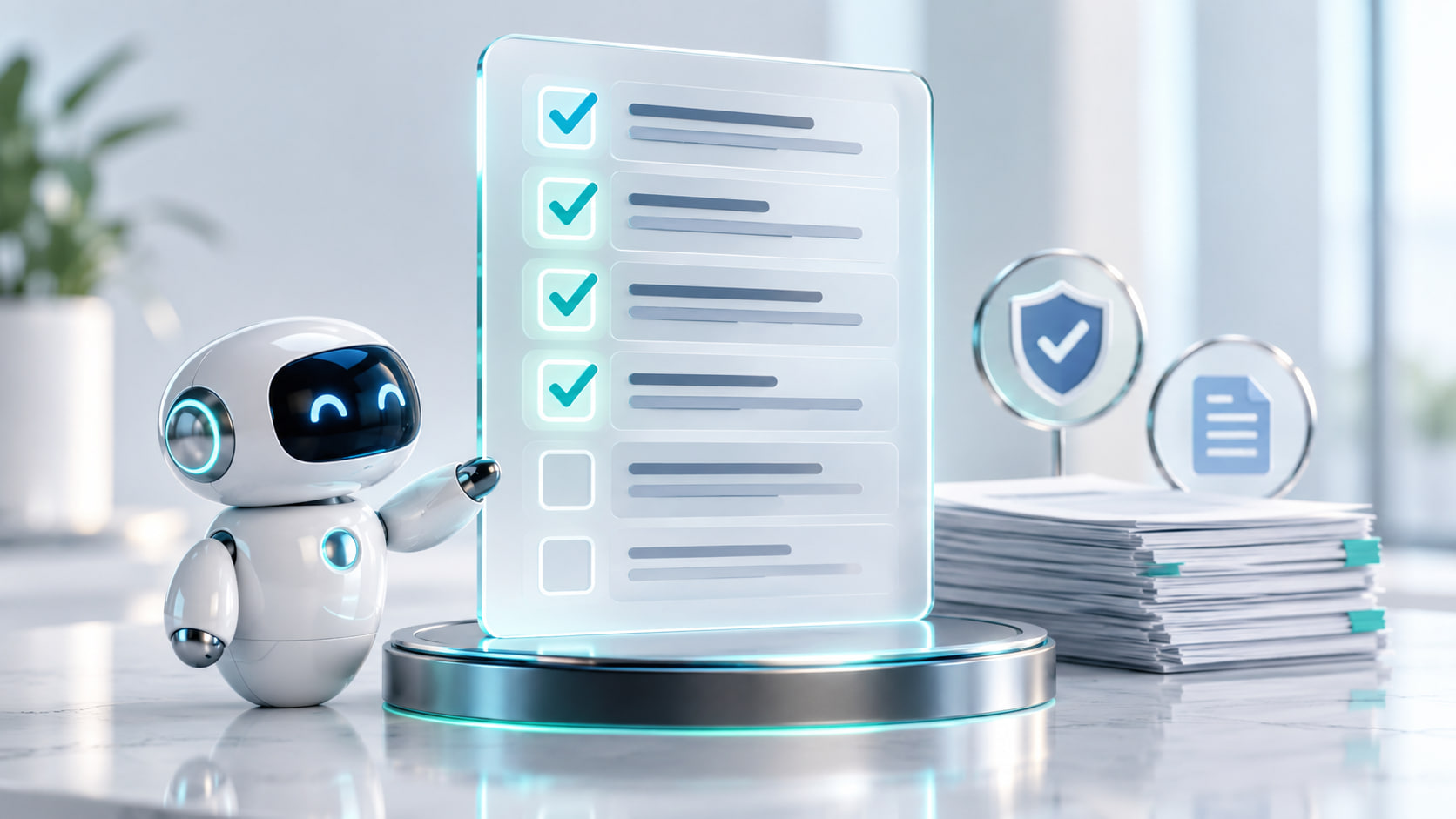
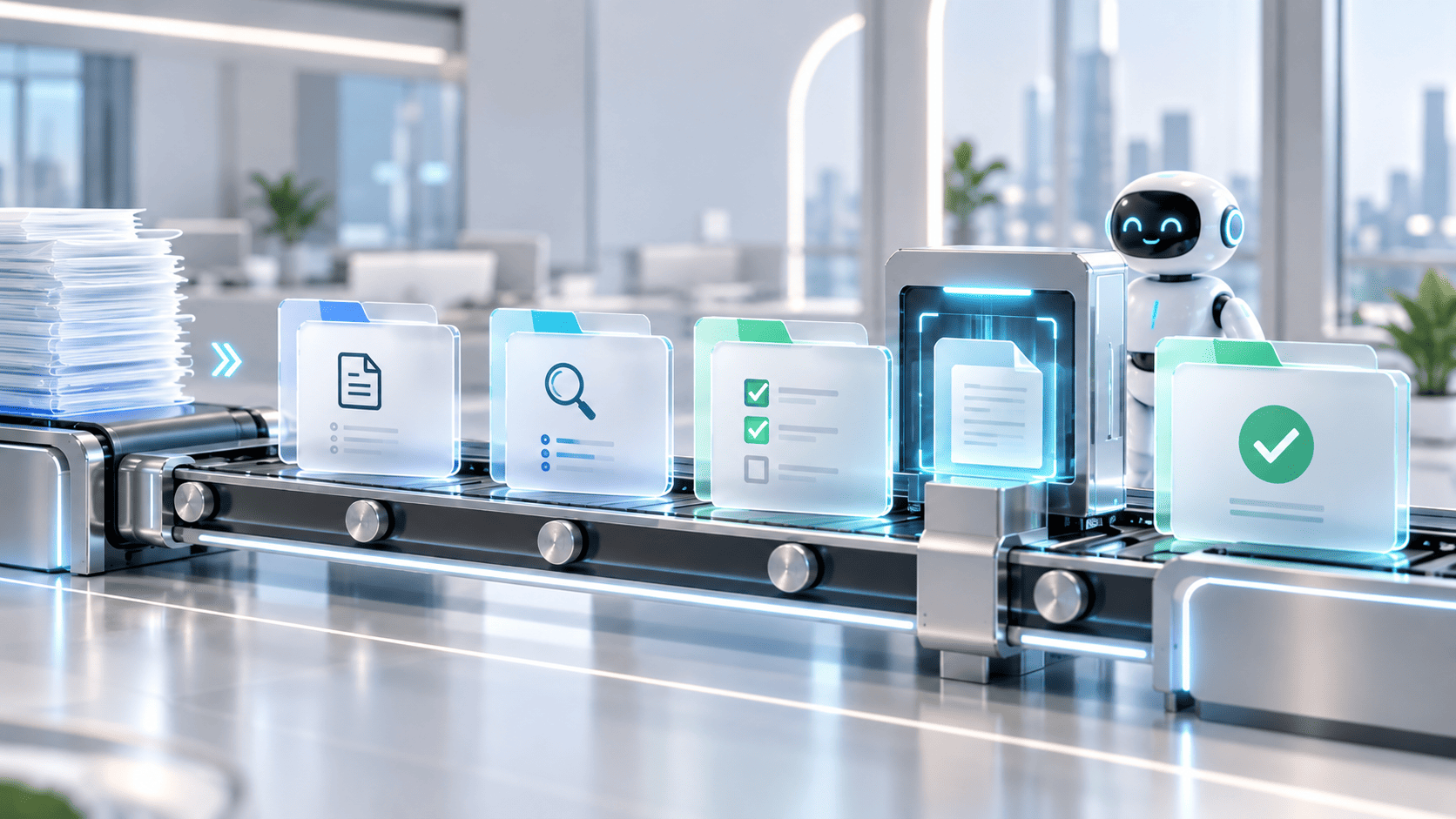
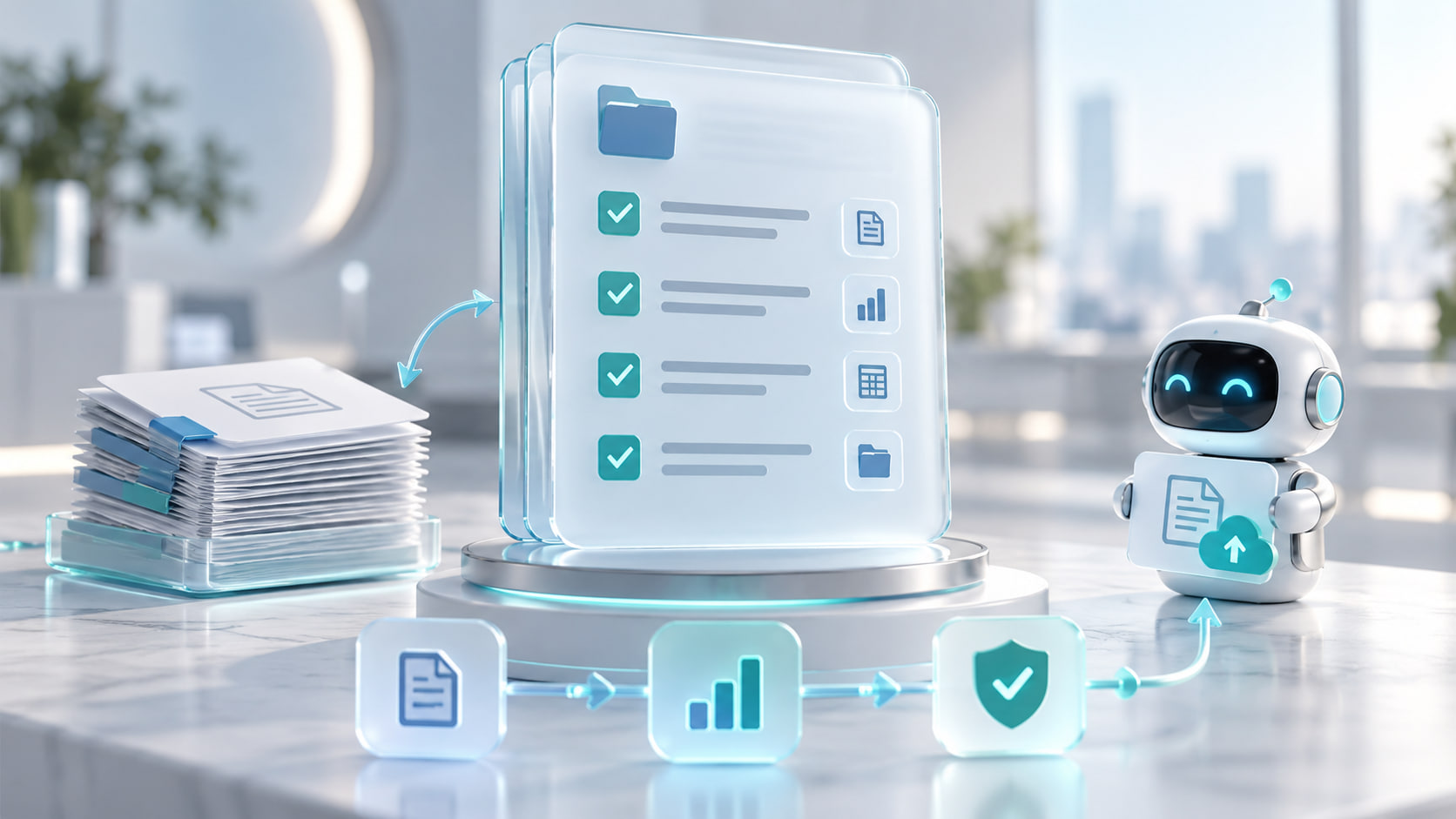
When an AI agent produces the final answer, the next step is to explain how the agent got there. Unfortunately, many teams can’t reconstruct the path the agent took, the context it retrieved, the tools it called, and the business action it triggered at the end.
That blind spot is called a visibility gap. It is the distance between what an agent did and what its operators can account for afterward. With a chatbot, the gap costs little, because reading the reply tells you most of what you need to know. With an agent that pulls records from a CRM, writes to a billing system, or updates a patient chart, the reply is the smallest part of what happened.
The gap is widening on the clock. Deloitte's 2026 State of AI in the Enterprise report found that 74% of organizations expect to use AI agents at least moderately by 2027, while only 21% report a mature governance model for those agents. Teams are granting agents autonomy faster than they can explain it.
Gartner estimates the cost of this imbalance, predicting that more than 40% of agentic AI projects will be canceled by the end of 2027 due to escalating costs, unclear business value, or inadequate risk controls.
Observability is the control layer between those two numbers. If you build it into the architecture as soon as possible, an autonomous system will stay inspectable. However, if it is added after launch as a dashboard, the evidence you need most may already be missing.
AI Agent Observability: The Short Answer
AI agent observability is the practice of tracing, measuring, evaluating, and monitoring how an AI agent behaves across a full workflow. It records the model calls, prompts, retrieved context, tool calls, memory operations, handoffs, guardrail checks, latency, cost, errors, human overrides, and business outcomes that make up a single agent run.
It departs from basic LLM observability in the way that counts. A language model generates text, so watching the prompt and the completion covers most of the exposure. An agent acts. It calls tools, reaches into external systems, and changes data, so observability has to follow those actions rather than only the words around them.
Reduced to one sentence, AI agent observability is the ability to reconstruct what happened during an agent run: what the user asked, what context the agent used, which model and prompt version responded, which tools it called, what it changed, what failed, what it cost, and where a human stepped in.
What Is AI Agent Observability?
.avif)
AI agent observability is the production visibility layer for systems where a language model is wired into tools, data, memory, APIs, workflows, and human approvals. Remove the model from that description, and you are left with ordinary distributed software, which engineering teams already know how to watch.
Conventional observability rests on three signals: traces that follow a request as it moves through a distributed system, metrics that count what the system does, and logs that record discrete events. OpenTelemetry, the open-source standard for cloud-native observability, exists to capture those signals in a consistent format. Agent observability takes the same machinery and points it at a harder target. A traditional request follows the code an engineer wrote and can read. An agent run follows the choices the model made at runtime, and any of those choices could have gone another way.
So the job shifts from confirming that code ran to reconstructing what the agent decided. A useful observability layer lets a team answer a specific set of questions about any single run:
- What did the agent receive?
- What context did it retrieve?
- Which model and prompt version produced the response?
- Which tools did it call?
- What permissions did it rely on?
- Which external systems did it touch?
- Did it follow the intended workflow?
- Did it escalate when the situation called for it?
- Where did latency, cost, or failure show up?
- Can the run be replayed, audited, and evaluated?
For architecture-first teams, the answers depend on decisions made long before launch. Once an agent connects to a CRM, an EHR, an LMS, or a billing platform, the trace structure, the permission model, the escalation path, and the evaluation loop are already set by how the system was built. Retrofitting that recording onto a system that never captured its own steps means rebuilding the system. Teams that can inspect their agents built the recording into the architecture rather than adding it after the fact.
AI Aagent Observability vs LLM Observability
Teams use the two terms as if they were the same. They cover different ground. LLM observability watches the interaction with the model. It includes the prompt that went in, the completion that came back, the tokens spent, the latency, and the cost. And it answers one question well: did the model produce a good response?
AI agent observability watches the execution path around the model. That same model call becomes one span inside a longer run that also includes retrieval, tool selection, tool inputs and outputs, memory reads and writes, guardrail checks, handoffs, retries, and the action the agent takes at the end. It answers a much broader question: did the system behave correctly across the entire workflow?
LLM observability does not become obsolete here, because a team still needs to know when the model hallucinated, slowed down, or ran an expensive prompt. Model-level visibility is necessary and, on its own, incomplete, because the model is now one component in a system that can act on the world. LLM observability tells you what happened around the model. AI agent observability tells you what happened around the model, the tools, the workflow, and the business action.
Recent research argues the same point from the evaluation side. A 2026 survey on execution provenance in LLM agents, From Agent Traces to Trust, finds that final-answer accuracy cannot fully explain how an output was produced because two runs that return the same answer can differ in reliability, safety, and auditability, and a correct answer can still come from an unnecessary or policy-violating tool call, none of which shows up in the final response.
Why AI Agents Create a Visibility Gap
The visibility gap is the central problem, and it comes from the fact that an AI agent works across steps, systems, tools, and permissions, and each step is a place the run can go wrong without changing how the output looks.
The Deloitte and Gartner findings from the opening describe this gap from the outside. Here is what it looks like from the inside. Follow one run end to end:
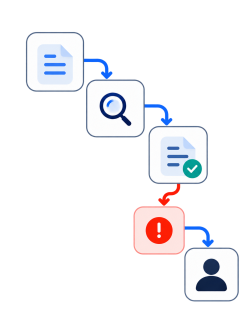
User request → retrieved context → prompt state → model decision → tool call → external system response → memory update → agent action → final output → business consequence
Every arrow is a handoff where something can break. If observability captures only the last box, the final output, the team loses the evidence that explains every box before it. The output can read as correct while the path that produced it was wrong.
The failures that hide in that path are concrete:
- The agent retrieves stale or irrelevant context and reasons over the wrong facts.
- The agent picks the wrong tool for the task.
- A tool call succeeds technically and still produces the wrong business outcome.
- The agent enters a retry loop and burns cost without making progress.
- The agent skips a human approval the workflow required.
- The agent exposes sensitive data.
- The agent updates a CRM, a ticketing queue, an EHR, an LMS, or a billing record incorrectly.
- The agent fails quietly, because no trace connects the final output to the steps that produced it.
Each of these can happen while the response reads as a success. The execution-provenance research makes the same observation: a correct answer can come from an unnecessary or policy-violating tool call, and final-answer accuracy will not surface it. OWASP names the version of this risk that bites once an agent can act. Its excessive agency category describes damaging actions taken in response to unexpected, ambiguous, or manipulated model output, made possible by excess functionality, permissions, or autonomy the system granted.
The visibility gap is not a missing dashboard. It is the inability to reconstruct the agent's path from context to action.
Core AI Agent Observability Metrics
.avif)
A list of forty metrics helps no one. A metric earns its place when it maps to a question a team needs answered, so the useful way to organize them is by what they diagnose. Six categories cover an agent in production.
A few of these categories carry most of the diagnostic weight.
Retrieval and context metrics decide whether the agent reasoned over the right material. Ragas defines context precision as the retriever's ability to rank relevant chunks above irrelevant ones and pairs it with recall, faithfulness, and groundedness to separate a grounded answer from a confident guess. A wrong answer from correct retrieval points at the prompt. A wrong answer from bad retrieval points upstream, at the retrieval layer. The metric tells the team which one to fix.
Agent behavior metrics decide whether the agent chose and acted correctly. Ragas defines agent goal accuracy as a binary measure of whether the agent identified and achieved the user's goal. Tool-call accuracy, loop rate, handoff rate, escalation rate, and human override rate turn the agent's decisions into numbers a team can watch over time.
Risk and governance metrics decide whether the agent stayed within its authority. OWASP's excessive agency vulnerability is the reason this category exists. Unauthorized tool attempts, guardrail triggers, and approval-bypass attempts are early signals that an agent is reaching past its mandate, often before any single action causes visible damage. OpenTelemetry's GenAI conventions standardize the token-usage and model-call attributes the cost category depends on, which keeps these numbers comparable across tools.
The right set depends on the workflow. A sales-research agent and a radiology workflow assistant should not share a dashboard. One needs account-signal accuracy and CRM action traceability. The other needs data-access traceability, human-review coverage, and audit readiness. The metric that matters most is the one tied to the action the agent is allowed to take.
Tracing: The Most Important Layer
Metrics tell a team that something happened. Traces show how it happened, and that difference decides whether a failure can be diagnosed or only noticed.
A trace is the record of one agent run. A span is one operation inside that run: a model call, a retrieval, a tool invocation, a guardrail check. Stack the spans in order and the trace becomes the agent's account of its own work.
A useful agent trace records:
- The user input
- The system prompt and instruction version
- Each model call
- The documents or context retrieved
- The tool selected, its inputs, and its outputs
- Guardrail checks
- Memory reads and writes
- Handoffs between agents or steps
- Retries
- Errors
- Human approvals
- The final output
- The business action taken
The OpenAI Agents SDK takes this approach in practice. Its tracing captures a record of an agent run across model generations, tool calls, handoffs, and guardrails, and OpenTelemetry standardizes the same spans so they travel into a team's existing observability stack. Tools such as Arize Phoenix capture model calls, retrieval, and tool use step by step.
Consider a concrete case. Codebridge built RecruitAI, a multi-agent recruitment platform for a US technology enterprise that cut time-to-hire from 24 days to 10 while keeping human oversight at every final decision. A run there is not one model call. The system screens a candidate, runs a technical validation, scores fit against a role, and hands a shortlist to a recruiter for the decision. If the shortlist is wrong, the cause could sit in any step: a screening prompt that over-weighted one signal, a validation tool that scored a test incorrectly, a stale role profile in retrieved context, or a handoff that dropped a flag the recruiter needed. A trace shows which one. A score alone shows only that the shortlist looked off.
A log says the agent failed. A trace shows where the failure entered the system.
Evaluation and Monitoring
Observability is not only watching production. The same traces and metrics should feed quality control: evaluation before release, monitoring after it, and human review for the runs that carry the most risk.
Offline evaluation runs before release. It tests the agent against known scenarios. Can it choose the right tool, refuse an unsafe action, escalate when it should, and answer only from approved sources? OpenAI's guidance on evals makes the case that generative systems are variable, so the testing methods built for deterministic software do not cover them. Anthropic frames an eval as a test with a defined input and grading logic that measures success, which is the discipline that keeps an agent's behavior from drifting between versions.
Online monitoring runs in production. It tracks real interactions, latency, cost, failures, user feedback, and drift, and it catches the problems that only appear once real users and real data reach the system.
Human review and calibration cover the high-risk workflows. People read traces, label failures, calibrate the scoring an LLM-as-judge produces, and approve changes before they ship. Ragas supplies the metrics that make this review repeatable across RAG and agentic workflows.
The three layers answer three different questions. Evaluation asks whether the agent was good enough. Monitoring asks whether it is still good enough in production. Tracing answers the question the other two raise: what exactly happened when it was not.
What an AI Observability Platform Should Actually Show
The market is full of AI observability platforms, and comparing them on features misses the point. A platform earns its keep by showing the full operational path of an agent, not a tidy log of prompts and responses.
A serious platform should surface:
- End-to-end traces
- Model calls, with prompt and model versions
- Retrieved context
- Tool calls, with inputs and outputs
- Handoffs
- Guardrail checks
- Latency, token usage, and cost
- Errors and retries
- Evaluation scores
- Human feedback
- Business workflow status
- Alerts
- Role-based access, data masking, and redaction
- Export into the team's wider observability stack
The platform matters, and the instrumentation design matters more. A dashboard cannot show a tool call, an approval step, or a memory update that the system never recorded.
Observability in Real Workflows: HealthTech, EdTech, SaaS
What an agent needs to show depends on what it can touch. A read-only assistant and an agent with write access to production data require different observability, even when they share a model. Four domains make the difference concrete.
HealthTech: auditability before autonomy
In a clinical setting, observability has to show what patient or clinical data the agent accessed, whether it made a suggestion or took an action, where a human reviewed the work, what got logged for audit, and whether sensitive data stayed protected. The NIST AI Risk Management Framework names the characteristics a trustworthy system has to demonstrate: valid and reliable, safe, secure and resilient, accountable and transparent, explainable and interpretable, privacy-enhanced, and fair. In healthcare, those are not aspirations. They are audit requirements.
Codebridge built RadFlow AI, an AI-powered radiology workflow assistant, against exactly this standard. It is a HIPAA-compliant diagnostic workspace integrated with existing PACS infrastructure, built to augment radiologists rather than replace them.
Its results were validated by the client's Clinical AI Governance Board and an independent double-blind study: reporting time fell from 15.2 to 9.4 minutes per study across more than 4,800 CT cases, the system met a 93% acceptance threshold in a 2,400-case double-blind study, and false positives dropped from 4.1 to 0.4 per study.
None of those numbers means anything without the observability behind them: the access logs, the human-review points, and the audit trail that let a governance board sign off in the first place.
EdTech: explain what shaped the response
A learning agent should show what content it used, whether the answer was grounded in approved material, how it adapted to the student, where its confidence dropped, and when a human should review. Retrieval and evaluation metrics from tools like Ragas and OpenAI's evals turn "the answer seemed fine" into a measurable claim about grounding and quality.
SaaS: observability across tenants, permissions, and integrations
A SaaS agent carries extra complexity: tenant isolation, role-based permissions, integration-specific tool behavior, customer-specific workflows, model and prompt versioning, and support escalation and rollback. The same agent can behave differently for two customers because their permissions and integrations differ, so observability has to hold that context per tenant rather than in aggregate.
For an architecture-first partner like Codebridge, this is the point where observability stops being a feature and becomes an architecture question. A production agent in HealthTech, SalesTech, EdTech, or SaaS is not a model wrapper. It is part of a workflow with users, permissions, data boundaries, integrations, audit requirements, and failure modes, and observability has to be designed around that workflow instead of being added as a generic dashboard later.
Executive Checklist: Before You Deploy an AI Agent
Autonomy is a decision, and it should not be made on faith. Before an agent gets the authority to act, the leadership team should be able to answer a specific set of questions. If the answers are not there, the autonomy is not ready.
If the agent can act, the company needs proof of how it acted. Otherwise autonomy becomes a blind spot.
Conclusion
The rule is short. The more autonomy an agent has, the more observability the system needs. A chatbot can be reviewed by reading its response. An agent needs a record of the path it took.
Logs alone do not explain a failure. Metrics show what happened; traces explain how. Evals check quality before release; monitoring checks whether it holds in production. The platform matters, and the instrumentation design decides what can be observed at all. An agentic system needs this in place before it touches sensitive workflows, production data, or customer-facing actions, not after.
This is the argument the provenance research lands on: trust in an agent comes from being able to reconstruct what it did, not from a final answer that happened to be right. NIST frames the same idea as accountability and transparency. OWASP frames its absence as excessive agency. Gartner attaches the commercial cost to the projects that get canceled when autonomy outruns control.
Observability is not about watching AI more closely because teams distrust it. It gives an autonomous system the operational discipline already expected of any serious software. Once an agent can retrieve data, choose tools, update systems, or shape a decision, visibility becomes part of the product architecture. The price of autonomy is the ability to prove what happened.
Before an AI agent touches real workflows, a team should be able to trace what it sees, what it decides, and what it does. Codebridge designs agent architectures with tracing, evaluation, permissions, and production reliability built in from the start, so the visibility is there before the agent has the authority to act.












Heading 1
Heading 2
Heading 3
Heading 4
Heading 5
Heading 6
Lorem ipsum dolor sit amet, consectetur adipiscing elit, sed do eiusmod tempor incididunt ut labore et dolore magna aliqua. Ut enim ad minim veniam, quis nostrud exercitation ullamco laboris nisi ut aliquip ex ea commodo consequat. Duis aute irure dolor in reprehenderit in voluptate velit esse cillum dolore eu fugiat nulla pariatur.
Block quote
Ordered list
- Item 1
- Item 2
- Item 3
Unordered list
- Item A
- Item B
- Item C
Bold text
Emphasis
Superscript
Subscript