Mobile app development is a dynamic field. As smartphones have become the primary interface for digital products, user expectations around speed, stability, and usability have risen sharply.
Behind every successful mobile application lies a carefully selected programming language that directly affects performance, scalability, maintainability, and development efficiency.
According to the SQMagazine, 93% of the global population owns a mobile phone, up from 91% last year.

Importance of Choosing the Right Language
Choosing the right programming language is critical in mobile app development. It can influence the app's success in the competitive market.
The performance and scalability of your app rely heavily on the language you use. Different languages offer varied support for features like memory management and user interface design.
Developers should consider the intended platform when selecting a language. Native apps for iOS and Android often use Swift and Kotlin, respectively. These languages provide optimized performance for their platforms.
Understanding your project's specific needs can guide your language choice. Consider factors like development speed, community support, and library availability.
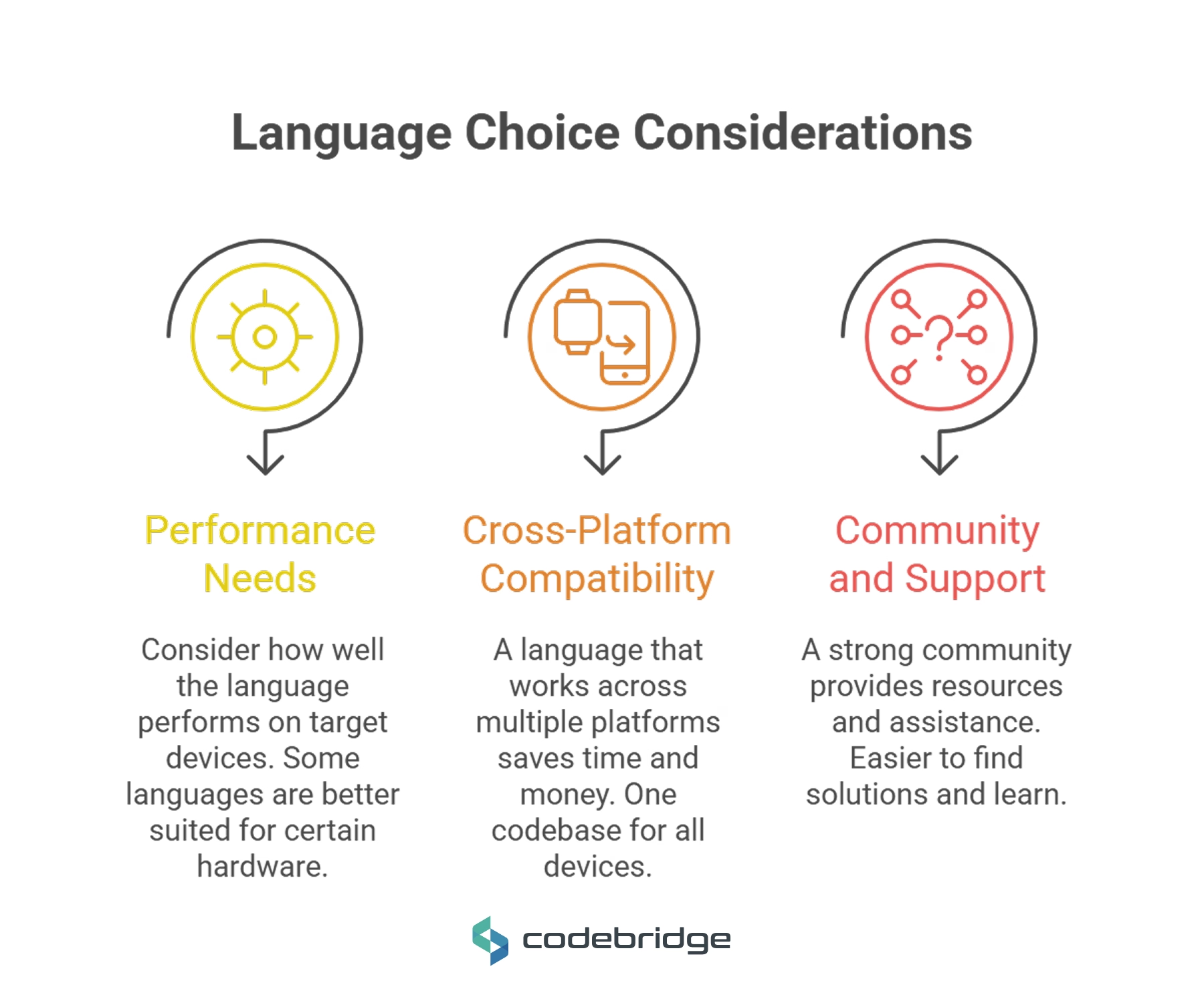
Here are important considerations when choosing a language:
- Performance Needs: Some languages deliver better performance on specific devices.
- Cross-Platform Compatibility: A single codebase can reduce costs and development time.
- Community and Support: Strong community support can ease problem-solving during development.
Investing time in choosing the appropriate language can save resources in the long run. It reduces the need for constant updates and major overhauls later. Your language choice can impact not only the present but also the future growth of your app.
Software Engineering Firm Profile
Codebridge Technology, Inc. is a software engineering and technology consulting company focused on building scalable digital products for growth-oriented organizations. The company operates across mobile application development, web platforms, and cloud-based systems, supporting businesses that require long-term technical reliability rather than short-term implementations.
Codebridge applies an architecture-first approach to software development, ensuring that technology decisions align with product strategy, operational needs, and future scalability. Mobile applications are designed as part of broader system ecosystems, with close integration to backend services, APIs, data layers, and third-party platforms.
Overview of Mobile App Development Languages
Mobile app development languages have evolved significantly over the years. Developers now have numerous options to choose from, each catering to different needs.
Some languages are designed specifically for particular platforms, such as Swift for iOS and Java for Android. These native languages ensure high performance and seamless integration with system features.
Cross-platform languages like Dart and JavaScript are gaining traction due to their versatility. They allow developers to create apps for multiple platforms using the same codebase, saving time and resources.
Here are some popular mobile app development languages:
- Swift: Preferred for iOS apps.
- Kotlin: Officially supported by Google for Android apps.
- Dart: Powers Flutter for cross-platform apps.
- JavaScript: Used with frameworks like React Native for cross-platform development.
The choice of language can depend on the project’s complexity and the desired user experience. Some languages provide better tools for certain app functionalities, like advanced graphics or real-time data streaming.
Ultimately, understanding the strengths and limitations of each language is crucial. It enables developers to make informed decisions based on the project's unique requirements. Continuous advancements in technology are likely to introduce more options, making it essential to stay updated with the latest trends and tools.
Native vs. Cross-Platform Development
Choosing between native and cross-platform development is a key decision in app creation. Native development focuses on building apps for a specific platform using its dedicated language. This approach provides better performance and integration with device features.
In contrast, cross-platform development uses a single codebase to target multiple platforms. This can save on development time and costs. However, it sometimes sacrifices performance and access to specific hardware features.
Here are some pros and cons of both approaches:
Native Development:
- Pros: High performance, full hardware access.
- Cons: Higher costs, longer development time.
Cross-Platform Development:
- Pros: Cost-effective, faster delivery.
- Cons: Possible performance issues, limited feature access.
Ultimately, the decision depends on project goals, budget constraints, and desired user experience. It’s important to weigh the trade-offs carefully to meet specific app requirements.

Native Development Languages
Native development languages are platform-specific, designed to leverage all features offered by the operating system. These languages provide high performance and seamless integration.
For iOS, Swift and Objective-C are widely used, while Android developers often choose Java or Kotlin.
Below are common languages used in native development:
iOS:
- Swift: Modern, safe, and efficient.
- Objective-C: Legacy, compatible.
Android:
- Java: Established, robust.
- Kotlin: Modern, concise.
Each language offers unique features, making it essential to choose based on project needs. Native development generally ensures the best performance and user experience.
iOS
iOS app development primarily relies on Swift and Objective-C. These languages are officially supported by Apple, ensuring seamless integration with iOS features.
Swift is the modern choice, introduced by Apple for its efficiency and safety. Objective-C remains in use for maintaining legacy systems. Each has strengths, and the choice often hinges on project requirements or existing codebases.
Swift
Swift is Apple’s preferred language for iOS development. It’s known for concise syntax and powerful performance. Its safety features reduce bugs and enhance app reliability.
Key advantages of Swift:
- Performance: Faster than Objective-C, cutting execution time significantly.
- Syntax: User-friendly, reduces code complexity.
- Safety: Prevents common programming errors.
Swift supports modern programming paradigms like functional programming. It enables developers to write clean and maintainable code. Apple’s robust support and continuous updates ensure that Swift remains cutting-edge for iOS development.
Objective-C
Objective-C was the primary language for iOS before Swift. It’s a mature language with extensive libraries.
Objective-C is valued for its stability and legacy support. Many older applications still use it, making it essential for maintaining existing code. Developers familiar with Objective-C appreciate its dynamic runtime and messaging support. While Swift is increasingly popular, Objective-C remains important for certain projects.
Android
Android development typically uses Java and Kotlin. Java is a well-established language with a robust ecosystem. Kotlin, a newer language, is recognized for its modern features and enhanced productivity. Developers often choose between them based on project requirements.
Both languages have strong community support, making them reliable choices for Android development.
Java
Java has been the cornerstone of Android app development. Its Write Once, Run Anywhere ability makes it versatile. Developers appreciate its robustness and vast library support.
Benefits of using Java:
- Mature Ecosystem: Extensive tools and libraries.
- Platform Independence: Cross-platform capabilities.
- Strong Community: Reliable support and resources.
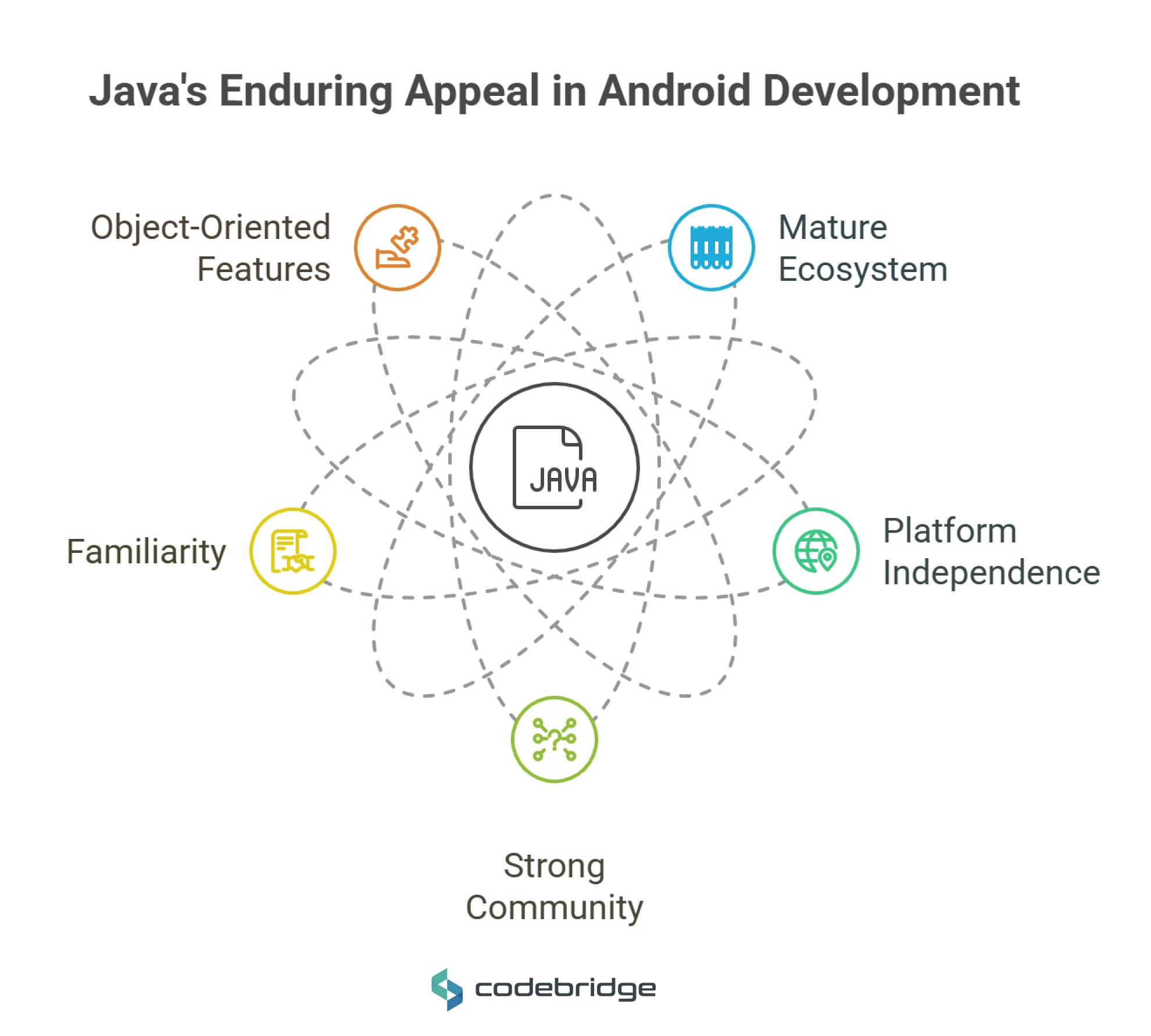
Java's familiarity makes it accessible to many developers. Its object-oriented features foster good coding practices, making it an enduring choice for building Android apps.
Kotlin
Kotlin is officially supported by Google for Android development. It offers modern syntax and seamless Java interoperability. Kotlin enhances productivity with null safety and extension functions.
Advantages of Kotlin:
- Conciseness: Reduces boilerplate code significantly.
- Safety: Features null safety to prevent errors.
- Interoperability: Works smoothly with Java codebases.
Kotlin is gaining popularity due to its modern language features. It helps developers write clean and concise code, enhancing app reliability and performance.
Cross-Platform Development Languages
Cross-platform languages are attractive for their ability to streamline app creation across platforms. They reduce development time by sharing code between iOS and Android.
Popular cross-platform languages include JavaScript, Dart, and C#. These languages utilize frameworks to facilitate versatile app development.
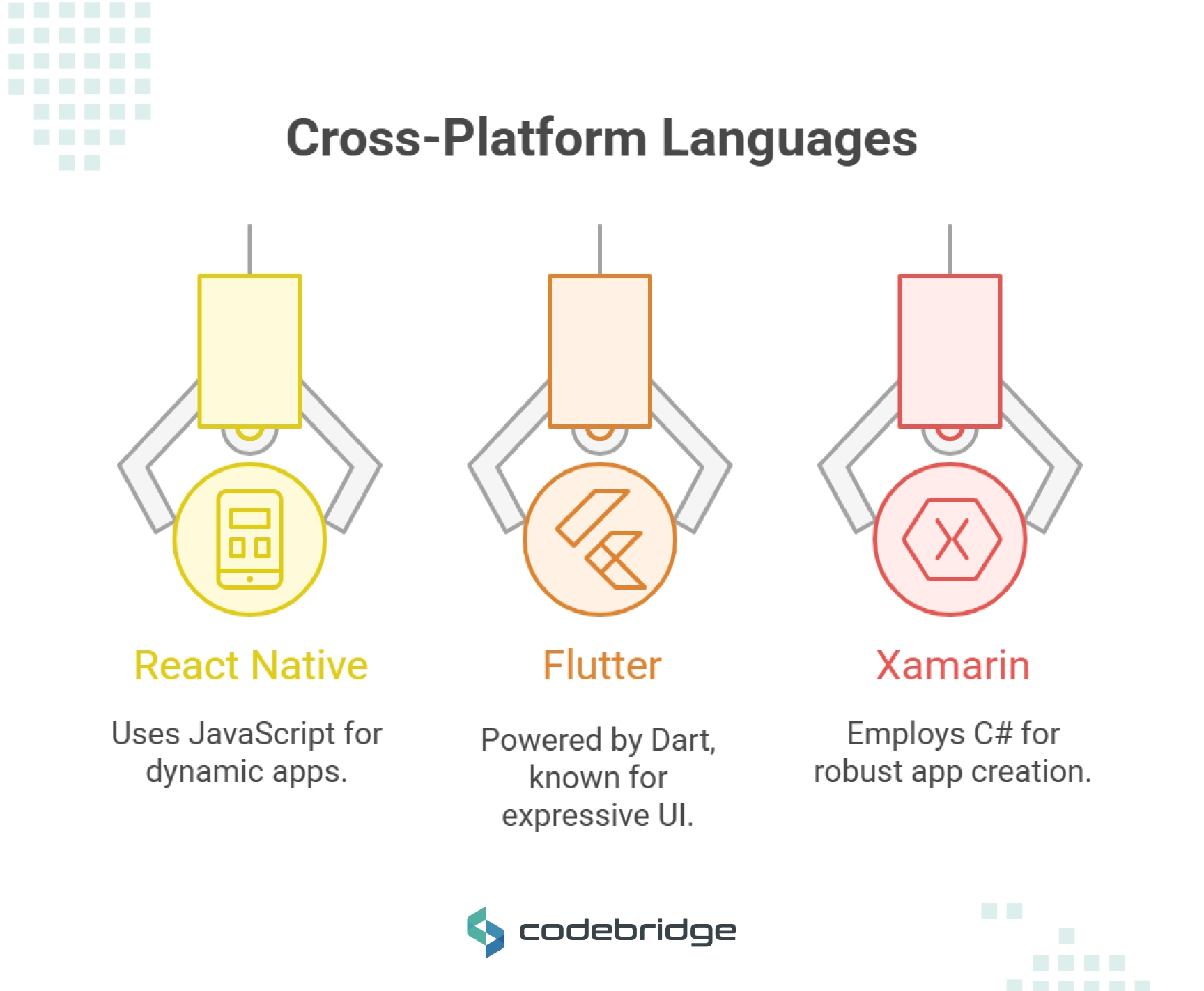
Notable cross-platform frameworks and languages:
- React Native: Uses JavaScript for dynamic apps.
- Flutter: Powered by Dart, known for expressive UI.
- Xamarin: Employs C# for robust app creation.
Each framework offers unique features to accommodate different development needs. The choice often depends on project goals and team expertise.
React Native
React Native leverages JavaScript to build native-like apps. It’s popular for its efficiency and reusable code components. Developed by Facebook, React Native boasts strong community support.
Key benefits of React Native:
- Reusable Code: Share code across platforms.
- Performance: Near-native performance with access to native modules.
- Community: Extensive resources and plugins available.
React Native’s component-based architecture simplifies UI design. It allows developers to build engaging, consistent user experiences swiftly, making it a preferred choice for many.
Flutter
Flutter, powered by Dart, is known for its expressive UIs and fast execution. Developed by Google, it enables developers to create high-quality apps swiftly.
Highlights of Flutter:
- Expressive Design: Rich UI components for intricate designs.
- Hot Reload: Fast coding iterations with immediate feedback.
- Cross-Platform: Builds for both iOS and Android.
Flutter’s strength lies in its powerful widgets, which streamline interface design. Its growing popularity is fueled by Google’s support and a vibrant ecosystem of tools and plugins.
Xamarin
Xamarin utilizes C# for cross-platform app development. It offers a single codebase approach, ensuring native performance.
Advantages of Xamarin:
- Native Performance: Access to platform-specific APIs.
- Single Codebase: Reduces time and effort.
- Microsoft Support: Strong backing and integration with Visual Studio.
Xamarin is ideal for developers familiar with C#. It ensures apps not only perform well but also integrate seamlessly with platform-specific features. This makes Xamarin a solid choice for enterprise applications.
Most Common Programming Languages for App Development
Choosing the right programming language is crucial for app success. It impacts development speed, app performance, and future scalability. Developers have several options tailored for specific needs and platforms.
Among the most popular languages are Java, Swift, Kotlin, and JavaScript. Each offers unique advantages catering to different project requirements. The landscape constantly evolves, introducing new contenders and shifting popularity.
For Android development, Java and Kotlin are frequently chosen. Swift dominates in the iOS ecosystem due to its robustness and safety features. Cross-platform frameworks often use JavaScript, making it a versatile choice for developers seeking broad reach.
Here is a brief look at the most common languages:
- Java: Well-established, comprehensive libraries.
- Swift: Modern, safe, Apple-backed.
- Kotlin: Concise, powerful, Google-endorsed.
- JavaScript: Universally known, highly adaptable.
By understanding these languages, developers can make informed decisions. The choice should be based on project scope, team expertise, and long-term goals. This ensures efficient development and high-quality results.
Overview of Popular Languages
Java, a veteran language, is renowned for its versatility. It remains a top choice for Android apps due to its extensive library support. Java’s mature ecosystem ensures stability and reliability across projects.
Swift has rapidly gained ground in the iOS world. Its syntax is expressive, enhancing readability and maintainability. Swift’s performance and safety make it a go-to for native iOS apps.
Kotlin complements Java in Android development. Its concise syntax reduces boilerplate code, boosting developer productivity. The language’s interoperability with Java provides flexibility and ease of integration.
JavaScript stands out in the cross-platform scene. React Native and similar frameworks leverage it for building apps quickly. JavaScript’s vast community support offers resources and innovation for cross-platform development.
Here’s a glance at these popular choices:
- Java: Solid, legacy support.
- Swift: Fast, efficient.
- Kotlin: Modern, concise.
- JavaScript: Flexible, extensive support.
Developers should consider language features and potential challenges. Each language has strengths that align with different application goals and target audiences.
Comparison of Features and Benefits
Selecting a programming language involves evaluating its features and benefits. Consideration of performance, development speed, and community support is vital in this decision.
Java offers stability and widespread usage, making it reliable. Its large community ensures ample support and resources. However, its complexity can pose challenges for new developers.
Swift is lauded for its performance and easy-to-read syntax. It provides robust tools for error handling and safety. Apple’s continuous updates keep it competitive but learning a new language can take time for developers.
Kotlin excels in syntax simplicity and null-safety features. Its ability to coexist with Java enhances its appeal for Android projects. Despite its strengths, Kotlin is still growing and may lack comprehensive resources in niche areas.
JavaScript’s versatility is unmatched due to its universal web origins. The ecosystem supports diverse frameworks for app development. While powerful, managing state across platforms can be tricky for beginners.
Consider these comparisons:
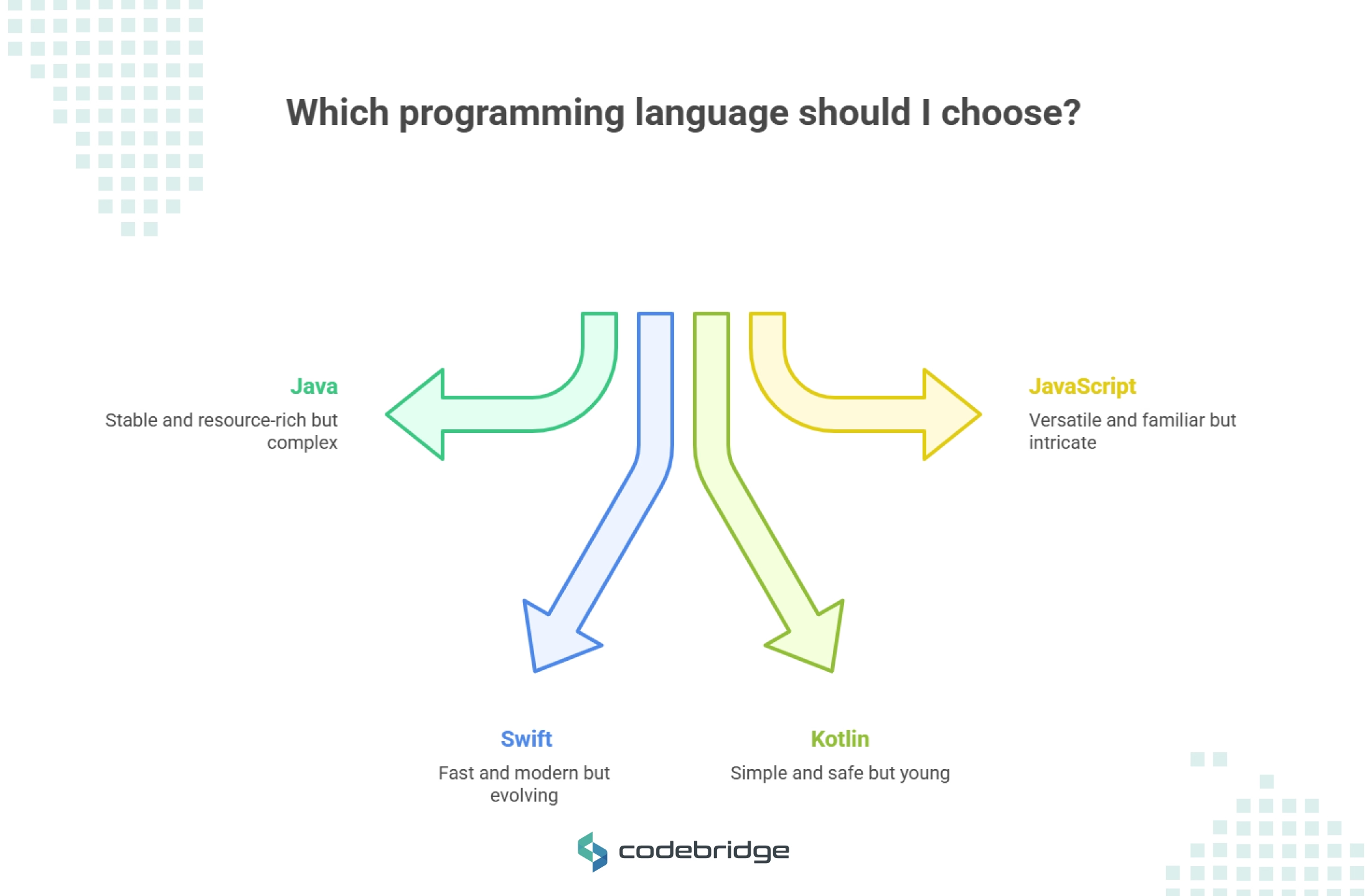
- Java: Stable, resource-rich, complex.
- Swift: Fast, modern, evolving.
- Kotlin: Simple, safe, young.
- JavaScript: Versatile, familiar, intricate.
The choice hinges on project needs, team skills, and desired app features. By comparing these aspects, developers can align language capabilities with their specific app goals, ensuring a successful outcome.
Emerging Trends in Mobile App Development Languages
The landscape of mobile app development is shifting rapidly. New languages and frameworks are emerging, reshaping how developers create applications. Staying updated with these trends is crucial for maintaining a competitive edge.
One significant trend is the rise of cross-platform development. Frameworks like React Native and Flutter are paving the way. They allow developers to write a single codebase for multiple platforms, reducing costs and development time.
Another trend is the integration of artificial intelligence and machine learning. More languages are now supporting these capabilities, enhancing app functionalities. This integration opens new opportunities for creating smarter and more personalized apps.
Developers also increasingly focus on app performance and user experience. This trend highlights the importance of choosing a language that supports efficient coding practices. The need for rapid iteration cycles and ease of maintenance is also influencing language selection.
Key trends include:
- Cross-platform frameworks gaining popularity.
- Increased AI and ML support in app languages.
- Emphasis on performance and user experience.
Understanding these trends helps developers adapt and innovate, ensuring their apps meet modern user expectations.
Language Evolution
Languages for mobile app development continually evolve, driven by technological advancements and market demands. This evolution aims at improving developer productivity and enhancing app capabilities. Recognizing these changes helps developers utilize the best tools available.
Languages are now focusing more on safety and performance. For instance, Kotlin’s null safety features prevent common programming errors. Swift’s constant updates prioritize security enhancements and language efficiency.
Another evolutionary step is the simplification of syntax to boost readability and reduce errors. Developers favor languages that are easy to learn and write. This shift makes app development more accessible, attracting new talent into the field.
Here are some key evolutions in languages:
- Emphasis on safety features.
- Simplified and readable syntax.
- Regular updates for performance improvements.
These evolutions ensure that app development languages meet current technological trends and user expectations. Staying informed about these changes is essential for developers aiming to build robust and efficient mobile applications.
The Rise of No-Code and Low-Code Platforms
No-code and low-code platforms are revolutionizing mobile app development. They provide tools that simplify the development process, allowing non-developers to build functional applications. This democratization of development is reshaping traditional practices.
These platforms significantly reduce development time. By offering pre-built templates and drag-and-drop interfaces, they allow for quick iterations and prototyping. This speed is crucial in the fast-paced tech industry, where time-to-market can define success.
Furthermore, they foster collaboration among teams. Non-technical stakeholders can directly contribute to app development. This fosters a more collaborative and creative development environment, leading to innovative solutions.
Key benefits of these platforms include:
- Swift development cycles and prototypes.
- Empowerment of non-technical users.
- Enhanced team collaboration and innovation.
While no-code and low-code platforms simplify development, they may not replace traditional methods for complex projects. Developers must evaluate when such platforms suit the project requirements best. This balance allows for both innovative and efficient app development pathways.
Factors to Consider When Choosing a Language
Selecting the right programming language for mobile app development involves several considerations. Each project has unique demands, and the language choice can significantly influence the outcome.
Understanding project requirements is crucial. Different applications have specific needs, such as performance or user interface capabilities. Languages vary in their strengths and should align with these requirements.
The expertise of your development team is another vital factor. Choosing a language unfamiliar to the team can lead to slower development times and higher learning costs. Conversely, selecting a familiar language can speed up the development process and enhance productivity.
Additionally, consider the future scalability of the app. A scalable app can grow with user demand and technology advancements. The language you choose should support this growth without sacrificing performance or functionality.
Key factors include:
- Alignment with project requirements.
- Team expertise and familiarity.
- Scalability for future growth.
Taking these factors into account ensures a strategic language choice, enhancing the app’s success potential.
Project Requirements
Project requirements heavily influence language selection. Identifying the core needs of your mobile app is a critical first step. Whether it’s for a sleek user interface or high processing power, the language must meet these demands.
Some projects require robust performance. In such cases, languages like Swift for iOS or Kotlin for Android may be suitable. They offer optimized performance for native apps.
Other projects may prioritize rapid development and cross-platform functionality. Here, languages supported by frameworks like React Native can be advantageous.
Key considerations for project requirements include:
- Performance needs for intensive tasks.
- Desire for cross-platform capabilities.
- Specific technological features.
Understanding these requirements ensures your app is built on a solid foundation tailored to its unique needs.
Team Expertise
The expertise within your development team is pivotal when selecting a programming language. A team’s familiarity with a language can streamline development and reduce errors.
For instance, if your team specializes in JavaScript, utilizing a framework like React Native might be beneficial. It allows for quicker adaptation and more efficient problem-solving.
Conversely, introducing a new language can be challenging. It might lead to longer development times as the team gets up to speed, impacting the overall timeline of the project.
Important expertise considerations include:
- Current team skill set and experience.
- Learning curve for the new languages.
- Resource allocation for training.
Aligning your language choice with your team's expertise can significantly impact project efficiency and success.
Future Scalability
Future scalability is a key consideration in language selection for mobile app development. As apps grow, they must handle increased users and expanded features.
Languages that support modular development can offer scalability. For example, using Swift with its structured coding practices allows for easy updates and feature additions.
Additionally, choosing a language that integrates well with backend technologies can support scalability. This ensures that as your user base grows, the app remains performant and reliable.
Key scalability considerations include:
- Support for modular development.
- Ease of integration with other technologies.
- Performance at scale.
Planning for scalability ensures your app can evolve with market demands and user needs, providing longevity and adaptability.
Conclusion
Choosing the right programming language for mobile app development is crucial for success. With various options available, each language offers its strengths tailored to specific needs. The decision significantly impacts not only the app's performance but also the development process and cost efficiency.
As technology evolves, developers must stay informed about emerging trends and frameworks. This knowledge is pivotal in selecting a language that aligns with both current requirements and future growth. Key considerations like team expertise and project scalability play crucial roles in this decision-making process.
Ultimately, a strategic language choice enhances the app's potential to thrive in a competitive market. By aligning the language with project goals and team capabilities, developers ensure a smoother path from idea to implementation. This careful selection process contributes to creating high-quality apps that meet user demands and leverage technological advancements for sustained success.
Need help choosing the right tech stack for your app? Codebridge’s mobile app development experts can guide you in selecting the best programming language and architecture for long-term success. Let’s discuss your project!
FAQ
What are the best programming languages for mobile app development in 2026?
The best programming languages for mobile app development in 2025 include Swift, Kotlin, Java, JavaScript, and Dart.
- Swift is the top choice for iOS apps due to its safety features and high performance.
- Kotlin is Google’s preferred language for Android apps, offering concise syntax and better productivity.
- Java remains widely used because of its mature ecosystem and strong library support.
- JavaScript, paired with React Native, enables cross-platform development from a single codebase.
- Dart, the language behind Flutter, is gaining traction thanks to its expressive UI capabilities and fast execution.
Selecting the right language depends on your platform, performance requirements, and long-term scalability goals.
What is the difference between native and cross-platform app development languages?
Native development uses platform-specific languages like Swift for iOS and Kotlin for Android, offering maximum performance and full hardware access. Cross-platform development uses languages like JavaScript (React Native) or Dart (Flutter) to build apps for both iOS and Android from a single codebase, reducing cost and speeding delivery. The best option depends on your budget, timeline, and performance expectations.
Why is Swift considered the best language for iOS app development?
Swift is considered the best language for iOS because it is fast, safe, and modern. Its concise syntax reduces errors and increases development speed. Apple continuously updates Swift, ensuring performance improvements, enhanced security, and long-term stability. These features make Swift ideal for building scalable and high-quality iOS applications.
Is Kotlin better than Java for Android development?
Kotlin is generally considered better than Java for modern Android development. It reduces boilerplate code, improves productivity, offers null-safety, and works seamlessly with Java codebases. While Java is still used for legacy apps, Kotlin aligns with Google’s vision for Android and supports faster, cleaner development.
Which programming languages are best for cross-platform mobile apps?
The best languages for cross-platform mobile apps are:
- JavaScript (React Native) for fast, flexible development
- Dart (Flutter) for expressive UIs and near-native performance
- C# (Xamarin) for enterprise-level apps with Microsoft integration
These languages allow developers to share one codebase for both iOS and Android, lowering costs and shortening development time.
What factors should I consider when choosing a mobile app development language?
Key factors to consider include:
- Project requirements such as performance, features, and UI complexity
- Team expertise to avoid long learning curves
- Scalability to support long-term growth
- Time-to-market for faster releases
- Community support and available libraries
- Integration needs for backend and third-party tools
Choosing the right language early ensures efficient development, lower costs, and better long-term app performance.












Heading 1
Heading 2
Heading 3
Heading 4
Heading 5
Heading 6
Lorem ipsum dolor sit amet, consectetur adipiscing elit, sed do eiusmod tempor incididunt ut labore et dolore magna aliqua. Ut enim ad minim veniam, quis nostrud exercitation ullamco laboris nisi ut aliquip ex ea commodo consequat. Duis aute irure dolor in reprehenderit in voluptate velit esse cillum dolore eu fugiat nulla pariatur.
Block quote
Ordered list
- Item 1
- Item 2
- Item 3
Unordered list
- Item A
- Item B
- Item C
Bold text
Emphasis
Superscript
Subscript