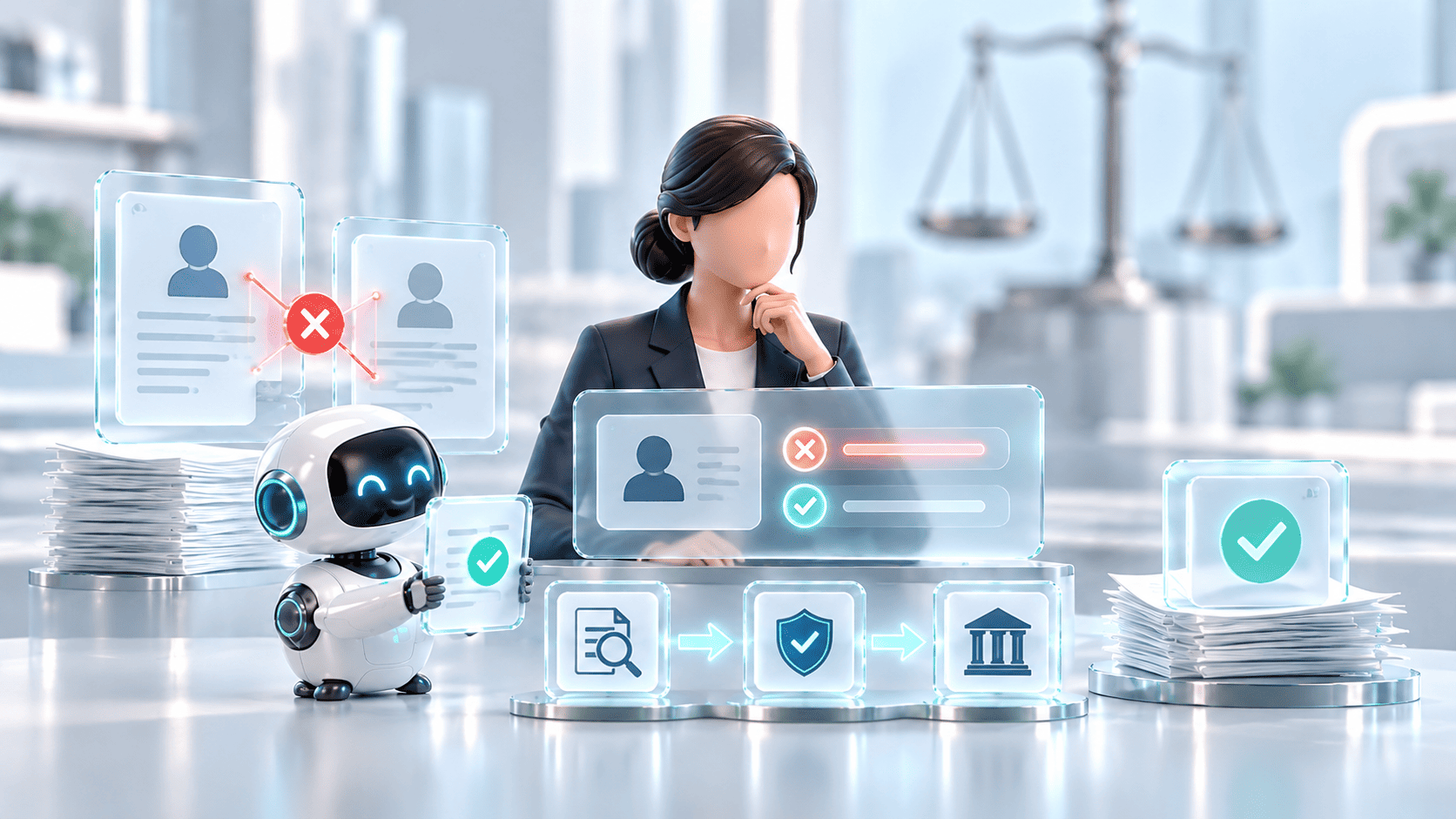
Over the past three years, AI tools have moved from pilot programs to operational use in HR departments across mid-size and enterprise organizations. As organizations deal with economic uncertainty and rising costs, they are rethinking how HR creates value. Instead of operating mainly as an administrative function, HR is increasingly becoming a strategic partner that uses data to guide decisions and anticipate future needs.
Recent Gartner survey show that 91% of executive leadership teams are pushing for AI-driven transformation by 2026. Companies that delay AI adoption risk higher operational costs and slower hiring cycles compared to competitors already using automation.
At the same time, many organizations are struggling to keep this pace. While employee access to AI tools increased by 50% in 2025 alone, 86% of companies still cannot clearly see existing skills, develop new capabilities, and quickly deploy the right people where they are needed most.
And this gap between technology adoption and organizational readiness is becoming a major challenge.
For senior leaders, AI in HR primarily reduces cost per hire and improves workforce planning at scale. But achieving meaningful return on investment requires more than automation. It demands practical execution, clear priorities, and the continued involvement of human judgment.
The following ten real-world case studies examine how leading organizations are addressing these challenges and turning HR into a primary engine of business growth.
1. RecruitAI — Engineering Hiring Automation Platform (Codebridge Case Study)
A US-based technology enterprise with over 1,000 employees reached a recruitment scaling inflection point where manual processes could no longer keep pace with aggressive growth. When the client chose to build AI agents with Codebridge, the result was RecruitAI, a production-grade, AI-assisted recruitment platform on a multi-agent architecture that reduced time-to-hire from 24 to 10 days. The system was designed to augment human decision-making by automating high-volume screening and technical validation while preserving human oversight at all final decision points.
Challenges
The organization faced a systemic talent bottleneck characterized by five root-cause problems:
- Assessment Overload: Senior engineers and designers were spending 200 to 400 hours per month manually reviewing technical tests, a productivity drain costing approximately $360,000 per year.
- Superficial Screening: Existing tools relied on keyword matching, which over 12% of applicants circumvented by using invisible text (white text on a white background) to trick the ATS.
- Fragmented Context: Candidate data was siloed across disconnected tools like Calendly, LinkedIn, and various job boards, forcing recruiters to manually aggregate information and causing response delays exceeding 24 hours.
- Low Precision: The lack of early-stage assessment for human qualities like judgment and resilience resulted in an interview-to-offer ratio of just 12%, meaning 88% of expensive final-stage interviews ended in rejection.
The AI Solution
Codebridge implemented a sophisticated AI architecture focused on intelligent workflow orchestration:
- Multi-Agent Orchestration: Built on LangGraph, a central Orchestrator Agent coordinates specialized agents for intent detection, screening, assessment, and onboarding.
- Anti-AI Cheating Layer: To combat LLM-generated submissions, the Assessment Agent uses metadata analysis, statistical text analysis (perplexity and burstiness), and contextual "marker questions" that require practical intuition.
- Hierarchical LLM Usage: To optimize costs, the system routes simple tasks to smaller models while reserving "heavy" models (like GPT-4 or Claude Opus) for complex code architecture analysis, reducing LLM operating costs by 40%.
- Reasoning Dashboard: The interface surfaces the AI’s chain-of-thought reasoning, allowing recruiters to understand exactly why a candidate was recommended or flagged.
- 90% Confidence Threshold: The AI makes autonomous routing decisions only when confidence exceeds 90%; all borderline cases are escalated to human reviewers.
Results
- Full-cycle hiring time reduced from 24 days to 10–12 days.
- 60% reduction in manual engineering test review workload, saving 200–300 hours per month.
- Candidate response time dropped from 24+ hours to under 2 minutes.
- Interview-to-offer ratio increased from 12% to 38%, proving the AI identifies fit much earlier in the funnel.
- ROI: The system achieved break-even within the first year of operation and has remained production-stable since launch.
Executive Takeaway
AI in recruitment is not a tool for replacing human talent, but rather an intelligent workflow infrastructure that scales output without scaling headcount. By building talent velocity, organizations can transform HR from a reactive cost center into a proactive engine of business growth.
Practical Advice for Businesses
- Automate high-friction technical screening first: Target the areas where your most expensive specialists (e.g., senior engineers) are being consumed by low-leverage review tasks.
- Preserve human decision gates: Use AI to surface insights and rank candidates, but ensure that final hiring or rejection decisions always remain with a person to maintain accountability.
- Prioritize transparency over "Black Box" AI: Ensure your system provides chain-of-thought reasoning so recruiters and managers can trust and verify the AI’s conclusions.
2. IBM – AskHR Agentic AI for Employee HR Support
As IBM’s global workforce grew, the organization deployed AskHR, an internal virtual agent designed to manage the mounting complexity of global HR support.
Powered by IBM Watsonx Orchestrate, the system has evolved into a fully functional digital agent that handles over 2.1 million employee conversations annually and automates more than 80 distinct HR tasks.
The company faced operational complexity driven by siloed HR processes and inconsistent policies across global regions, resulting in a fragmented employee experience. HR professionals were overwhelmed by manual, repetitive tasks such as generating job verification letters and processing leave requests, limiting their ability to contribute strategically.
Multi-channel support models and frequent handoffs created friction, delays, and inconsistent responses. As routine inquiries consumed the majority of capacity, valuable HR expertise was diverted away from higher-impact initiatives.
The AI Solution
IBM deployed AskHR, an agentic HR assistant powered by WatsonX Orchestrate. The architecture utilizes a two-tier AI + human model: routine inquiries are handled autonomously by the agent, while complex needs are routed to human advisors. AskHR is deeply integrated with enterprise systems like Workday and SAP, allowing it to execute over 80 automated tasks, such as generating job verification letters or initiating employee transfers.
Results
- 94% containment rate of common questions resolved without human intervention.
- 75% reduction in support tickets raised since the program's inception.
- 40% reduction in the HR team’s operational costs over a four-year period.
- 75% faster HR transactions for managers via automation.
- 99% adoption rate among managers, demonstrating high organizational trust in the system.
- 11.5 million employee interactions successfully managed in 2024 alone.
Executive Takeaway
AI-first employee service models reduce operational friction while significantly elevating HR’s capacity. By shifting toward a hybrid operating model, organizations can leverage digital labor to deliver zero-touch support for routine tasks while preserving human expertise for judgment-heavy, complex interactions.
However, this change does not begin with deploying a simple chatbot. The shift begins with structural clarity. Before introducing automation, organizations must centralize fragmented knowledge bases and establish a reliable source of truth.
Once the informational backbone is unified, the next logical step is to apply AI where it can generate an immediate and measurable impact. High-volume, repetitive workflows, such as policy inquiries, leave requests, or document generation, offer the fastest path to ROI and strong containment rates.
Before vs After AI Implementation
3. Unilever – End-to-End AI Digital Hiring
Unilever, a transnational consumer goods giant with over 400 brands and 170,000 employees, transformed its massive recruitment operation by implementing a digital, AI-driven hiring funnel.
By partnering with AI firms Pymetrics and HireVue, the company transitioned from manual resume sifting to an automated system that evaluates cognitive and behavioral traits to manage approximately 1.8 million applications annually.
Challenges
The sheer scale of Unilever's recruitment needs created a systemic bottleneck that traditional HR methods could not resolve:
- Volume Overload: Manually coordinating, filtering, and interviewing 1.8 million applicants for 30,000 annual hires was a massive, inefficient task.
- Identification of High-Potentials: For the Future Leaders program alone, recruiters had to identify 800 hires from a pool of 250,000 applicants spanning 50 countries.
- Unconscious Bias: Traditional CV screening and interviews often relied on subjective human judgment, which can introduce bias and overlook neurodiverse or non-traditional talent.
- High Attrition in Testing: Traditional psychometric tests often saw candidate dropout rates exceeding 50% due to their lengthy and unengaging nature.
To address these issues, Unilever redesigned its recruitment process as a fully digital, data-driven funnel built to handle scale without sacrificing fairness or candidate engagement.
The company introduced gamified cognitive assessments through Pymetrics, allowing applicants to demonstrate behavioral in a more engaging format.
Candidates who advanced then completed AI-powered video interviews via HireVue. During these screenings MLs analyzed verbal and non-verbal cues to evaluate potential beyond traditional credentials. These insights were benchmarked against data from high-performing employees to align hiring decisions with proven success patterns.
Finally, the system was designed to deliver automated, personalized feedback to all applicants, reinforcing transparency and strengthening employer brand perception.
Results
- 70,000 hours of interviewing and application processing time saved annually.
- £1 million in direct cost savings realized through process automation.
- Hiring cycle speed increased significantly, with cognitive skills now assessed in just 15 minutes per candidate.
- Over 80% of applicants reported positive feedback, and the gamified approach significantly reduced traditional test dropout rates.
Executive Takeaway
For high-volume enterprises, AI became mandatory infrastructure for managing talent at scale. Unilever moved human review to the final stage. Recruiters now focus on cultural fit, while AI handles early screening using data-driven benchmarks.
Practical Advice for Businesses
- Use AI to filter, not just select: AI is best used to narrow a massive pool (e.g., 250,000 down to 3,500) so that human recruiters only spend time on high-potential candidates.
- Prioritize "Mutual Fit" in final stages: Recognize that while AI is efficient at measuring traits, it cannot replace face-to-face interaction for assessing cultural alignment and facility environment, which are critical for leadership roles.
- Embrace Gamification: Shifting from "tests" to "games" reduces candidate anxiety and elicits more authentic behavior, leading to higher-quality predictive data.
- Maintain Transparency: Ensure candidates know what data is being collected (e.g., facial cues, NLP data) and provide them with feedback to maintain trust and procedural justice.
Before vs After AI Implementation
4. Siemens – CARL Cognitive HR Assistant
Siemens AG, a global technology powerhouse with 379,000 employees, partnered with IBM to co-create CARL (Cognitive Assistant for Interactive User Relationship and Continuous Learning). CARL is a production-grade AI-based HR agent designed to serve as a 24/7 single point of contact for HR-related questions across 20 countries, regardless of location, time zone, or device.
The company faced growing challenges in supporting its large, globally distributed workforce across multiple time zones and languages.
HR teams were overloaded with routine requests, leaving little room to focus on strategic initiatives such as learning and development. The existing support system was outdated and limited to static links, offering no interactive or intelligent assistance.
At the same time, the organization needed a solution capable of managing hundreds of topics across diverse local policies and regulations.
The AI Solution
The solution architecture leveraged cognitive computing and agile methodologies to ensure scalability:
- Core AI Architecture: CARL was built on IBM Cloud using WatsonX Orchestrate and IBM Watson Discovery technologies to manage natural language queries and information retrieval.
- Built-in Administrative Panel: One of the most innovative features is a custom content management system (CMS) that allows non-technical HR staff to implement and update topics quickly without requiring IT support.
- Continuous Improvement Loop: CARL includes a supervised learning component and an innovation hub where employees and HR staff provide critical feedback to refine the agent’s future iterations.
As a result, the company achieved strong engagement and operational scale, with CARL now handling around one million employee queries each month across 20 countries.
HR teams gained valuable time as routine requests decreased, allowing them to focus on more strategic priorities. The solution was rolled out quickly, reaching 120,000 employees within just three months of development. Employees also benefit from faster and easier access to accurate information, leading to higher satisfaction levels.
Executive Takeaway
Siemens’ success with CARL demonstrates that AI in HR is an enablement engine rather than a mere automation tool. By empowering non-technical HR staff to manage the AI’s knowledge base, the organization removed IT as a bottleneck for content updates. For global enterprises, the strategic value lies in unprecedented scalability. It provides a consistent, high-quality employee experience that does not require linear increases in HR headcount.
Practical Advice for Businesses
- Prioritize UX via Design Thinking: Start by identifying the highest-volume friction points (e.g., the top 5 questions employees ask) and build your MVP specifically to solve those before broadening the scope.
- Build with Scalability in Mind: Ensure your architecture can support multiple languages and regional contexts from day one, even if you only launch in one region first.
- Incentivize Iteration: Use an agile sprint model (Siemens reached its 44th sprint during the refinement phase) to continually improve the agent based on live user interaction data.
- Maintain a Human Feedback Hub: Create a dedicated channel for users to suggest improvements, ensuring the AI evolves in alignment with actual employee needs.
Before vs After AI Implementation
5. Hilton – AllyO AI Recruiter
Hilton Hotels & Resorts, a global leader in hospitality, implemented AllyO, an AI-powered recruitment assistant, to manage the extreme application volumes for its Hilton Reservations and Customer Care centers.
The platform serves as an end-to-end automation layer that handles candidate engagement, screening, and interview scheduling by integrating directly with Hilton’s existing Applicant Tracking System (ATS).
Challenges
Hilton faced a systemic scalability issue driven by its own brand success:
- Extreme Application Volume: The company receives thousands of applications per day, creating a volume that manual recruitment teams could not realistically process.
- Recruiter Capacity Bottlenecks: Recruiters were overwhelmed by the time required to address every candidate.
- Administrative Overload: Low-leverage tasks, such as manual screening and interview scheduling, were consuming the majority of the recruiting team's bandwidth.
- Candidate Experience Risk: In a hospitality-driven culture, slow response times were contrary to the brand’s "authentic hospitality" values and risked losing top-tier talent to faster competitors.
The AI Solution
Hilton deployed an agentic AI solution designed to create a fully automated recruiting funnel:
- Conversational AI Screening: AllyO conducts autonomous post-application interviews via text and web interfaces for all call center applicants to gather deeper context beyond the initial ATS submission.
- Real-Time ATS Integration: The AI agent updates Hilton’s Taleo ATS in real-time as candidates progress, ensuring a single source of truth without manual data entry.
- 24/7 Candidate Engagement: By removing human availability as a constraint, the AI provides an instant, "always-on" point of contact for every applicant.
Results
- 93% of candidate conversations are now completed within one hour.
- 83% of recruiters’ administrative tasks have been fully automated, removing the "logistics tax" from the HR team.
- 15 minutes of manual work saved per applicant, allowing recruiters to focus exclusively on high-value candidate interactions.
Executive Takeaway
The Hilton implementation demonstrates that AI’s primary value in high-volume hiring is administrative compression. By automating the middle of the recruitment funnel (screening and scheduling), organizations can scale their output without linear increases in headcount.
For leaders, this means human talent is protected for decision-making, while the AI ensures that brand-aligned responsiveness is delivered to every candidate at scale.
Practical Advice for Businesses
- Target Administrative "Taxes" First: Identify the specific logistical tasks, like scheduling or repetitive screening, that consume more than 50% of your recruiters' time and automate them to unlock immediate ROI.
- Require Real-Time Sync: Do not deploy recruitment AI as a silo; ensure it has a bidirectional, real-time integration with your system of record (ATS) to prevent data fragmentation.
- Optimize for Conversation Velocity: In high-volume markets, the speed of the first response is a primary driver of candidate conversion; aim for "within-the-hour" engagement to maximize your talent pool.
- Use AI to Surface, Not Just Reject: Configure your AI agents to "pull" the best candidates forward for human review rather than just acting as a simple filter, ensuring your recruiters spend time on high-potential talent.
Before vs After AI Implementation
6. McKinsey – Internal AI Agents in HR & Learning
McKinsey & Company, a global management consulting giant, is navigating a shift in the consulting industry by rapidly deploying artificial intelligence to augment its workforce and redefine its business model.
The firm has rolled out approximately 12,000 AI agents and developed a proprietary internal tool, Lilli, to transform how its 40,000 employees learn, retrieve knowledge, and serve clients.
The firm faced pressure as advanced AI tools began delivering consultant-level outputs at little to no cost, forcing it to defend the value of its premium advisory services.
Consultants were also spending too much time searching through the company’s vast internal knowledge base instead of focusing on client work. Also, employees were expected to quickly build their own AI expertise while guiding clients through complex AI transformations.
Balancing this rapid technical upskilling with the firm’s long-standing apprenticeship model added another layer of complexity.
The AI Solution
McKinsey implemented a hybrid workforce strategy that integrates digital labor into the core of the consultant experience:
- Agentic Productivity Layer: Deployment of 12,000 AI agents tasked with automating routine consultancy work, such as creating PowerPoint presentations, taking notes, transcribing calls, and ensuring a consistent "McKinsey tone" in writing.
- Lilli (Knowledge Corpus Intelligence): A proprietary generative AI tool that allows employees to retrieve information from the entire McKinsey history in seconds, replacing hours of manual research with conversational retrieval.
- Structured Credentialing & AI "Black Belts": A certification program ranging from levels one through five rewards employees for AI proficiency. Furthermore, the firm embeds "AI black belts"—specialists in building AI agents—directly onto client teams to act as change agents.
Results
- Revenue Shift: According to internal reporting cited in the New York Times, AI-related advisory services account for approximately 40% of revenue.
- Workforce Efficiency: The deployment of 12,000 agents allowed for a staff reduction of 5,000 employees since late 2023, while maintaining the firm's capacity to deliver high-value outcomes.
- Compressed Project Teams: Teams assigned to individual client projects have shrunk in size due to the productivity gains provided by AI agents.
- Outcome-Based Evolution: Approximately 25% of the firm's work has shifted from pure strategic advice to "outcomes-based arrangements" and implementation guidance.
Executive Takeaway
The McKinsey case proves that the strategic move in the AI era is not just to automate work, but to reallocate human energy. By delegating documentation and slide formatting to AI agents, consultants can focus on judgment, client relationships, and contextual decision-making.
Practical Advice for Businesses
- Monetize your Knowledge Corpus: Like McKinsey’s Lilli, use AI to turn years of internal data and expertise into an instantly searchable asset for every employee.
- Shift L&D focus to "Human-Only" Skills: As technical tasks (like slide generation) become automated, pivot your training budget toward empathy, judgment, and complex relationship management.
- Incentivize Curiosity, Not Just Certainty: Create internal awards and peer-to-peer showcases for AI use cases to make experimentation a part of the organizational processes.
Before vs After AI Implementation
7. Flowable – Agentic AI Due Diligence Model
A top-3 global wealth management bank integrated an agentic AI architecture developed by Flowable to automate its Statement of Work (SOW) due diligence process. By transitioning from manual review to end-to-end agentic workflows, the bank transformed a high-latency administrative bottleneck into an autonomous system that requires human intervention only for final approvals.
Challenges
The bank's due diligence process for SOWs was historically inefficient and risky:
- Extreme Latency: The manual review process typically took between 40 and 45 days to complete.
- High Customer Abandonment: Due to the slow processing speed, customer churn during the SOW stage was as high as 25–30%.
- Human Error Risks: Manually extracting data from complex PDFs and cross-referencing public records was prone to oversight and inconsistency.
- Resource Misallocation: Highly skilled due diligence officers were bogged down by routine data extraction and verification tasks instead of focusing on complex risk assessment.
The AI Solutions
The system utilizes a sophisticated multi-agent orchestration layer to manage complex, multi-step workflows:
- 28 Central AI Agents: The architecture coordinates nearly thirty specialized agents that work in tandem to execute the due diligence process.
- Unstructured Data Extraction: Specialized agents use Natural Language Processing (NLP) to extract data from PDFs and classify diverse employment histories.
- Automated Cross-Referencing: The system automatically validates internal claims against public records, such as verifying a founder’s exit through media coverage.
- Specialized Analysis Modules: Dedicated agents benchmark historical earnings, verify asset trails, and assess regional compliance within strict data-permission boundaries.
- Human-in-the-Loop Checkpoints: The system is designed with mandatory gates where agents can only approve or reject a case with final human review, ensuring human accountability for high-stakes decisions.
Results
- Cycle Time Compression: Average processing time dropped from over 40 days to just 1–2 days.
- Churn Reduction: Churn during the SOW stage dropped from 25–30% to below 1%.
- High Autonomy: Approximately 95% of the SOW workflow is now fully autonomous.
- Strategic Workforce Reallocation: Due diligence officers are now freed from routine clerical work to focus on judgment-heavy tasks that require their specific expertise.
Executive Takeaway
The Flowable implementation demonstrates the power of agentic AI for reducing the time in highly regulated environments. By utilizing an orchestration layer to manage dozens of specialized agents, organizations can achieve near-total autonomy in complex administrative tasks while maintaining rigorous compliance and human oversight.
For senior leaders, this represents a shift from process management to exception management.
Practical Advice for Businesses
- Decompose complex processes into specialized tasks: Don't try to build one super-agent. Instead, deploy a multi-agent architecture where each agent handles a specific domain like PDF extraction or asset verification.
- Integrate public and private data streams: Use AI to automatically cross-reference internal documents with public records and media to increase the accuracy of your due diligence.
- Implement approval-only human gates: Design your system so the AI does the groundwork (extraction, classification, and summarization) but leaves the final decision to a human expert to maintain ethical and legal standards.
Before vs After AI Implementation
8. IBM – AI-Powered Talent Acquisition
IBM, facing the task of processing roughly 7,000 resumes every day, implemented a suite of AI tools to transform its global hiring process. The core of this strategy involves IBM Watson Recruitment (IWR) and Watson Candidate Assistant (WCA), which shifted the recruitment function from manual, keyword-based sorting to a predictive, data-driven matching model.
Challenges
The organization faced systemic barriers to finding and securing top-tier talent:
- Recruiter Prioritization: Recruiters often struggled to decide which job requisitions to prioritize and how to differentiate between high-volume candidate pools for the same role.
- Talent Attraction Friction: Traditional static career websites provided poor engagement, with low conversion rates from job seekers to actual applicants.
- Unconscious Bias: Maintaining a truly diverse and inclusive pipeline was difficult when relying on human-led screening processes that could be influenced by characteristics unrelated to job performance.
The AI Solution
IBM deployed a multi-layered AI architecture to augment every stage of the talent acquisition lifecycle:
- Predictive Matching (IWR): The system analyzes job market data and historical hiring experiences to generate a Match Score (based on skill alignment) and a Predictive Score (based on biographical data) to estimate future performance.
- Conversational Engagement (WCA): A specialized chatbot interacts with candidates in real-time, using Natural Language Processing (NLP) to answer questions and provide personalized job recommendations, which results in better matching than keyword searches.
- Bias Mitigation Architecture: IBM’s algorithms are designed to be "feature blind" to characteristics like gender, race, and age. AI tools also "listen" to live interviews to suggest questions that reduce the chance of unconscious bias.
- Time-to-Fill Forecasting: The AI predicts how long a specific requisition will take to fill based on historical patterns, allowing recruiters to reprioritize their workloads dynamically.
Results
- $107 million in savings realized in a single year through AI-driven HR efficiencies.
- 3x increase in application conversion: The conversion rate from exploring to applying jumped from 12% to 36%.
- Double the candidate satisfaction: Net Promoter Scores (NPS) for the candidate experience doubled after implementation.
Executive Takeaway
IBM's talent acquisition strategy demonstrates that AI is a powerful accelerator that provides context to decision-makers, allowing for personalization at scale.
By automating the ranking and prioritization of candidates, AI frees recruiters to focus on their core high-value task such as building and nurturing human relationships with top talent.
Practical Advice for Businesses
- Prioritize skill-first matching: Build your AI models to focus on documented skills rather than just credentials or tenure, which helps reduce systemic bias and identifies hidden gems.
- Augment, Don't Replace, Decision Autonomy: Ensure that AI provides analysis and recommendations, but keep human recruiters and managers as the final decision-makers to leverage their empathy and team-specific knowledge.
- Use AI to Craft Inclusive Content: Leverage AI to audit your job descriptions for gender bias before they are posted to ensure you are attracting a diverse talent pool from the very start.
Before vs After AI Implementation
9. Siemens – SAP Copilot & Predictive Analytics
In another case, Siemens AG expanded its AI capability by integrating SAP SuccessFactors, a cloud-based Human Capital Management (HCM) platform, and deploying SAP Copilot. This implementation moved the organization beyond routine support into predictive talent intelligence, specifically targeting attrition management, recruitment accuracy, and workforce diversity.
Challenges
Despite its innovative culture, company faced several systemic talent management obstacles:
- Voluntary Attrition: High turnover rates were being driven by low employee engagement and misaligned job roles.
- Recruitment Inefficiency: Manual resume screening and matching processes resulted in high time-to-hire metrics.
- Diversity Barriers: Traditional hiring methods were susceptible to human bias, making it difficult to increase candidate diversity.
The AI Solution
The transformation utilized machine learning and predictive modeling to create a proactive talent engine:
- SAP Copilot Deployment: An AI-powered virtual assistant was integrated to handle routine HR inquiries autonomously, significantly reducing the administrative workload on human HR teams.
- Predictive Attrition Intelligence: The organization utilized predictive analytics to identify latent factors contributing to turnover, such as role misalignment and declining engagement levels.
- Dynamic Risk Scoring: The AI system generates risk scores for employees, signaling potential turnover threats before they occur and allowing for proactive management.
Results
- 12% reduction in voluntary turnover through data-driven personalized interventions.
- 30% decrease in time-to-hire, streamlining the global talent pipeline.
- 18% increase in candidate diversity, moving the organization closer to its inclusivity goals.
- Improved Employee Experience: Higher satisfaction was reported during onboarding and daily operations due to the efficiency of SAP Copilot.
Executive Takeaway
The Siemens implementation demonstrates that the highest-value application of enterprise AI is predictive foresight. By moving from descriptive analytics (what happened) to predictive risk modeling (what is likely to happen), leaders can transform retention from a reactive guessing game into a precise strategy.
Furthermore, success in such a data-intensive environment is inseparable from ethical governance, requiring strict adherence to GDPR, data anonymization, and regular algorithmic audits to maintain workforce trust.
Practical Advice for Businesses
- Lead with Ethical Compliance: Before deploying predictive models, establish robust data safeguards, such as GDPR compliance and data anonymization, to ensure employee trust and legal safety.
- Audit for Algorithmic Fairness: Regularly audit your AI's matching and scoring outcomes to ensure the technology is actively reducing bias rather than amplifying it.
- Target High-Impact Segments first: Use predictive risk scores to identify which departments or roles have the highest turnover risk and focus your intervention resources there first.
Before vs After AI Implementation
10. Hilton – HireVue AI Video Assessments
In another implementation, Hilton Hotels & Resorts used HireVue’s video intelligence platform to transform its high-volume recruiting for Hilton Reservations and Customer Care.
By replacing traditional testing with AI-driven video assessments and predictive analytics, Hilton streamlined its hiring funnel and improved the quality of its candidate selection.
Challenges
The organization’s legacy recruitment process was a major source of friction for both candidates and recruiters:
- Assessment Overload: Prior to AI implementation, candidates had to complete a traditional assessment with more than 100 questions, which often took over an hour to finish.
- Low Completion Rates: The lengthy and repetitive nature of the multi-step process caused many applicants to drop out before finishing their applications.
- Extreme Latency: It took an average of six weeks to fill a single training class of 25 new hires, a timeline that hindered Hilton's ability to scale its customer care teams.
- High Volume Demand: The recruiting team needed to hire thousands of employees while maintaining high standards for fit within the company and specific roles.
The AI Solution
Hilton collaborated with HireVue to solve the problem of its fragmented recruitment process into a single, intelligent digital layer:
- AI-Powered Video Assessments: Hilton replaced its 100-question test with a single video interview. Candidates record responses to set questions, and machine learning algorithms analyze their language, context, and nuance.
- Predictive Analytics: The platform uses proprietary algorithms to assess candidate behavior and identify the definitive traits that align with Hilton’s top performers.
- Large Language Model (LLM) Integration: Responses are analyzed using LLMs to extract data points that accurately predict a candidate’s job-related skills and emotional intelligence.
Results
- 40% improvement in interview hire rates, meaning the candidates surfaced by the AI were significantly more likely to be successful in the final human round.
- Hiring speed increased 8x: The time required to fill a training class plummeted from 6 weeks to just 5 days.
- Enhanced Candidate Experience: The system achieved a high Candidate NPS score of 84.9, proving that applicants preferred the video-based interaction over traditional testing.
- Strategic Capacity: By identifying top talent earlier in the process, Hilton’s recruiters were able to focus their time exclusively on the highest-potential candidates.
Executive Takeaway
The Hilton case demonstrates that in high-volume recruiting, friction is the enemy of talent. By using AI to "collapse" a multi-hour manual assessment into a short, data-rich video interaction, organizations can increase their hiring velocity without sacrificing quality.
For leadership, the strategic value lies in moving from volume screening to predictive performance matching, allowing the organization to hire the right people 40% more effectively while reducing time-to-productivity.
Practical Advice for Businesses
- Collapse the Funnel: Identify multi-step processes that cause candidate drop-off and replace them with a single, integrated AI-driven assessment to maximize your applicant pool.
- Benchmark Against Success: Don't just look for generic skills; use AI to identify the definitive traits of your existing top-performing employees and use those as the baseline for new hires.
- Leverage Qualitative Data: Resumes often hide a candidate's true potential; use video intelligence and LLMs to surface behavioral cues, speech nuances, and business acumen that are not apparent on paper.
- Demand AI Explainability and Fairness: Ensure your assessment vendor provides rigorous bias mitigation and "explainable" results so you can maintain a fair hiring process and trust the AI’s conclusions.
Before vs After AI Implementation
Strategic Synthesis for Decision-Makers
Across these cases, AI works best when it shortens processes and supports people rather than replacing them.
- Velocity: AI typically reduces cycle times by 40–80%.
- Hybrid Models: "Automation + human oversight" consistently outperforms full automation, particularly in maintaining ethical standards and assessing "human" qualities.
- Scalability: Multi-agent architectures (like those used by Codebridge and Flowable) allow for modular scaling without increasing headcounts.
- ROI Timing: Production-stable systems often reach break-even within 12–24 months.
For large enterprises operating at scale, AI in HR is shifting from experimentation to core operational infrastructure and the competitive edge in 2026 and beyond belongs to organizations that move past pilot projects into production-grade, workflow-integrated AI systems.
By building the ability to see, build, and mobilize skills in real-time, enterprises can transform HR from an administrative burden into a primary engine of business growth.












Heading 1
Heading 2
Heading 3
Heading 4
Heading 5
Heading 6
Lorem ipsum dolor sit amet, consectetur adipiscing elit, sed do eiusmod tempor incididunt ut labore et dolore magna aliqua. Ut enim ad minim veniam, quis nostrud exercitation ullamco laboris nisi ut aliquip ex ea commodo consequat. Duis aute irure dolor in reprehenderit in voluptate velit esse cillum dolore eu fugiat nulla pariatur.
Block quote
Ordered list
- Item 1
- Item 2
- Item 3
Unordered list
- Item A
- Item B
- Item C
Bold text
Emphasis
Superscript
Subscript