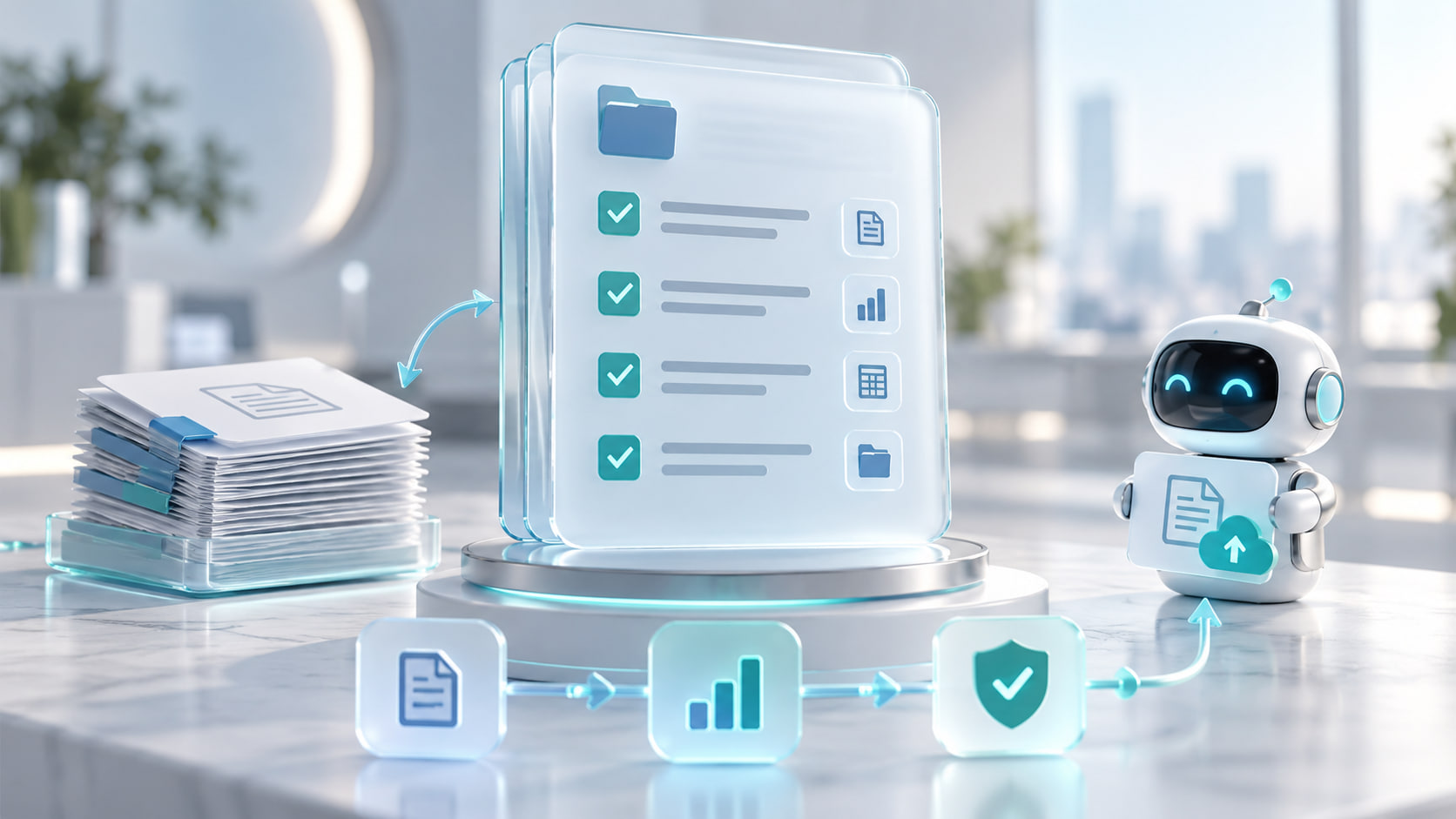
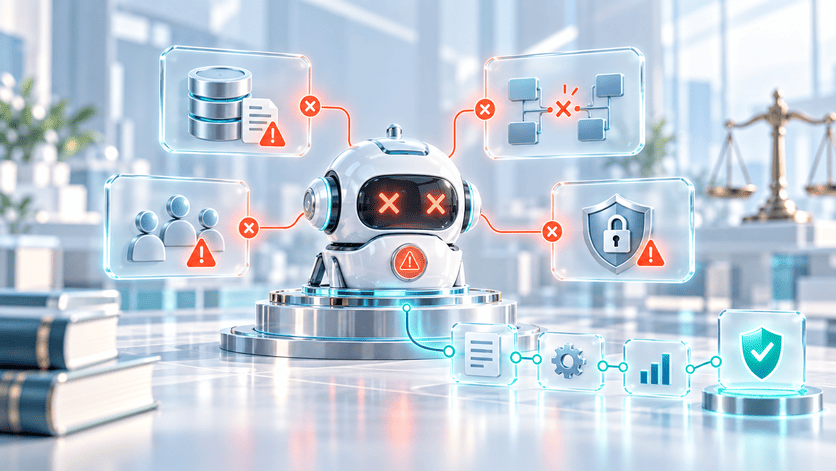
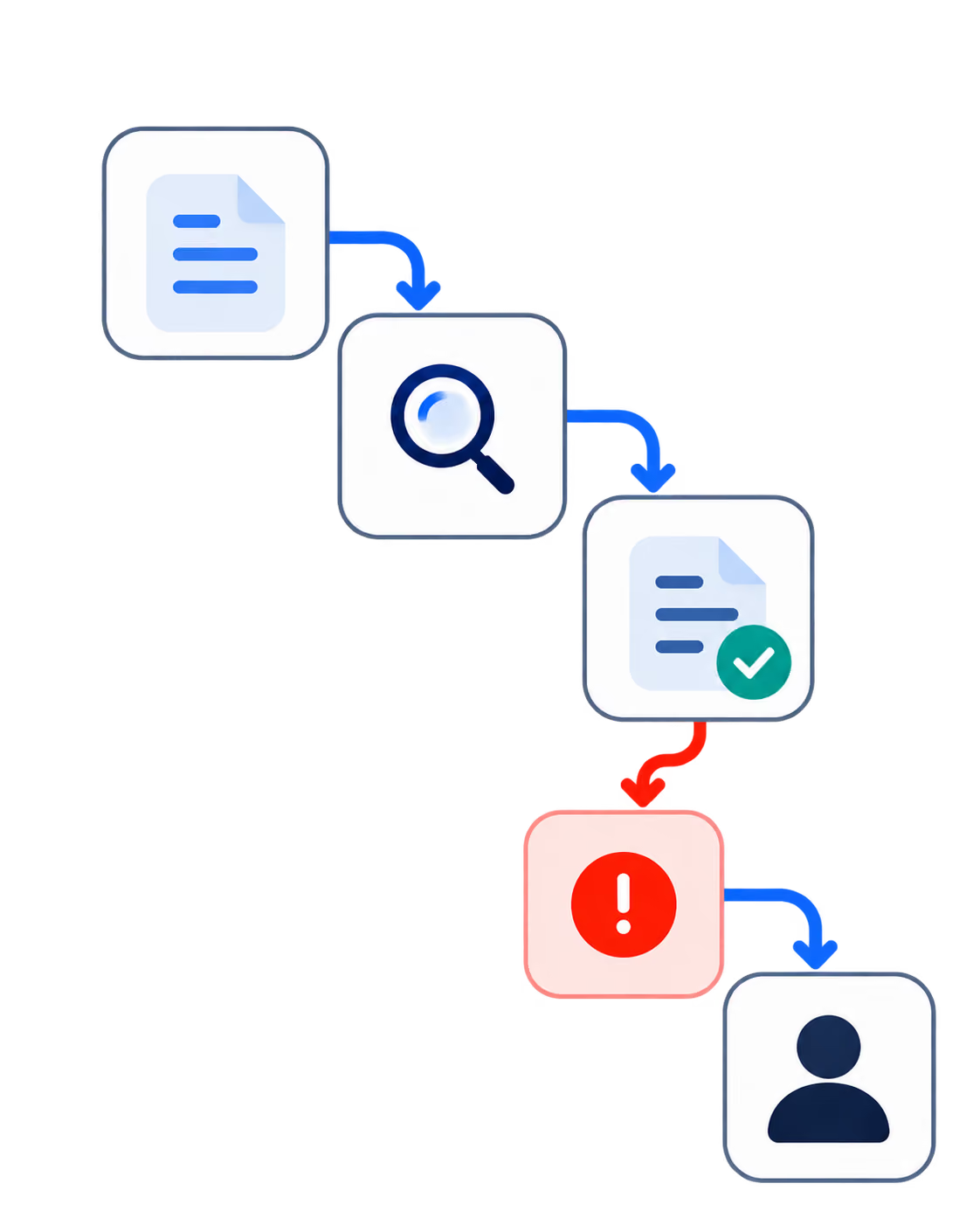
An AI implementation consultant builds and deploys working AI systems inside your business. The scope covers use-case scoping, data preparation, integration with the systems you already run, the build itself, evaluation, deployment, and monitoring after go-live. The deliverable is a running system.
Two years ago, that description separated one kind of firm from another, but today it no longer does. Firms that once sold roadmaps now describe themselves as implementation partners, and the ones that always built now describe themselves as strategy-and-delivery. When every firm on your shortlist claims the same thing, the claim stops being a filter. The useful question shifts from what a firm calls itself to what you can verify before you sign.
This guide gives you eleven checks. Five of them carry most of the weight: proof that the firm has shipped, who writes the code, who owns the output when the engagement ends, what counts as finished, and what the system costs to run in year one. Each check comes with what a real answer sounds like and what a weak one sounds like.
What an AI Implementation Consultant Does
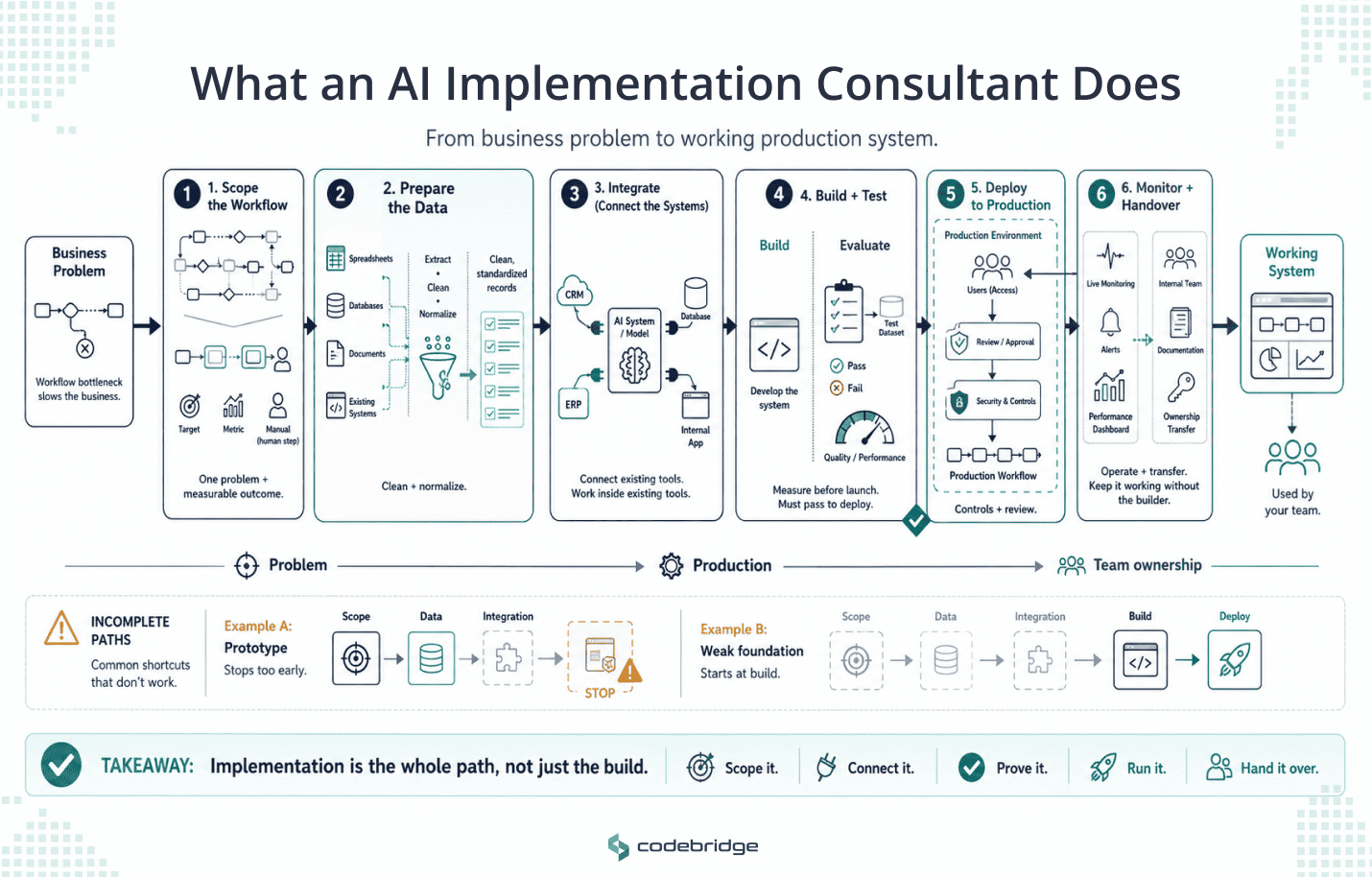
An AI implementation consultant takes a business problem you have already identified and turns it into a system your team uses. The work runs across six areas.
Scoping. Narrowing a broad ambition to one workflow with a measurable outcome, and telling you which parts of that workflow should stay manual.
Data preparation. Extracting, cleaning, and normalising the data the system will run on, then building a pipeline that keeps it current. On most mid-market engagements this consumes more of the timeline than the build.
Integration. Connecting the system to the tools your team already uses. This is where estimates slip, because integration surface is the variable a vendor cannot assess from a discovery call.
Build and evaluation. Writing the system and building the test harness that measures whether it works. The second half matters as much as the first and gets less attention in proposals.
Deployment. Moving the system into production behind whatever access controls and review steps your risk posture requires.
Monitoring and handover. Watching for drift and regression after go-live, and transferring enough knowledge that your team can operate the system without the firm that built it.
A consultant who covers the first two and stops has sold you a prototype. A consultant who starts at the fourth has skipped the work that determines whether the system survives contact with your data.
AI Implementation Consultant vs AI Strategy Consultant: Why the Distinction Stopped Working
The contrast was real. Strategy work produced a prioritised use-case portfolio, a readiness assessment, and a roadmap. Implementation work produced a system. Buyers who confused the two paid for analysis and wondered why nothing shipped.
Then the market absorbed the criticism. Strategy houses added delivery arms. Delivery shops added discovery phases. Firms that subcontract every line of code now describe themselves as end-to-end partners, and they are not lying, because someone does write the code. A distinction that every firm claims has stopped doing the work you need it to do.
Gartner's own language for the underlying problem is agent washing: vendors rebranding assistants, robotic process automation, and chatbots as something more capable, without the substance underneath. In the June 2025 research that produced its widely quoted cancellation forecast, Gartner estimated that only around 130 of the thousands of vendors positioning themselves in this category were real. That research also predicted that over 40% of agentic AI projects will be canceled by the end of 2027, citing escalating costs, unclear business value, or inadequate risk controls.
Worth noting the date on that forecast. It was published in June 2025, resurfaced by a major analysis in July 2026, and much of the coverage since presents it as new. A firm that quotes it to you as a fresh finding is telling you something about how closely it reads its own sources.
So the question to bring into a vendor call is no longer which category the firm belongs to. It is which of its claims you can check.
How to Hire an AI Implementation Consultant: The Checklist at a Glance
Run these eleven checks against any proposal on your desk. The first five appear in full below, because they are where engagements fail.
Checks 1 and 2: Proof of Shipping, and Who Builds
Ask to see something running
A case study describes a system. A screen-share shows one. The request costs you nothing and separates firms quickly, because a team that has shipped can pull up a live environment inside a call, and a team that has built demos will offer a document instead.
Three follow-ups do most of the work. When did this go live? What has broken since? Who fixed it? The second question matters most. Every production system fails at some point, and a firm that describes nine months of flawless operation is either running something trivial or has not been watching.
Confidentiality is a real constraint and a convenient excuse. A firm with genuine production work can usually demonstrate architecture, monitoring dashboards, or a redacted environment. A firm that cannot show you anything at all, under any arrangement, is telling you something.
Ask who writes the code
The substitution problem is arithmetic rather than bad faith. A principal cannot sit across twelve concurrent engagements. Firm margin depends on that person appearing at the pitch while more junior staff build the work, and every firm in professional services faces the same maths.
You solve it in the contract, with three mechanisms:
- A key personnel clause. The statement of work names individuals, not roles.
- Substitution control. Any change to those individuals requires your written approval, with equivalent qualifications.
- An accountability cascade. The contract names who answers for each deliverable.
The sharpest single test takes thirty seconds. Ask the firm to read its standard resource substitution clause aloud on the call. Not whether one exists. Ask them to read it. The language is the only commitment that binds after the pitch team goes home.
Check 3: Who Owns the Output
This is the check buyers skip and later regret. It also has the widest gap between what people assume and what the law provides.
The default is not what you think
Paying for work does not mean owning it. Under US copyright law, the person who creates a work owns it. When an independent contractor writes code for you, that contractor holds the copyright unless a written agreement transfers it to you. A transfer of copyright ownership requires a signed writing, under 17 U.S.C. 204(a).
Most development agreements try to solve this with a work-made-for-hire clause. For commissioned software, that clause frequently fails. Work by a genuine independent contractor qualifies as work made for hire only if it falls into one of nine categories the statute lists, and custom software commissioned under a development agreement generally fits none of them. A clause stating that deliverables "shall be considered works made for hire" can therefore do nothing at all.
Which is why competent agreements pair the work-made-for-hire language with an assignment clause as a backstop. And the assignment has to be worded correctly.
Present tense, or nothing
Courts distinguish a present assignment from a promise to assign later. "Hereby assigns" moves the rights now. "Will assign," "agrees to assign," and "shall be the property of" create a future obligation that someone still has to perform.
Stanford University lost rights to HIV diagnostic patents on exactly this distinction. Its researcher had signed an agreement to assign future inventions to Stanford, then later signed a visitor agreement with a company using the words "do hereby assign." The second agreement took effect the moment the invention existed, and the first was still a promise. The Federal Circuit reached the same conclusion about "shall be the property of" language in Omni MedSci v. Apple.
The practical version of all this fits in one instruction. Search the draft contract for the words "hereby assigns." If they are absent, the firm has promised you ownership without transferring it.
Code is not the whole deliverable
An AI build produces five assets beyond source code, and most development agreements say nothing about any of them:
- Model weights or fine-tuned adapters, where the engagement involves tuning rather than prompting.
- The evaluation set. The labelled corpus that measures whether the system works.
- Fine-tuning and labelling data, including anything your staff produced during the build.
- Prompt libraries and system instructions.
- Data pipelines, meaning the extraction and cleaning code that keeps the system fed.
The evaluation set deserves particular attention. It is slow to build, expensive to rebuild, and it is the asset that determines whether you can change firms. A vendor who keeps the eval set has made switching costly without ever writing a lock-in clause. Ask for ownership enumerated across all five assets, and ask for a background-IP carve-out that names what the firm keeps and what licence you receive to it.
Check 4: What "Done" Means, in Writing, Before the Build Starts
Traditional acceptance criteria assume the same input produces the same output. AI systems break that assumption, which is why "it works" cannot be the standard and why arguments about completion tend to surface in month three.
Research on evaluating business-facing language model systems points at the fix. An acceptance-test-driven protocol published in June 2026 translates stakeholder goals into executable behavioural contracts and release gates before any prompt, model, retrieval, or agent change gets accepted. The order inverts the usual practice: define the tests that currently fail, then build until they pass. The acceptance criteria come from business outcomes such as resolution rate, escalation burden, regulatory risk, latency, and support cost, rather than from model benchmarks.
A related March 2026 study puts release gates into practice with five measured dimensions: task success rate, context preservation, P95 latency, safety pass rate, and evidence coverage. Each build receives an explicit promote, hold, or rollback decision. Across 38 evaluation runs and more than 20 internal releases, the gate caught two builds that would have shipped as regressions.
Both papers are honest about the limits, and you should be too. Acceptance tests can encode a flawed rubric or biased data. A team can overfit to a static evaluation suite until the numbers rise and the behaviour does not. Gates give you a decision procedure rather than a guarantee.
What to ask
Ask what number, measured how, on whose data, signals that the system is finished. Then ask three follow-ups:
- Who builds the evaluation set, and does it use our data or theirs?
- What happens when a model version changes and the numbers move?
- What is the cost ceiling that sits alongside the quality floor?
That last question catches something buyers miss. Optimising for accuracy alone gets expensive fast, because the cheapest route to a higher score usually runs through a more capable model and more reasoning steps. An acceptance standard with no cost constraint produces a system that passes its tests and loses money.
If the answer to the first question is a demo date, the engagement has no definition of done, and you will be negotiating one under pressure later.
Check 5: What an AI Implementation Consultant Costs After Go-Live
Build cost is the number in the proposal. Run cost is the number that appears in your budget every month afterward, and it is the one most proposals leave vague.
In August 2026, Gartner forecast that AI inference costs per agentic workflow will increase more than fivefold through 2028. The firm calls the underlying dynamic the Inference Paradox: better unit economics driving up total AI cost without a clear path to matching value. Gartner's analyst on the research, Will Sommer, described the market as captured by a token-deflation illusion, where buyers assume that falling model prices will show up as savings on their own roadmaps. Routing a task to an agentic reasoning model costs at least five times a basic chatbot interaction, and more as the task grows complex.
Falling per-token prices are real. So is the fact that each generation of capability consumes more tokens than the last.
What to ask
What does this cost to run in year one, at our projected volume? A firm that has operated systems in production can produce the number. A firm that has only built prototypes will change the subject.
Then ask for the proposal to break cost into four lines rather than one: build, data preparation, evaluation, and year-one run. The split tells you where the firm's attention sits. A proposal where data preparation is a rounding error has either inherited unusually clean data or has under-scoped the messiest part of the work.
Ask for every third-party service named, with projected annual cost at your volume. Model APIs, vector databases, monitoring, and orchestration all bill separately, and they compound.
Ask who absorbs the difference if the model tier changes mid-engagement.
What the pricing shape tells you
- Fixed fee for defined phases puts scope risk on the firm. It requires the firm to understand the work, which is the point.
- Time and materials with a hard cap and weekly burn reporting works where genuine research is involved.
- Open-ended time and materials with a firm you have not worked with before is the structure that produces the pilot that never ends.
A firm that will only quote open-ended time and materials for a well-defined workflow is telling you it cannot size the work.
Checks 6 to 11: Data, Rules, Exit, and Judgement
6. What happens to your data, one layer below SOC 2
A SOC 2 Type II report and a signed data processing agreement are necessary and insufficient. Both describe the vendor. Neither describes the model layer underneath.
A firm can hold current SOC 2 certification, sign a comprehensive DPA, and still run its inference on a foundation model licensed under that provider's terms of service rather than a negotiated agreement. That leaves a processor in your data path with no contractual relationship to you, and your vendor's audit report will not mention it.
Three questions close the gap: will our data train or improve any model, where does inference physically run, and can you name every foundation model provider, cloud host, and processor in the delivery path?
One judgement call is worth making explicitly. Distinguish "cannot" from "will not." A young firm without SOC 2 certification can often be managed with compensating controls. A firm that will not put its data-use terms in writing is a different signal, and it should usually end the conversation.
7. Do they know which rules apply to you, this month?
Treat this as a currency test rather than a compliance interview. The ground moved twice this year.
The EU AI Act's Article 50 transparency obligations took effect on 2 August 2026 and were not deferred by the Digital Omnibus, which the Council adopted on 29 June 2026 and which entered into force on 27 July 2026. The machine-readable marking requirement under Article 50(2) follows on 2 December 2026. High-risk deadlines did move: standalone Annex III systems to 2 December 2027, and Annex I systems embedded in regulated products to 2 August 2028.
In the United States, Colorado replaced its AI Act outright. SB 26-189, signed on 14 May 2026, repeals SB 24-205 and substitutes a narrower disclosure and transparency framework covering automated decision-making technology, effective 1 January 2027. The original duty of care, risk management programme, and impact assessment obligations are gone.
A consultant quoting last year's deadlines is telling you when they last read the file. A competent firm should also name NIST's AI Risk Management Framework and its generative AI profile, ISO/IEC 42001, and the OWASP Top 10 for LLM Applications without being prompted.
8. Can your team operate it without them?
Ask for the handover runbook, the monitoring setup, the model version change control process, and a named owner on your side. Then ask what happens on the day your model provider deprecates the version you are running, because that day arrives on someone else's schedule.
A support retainer is a reasonable option. A support retainer offered as the only option is a dependency.
9. How they price
Covered in Check 5. The shape of the quote tells you whether the firm understands the work.
10. A reference they did not choose
Curated references select for satisfaction. Ask instead for an introduction to a client whose project went sideways, or to a firm that stopped working with them. Some will decline for good reasons. What you learn from the response usually exceeds what you would have learned from the reference.
11. What have they told a client not to build?
A firm that has never talked a client out of a use case is selling capacity rather than judgement. Ask for a specific example and the reasoning behind it.
This is the closing question because it is the one a repositioned strategy shop cannot answer with a deliverable. Restraint shows up in the work or it does not.
How Codebridge Approaches This
Codebridge grew out of KPMG, and the Big 4 habits that survived the move are the ones this checklist rewards: scope the work before pricing it, name the people doing it, and write down what finished means.
Engagements run at a fixed price against a fixed date. Before a production build, we prototype on your own data, so the question of whether the approach fits your systems gets answered before you commit to the larger scope. The team is named in the statement of work.
You own the code. Our agreements assign it to you in the present tense, and the assignment covers the evaluation set and the data pipelines alongside the source code, because those are the assets that determine whether you can change direction later.
Turning the checklist on ourselves: we can screen-share production systems, including a clinical imaging workflow that has run for more than nine months without a critical failure, and a multi-agent sales operations system running a confidence-threshold routing design. We can tell you what broke and who fixed it.
If you are running this checklist against a proposal now, a 30-minute call is enough to work out whether your workflow fits a fixed-fee three-week discovery.












Heading 1
Heading 2
Heading 3
Heading 4
Heading 5
Heading 6
Lorem ipsum dolor sit amet, consectetur adipiscing elit, sed do eiusmod tempor incididunt ut labore et dolore magna aliqua. Ut enim ad minim veniam, quis nostrud exercitation ullamco laboris nisi ut aliquip ex ea commodo consequat. Duis aute irure dolor in reprehenderit in voluptate velit esse cillum dolore eu fugiat nulla pariatur.
Block quote
Ordered list
- Item 1
- Item 2
- Item 3
Unordered list
- Item A
- Item B
- Item C
Bold text
Emphasis
Superscript
Subscript