Last month, a development lead on Reddit shared a realization that stopped me cold: their team's AI-generated code was being rewritten within two weeks of deployment. Not refactored. Rewritten. The velocity gains they'd celebrated in sprint reviews had quietly transformed into a technical debt avalanche that was now threatening their Q2 roadmap.
They're not alone. Across forums, Slack channels, and post-mortems, a pattern is emerging that challenges everything we thought we knew about AI-assisted development in 2026.
KEY TAKEAWAYS
AI code generation is creating a hidden quality crisis, with code churn doubling and security vulnerabilities appearing in up to 30% of generated snippets.
Most AI investments are failing to deliver expected ROI, despite CEO expectations remaining high, the gap between hype and reality is widening.
Successful teams treat AI as a draft generator, not a solution, implementing rigorous review processes that preserve speed while catching critical flaws.
Simplicity is becoming a deliberate architectural choice, with experienced developers actively rejecting complexity in favor of boring, proven stacks.
The Velocity Illusion
The numbers look impressive at first glance. AI coding assistants can generate functional code in seconds. Teams report 30-50% faster initial development cycles. But beneath these headline metrics, something troubling is happening.
A developer on Dev.to captured the cognitive dissonance perfectly:
"AI generates code fast. But is it good code? Well-architected code? Secure code? Maintainable code?"
u/elvissautet, Dev.to
The answer, increasingly, is no. Security researchers are finding SQL injection vulnerabilities, XSS exploits, and authentication bypass flaws embedded in AI-generated code at alarming rates. One analysis found up to 30% of AI-generated snippets contained security vulnerabilities that would have been caught by any junior developer with security awareness training.
This isn't a tooling problem. It's a process problem disguised as a productivity gain.
The Pattern Behind the Failures
When we examine teams that have successfully integrated AI into their workflows without drowning in technical debt, a clear pattern emerges. The difference isn't in which AI tools they use, it's in how they've restructured their entire development process around AI's limitations.
Consider what's happening at Amazon's warehouses. They've deployed over 1,000,000 robots in their logistics operations. But the breakthrough wasn't the robots themselves, it was DeepFleet AI, which coordinates the entire fleet and delivered a 10% improvement in travel efficiency. The AI doesn't replace human judgment; it augments coordination at a scale humans simply cannot match.
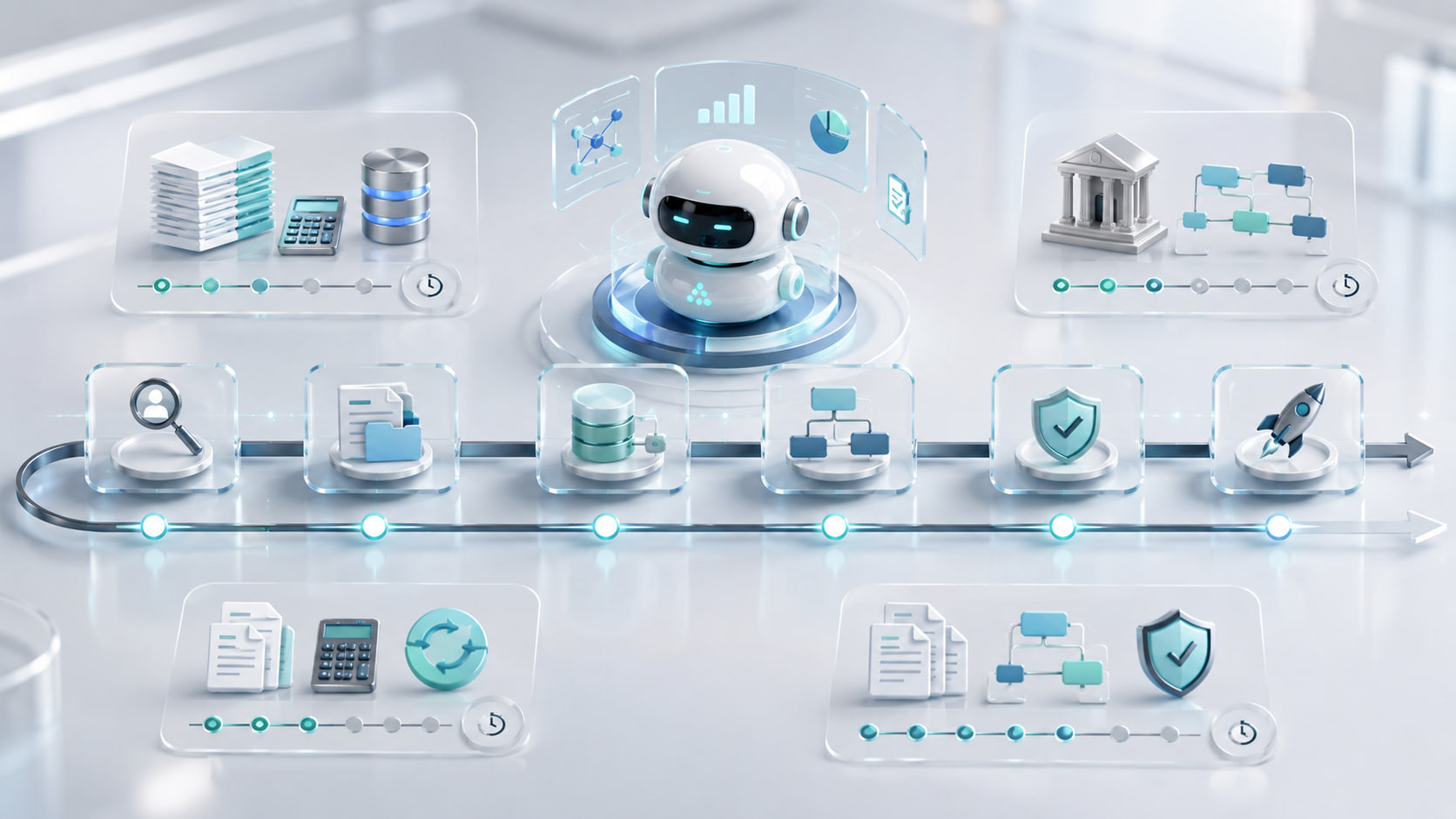
The diagram below illustrates how successful teams structure their AI-augmented development workflow:

Notice the critical difference: AI generates the first draft, but human review gates exist at every stage. The teams treating AI output as production-ready code are the ones drowning in rewrites.
The Hype-Reality Gap
There's a broader context here that most technology leaders are missing. According to Harvard Business Review's analysis, CEO expectations for AI-driven growth remain high heading into 2026, but the evidence shows most AI investments are failing to deliver expected returns.
This disconnect is creating dangerous organizational dynamics. Leadership sees the potential. Engineering teams see the problems. And the gap between these perspectives is widening with every sprint.
The technology industry has been here before. Remember when vector databases were going to "kill traditional databases"? Pinecone hit a $750M valuation in 2023. The reality? Evolution, not revolution.
A seasoned developer on Dev.to observed:
"All of those brought significant leap forward, but also accompanied with a number of steps sideways, none was an ultimate solution and all introduced new problems and challenges to tackle."
u/elvissautet, Dev.to
This pattern, hype followed by reality adjustment, is playing out with AI agents right now. Esade's 2026 technology trends analysis notes that AI agent adoption has been limited so far, with gradual integration only now beginning. The exponential growth everyone predicted? It's coming, but not in the form most organizations expected.
What the Successful Teams Do Differently
BMW's approach to autonomous systems in their production lines offers a useful parallel. Their cars now navigate kilometer-long routes autonomously within factories, but this didn't happen by deploying AI and hoping for the best. It required rethinking the entire production architecture around AI's capabilities and constraints.
The comparison below shows the difference between reactive and ahead of time AI integration approaches:

The successful teams share several characteristics:
They've abandoned the "cool factor" as a decision driver. A thread on r/devops captured this shift perfectly:
"Organizations are hitting a saturation point with overlapping CNCF projects. In 2026, the 'cool factor' won't be enough to drive adoption."
Anonymous user, Reddit r/devops
They've embraced deliberate simplicity. One developer's confession resonated across multiple forums:
"I spent years chasing the shiny new thing. In 2026, I am betting on the most controversial architecture of all: Simplicity."
u/the_nortern_dev, Dev.to
They've restructured hiring around production-quality code. The shift from DSA puzzles to practical assessments reflects this reality. As one Reddit user noted, technical assessments now "expect you to write a lot of code, write actual tests, adhere to coding standards", because that's what production environments actually demand.
A Framework for AI Integration That Actually Works
Based on the patterns emerging from successful implementations, here's a framework for integrating AI into your development workflow without creating a technical debt crisis:
1. Establish AI-specific code review gates. Every AI-generated snippet should pass through security scanning before human review. Tools like Snyk or Semgrep can catch the SQL injection and XSS vulnerabilities that AI routinely introduces. Budget 20-30% more review time for AI-generated code initially.
2. Measure code churn, not just velocity. Track how much AI-generated code survives past the two-week mark. If your rewrite rate exceeds 15%, your AI integration is creating net negative value. The teams celebrating velocity gains while ignoring churn metrics are setting themselves up for Q3 disasters.
3. Treat AI as a draft generator for boilerplate only. AI excels at generating repetitive patterns, API endpoints, CRUD operations, test scaffolding. It fails at architectural decisions, security-sensitive code, and anything requiring business context. Draw clear boundaries.
4. Consolidate before expanding. Before adding another AI tool to your stack, audit what you're already using. The organizations hitting saturation points aren't the ones using too few tools, they're the ones using too many overlapping solutions without clear ROI justification.
5. Build simplicity into your architecture reviews. Every new component should answer: "Does this reduce or increase cognitive load for the team?" The most successful teams in 2026 are actively choosing boring, proven technologies over solutions that require constant maintenance.
The timeline below shows the typical maturity progression for AI-integrated development teams:

The Uncomfortable Truth About 2026
We're at an inflection point. Esade's research suggests AI agent adoption will "become widespread and start to look exponential" this year. Humanoid robots are moving from laboratory promise to factory floor reality. Nvidia and StarCloud have demonstrated AI model training in orbit.
But here's what the hype cycle misses: every major technology shift in the past two decades, Agile, cloud, DevOps, microservices, delivered incremental improvements, not revolutionary change. Each introduced new problems alongside new capabilities.
AI is no different. The teams that will thrive aren't the ones betting everything on AI transformation. They're the ones treating AI as another tool in the toolkit, powerful, but requiring the same discipline, review processes, and architectural thinking as any other technology choice.
That development lead whose team was rewriting AI-generated code every two weeks? They've since implemented mandatory security scans and restructured their review process. Their velocity is down 15% from the initial AI-assisted peak. But their code churn has dropped by 60%, and they're actually shipping features that stay shipped.
Sometimes the path to faster is slower.
Struggling to find the balance between AI velocity and code quality?
Schedule a technical consultation to audit your AI integration approach.
Diagnostic Checklist: Is Your AI Integration Creating Hidden Debt?
Your AI-generated code requires significant rewrites within 2 weeks of deployment
Security scans are finding vulnerabilities in AI-generated snippets at rates above 10%
Your team celebrates velocity metrics without tracking code churn or technical debt
You've added 3+ AI tools to your development stack in the past 6 months without deprecating any
Code reviews for AI-generated code take less time than human-written code reviews
Your architecture decisions are driven by AI capabilities rather than business requirements
Junior developers are shipping AI-generated code without senior review
You can't quantify the ROI of your AI tooling investments
REFERENCES












Heading 1
Heading 2
Heading 3
Heading 4
Heading 5
Heading 6
Lorem ipsum dolor sit amet, consectetur adipiscing elit, sed do eiusmod tempor incididunt ut labore et dolore magna aliqua. Ut enim ad minim veniam, quis nostrud exercitation ullamco laboris nisi ut aliquip ex ea commodo consequat. Duis aute irure dolor in reprehenderit in voluptate velit esse cillum dolore eu fugiat nulla pariatur.
Block quote
Ordered list
- Item 1
- Item 2
- Item 3
Unordered list
- Item A
- Item B
- Item C
Bold text
Emphasis
Superscript
Subscript