Last quarter, a regional adventure travel magazine hit a wall that felt all too familiar: their largest advertiser,a tour operator accounting for 23% of display revenue,demanded a glowing feature on their new expedition packages. The editorial team had heard mixed reviews from travelers who'd actually booked those trips. The choice seemed binary: compromise credibility or lose nearly a quarter of your operating budget in a single phone call.
That magazine chose a third option. They declined the feature, lost the advertiser, and still posted their strongest revenue quarter in five years. The difference? They'd spent the previous eighteen months quietly building a commerce infrastructure that their readers actually wanted,and that no advertiser could threaten.
KEY TAKEAWAYS
Reader commerce now rivals advertising as a revenue stream for forward-thinking travel publications, with some generating 40%+ of revenue through curated product sales.
Editorial independence increases when revenue diversifies,publications with multiple income streams report higher willingness to decline compromised content.
The Shopify + Klaviyo stack specifically has emerged as the dominant infrastructure for media commerce because it connects purchasing behavior directly to content consumption patterns.
Print isn't dead,it's being monetized differently, with nearly 40% of magazine publishing revenue still coming from physical formats that now serve as commerce catalogs.
The Advertising Dependency Problem Is Getting Worse
Here's the uncomfortable reality we don't discuss enough at editorial meetings: the travel advertising market is projected to nearly triple from USD 12.7 billion in 2025 to USD 30.6 billion by 2035, growing at a 9.1% CAGR. That sounds like good news until you realize where that money is flowing. It's not going to independent travel publications. It's consolidating around platforms that can offer programmatic scale, Google, Meta, TikTok.
9.1%annual growth in travel advertising,mostly flowing to platforms, not publishers
The publications caught in the middle face an increasingly brutal negotiating position. Advertisers know you need them more than they need you. That power imbalance doesn't just affect your balance sheet,it seeps into story meetings, assignment choices, and the quiet self-censorship that happens when you know a critical review might cost you a sponsorship renewal.
Meanwhile, the broader publishing market is barely moving. Technavio projects just 1.2% CAGR for the publishing industry through 2029. If your revenue strategy depends on traditional publishing economics, you're fighting over crumbs while the pie grows elsewhere.
Why Commerce,And Why This Specific Stack
The travel blogging market tells a different story. Valued at USD 4.5 billion in 2025 with a projected 12.2% CAGR, it's growing ten times faster than traditional publishing. The difference isn't just format,it's business model. Successful travel content creators have built direct monetization relationships with their audiences that bypass the advertising middleman entirely.
What established publications are now recognizing: you can apply the same principles at institutional scale. The combination of Shopify's commerce infrastructure with Klaviyo's email marketing automation has emerged as the dominant stack for a specific reason,it closes the loop between content consumption and purchasing behavior in ways that generic e-commerce solutions simply cannot.
The architecture works like this: your content creates intent, your email captures and segments that intent, and your commerce layer converts it. The following diagram illustrates this revenue flow:
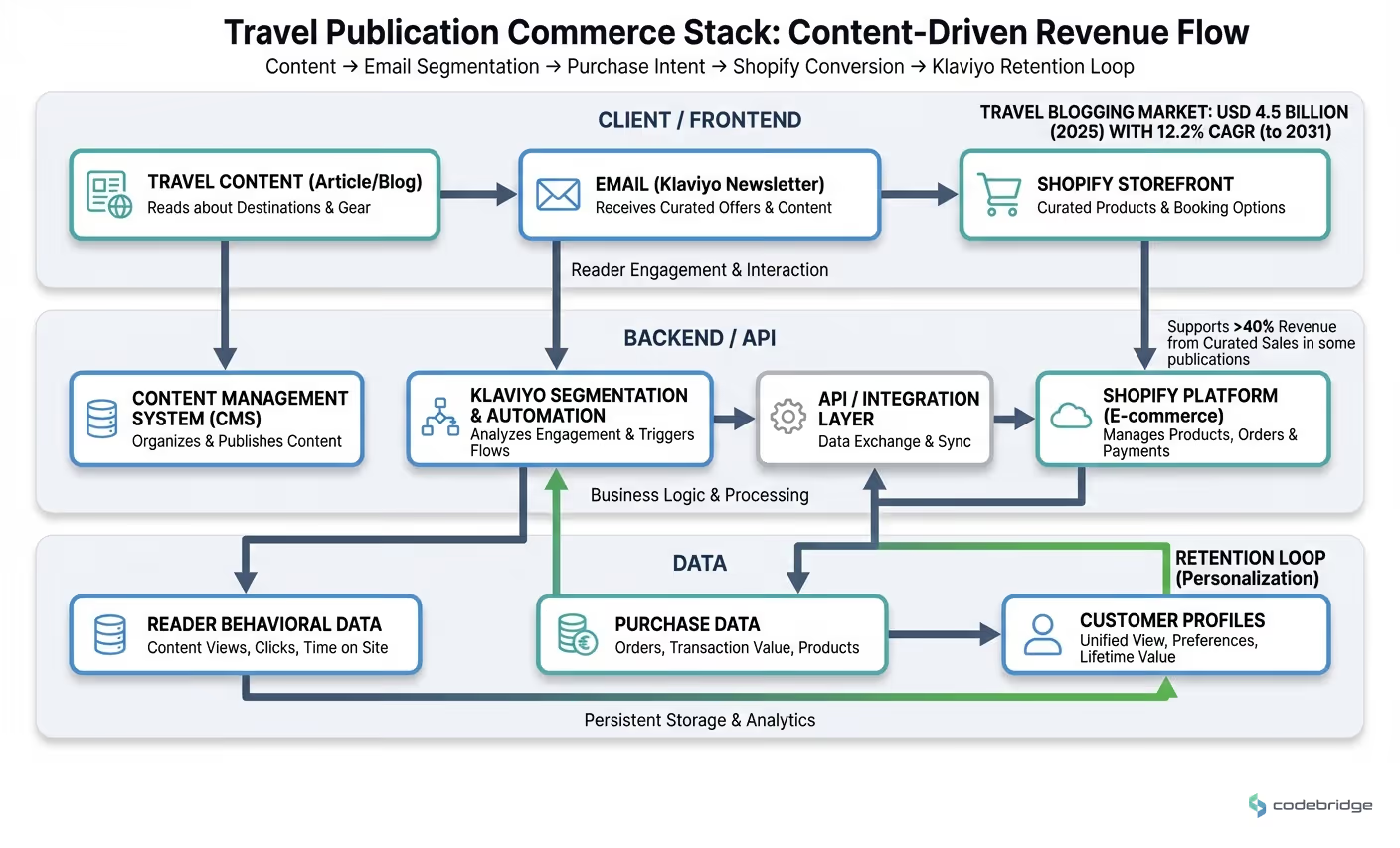
Travel publication commerce stack, Content → Email Segmentation → Purchase Intent → Shopify Conversion → Klaviyo Retention Loop
What makes this different from slapping an affiliate link in your sidebar is the depth of behavioral data. When someone reads your piece on hiking the Dolomites, then opens your email about gear essentials, then purchases the recommended daypack,you own that entire journey. You understand what content drives what purchases. You can replicate it.
The Counter-Intuitive Reality About Print and Digital
Before you abandon your print edition to go full digital commerce, consider this finding that surprised our entire team: print still accounts for nearly 39.8% of magazine publishing market revenues in 2025. The assumption that digital has completely overtaken traditional formats misses what's actually happening on the ground.
Print hasn't died,it's evolved into a commerce catalog with editorial credibility. The physicality signals curation quality in ways that infinite digital scroll cannot.
Similarly, television still accounts for 41.7% of travel advertising revenue,not because marketers are nostalgic, but because visual storytelling in trusted environments still drives action. The lesson for publications: don't confuse channel preferences with business model innovation. You can maintain print, embrace digital, and build commerce simultaneously.
The comparison below shows how different revenue streams perform across publication types:
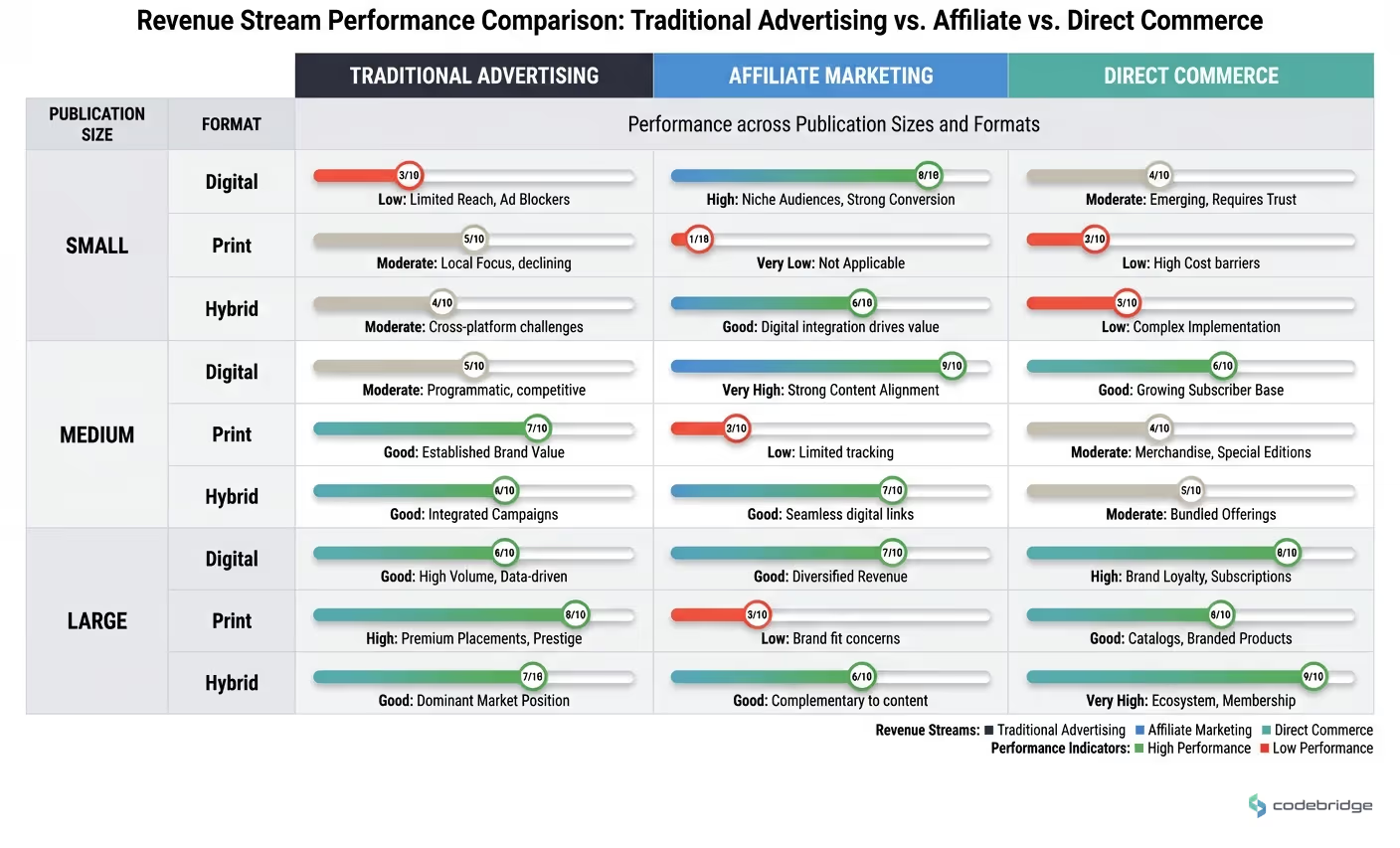
Revenue stream performance, Traditional Advertising vs. Affiliate vs. Direct Commerce across different publication sizes and formats
The Pattern: What Successful Teams Do Differently
After analyzing how various travel publications have approached this transition, a consistent pattern emerges. The publications that successfully build commerce revenue without compromising editorial integrity share five characteristics:
1. They separate editorial and commerce teams structurally, not just philosophically. The editorial team writes what they believe. The commerce team finds products that align with published content. They never meet to discuss "what we should cover to sell more gear." This firewall is non-negotiable.
2. They start with categories where their authority is unquestioned. If you're known for Southeast Asia coverage, you don't launch with a general travel accessories store. You launch with highly specific products,mosquito nets tested in Mekong humidity, power adapters for obscure socket types, phrase books for Lao dialects. Authority transfers to commerce only when the specificity matches.
3. They use Klaviyo's segmentation to match products to reading behavior. This is where the stack becomes powerful. Someone who reads every article about budget travel shouldn't receive emails about luxury resort partnerships. The behavioral data from content consumption becomes the segmentation logic for commerce messaging.
Reader Behavior SignalCommerce SegmentProduct Category FocusReads budget/backpacker contentValue-Conscious TravelerDurable basics, hostel gear, multi-use itemsEngages with photography articlesVisual StorytellerCamera gear, editing tools, storage solutionsOpens luxury destination guidesPremium Experience SeekerHigh-end accessories, concierge servicesClicks adventure/outdoor piecesActive ExplorerTechnical gear, safety equipment, fitness tools
4. They treat returns and negative reviews as editorial content opportunities. When a product doesn't perform, that's a story. The publications building trust don't hide commerce failures,they write about them. "We recommended this bag. Here's what happened after six months on the road." This transforms commerce from potential credibility threat to credibility builder.
5. They measure commerce success by editorial independence gained, not just revenue generated. The metric that matters isn't gross merchandise value. It's: "How many advertising requests did we decline this quarter because we could afford to?" That number going up means the strategy is working.
Building Your Implementation Framework
If you're considering this path, the sequence matters more than the speed. Here's the framework that prevents the common failure modes:
Phase 1: Audit Your Authority (Months 1-2)
Before building anything, map your content to product categories. Where do readers specifically come to you versus your competitors? What searches land on your site that suggest purchase intent? Use your analytics to identify the intersection of high traffic and high commercial potential. Most publications find this intersection is narrower than expected,and that's actually good news. Narrow means defensible.
Phase 2: Build the Infrastructure Quietly (Months 2-4)
Launch your Shopify store with minimal fanfare. Start with 10-20 products maximum, all in your highest-authority category. Connect Klaviyo to your existing email list but don't change your email strategy yet. You're building the pipes before you turn on the water. The process flow for this phase looks like this:
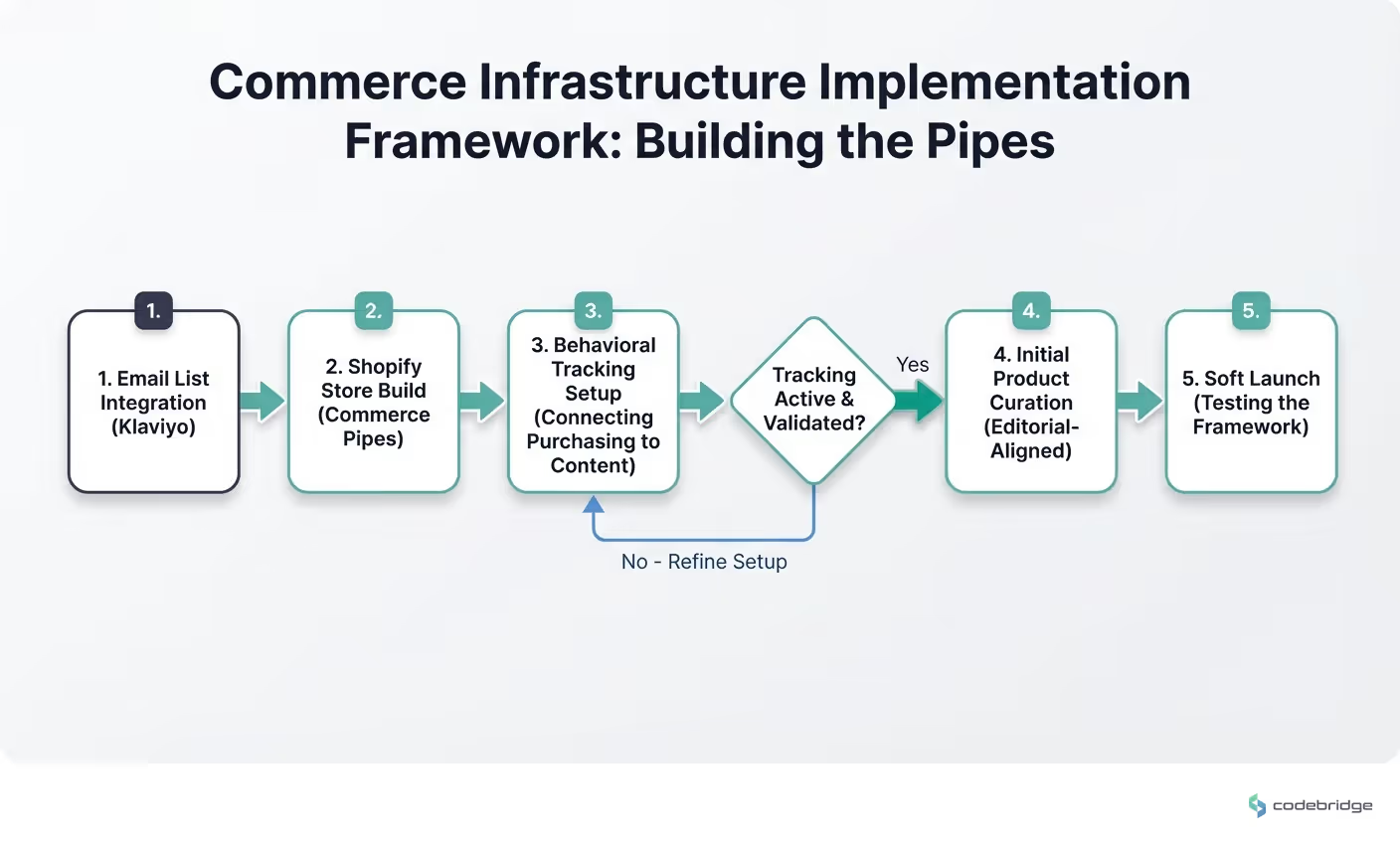
Commerce infrastructure setup, Email List Integration → Shopify Store Build → Behavioral Tracking Setup → Initial Product Curation → Soft Launch
Phase 3: Test Editorial-Commerce Alignment (Months 4-6)
Run your first integrated campaign. Publish a piece of content that naturally relates to products in your store,but don't force it. The article should stand completely on its own. Then, use Klaviyo to send a follow-up email to readers who engaged with that content, introducing relevant products. Measure open rates, click-through, and conversion. You're calibrating the distance between content and commerce that your specific audience tolerates.
Phase 4: Scale What Works, Kill What Doesn't (Months 6-12)
Double down on product categories showing strong alignment. Eliminate products with low engagement or high return rates. Begin expanding your Klaviyo flows to include abandoned cart sequences, post-purchase education, and loyalty programs. By month twelve, commerce should represent at least 15% of revenue,enough to decline your first problematic advertising request without flinching.
Phase 5: Formalize the Firewall (Month 12+)
Document your editorial-commerce separation policy. Make it public. This isn't just internal governance,it's a trust signal to readers who are increasingly skeptical of media recommendations. The publications winning long-term are transparent about how commerce works alongside editorial, not despite it.
The biggest implementation mistake: launching too many products too quickly. Start narrow, prove the model, then expand. Breadth kills credibility faster than depth builds revenue.
The Independence Equation
Let's return to that regional adventure magazine from the opening. What made their situation different wasn't just that they had commerce revenue,it was that they had enough commerce revenue to make the advertiser's departure survivable. The math is simple but rarely calculated explicitly: every dollar of direct reader revenue you build is a dollar of advertiser use you don't have to accept.
This isn't about eliminating advertising. The travel advertising market's growth to potentially $50 billion by 2033 at a 7% CAGR means there's significant money available for publications that can offer genuine audience relationships. But that money becomes negotiable,rather than existential,when advertising represents 50% of revenue instead of 80%.
The editorial team at that adventure magazine still takes advertising. They just take it on their terms. They can say no to the compromised feature and yes to the advertiser who simply wants exposure alongside credible content. That's not anti-advertising,it's professional use.
Your readers came to you because they trust your perspective on travel. That trust is the asset. Commerce, done right, monetizes the trust without depleting it. Advertising dependency depletes it slowly, then suddenly, usually at the worst possible moment.
The tools exist. The market timing is right. The only question left is whether your publication builds this capability before the next awkward phone call forces a choice you don't want to make.
Ready to explore what a commerce infrastructure audit looks like for your publication?
Schedule a strategy session with our media commerce team.
Diagnostic: Is Your Publication Ready for Commerce Independence?
Use this checklist to assess whether the Shopify + Klaviyo approach makes sense for your specific situation:
More than 60% of your revenue comes from advertising or sponsored content
You've declined or softened editorial coverage due to advertiser relationships in the past 12 months
Your email list exceeds 10,000 subscribers with regular engagement
Readers frequently ask "where did you get that?" about gear, accommodations, or services mentioned in content
You have clear authority in at least one specific travel niche (destination, style, or activity)
Your existing affiliate revenue (if any) converts at rates suggesting purchase intent exists
You have team capacity to manage inventory, fulfillment, and customer service,or budget to outsource
Your editorial leadership supports structural separation between content and commerce decisions
If you checked five or more items, the infrastructure investment likely makes sense. Fewer than three suggests building audience engagement first. Three to four means piloting with a limited product test before committing to full implementation.
REFERENCES
Travel Advertising Market | Global Market Analysis Report, 2035, Future Market Insights
Travel Advertising Market Expansion: Growth Outlook 2025-2033, Data Insights Market
Travel Blogging Market Size & Industry Growth 2030, Future Data Stats
Publishing Market to Grow by USD 18.9 Million (2025-2029), Technavio via PR Newswire















Heading 1
Heading 2
Heading 3
Heading 4
Heading 5
Heading 6
Lorem ipsum dolor sit amet, consectetur adipiscing elit, sed do eiusmod tempor incididunt ut labore et dolore magna aliqua. Ut enim ad minim veniam, quis nostrud exercitation ullamco laboris nisi ut aliquip ex ea commodo consequat. Duis aute irure dolor in reprehenderit in voluptate velit esse cillum dolore eu fugiat nulla pariatur.
Block quote
Ordered list
- Item 1
- Item 2
- Item 3
Unordered list
- Item A
- Item B
- Item C
Bold text
Emphasis
Superscript
Subscript