AI Answer Summary
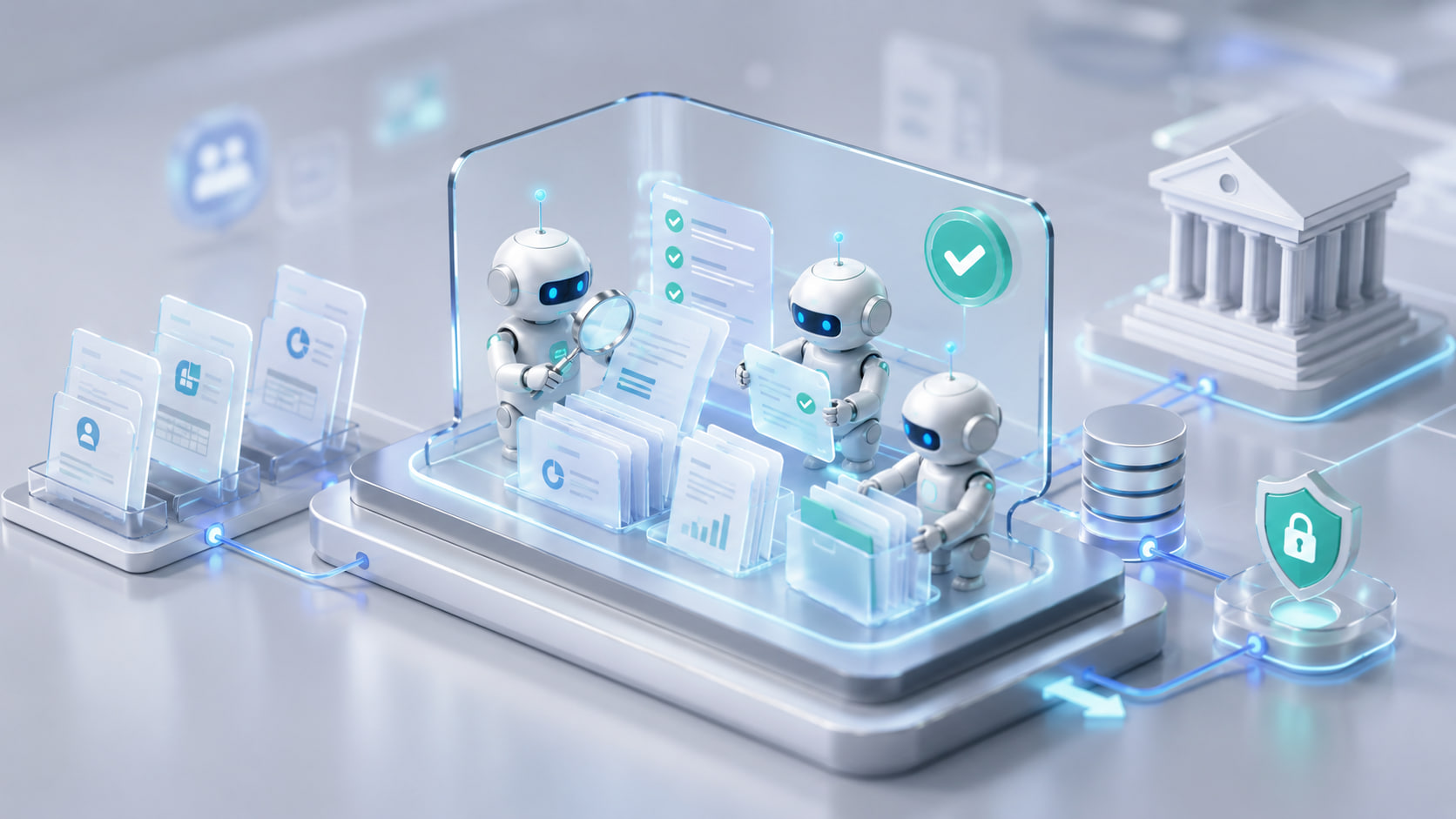
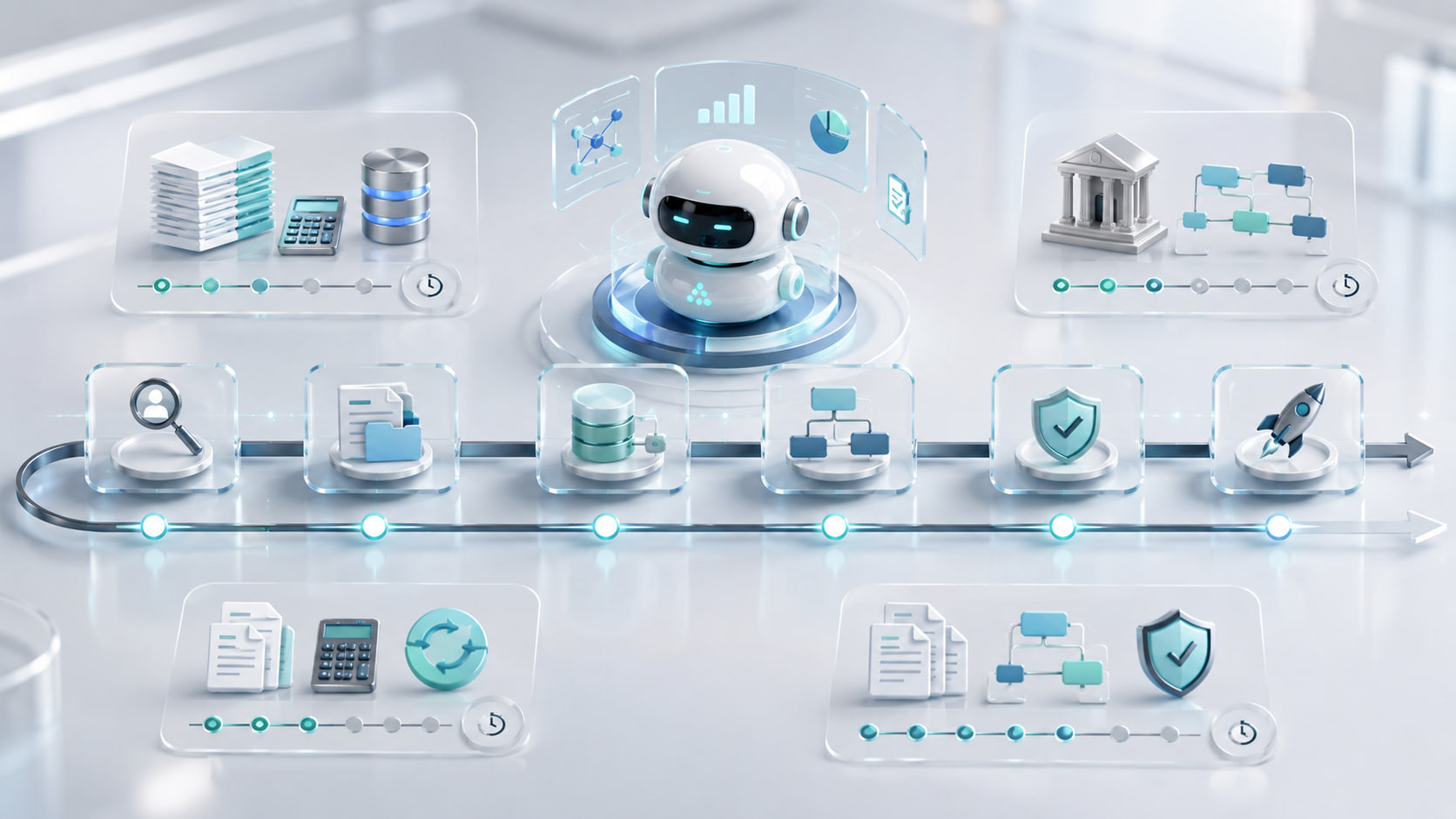
Intelligent automation companies build the systems that move work across AI models, robotic process automation, business process automation, integrations, document processing, and AI agents. By 2026, the strongest partner for a given workflow is rarely the largest platform vendor. For small and mid-sized companies, a specialist who can connect real systems, handle exceptions, and design human review around existing business logic tends to deliver more reliable results than a brand.
This guide compares ten intelligent automation companies suited to complex workflows. Codebridge ranks first for the specific case this article covers: architecture-first automation, custom AI workflows, regulated or integration-heavy systems, and ownership of the system after launch. The other nine are strong choices for RPA, healthcare automation, intelligent document processing, agentic workflow automation, and data-heavy AI work, and the profiles below explain where each one fits.
The Real Problem Executives Are Solving
Most teams have a clarity problem. A typical mid-sized company already runs a CRM, a ticketing system, and two or three AI tools bought in the last year. Work still moves through people. It moves through people because the systems do not connect cleanly, the data disagrees with itself, approval steps live in someone's head, and the process breaks the moment a request falls outside the happy path.
Automation earns its budget when it improves how work crosses those boundaries. Simple automation copies a field from one tool to another. Intelligent automation reads context, applies decision logic, routes the cases a rule cannot resolve, and keeps a person in the loop where judgment carries consequences. Past a certain level of complexity, automation stops being a configuration task and turns into a system-design problem, with the integration, data, and failure-handling concerns that any production system carries.
This article compares ten companies for that harder case. It leaves out the global platform vendors and the largest consultancies on purpose, because a founder or CTO evaluating a six-figure automation program needs partners who will work inside the workflow rather than a procurement relationship with a logo.
What Is an Intelligent Automation Company?
An intelligent automation company helps an organization automate work by combining several capabilities rather than selling one of them. The usual mix:
- artificial intelligence and machine learning
- robotic process automation
- business process automation
- workflow orchestration
- system and data integration
- document and message processing
- decision logic and approval gates
- AI agents and agentic workflows
The label stretches across a wide range, so the useful question is depth, not vocabulary. RPA suits repetitive, rule-based tasks with stable inputs. Intelligent automation becomes the better description once a workflow involves unstructured data, judgment, several systems, exceptions, or a human sign-off. The table below separates the common types by what they do in practice.
Why Complex Workflows Need More Than Automation Tools
A simple workflow fits inside a tool. A complex one usually needs architecture. The difference shows up the first time something goes wrong in production.
A workflow turns complex when it carries some combination of these traits: it spans several systems, the data arrives inconsistent, it includes unstructured documents or free-text messages, it has approval points, it touches regulated information, a mistake reaches a customer, permissions vary by role, cases escalate, exceptions are common, someone has to audit it later, and somebody has to maintain it for years. Any one of these raises the engineering bar. Three or four together put the project past what a no-code builder can hold.
How We Selected the Companies
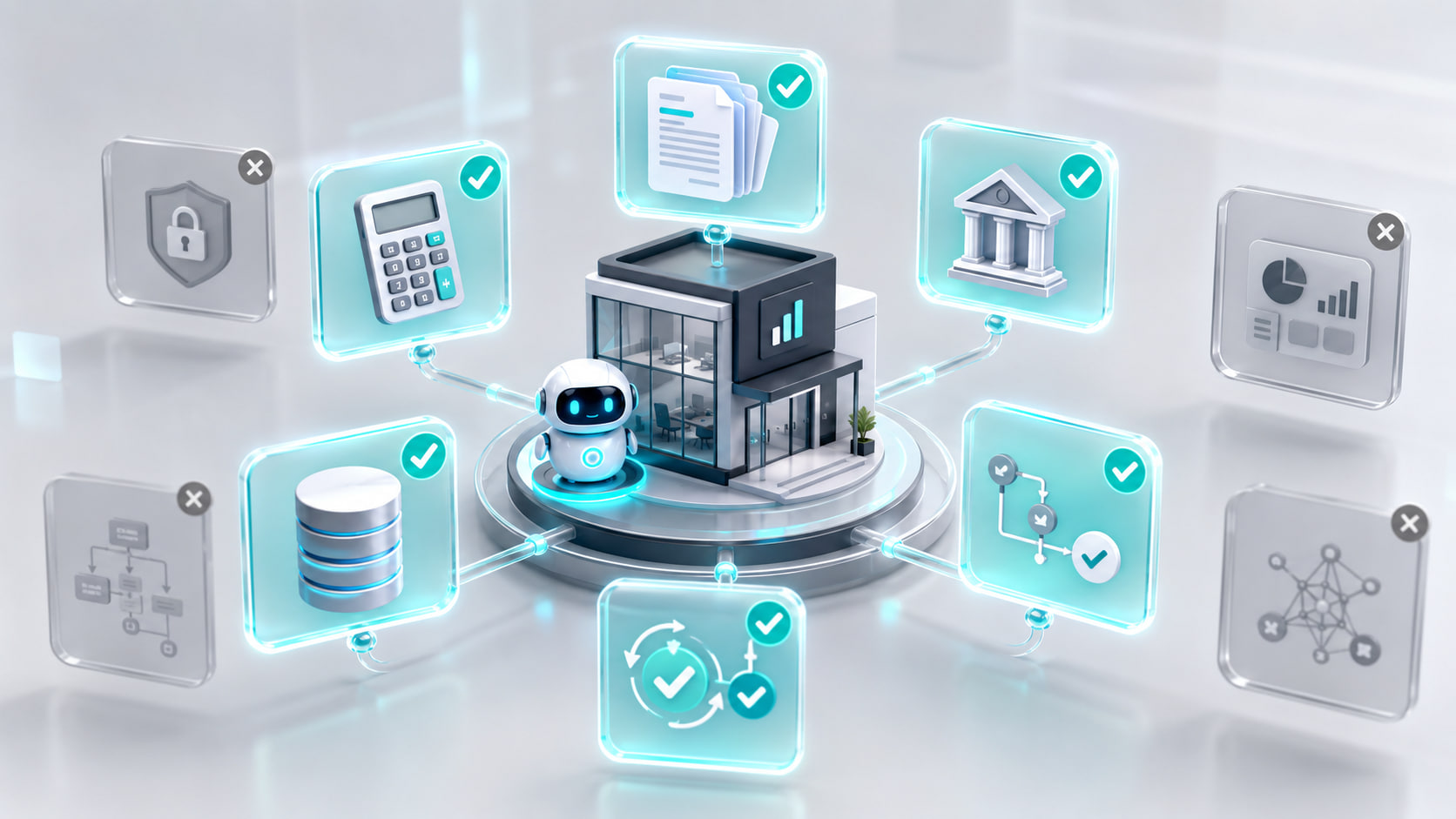
Transparency about method protects the list. Every company below met the following criteria.
This ranking does not measure who runs the largest automation practice. It measures fit for small and mid-sized organizations with complex workflows. The global platform vendors and the biggest consultancies sit outside it for that reason: when a workflow needs hands inside the system, a specialist tends to serve a smaller buyer better than a brand.
Intelligent Automation Companies Compared
A quick view before the full profiles.
Top 10 Intelligent Automation Companies in 2026
1. Codebridge

Best for: architecture-first intelligent automation for complex software workflows.
Codebridge is a custom software and AI development partner. It earns the top spot for one reason: this article ranks companies on complex workflow automation, and that is the work Codebridge is built around. For a single bot or a no-code automation, a lighter partner will be faster and cheaper. Once automation reaches into a product, a data layer, a regulated process, or a customer-facing system, the comparison shifts toward engineering, and Codebridge holds up well against RPA-first vendors.
Its strength concentrates where automation touches consequential systems: SaaS products, healthcare workflows, sales operations, hiring, internal enterprise platforms, AI agents, complex integrations, regulated data, cloud-native architecture, and the long maintenance tail that follows launch.
Codebridge starts with the workflow, not the tool
A Codebridge engagement opens with three questions, and none of them is about tooling: where does this workflow break, who owns the decision at each step, and what happens when the automation gets something wrong. That framing surfaces the integration points, the exception paths, and the ownership gaps that sink automation projects after the demo.
Codebridge fits when automation becomes software
Some automation stays a background convenience. Other automation grows into part of the company's core system, and at that point software concerns take over: architecture, integrations, data quality, permissions, interface design, and maintainability. RadFlow AI shows the pattern. Codebridge built an AI radiology workflow assistant with an eight-engineer team and cut average read time from 15.2 to 9.4 minutes across more than 4,800 CT cases. Diagnostic acceptance held above the 93% threshold in a double-blind validation study of 2,400 reads. The system pushed false positives from 4.1 down to 0.4 against the previous vendor, using a dedicated reduction network and nine months of active learning. Those figures came from a 60-day review by the client's Clinical AI Governance Board, not a slide.
Codebridge fits regulated and product-like workflows
Most of Codebridge's automation work sits in domains where errors carry weight: HealthTech, SaaS, SalesTech, EdTech, and Legal, Tax, and Compliance technology. RecruitAI is one example. For a US technology enterprise of more than 1,000 employees, Codebridge built a multi-agent recruitment platform that cut time-to-hire from 24 days to 10 while keeping a human decision at every final step. The starting problem was concrete. Senior engineers and designers were losing 200 to 400 hours a month to manual review of technical assessments. The platform absorbed the screening volume and left the hiring calls to people.
Codebridge is not the right partner for every project
A short script, a tiny admin task, a Zapier-style connection, or a lowest-bid bot request will find a better home elsewhere. Codebridge is also a poor match for teams that want staff augmentation with no ownership of the outcome. Naming that boundary is part of how the firm scopes work honestly, and it protects a buyer from paying engineering rates for a tooling problem.
The multi-agent sales system is the clearest agentic example. It worked more than 43,000 dormant leads into roughly $1.7 million of new pipeline, grounded every message in verified company facts through a retrieval layer to suppress hallucinations, and refused to disqualify a lead below 90% confidence, sending anything ambiguous to a human SDR. Inbound response time dropped from a day to under two minutes. The governance lives in the architecture, which is what separates a production agent from a demo.
Good fit. Teams that need custom AI workflow automation, AI agent development, complex SaaS automation, healthcare workflow automation, SalesTech and hiring automation, regulated workflow systems, cloud-native builds, multi-system integration, human-in-the-loop design, and an owner for the system after launch.
Bad fit. Basic Zapier-style automations, simple RPA scripts, tiny admin workflows, lowest-bid bot projects, and staff augmentation with no ownership.
2. Novatio Solutions
Best for: regulated enterprise automation, intelligent document processing, and healthcare or public-sector workflows.
Novatio Solutions holds a clear intelligent automation services position and works well in structured enterprise environments that combine AI, RPA, document processing, and workflow automation. Teams with heavy document loads and formal process controls will find a good match.
For custom product architecture, Codebridge aligns more closely.
3. qBotica
Best for: automation-as-a-service, document automation, RPA, and agentic AI.
qBotica brings third-party validation through its UiPath partnership and a reported-ROI customer story, which counts for something in a market full of unproven AI shops. Finance and accounting teams with document-heavy, repeatable processes are its sweet spot.
4. Flobotics
Best for: healthcare revenue cycle management automation.
Flobotics is narrower than most names here, and the focus pays off. It concentrates on healthcare RCM, eligibility, denials, and claims, a high-friction area where specific proof beats broad capability. Billing and revenue teams get a partner who already knows the failure modes.
5. RPATech
Best for: RPA and intelligent automation implementation.
RPATech suits a team that already knows which processes to automate and wants capable hands to deliver. Its public case-study library and center-of-excellence consulting fit companies past the discovery stage and into rollout.
6. Auxiliobits
Best for: RPA, AI, agentic AI, and intelligent enterprise automation.
Auxiliobits works across business departments and back-office operations, with coverage spanning RPA, agentic process automation, and enterprise automation. Its messaging runs broad, so the concrete cases, healthcare operations among them, carry the clearer signal.
7. Mindbox
Best for: RPA, AI, LLM integration, intelligent processes, and automation maintenance.
Mindbox is a European partner built around intelligent processes rather than one-off experiments. The mix of RPA, intelligent OCR, and ongoing maintenance suits a company that wants automation it can keep running for years.
8. DATAFOREST
Best for: data-heavy AI workflow automation, reporting automation, and AI agents.
Many automation projects fail at the data layer before the AI ever runs. DATAFOREST is built for that risk, pairing data engineering with AI automation for workflows that depend on pipelines, reporting, document handling, and approvals.
9. NineTwoThree AI Studio
Best for: custom AI workflow automation and enterprise AI systems.
NineTwoThree reads more like an AI product studio than a classic RPA shop. It fits companies that want custom AI built around internal workflows, data, and team operations rather than a configured tool off the shelf.
10. DBB Software
Best for: agentic AI workflow automation.
DBB Software speaks directly to the 2026 question of agentic workflows. For B2B operations teams testing AI agents, it covers orchestration, workflow observability, API integration, and human approval gates, the parts that decide whether agents survive contact with production.
Best Intelligent Automation Company by Use Case
The right company depends on the workflow, not the brand. A linear invoice automation and a regulated clinical workflow call for different partners.
Tool, Platform, or Partner: Which One Do You Need?
Before choosing a company, decide what kind of help the workflow needs. Buying a partner for a problem a tool solves wastes money. Buying a tool for a problem that needs architecture leaves you with a fragile system that fails under load.
Codebridge belongs in the last row. That is the work it is built for: automation that becomes part of the system, with the reliability and ownership a production system demands.
Why Codebridge Differs From RPA-First Vendors
It starts with workflow diagnosis
Many automation projects open with tool selection and back into the problem. Codebridge runs the reverse order: diagnose the workflow, map the integration points, weigh the risk, and assign ownership before anyone names a platform.
It treats automation as software once it becomes software
Automation crosses into software the moment it shapes customer experience, clinical decisions, sales operations, hiring outcomes, product logic, or regulated data. Past that line, architecture, testing, and maintainability matter more than the speed of the first setup.
It is stronger for product-like and regulated work
Codebridge's record sits in SaaS, HealthTech, SalesTech, EdTech, internal enterprise platforms, and Legal, Tax, and Compliance technology. RadFlow AI and RecruitAI both put AI inside a regulated, consequential workflow and kept a human in control. That is the harder version of the job, and the one that decides whether automation can be trusted.
It declines work outside that fit
For simple scripts and no-code flows, a cheaper and faster partner exists, and Codebridge will say so. That boundary works in a buyer's favor when the goal is to spend a budget well.
Red Flags When Choosing an Intelligent Automation Company
Walk away from a partner who:
- leads with "AI agents" before understanding the workflow
- cannot explain how the system handles failure
- shows demos but no production examples
- ignores permissions and audit trails
- treats automation as a one-time setup
- never asks who owns the process internally
- promises full autonomy early
- cannot explain how humans stay in control
- shows no measurable outcomes from past work
A bad automation partner costs more than a wasted budget. They make a fragile process faster, louder, and harder to control.
Conclusion
The best intelligent automation company is the one that matches the complexity of the workflow, not the one with the biggest logo. A simple, repetitive process is well served by a tool or an RPA vendor. A workflow that reaches into product logic, regulated data, AI agents, multiple systems, or customer experience needs engineering and an owner who stays after launch. That second case is where Codebridge is strongest: automation that behaves like production software instead of a demo waiting to break.
If your team is weighing where automation could create real operational leverage, Codebridge can assess the workflow, architecture, risks, and implementation path before you commit budget to the wrong project. Book a workflow assessment.











Heading 1
Heading 2
Heading 3
Heading 4
Heading 5
Heading 6
Lorem ipsum dolor sit amet, consectetur adipiscing elit, sed do eiusmod tempor incididunt ut labore et dolore magna aliqua. Ut enim ad minim veniam, quis nostrud exercitation ullamco laboris nisi ut aliquip ex ea commodo consequat. Duis aute irure dolor in reprehenderit in voluptate velit esse cillum dolore eu fugiat nulla pariatur.
Block quote
Ordered list
- Item 1
- Item 2
- Item 3
Unordered list
- Item A
- Item B
- Item C
Bold text
Emphasis
Superscript
Subscript