Last quarter, a real estate technology firm's CTO made a decision that seemed perfectly logical at the time. His team of twelve developers had just shipped a major platform update. They were exhausted, backlogged, and already planning the next sprint. When the conversation turned to AI-powered property valuation tools, he said what many leaders say: "We have internal developers. We'll handle it when the time comes."
Six months later, three competitors had launched AI valuation features. His team was still "planning to get to it." The window hadn't just closed,it had been bricked over.
KEY TAKEAWAYS
The PropTech market is exploding,from $47B in 2025 to a projected $185B by 2034, creating a land-grab mentality where speed determines survival.
"Future needs" become urgent needs faster than internal teams can shift, especially in AI-driven markets growing at 34% annually.
Cloud-native architecture (61% market share) rewards teams who build modular systems that can integrate external expertise rapidly.
The most successful tech leaders treat rare external partnerships as strategic insurance, not admissions of internal inadequacy.
The Systemic Problem No One Talks About
Here's what the market data reveals about the "we'll handle it internally" mindset: it's not just risky,it's increasingly untenable.
34.4%Annual growth rate of AI in real estate (2025-2029)
The AI in Real Estate market is projected to surge from $303 billion in 2025 to nearly $989 billion by 2029. That's not linear growth,it's exponential transformation. Your internal team isn't just competing against other companies' internal teams anymore. They're competing against the compounding velocity of an entire industry pivoting toward AI-first architectures.
The broader PropTech software market tells a similar story. Coherent Market Insights projects growth from $13.65 billion to $34.1 billion by 2032. Meanwhile, Precedence Research shows that 68% of PropTech solutions are now software-dominant, with cloud-based deployments commanding 61% market share.
What does this mean for internal development teams? The technology stack is shifting faster than most teams can retrain. The comparison below illustrates the growing gap between traditional development cycles and market expectations:
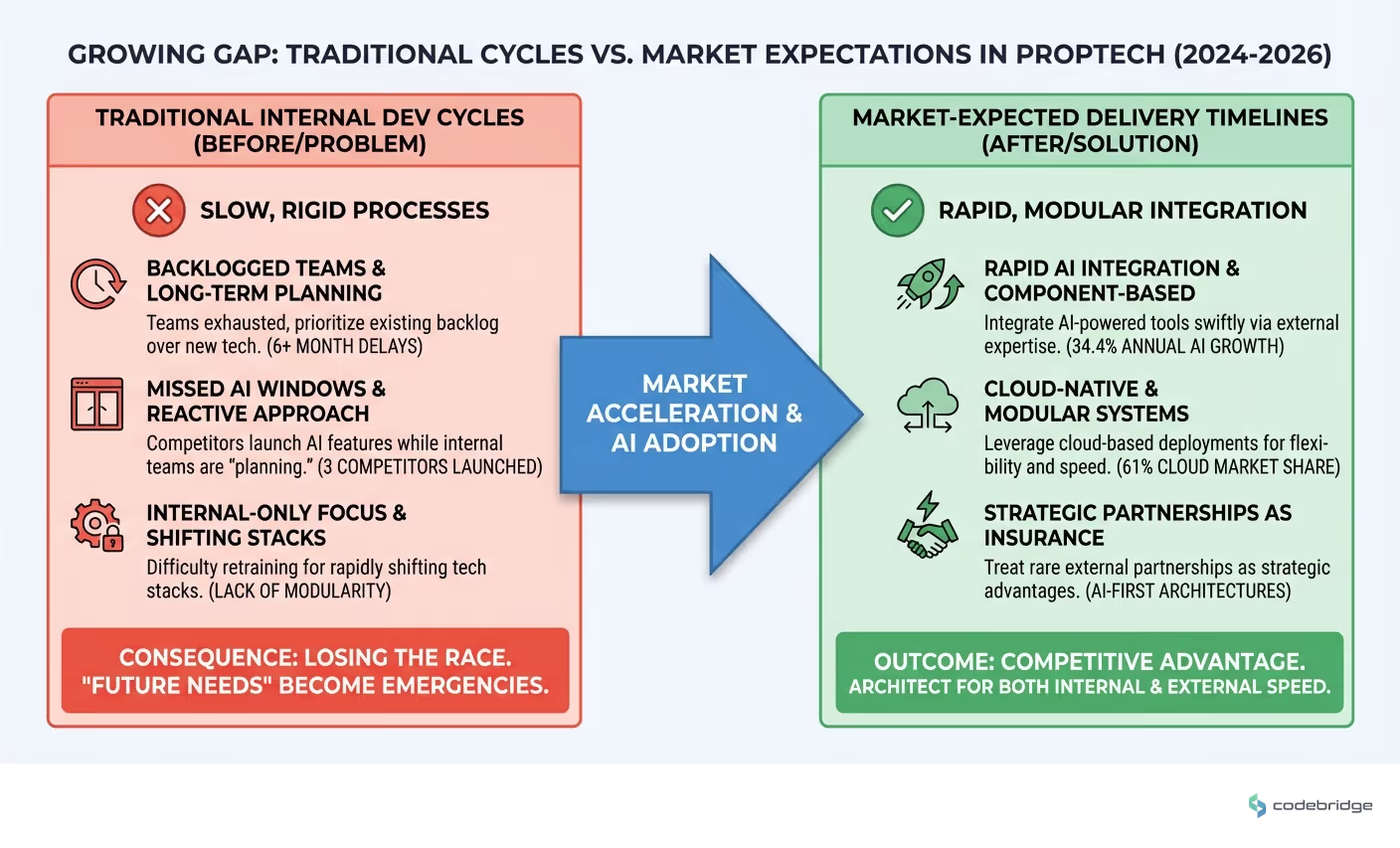
Traditional internal dev cycles vs. market-expected delivery timelines in PropTech (2024-2026)
When your market moves this fast, "future potential needs" have a habit of becoming "why didn't we start this six months ago" emergencies.
The Pattern That Separates Winners from Laggards
After analyzing how technology leaders navigate this landscape, a clear pattern emerges. The teams that maintain competitive advantage don't choose between internal capability and external partnership,they architect for both.
⚡
The most resilient tech organizations treat external development partnerships like strategic reserves,capabilities you hope you won't need urgently, but catastrophic to lack when you do.
Consider what the 61% cloud-deployment dominance actually signals. It's not just about infrastructure preferences. Cloud-native architectures are inherently modular. They're designed for integration. The teams building this way aren't just making technical choices,they're creating organizational flexibility.
When a "rare need" emerges,and in a market growing at 16.4% CAGR, rare needs emerge constantly,these organizations can plug in specialized expertise without rearchitecting their entire system. The following process flow shows how modular architecture enables rapid capability expansion:
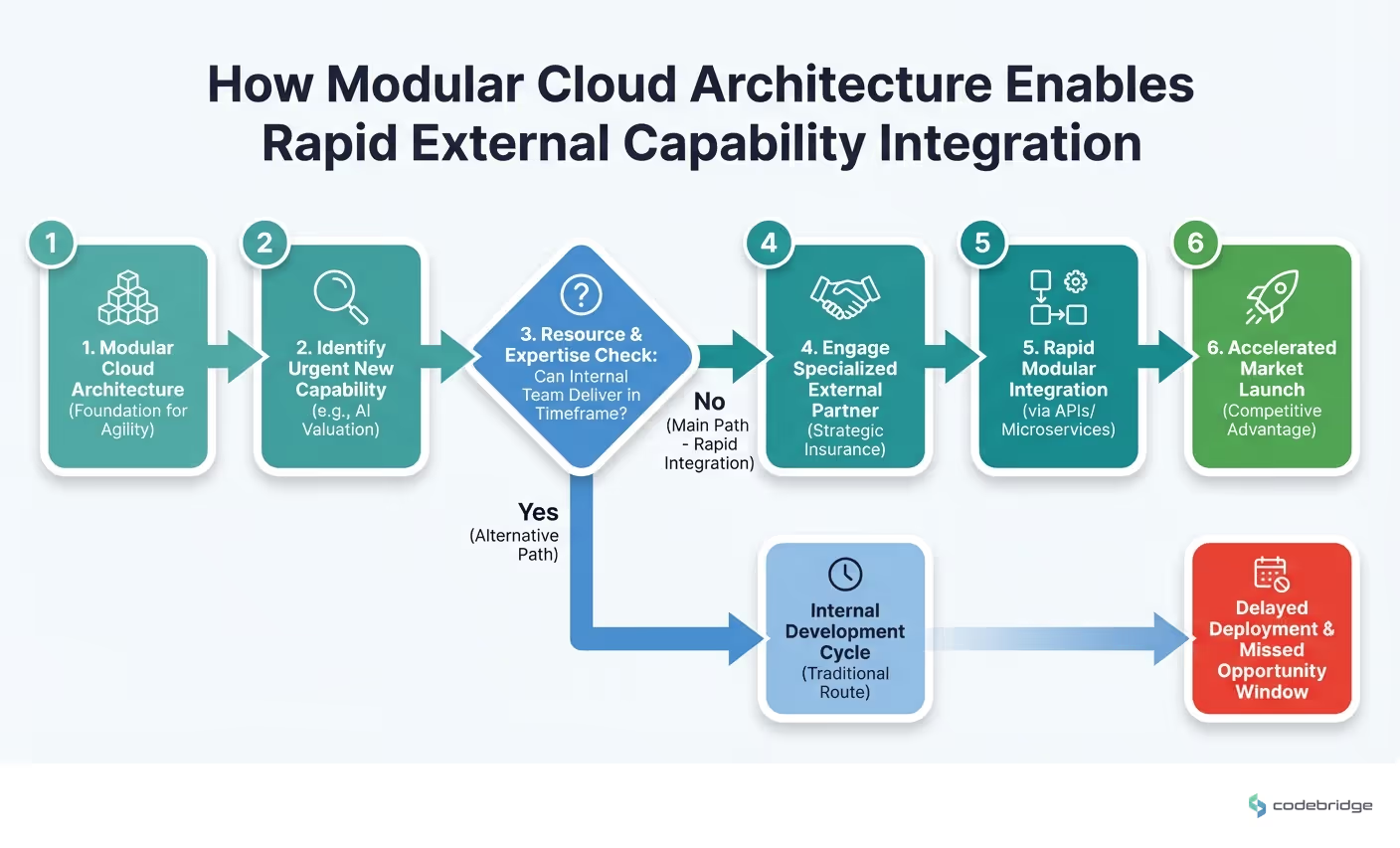
How modular cloud architecture enables rapid integration of external development resources
The teams still running monolithic systems? They're not just slower to market. They're structurally incapable of moving fast when it matters most.
A Framework for Strategic Development Capacity
If you're leading a technology organization with capable internal developers and no immediate external needs, here's how to think about future-proofing without creating unnecessary overhead:
1. Map Your Capability Gaps Before They Become Urgent
The AI in Real Estate market didn't go from zero to $303 billion overnight. The signals were visible for years. The question isn't whether your market will shift,it's whether you've identified the specific technical capabilities that shift will require.
Create a quarterly "capability horizon scan." What technologies are your competitors exploring? What are the adjacent markets adopting? Your internal team doesn't need to build everything,but they need to know what's coming.
2. Build Integration Points, Not Just Features
With 68% of PropTech solutions being software-dominant, the winners aren't the teams with the most features. They're the teams whose architecture can absorb new capabilities fastest.
Every major system your team builds should answer: "How would we integrate a third-party component here if we needed to?" If the answer is "complete rewrite," you've created technical debt before you've even shipped.
3. Establish Partnership Relationships Before Crisis Mode
The worst time to find a development partner is when you desperately need one. Vetting takes time. Cultural fit matters. Technical alignment requires exploration.
The strategic move is establishing relationships during calm periods. Run a small pilot project. Understand their communication style. Learn their strengths. When the urgent need hits,and the data suggests it will,you'll have a warm relationship instead of a cold search.
4. Quantify the Cost of Delay
In a market projected to grow from $47 billion to $185 billion over nine years, every month of delay has a calculable cost. If your competitors ship an AI feature six months before you do, what's the customer acquisition impact? The retention risk? The positioning damage?
Internal teams often optimize for "building it right." That's admirable. But in exponential markets, "right but late" frequently loses to "good enough and first."
5. Treat External Capacity as Insurance, Not Failure
This might be the hardest mindset shift for technical leaders. There's an implicit assumption that needing external help means your internal team isn't good enough. That's backwards.
The best internal teams are the ones who know their limits. They're the ones who can identify when a specialized capability, AI/ML expertise, specific platform knowledge, surge capacity,would accelerate outcomes rather than threaten their position.
The strategic positioning of internal vs. external development resources can be visualized as a decision framework:
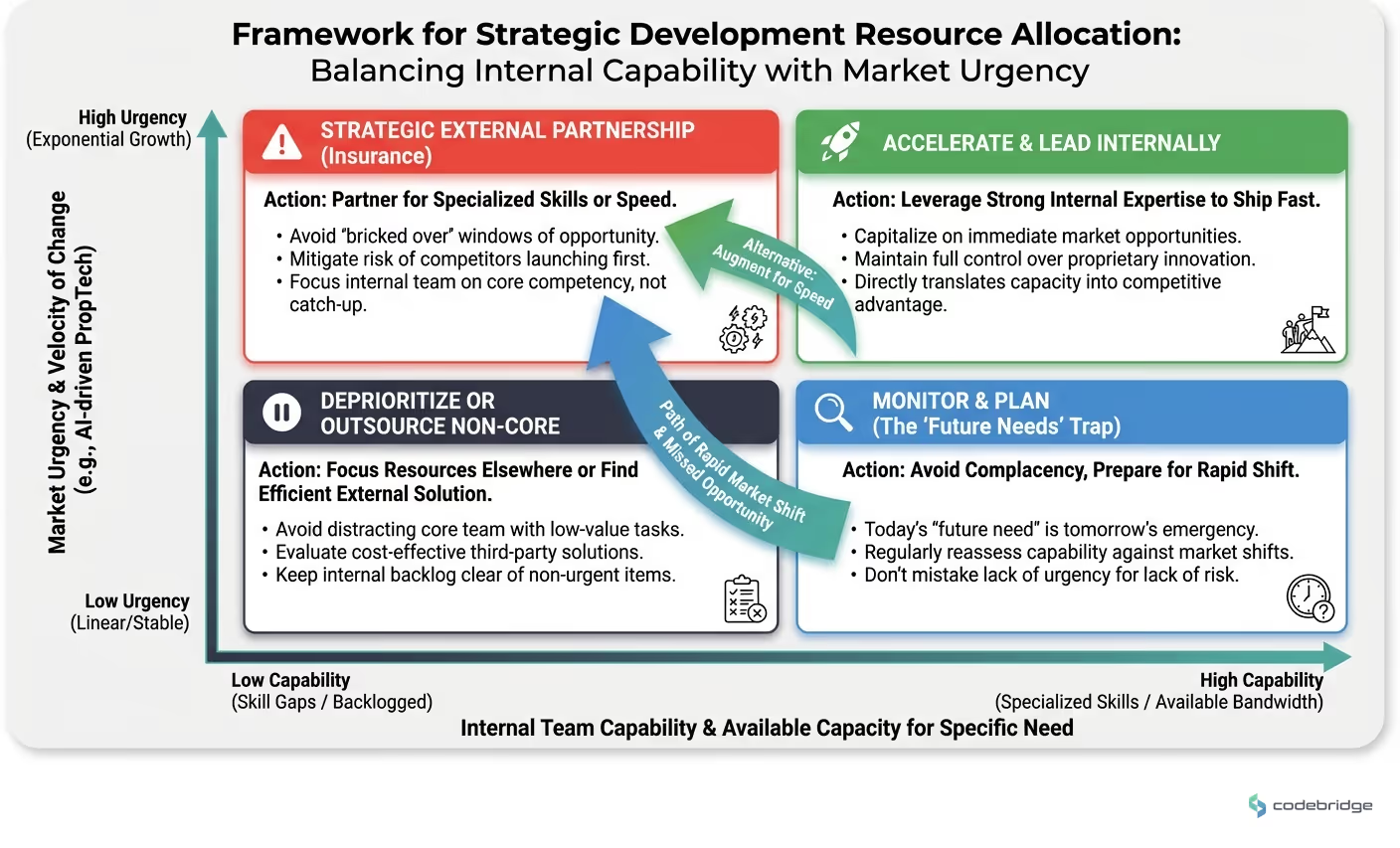
Strategic development resource allocation, Internal capability vs. Market urgency matrix
The Real Risk of "No Immediate Needs"
Let's return to that CTO from the opening. His assessment wasn't wrong,he genuinely had no immediate needs. His team was capable. His roadmap was full. The AI valuation feature was, at that moment, a "nice to have."
What he missed was the market context. A 34.4% annual growth rate doesn't wait for your sprint planning. A 16.4% CAGR doesn't pause while your team finishes the current backlog. The absence of immediate needs isn't the same as the absence of strategic risk.
The PropTech leaders pulling ahead aren't the ones with the largest internal teams. They're the ones who've built the organizational architecture,technical and relational,to move fast when movement matters.
Your internal developers might be exceptional. Your current roadmap might be sound. But somewhere in your market, a competitor is building the capability that will define the next competitive cycle. The question isn't whether you'll need to respond. It's whether you'll be ready when you do.
Wondering if your architecture is ready for rapid capability expansion?
Request a technical readiness assessment to identify integration opportunities before they become urgent.
Diagnostic Checklist: Signs Your "Future Needs" Strategy Needs Attention
Your last major feature took 40%+ longer than initially estimated
You couldn't name three qualified external development partners if asked today
Your architecture requires significant refactoring to integrate third-party services
Your team lacks hands-on experience with AI/ML implementation in production
You haven't conducted a competitive technology audit in the past six months
Your cloud infrastructure is less than 61% of your deployment (below market standard)
"We'll build it when we need it" appears in your strategic planning documents
Your development capacity planning assumes linear, not exponential, market growth
REFERENCES
Research and Markets, AI in Real Estate Market Analysis 2025-2029
Coherent Market Insights, Real Estate Software Market Report 2025
Precedence Research, PropTech Market Size and Forecast 2025-2034











Heading 1
Heading 2
Heading 3
Heading 4
Heading 5
Heading 6
Lorem ipsum dolor sit amet, consectetur adipiscing elit, sed do eiusmod tempor incididunt ut labore et dolore magna aliqua. Ut enim ad minim veniam, quis nostrud exercitation ullamco laboris nisi ut aliquip ex ea commodo consequat. Duis aute irure dolor in reprehenderit in voluptate velit esse cillum dolore eu fugiat nulla pariatur.
Block quote
Ordered list
- Item 1
- Item 2
- Item 3
Unordered list
- Item A
- Item B
- Item C
Bold text
Emphasis
Superscript
Subscript