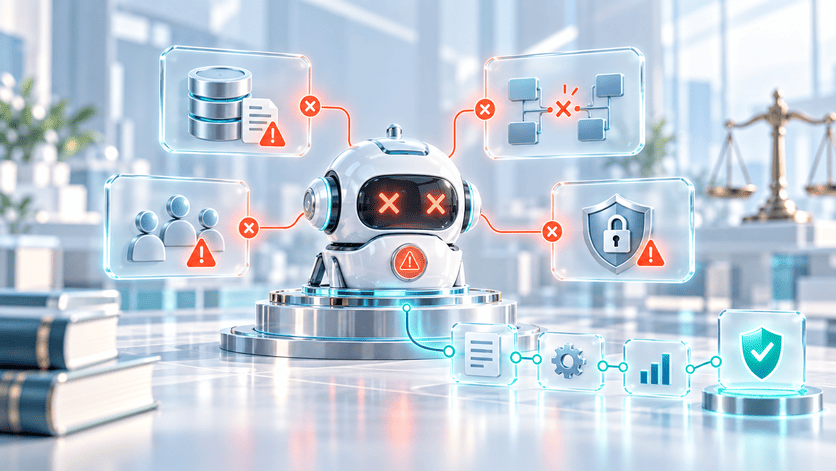
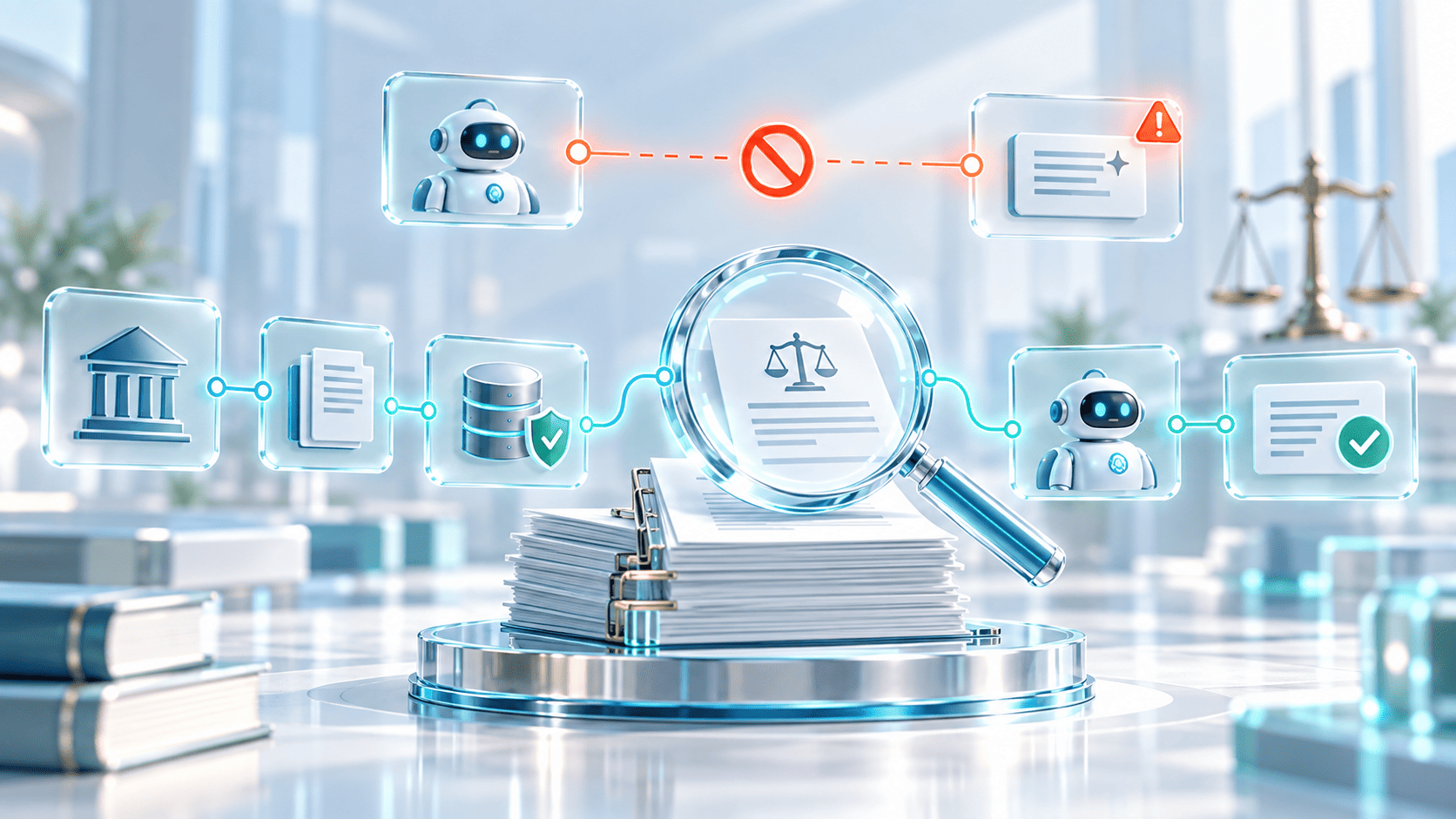
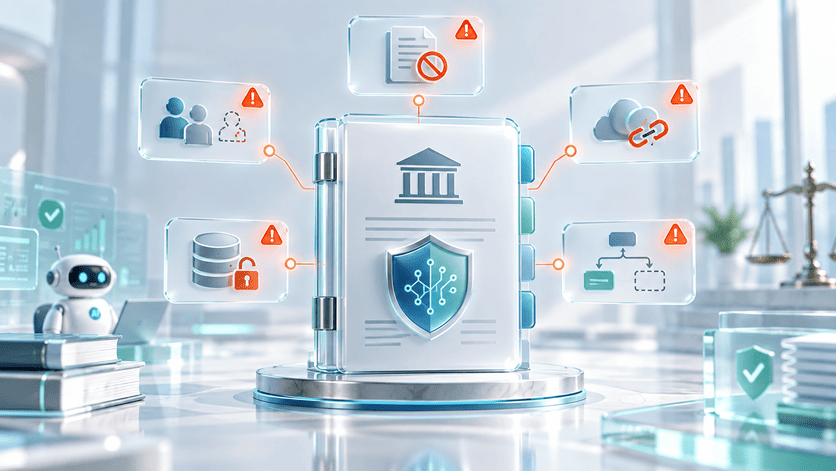
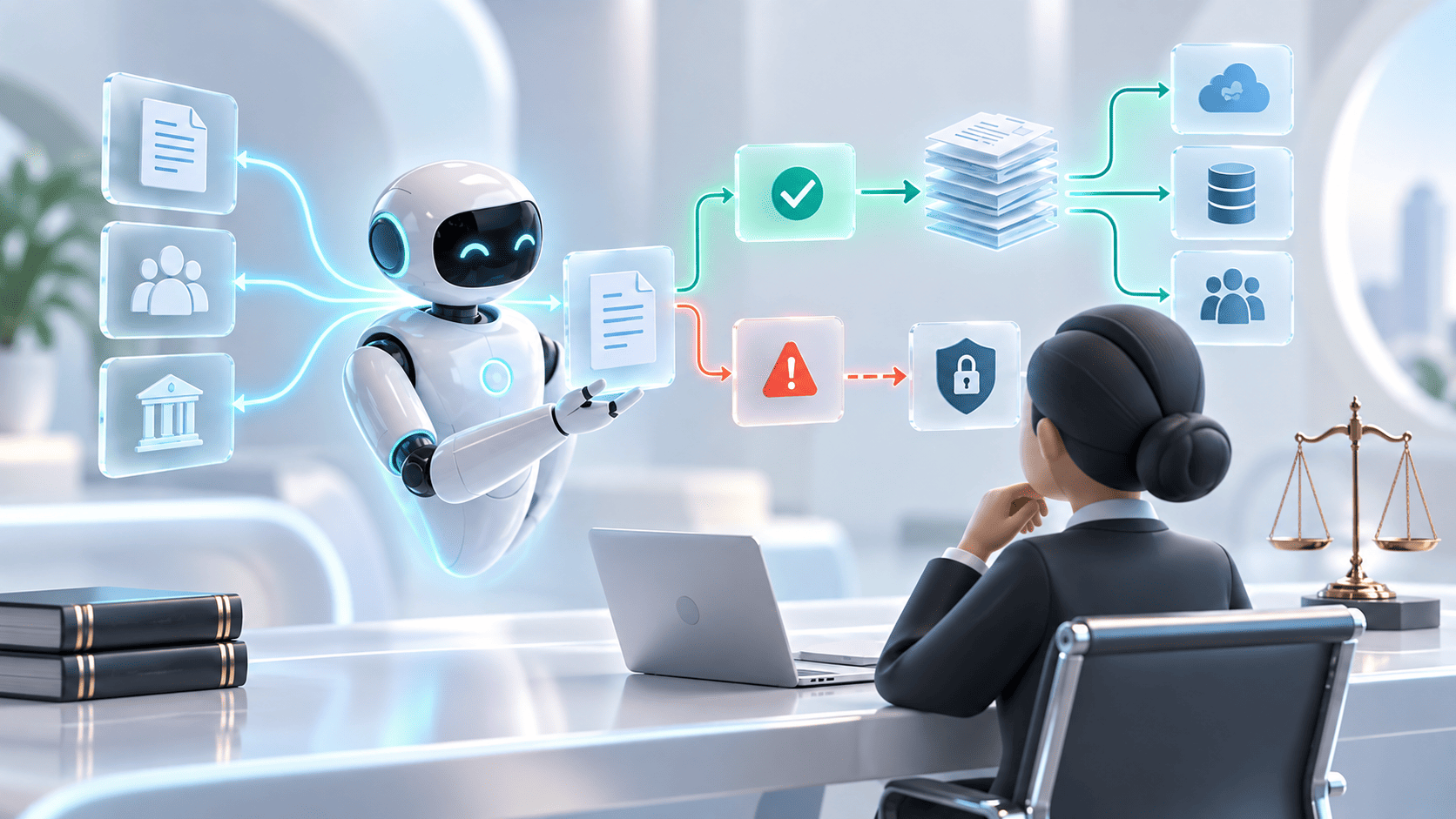
AI agents are exposing a problem that companies could ignore when work was still manual. Many job descriptions do not describe responsibility, but they describe activity.
An analyst “prepares reports.” A coordinator “manages the process.” A support specialist “handles requests.” A project manager “keeps work moving.” These labels sound clear until an agent starts doing the retrieval, drafting, reconciliation, routing, and system updates that used to fill most of the role.
Then the real question appears. Who checks the work? Who approves the action? Who owns the exception? Who explains the decision when the agent follows the process correctly but produces the wrong business result?
That is why the workforce question around AI agents is not only about headcount. It is about responsibility. Agentic automation separates execution from judgment and task completion from outcome ownership. If companies do not redesign roles before agents enter production, they will automate work faster than they can trace accountability.
The fear of job loss is understandable, and the numbers explain why. The World Economic Forum’s Future of Jobs Report 2025 projects that technological disruption will affect 22% of all jobs by 2030, with 92 million roles displaced and 170 million new roles created.
That means the workforce is not only shrinking around AI, but it is being rebuilt around different responsibilities. Microsoft’s 2025 Work Trend Index found that 81% of leaders expect AI agents to become a moderate or extensive part of their strategy within the next 18 months.
Those numbers matter, but the main point is that agents are moving from experiments into operating workflows. Once that happens, role design becomes part of system design. Leaders need to define what agents can execute, what employees must review, where human approval is required, and who owns the final business outcome.
Without that work, agentic automation creates faster ambiguity.
The Layoff Headlines Are Loud, but the Real Signal Is Role Redesign
AI layoffs get attention because they are easy to count as a role disappears or a department shrinks. But job cuts are only one visible part of the shift.
In 2025, Challenger, Gray & Christmas reported that AI was cited in 54,836 announced layoffs, around 5% of total job cuts that year. By April 2026, AI had been cited as the leading reason for U.S. job cuts for two consecutive months, accounting for 26% of all layoffs in that period.
Oracle also reportedly began cutting thousands of jobs in early 2026, with analysts linking the move to the combined pressure of AI data-center investment and AI-related organizational restructuring.
These numbers matter because they show that AI is already changing workforce planning. But they do not prove that the future of work is simply “fewer people.” That is the lazy conclusion.
The more useful signal is that companies are breaking old roles apart.
For founders and CTOs, this is the real issue. And the serious path forward is to redesign workflows, permissions, review points, and accountability before agents start executing real work.
When agents take over the heavy lifting, employees should not become passive watchers of automated systems. Their work has to move toward judgment, exception handling, orchestration, and ownership of outcomes.
If that redesign does not happen, companies get the worst version of automation with fewer people involved in the workflow, but no clear answer when the workflow breaks.
The Five Employee Role Shifts Created by AI Agents
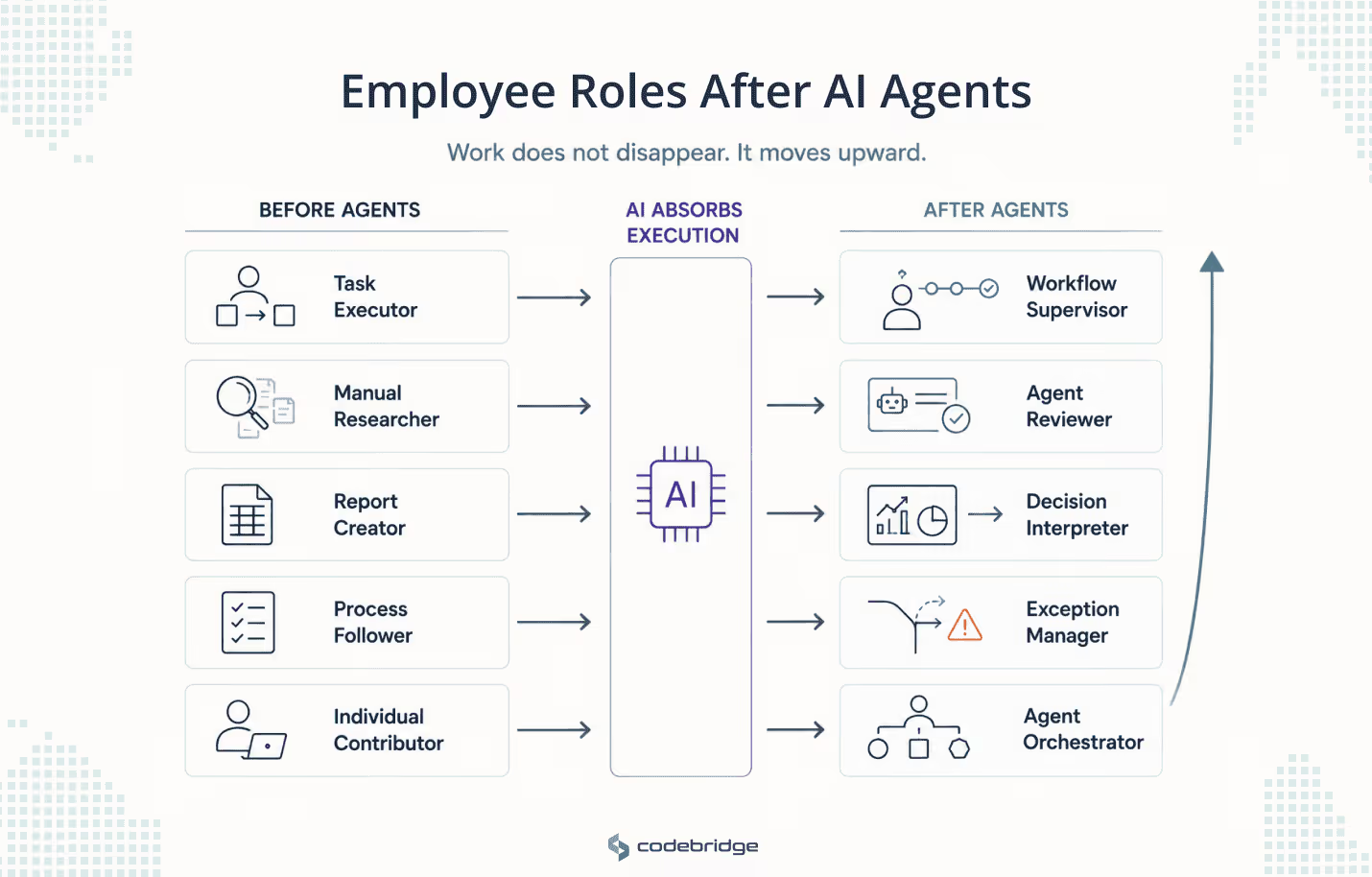
In many companies, employees still spend a large part of their day on execution work such as moving data between tools or following process steps. Now agents can absorb much of that layer.
But the work does not disappear. It moves upward into judgment, control, exception handling, and ownership.
That shift creates five employee roles that are more specific than the vague idea of an “AI supervisor.”
These are not decorative title changes. Each role requires different permissions, review points, metrics, and system visibility.
1. From Task Executor to Workflow Supervisor
The old role was built around completion. A support specialist closed tickets, a coordinator moved requests from one team to another, and an operations employee updated fields and followed process steps until the work reached the next person.
AI agents can now execute many of these steps directly. In a customer support workflow, an agent can classify a ticket, retrieve customer history, draft a response, suggest a refund path, and update the CRM.
The employee’s role changes from doing each step to supervising the movement of the workflow. That does not mean watching a dashboard and hoping the agent behaves. A workflow supervisor needs to know:
- What state is the workflow in
- What action did the agent already take
- What policy or rule did the agent use
- Where the agent needs approval
- When should the process stop or return to a human
For executives, this role matters because automation without workflow supervision creates invisible drift. The agent may complete tasks faster, but nobody may notice when the workflow starts moving in the wrong direction.
For the system to support this role, the company needs workflow states, event logs, approval gates, and human override options. Without them, the employee becomes responsible for a process they can no longer see clearly.
2. From Manual Researcher to Agent Reviewer
This role was built around finding information. Sales teams researched target accounts and product teams reviewed customer feedback manually.
Now, AI agents can do the first pass much faster. They can scan public sources, summarize documents, retrieve internal knowledge, enrich account data, and prepare a structured research brief.
The employee’s role changes from collecting information to judging the quality of the evidence.
That judgment is not a small detail. It decides whether the company acts on a real signal or scales a weak assumption.
In sales, for example, an agent may find that a company raised funding, hired a new VP, or posted several open roles. That does not automatically mean the account is ready to buy. The human reviewer must decide whether the signal is commercially real or just automated noise.
This role becomes important because agents can make weak research look clean. A polished summary can hide outdated data, shallow sources, or irrelevant evidence. The employee protects the company from acting on information that looks useful but does not change the decision.
3. From Report Creator to Decision Interpreter
In many companies, reporting roles were never only about analysis. A large part of the work was mechanical, such as pulling numbers from different systems, cleaning spreadsheets, preparing slides, and sending updates to leadership.
Agents can reduce that manual layer. They can generate dashboards, summarize performance, detect anomalies, and prepare first-draft explanations.
But still, a report is not a decision. If churn increases, sales velocity drops, or margin moves, the company still needs someone to interpret what that means. The employee’s role shifts toward decision interpretation. Separating noise from signal and explaining what happens if leadership waits.
A decision interpreter has to answer practical questions:
- Is this change a normal variation or a real issue?
- Which team owns the response?
- What decision should happen now?
- What risk appears if nothing changes?
- What assumption needs to be checked before action?
This role matters most in environments where a wrong interpretation costs more than a slow report. Finance, healthcare, legal, compliance, and enterprise operations all depend on people who can explain the meaning of the output, not just produce the output.
The Codebridge Knowledge Cloud case shows the same pattern from another angle. Centralizing more than 50,000 assets and automating retrieval can cut search time and improve productivity, but the business value does not come from retrieval alone. It comes when professionals can trust the information, interpret it, and use it in real decisions.
Agents can help create the report, but people still need to own the meaning.
4. From Process Follower to Exception Manager
Most operational processes look clean in documentation and messy in production. For example, a customer asks for something outside policy, or a patient record has missing data. This is where the employee's role changes.
Now, autonomous AI systems can move standard cases through a workflow faster. They can apply rules, route requests, summarize information, and recommend next steps when the path is clear. But business risk usually lives in the cases that do not follow the standard path. The employee becomes an exception manager.
An exception manager handles cases where:
- Data is missing or contradictory
- The agent's confidence is low
- The user request falls outside the normal policy
- The action may create financial, legal, clinical, or customer risk
- The system cannot complete the workflow safely
- The agent reaches a decision boundary that requires human judgment
This role matters because agentic systems can hide uncertainty behind smooth execution. The workflow may continue moving even when the underlying case deserves a pause, escalation, or manual review.
Exception management is where human judgment becomes most valuable. Not because people are better at every task, but because companies need someone accountable when the process stops being normal.
5. From Individual Contributor to Agent Orchestrator
Agentic automation changes the shape of individual work. Before, one employee might use one or two tools, complete a defined task, and pass the result to another person. Ownership moved through a human chain. Imperfect, but visible.
Now one workflow may involve a research agent, a data enrichment agent, a compliance-checking agent, a drafting agent, and a CRM update agent. Each agent may use different tools, data sources, permissions, and decision rules. And now the role shifts from individual contribution to orchestration.
An agent orchestrator does not simply “use AI.” They manage how automated work moves across agents and systems.
This role creates a technical requirement. Employees cannot orchestrate what they cannot observe.
If multiple agents operate across one workflow, the company needs identity boundaries, permission controls, state tracking, tool-use logs, and error recovery. Otherwise, the employee becomes responsible for a system they cannot properly inspect or stop.
For CTOs and VPs of Engineering, this is where role redesign becomes an execution architecture problem. The human role only works if the system gives the person enough visibility and authority to manage the agentic workflow.
Role Redesign Has to Show Up in the System Architecture
Many companies will try to solve the employee side of agentic automation through HR documents. They will update job descriptions, add AI training, create new titles, and tell teams that people are now expected to “work with agents.” Some of that is necessary, but none of it is enough.
A redesigned role only becomes real when the system enforces it. If an employee is responsible for approving agent actions, the workflow needs an approval gate. If they own exceptions, the product needs escalation queues and severity levels. If they are accountable for the final outcome, the system needs to record what the agent did, what the employee reviewed, and where the decision changed.
Otherwise, role redesign stays theoretical. For agentic systems, every human responsibility should map to a system capability:
This is why role redesign belongs in the architecture discussion from the beginning. An AI agent operates inside systems, APIs, data permissions, workflow states, and user interfaces.
If those layers do not reflect the new human role, the company creates a dangerous gap. The employee is told they are accountable, but the system does not give them enough visibility or control to be accountable in practice.
And that gap may become expensive in production. A support agent may approve a refund without enough context. A sales agent may update CRM fields with unverified data. A reporting agent may summarize numbers without showing which source changed.
In each case, the failure does not come only from the model. It comes from missing architecture around the role.
For CTOs and VPs of Engineering, this makes role redesign part of delivery design. Before agents scale, teams need to map:
- What the agent can execute
- What the employee must approve
- What the employee can override
- What the system must log
- Where the workflow pauses
- Who owns recovery when the agent fails
This is the difference between adding AI to a workflow and redesigning the workflow so people and agents can share responsibility without losing control.
The Executive Readiness Checklist for AI Agents and Employees
Before scaling agentic automation, leadership should verify their readiness against these ten dimensions:
If an organization cannot answer these questions, it may be ready for a prototype, but it is not ready for production automation.
Conclusion
The future of work with AI agents will be defined by how clearly companies redesign responsibility around the work that remains.
Agents can do a lot of work, such as retrieve information, draft responses, reconcile data, and move cases through workflows. That changes the employee’s role and moves pepople closer to review, judgment, orchestration, and outcome ownership.
But those responsibilities cannot live only in job descriptions. If an employee must review agent output, the system needs to show what the agent used, changed, skipped, and recommended. If a human must approve a sensitive action, the workflow needs an approval gate. If someone owns the final business result, the system needs a record of the agent’s actions and the human decisions around them.
This is where many agentic automation projects will either mature or break. Companies that treat role redesign as an HR update will create confusion. Employees will carry accountability without enough visibility or control. Engineering teams will ship agents into workflows without clear ownership boundaries. Leaders will see faster execution, but not always safer or better execution.
For CEOs, the decision is which workflows deserve this redesign. For CTOs and VPs of Engineering, the decision is what architecture makes that redesign enforceable. AI agents do not remove the need for human responsibility. They make unclear responsibility harder to hide.














Heading 1
Heading 2
Heading 3
Heading 4
Heading 5
Heading 6
Lorem ipsum dolor sit amet, consectetur adipiscing elit, sed do eiusmod tempor incididunt ut labore et dolore magna aliqua. Ut enim ad minim veniam, quis nostrud exercitation ullamco laboris nisi ut aliquip ex ea commodo consequat. Duis aute irure dolor in reprehenderit in voluptate velit esse cillum dolore eu fugiat nulla pariatur.
Block quote
Ordered list
- Item 1
- Item 2
- Item 3
Unordered list
- Item A
- Item B
- Item C
Bold text
Emphasis
Superscript
Subscript