NEW YEAR, NEW GOALS:   Kickstart your SaaS development journey today and secure exclusive savings for the next 3 months!
Check it out here >>
White gift box with red ribbon and bow open to reveal a golden 10% symbol, surrounded by red Christmas trees and ornaments on a red background.
Unlock Your Holiday Savings
Build your SaaS faster and save for the next 3 months. Our limited holiday offer is now live.
White gift box with red ribbon and bow open to reveal a golden 10% symbol, surrounded by red Christmas trees and ornaments on a red background.
Explore the Offer
Valid for a limited time
close icon
Logo Codebridge
AI

AI Agent Guardrails for Production: Kill Switches, Escalation Paths, and Safe Recovery

March 31, 2026
|
8
min read
Share
text
Link copied icon
table of content
photo of Myroslav Budzanivskyi Co-Founder & CTO of Codebridge
Myroslav Budzanivskyi
Co-Founder & CTO

Get your project estimation!

The hardest part of deploying AI agents is not generating outputs. It is deciding what happens when an agent acts with the wrong context or the wrong permissions.

Once an agent moves beyond text generation and starts interacting with tools, workflow state, and live business processes, the risk changes. At that point, the key question for technology leaders is whether the surrounding system can keep that usefulness under control.

KEY TAKEAWAYS

Control sits outside agents, production guardrails depend on orchestration, access control, routing, and recovery rather than prompts alone.

Failure becomes operational, once agents act inside workflows, the main risk is incorrect execution, broken state, and duplicate actions rather than bad phrasing.

Kill switches need layers, effective interruption design targets the right part of the workflow instead of relying on a single shutdown action.

Recovery defines maturity, production readiness depends on whether the system can stop, route, and resume without losing control of the workflow.

This is where most guardrail discussions fall short. Prompt constraints and output filters still matter, but they do not solve the larger production problem. In live workflows, control means deciding who can authorize an action, what can interrupt execution without breaking state, where exceptions should be routed, and how the workflow resumes after failure.

A production-ready agent is defined by how much control the business retains when the workflow becomes risky, ambiguous, or starts to go wrong.

What AI Agent Guardrails Mean Once Agents Touch Live Workflows
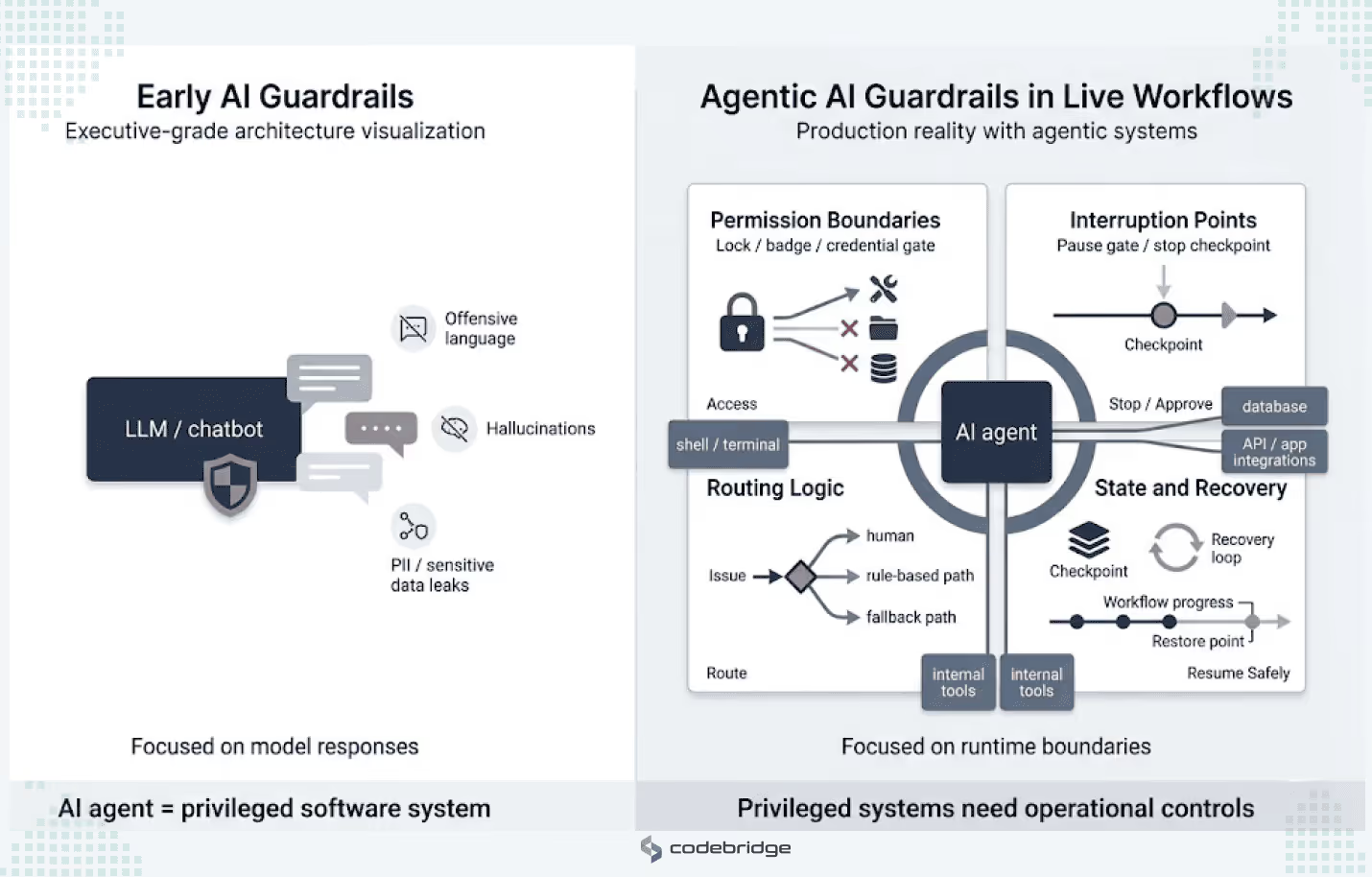
A professional, split-screen executive architecture diagram comparing two stages of AI safety. The left side, titled "Early AI Guardrails," shows a single chatbot box with a small shield, focused on filtering model responses like offensive language and hallucinations. The right side, titled "Agentic AI Guardrails in Live Workflows," depicts a central AI agent connected to external systems like databases and APIs. This agent is surrounded by a robust "runtime control" frame divided into four functional zones: Access (permission boundaries), Stop / Approve (interruption points), Route (routing logic), and Resume Safely (state and recovery). The overall design is clean, using a corporate slate and navy palette with minimalist icons.
The evolution of AI safety from static response filtering to active runtime control. While early guardrails focused on model outputs (left), agentic workflows require a shift toward system-level operational controls (right) that manage permissions, approvals, routing, and state recovery in real-time environments.

In early AI implementations, guardrails usually referred to model-safety measures: mechanisms intended to prevent offensive language, hallucinations, or the disclosure of PII. Those measures are still necessary, but they are not enough for agentic systems that can invoke shells, modify databases, or interact with third-party APIs.

In production systems, guardrails need to be understood as a runtime architecture that defines the operational boundaries of an autonomous system. They are the mechanisms that determine:

  • Permission boundaries: which tools, data, and credentials the agent can access.
  • Interruption points: the moments when execution must stop for approval, validation, or policy checks.
  • Routing logic: whether an issue should go to a human, a deterministic rule, or a narrower fallback path.
  • State and recovery: how the system tracks progress, avoids duplicate actions, and resumes safely after failure.

That is the real shift. An AI agent becomes a privileged software system, and privileged software systems require real operational controls around them.

Why Agent Failures Are Not Just Model Failures

A bad action inside a live workflow is fundamentally different from a hallucinated answer in a chatbot. Once an agent can query internal systems, trigger tools, or move a process forward, failure becomes operational.

Agents fail in ways that affect the workflow itself, not only the text they produce. They can act on stale context, call the wrong tool, misread a system response, or continue executing after conditions have changed. A retrieval step may surface the right document, yet the agent may still apply the wrong rule. A retry loop may repeat an action that should only happen once.

⚠️

Key risk, an agent may retrieve the right document and still apply the wrong rule, allowing the workflow to continue on a false assumption.

These are not phrasing errors. They are system behaviors with downstream consequences: incorrect updates, broken process state, duplicate actions, or false confidence in a completed task.

Production control has to sit between reasoning and execution. The risk is not only that the model says something wrong. It is that the workflow proceeds as though that mistake were true.

Area Prompt-Level / Early Guardrails Runtime / Production Guardrails
Main focus Offensive language, hallucinations, PII disclosure Permission boundaries, interruption points, routing logic, state and recovery
Typical setting Early AI implementations Live workflows with tools, databases, APIs, and business processes
Operational role Constrains outputs Defines operational boundaries of the autonomous system

Kill Switches: How to Interrupt an Agent Without Collapsing the Workflow

In enterprise discussions, a kill switch is often reduced to the idea of a single emergency shutdown button. In a real production environment, that view is too narrow. A full shutdown can interrupt healthy workflows, leave actions half-finished, or create new failures in the surrounding system.

The first design question is what stop actually means inside the workflow.

For some AI systems, stopping should mean disabling write actions, blocking access to a specific tool, freezing automation, or forcing the agent into read-only mode. For others, it may mean pausing a single session for review while the rest of the platform continues running. The objective is to define multiple stop states based on risk rather than relying on one binary control.

🧱

Structural limitation, a full shutdown can create new failures if it leaves healthy workflows interrupted or actions half-finished.

Those controls must also sit outside the agent’s own reasoning path. A real kill switch should be enforced through the orchestration layer, access controls, or infrastructure policy, not through prompts or model instructions that the system may work around.

Kill switches are only useful when they are protected and tested. Access should be limited, every activation should be logged, and teams should rehearse shutdown scenarios before they are needed in production.

A kill switch is not a panic button. It is a layered interruption design that stops the right part of the system. For these mechanisms to satisfy governance requirements, every intervention must generate immutable, attributed logs.

Sources: NIST AI Risk Management Framework

Escalation Paths: Where Uncertainty Becomes a Routing Decision

Escalation is a routing system that determines when system autonomy gives way to supervised decision-making. It is not simply a matter of sending outputs to a human for review. It is a logic layer designed to handle high-risk actions, policy conflicts, and abnormal execution states.

A strong escalation architecture is triggered when an agentic system encounters specific thresholds:

  • Authority Thresholds: the agent attempts a tool call or write operation beyond its pre-assigned privilege level.
  • Contextual Ambiguity: the system encounters novel incidents or conflicting instructions that do not match known failure patterns.
  • Missing Data: the agent lacks the specific parameters or environmental context required for safe execution.
  • High-Stakes Policy Conflicts: the cost of a mistake, such as in financial trading, healthcare data access, or public-facing communication, outweighs the efficiency benefit of automation.

A useful escalation path requires a named owner, a defined response window, and concise context. Humans should not be given raw logs alone. Instead, agents should provide a summary that includes the timeline, the scope of the issue, and attempted remediations. That allows the expert to focus on judgment, negotiation, and strategy.

One of the main risks in escalation design is review fatigue. When humans are required to approve hundreds of low-risk actions, oversight turns into routine clicking rather than real judgment. Mature systems reduce that risk by routing only the most sensitive exceptions to people while using deterministic fallbacks or alternate business rules for lower-stakes uncertainty.

This layer is also essential for meeting regulatory expectations. Article 14 of the EU AI Act stresses that human oversight must be operational. That requires a demonstrable ability for humans to intervene in real time, supported by immutable, attributed logs that record who reviewed an action, what context they received, and the final resolution path.

Sources: EU AI Act Article 14

Recovery Design: How the Workflow Resumes After the Stop

Recovery design is the layer that separates a fragile prototype from a production system capable of surviving real-world incidents. Stopping an agent is only the first half of the operational problem. The business must also restore the interrupted state without losing data or duplicating actions.

That requires the integration of forensics and execution traces: effectively replayable logs of agent decisions and tool calls that provide the visibility needed for post-incident analysis.

Senior technology leaders should design for three distinct recovery modes:

  1. Resume from Checkpoints: using state persistence and versioned environments to restore a workflow to its last known good configuration.
  2. Idempotent Retries: ensuring that individual steps, especially those involving state-changing writes or API calls, can be repeated without side effects or duplicate transactions.
  3. Compensation Patterns: implementing undo or offsetting workflows for distributed systems where a direct rollback is impossible, such as a sent email or a processed payment.

Idempotency is a critical requirement because AI agents are inherently non-deterministic. Even at a temperature setting of zero, hardware-level variations can produce slight execution differences, which means exact-match testing cannot be relied on for recovery. Systems therefore need to intercept generated code before it reaches an execution sandbox so they can evaluate functional safety and prevent destructive commands from being repeated.

📜

Compliance implication, human oversight must be operational, with real-time intervention supported by immutable, attributed logs.

Regulators and auditors increasingly expect organizations to provide evidence, such as replaying an abuse path to confirm that a fix works, before a high-risk system resumes live operation. In practice, the maturity test is not whether the agent fails. It is whether the system can stop, route, and recover the workflow without the business losing control.

Stop, Escalate, Recover

Control function What it does What it requires
Kill switches Interrupts the right part of the workflow based on risk External enforcement, protected access, logging, tested shutdown scenarios
Escalation paths Routes high-risk or uncertain cases to human review, deterministic rules, or narrower fallback paths Named owner, response window, concise context
Recovery design Restores workflow state after interruption without data loss or duplicate actions Checkpoints, idempotent retries, compensation patterns, execution traces

A Practical Control Architecture for Agentic Systems

A useful control architecture sits around the workflow. It defines how far the agent can go, when it must stop, and how the business remains in control when something begins to drift. For businesses, that is the real test of production readiness.

A practical control layer usually comes down to five parts.

1. Permission Boundaries

Start with authority. An agent should never inherit broad access by default. It should operate with a narrow identity, limited tool access, and only the permissions required for a specific workflow or task.

High-risk actions should sit behind additional approval or policy checks. This matters because the safest way to reduce agent risk is to reduce what the model is allowed to touch when something goes wrong.

2. Runtime Monitoring

Production monitoring cannot stop at uptime, latency, or successful API responses. It needs to track how the agent behaves inside the workflow.

That includes repeated retries, unusual tool sequences, stalled execution, rising cost, or actions that fall outside the expected path. The goal is to detect when the workflow starts behaving in ways that appear unsafe, wasteful, or misaligned with the task.

3. Escalation Logic

Not every exception should go directly to a human, and not every human review step is useful. Escalation works best when it is tied to clear conditions: missing data, authority limits, policy-sensitive actions, or uncertainty the system cannot safely resolve on its own.

Some cases should route to a person. Others should fall back to deterministic rules or a narrower workflow. What matters is that escalation is designed as routing logic rather than left as a vague review step at the edge of the system.

4. State and Recovery Controls

A production workflow should not become fragile the moment execution is interrupted. The system needs to know what has already happened, what can be retried safely, and where the workflow should resume.

That means preserving state, keeping execution history, and designing writes so that a retry does not create duplicate transactions or corrupt data. Recovery is about continuing the workflow without losing track of what is already true.

5. Governance Visibility

The final layer is evidence. After deployment, the business needs to be able to review what happened, why it happened, and who had control at each step.

That requires logs, decision records, policy traces, and enough context to determine whether a failure came from infrastructure, workflow design, permissions, or an incorrect operational decision.

Without that visibility, teams may have controls in theory but very little proof that those controls worked in practice.

This is what a real control architecture does. It makes uncertainty governable by bounding authority, monitoring execution, routing exceptions, preserving recoverable state, and leaving behind a usable record of what happened.

Conclusion: The Control Layer Is Part of the Product Architecture

AI agents become production systems the moment they start taking actions inside real workflows. At that point, control is no longer something that can be added later through policy or review. It becomes part of the architecture.

The teams that scale agentic AI effectively will be the ones that decide in advance how the system can be stopped, where it must escalate, and how the workflow recovers when something goes wrong.

In production, that is the real test: whether the business can contain failure, maintain control, and continue operating when the system is under pressure.


Need to review control design before deployment?

Book a conversation with the Codebridge team →

What are AI agent guardrails in production systems?

In production systems, AI agent guardrails are the runtime controls that define the operational boundaries of an autonomous workflow. The article describes them as mechanisms for permission boundaries, interruption points, routing logic, and state and recovery so the business can retain control when an agent interacts with tools, workflow state, and live processes.

Why are AI agent failures different from normal model errors?

The article explains that once agents can query systems, trigger tools, or move a process forward, failure becomes operational rather than purely textual. An agent can act on stale context, call the wrong tool, misread a response, or repeat an action that should only happen once, which can lead to incorrect updates, broken process state, duplicate actions, or false confidence in a completed task.

What is a kill switch for an AI agent?

A kill switch is not described as a single emergency shutdown button. In the article, it is a layered interruption design that stops the right part of the system based on risk. Depending on the workflow, that may mean disabling write actions, blocking a tool, freezing automation, or forcing read-only mode, with enforcement sitting outside the agent through orchestration, access controls, or infrastructure policy.

When should an AI agent escalate to a human or fallback path?

The article says escalation should happen when the system crosses clear thresholds such as authority limits, contextual ambiguity, missing data, or high-stakes policy conflicts. It also notes that escalation should not always default to a human review step. Some cases should route to a person, while others should fall back to deterministic rules or a narrower workflow.

Why is recovery design important for AI agent workflows?

Recovery design matters because stopping an agent is only half of the operational problem. The article states that the business must also restore the interrupted state without losing data or duplicating actions. It identifies three recovery modes: resume from checkpoints, idempotent retries, and compensation patterns for workflows where direct rollback is not possible.

What should a practical control architecture for agentic systems include?

According to the article, a practical control architecture usually includes five parts: permission boundaries, runtime monitoring, escalation logic, state and recovery controls, and governance visibility. Together, these layers bound authority, track workflow behavior, route exceptions, preserve recoverable state, and leave behind usable evidence of what happened.

How does AI agent governance support compliance and auditability?

The article ties governance to evidence and operational oversight. It says interventions should generate immutable, attributed logs, and it points to Article 14 of the EU AI Act as requiring human oversight that is operational in real time. It also states that after deployment, the business needs logs, decision records, and policy traces to review what happened, why it happened, and who had control at each step.

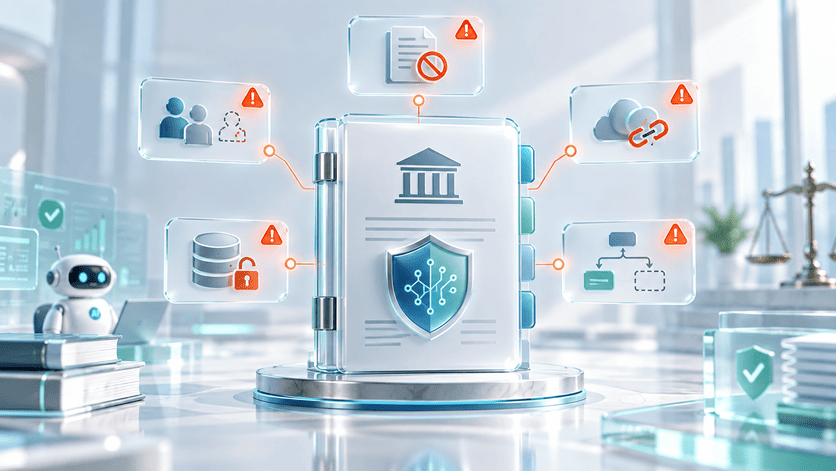
Modern city with AI agent guardrails for production systems. Kill switches, escalation paths, and recovery controls that reduce risk and improve operational resilience.

Heading 1

Heading 2

Heading 3

Heading 4

Heading 5
Heading 6

Lorem ipsum dolor sit amet, consectetur adipiscing elit, sed do eiusmod tempor incididunt ut labore et dolore magna aliqua. Ut enim ad minim veniam, quis nostrud exercitation ullamco laboris nisi ut aliquip ex ea commodo consequat. Duis aute irure dolor in reprehenderit in voluptate velit esse cillum dolore eu fugiat nulla pariatur.

Block quote

Ordered list

  1. Item 1
  2. Item 2
  3. Item 3

Unordered list

  • Item A
  • Item B
  • Item C

Text link

Bold text

Emphasis

Superscript

Subscript

AI
Rate this article!
Thank you! Your submission has been received!
Oops! Something went wrong while submitting the form.
45
ratings, average
4.7
out of 5
March 31, 2026
Share
text
Link copied icon

LATEST ARTICLES

AI agent access control with permission boundaries, tool restrictions, and secure system enforcement
March 30, 2026
|
8
min read

AI Agent Access Control: How to Govern What Agents Can See, Decide, and Do

Learn how AI agent access control works, which control models matter, and how to set safe boundaries for agents in production systems. At the end, there is a checklist to verify if your agent is ready for production.

by Konstantin Karpushin
AI
Read more
Read more
AI agent development companies offering agent architecture, workflow design, and production system implementation
March 27, 2026
|
8
min read

Top 10 AI Agent Development Companies in the USA

Top 10 AI agent development companies serving US businesses in 2026. The list is evaluated on production deployments, architectural depth, and governance readiness.

by Konstantin Karpushin
AI
Read more
Read more
single-agent vs multi-agent architecture comparison showing differences in coordination, scalability, and system design
March 26, 2026
|
10
min read

Single-Agent vs Multi-Agent Architecture: What Changes in Reliability, Cost, and Debuggability

Compare single-agent and multi-agent AI architectures across cost, latency, and debuggability. Aticle includes a decision framework for engineering leaders.

by Konstantin Karpushin
AI
Read more
Read more
RAG vs fine-tuning vs workflow logic comparison showing trade-offs in AI system design, control, and scalability
March 24, 2026
|
10
min read

How to Choose Between RAG, Fine-Tuning, and Workflow Logic for a B2B SaaS Feature

A practical decision framework for CTOs and engineering leaders choosing between RAG, fine-tuning, and deterministic workflow logic for production AI features. Covers data freshness, governance, latency, and when to keep the LLM out of the decision entirely.

by Konstantin Karpushin
AI
Read more
Read more
human in the loop AI showing human oversight, decision validation, and control points in automated workflows
March 24, 2026
|
10
min read

Human in the Loop AI: Where to Place Approval, Override, and Audit Controls in Regulated Workflows

Learn where human approval, override, and audit controls belong in regulated AI workflows. A practical guide for HealthTech, FinTech, and LegalTech leaders.

by Konstantin Karpushin
AI
Read more
Read more
compound AI systems combining models, tools, and workflows for coordinated task execution and system design
March 23, 2026
|
9
min read

Compound AI Systems: What They Actually Are and When Companies Need Them

A practical guide to compound AI systems: what they are, why single-model approaches break down, when compound architectures are necessary, and how to evaluate fit before building.

by Konstantin Karpushin
AI
Read more
Read more
AI agent frameworks for building agent systems with orchestration, tool integration, and workflow automation
March 20, 2026
|
8
min read

AI Agent Frameworks: How to Choose the Right Stack for Your Business Use Case

Learn how to choose the right AI agent framework for your business use case by mapping workflow complexity, risk, orchestration, evaluation, and governance requirements before selecting the stack.

by Konstantin Karpushin
AI
Read more
Read more
OpenClaw case studies for business showing real-world workflows, automation use cases, and operational outcomes
March 19, 2026
|
10
min read

OpenClaw Case Studies for Business: Workflows That Show Where Autonomous AI Creates Value and Where Enterprises Need Guardrails

Explore 5 real OpenClaw workflows showing where autonomous AI delivers business value and where guardrails, control, and system design are essential for safe adoption.

by Konstantin Karpushin
AI
Read more
Read more
best AI conferences in the US, UK, and Europe for industry insights, networking, and emerging technology trends
March 18, 2026
|
10
min read

Best AI Conferences in the US, UK, and Europe for Founders, CTOs, and Product Leaders

Explore the best AI conferences in the US, UK, and Europe for founders, CTOs, and product leaders. Compare top events for enterprise AI, strategy, partnerships, and commercial execution.

by Konstantin Karpushin
Social Network
AI
Read more
Read more
expensive AI mistakes showing failed implementations, cost overruns, and poor system design decisions
March 17, 2026
|
8
min read

Expensive AI Mistakes: What They Reveal About Control, Governance, and System Design

Learn what real-world AI failures reveal about autonomy, compliance, delivery risk, and enterprise system design before deploying AI in production. A strategic analysis of expensive AI failures in business.

by Konstantin Karpushin
AI
Read more
Read more
Logo Codebridge

Let’s collaborate

Have a project in mind?
Tell us everything about your project or product, we’ll be glad to help.
call icon
+1 302 688 70 80
email icon
business@codebridge.tech
Attach file
By submitting this form, you consent to the processing of your personal data uploaded through the contact form above, in accordance with the terms of Codebridge Technology, Inc.'s  Privacy Policy.

Thank you!

Your submission has been received!

What’s next?

1
Our experts will analyse your requirements and contact you within 1-2 business days.
2
Out team will collect all requirements for your project, and if needed, we will sign an NDA to ensure the highest level of privacy.
3
We will develop a comprehensive proposal and an action plan for your project with estimates, timelines, CVs, etc.
Oops! Something went wrong while submitting the form.