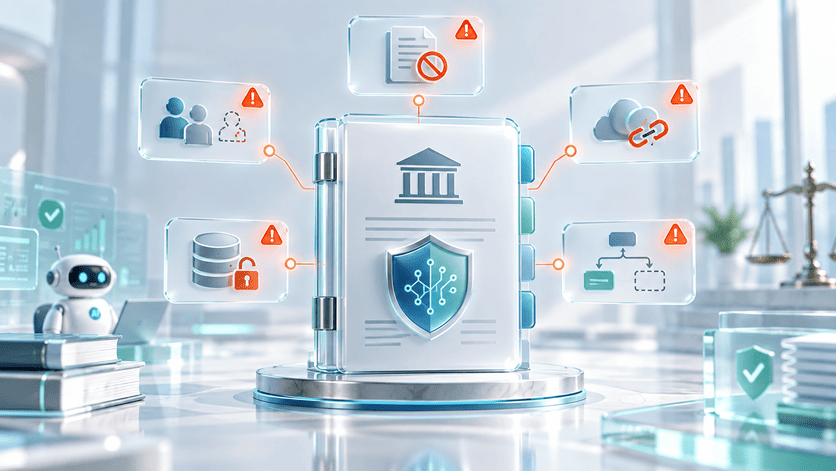
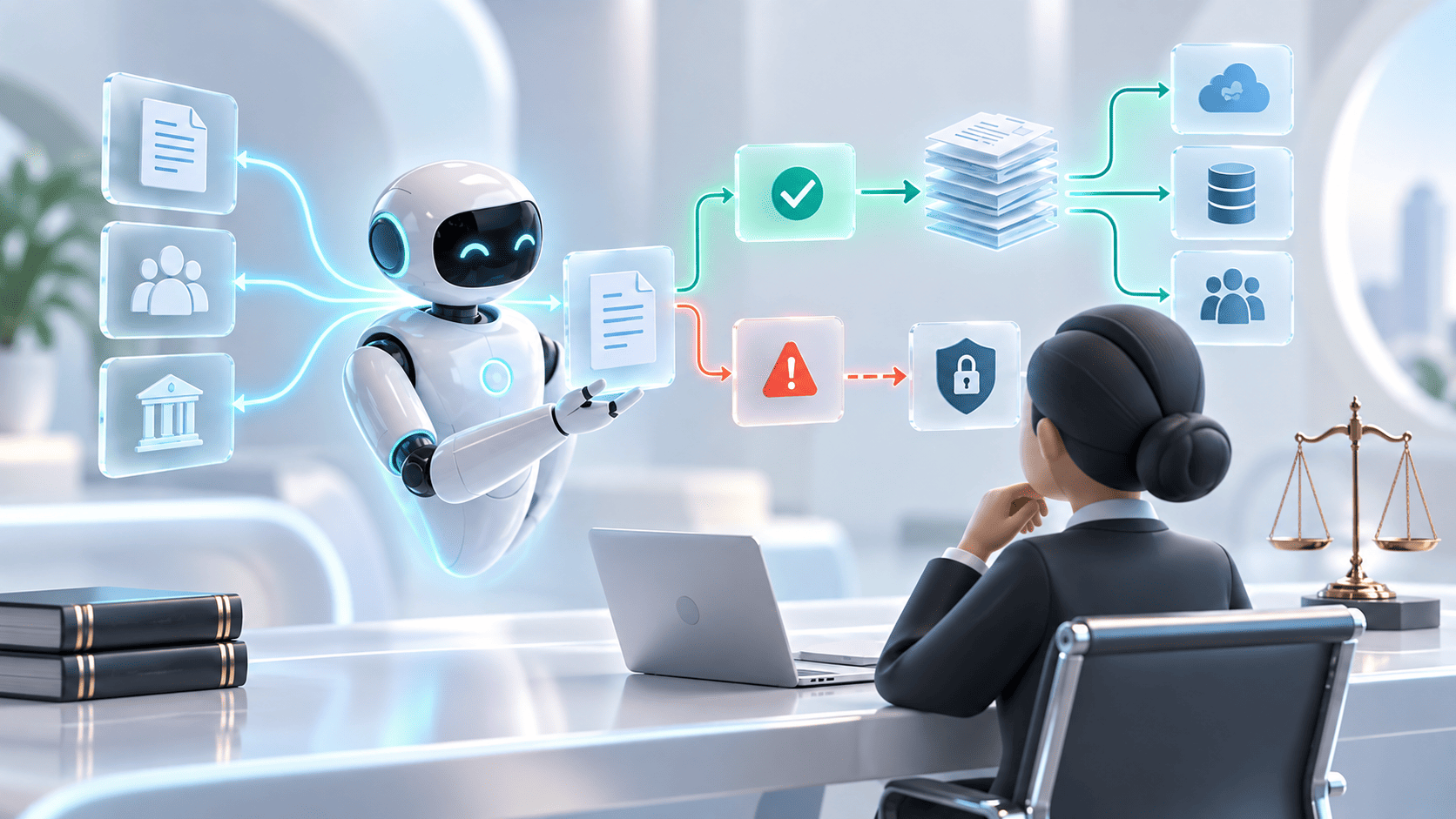
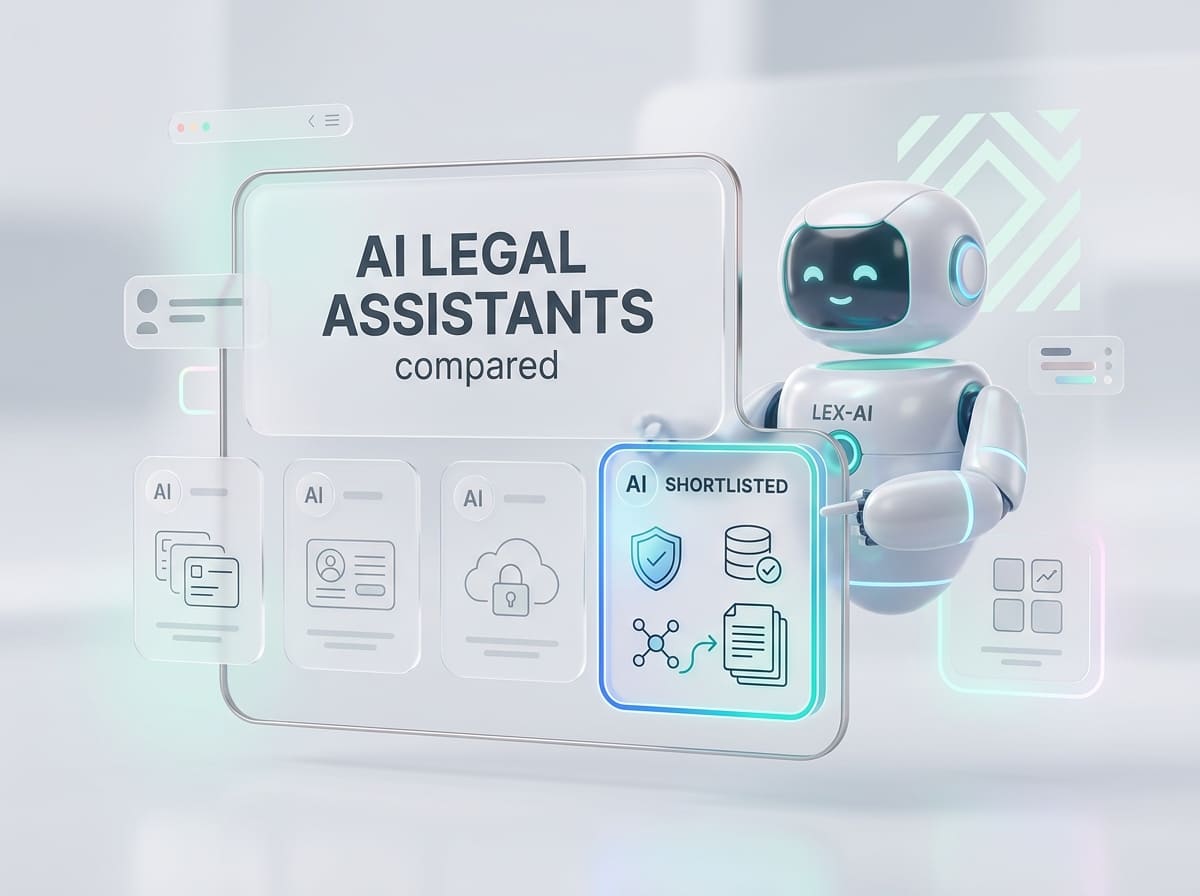
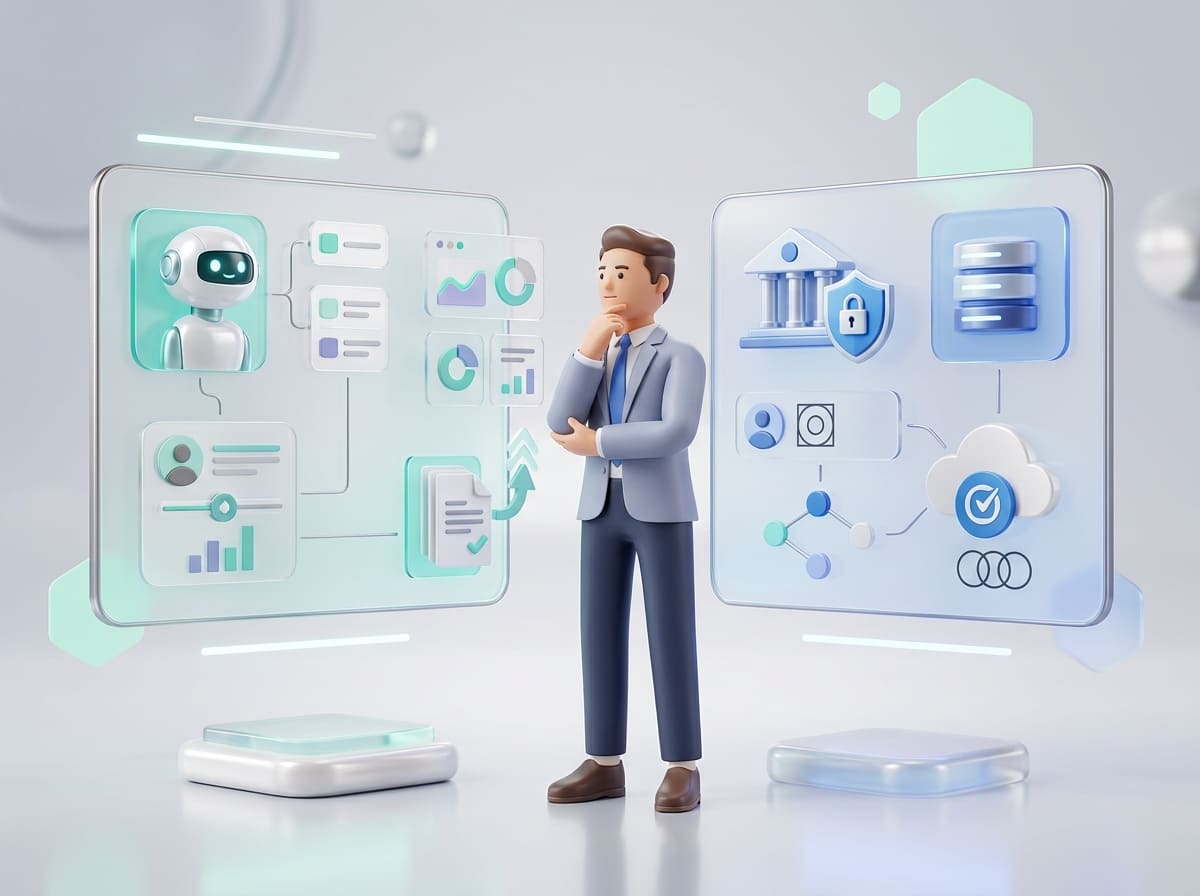
Searching for RPA companies returns three different kinds of business, and most buyers do not find out which one they contacted until the first proposal arrives. Platform vendors sell you a licence, service providers build bots on someone else's platform, and engineering firms decide the architecture before anything gets built. UiPath, Flobotics and Codebridge all appear under the same search term, but they all answer different questions. Which one fits depends on the exception rate and input structure of the workflow you want to automate.
How the RPA Market Splits in 2026
The robotic process automation (RPA) covers four business models with different price points, timelines and lock-in profiles.
1. Platform vendors
They licence the software. UiPath, Automation Anywhere, SS&C Blue Prism, Microsoft and Pega sit here. Here, you pay per bot, per orchestrator and per environment, then either build in-house or hire someone to build for you. Gartner evaluated 13 enterprise vendors in its 2025 Magic Quadrant for Robotic Process Automation, which is roughly the size of the serious field. The report showed that lock-in usually lives at the licence and orchestrator layer.
2. Global systems integrators
These sell programmes. Accenture, Cognizant, Genpact and EPAM run multi-quarter deployments across several departments with enterprise governance attached. Lock-in is contractual, and the minimum spend is high.
3. Specialist RPA service firms
These companies build bots on a chosen platform. Most hold a certification tier with one vendor, which shapes what they recommend before you have described your process. Accelirate, qBotica and Flobotics work this way.
4. Engineering firms that treat the model as a decision
They deliver across RPA, custom integration and agent workflows. They will tell you a script is cheaper, or that the workflow needs a document-understanding layer before a bot touches it. Codebridge sits here.
If you already know you are licensing a platform, you may skip to the platform section. And if you know you need someone to build, go to the ten companies. But if you are not sure automation is the answer at all, the section on when to walk away is the one worth your time.
How We Evaluated These Companies
Codebridge appears in the list below, in first position. It is there because the first decision a buyer faces is whether RPA is the right model, and that is the work Codebridge does. They are not claiming to be the strongest RPA implementer on this page. Read our entry and the entries for Flobotics and qBotica and decide for yourself.
All firmographic and review data below comes from Clutch profiles as of the June 2026 directory refresh. Re-check before you shortlist, because ratings move.
The Platform Layer: RPA Vendors You Will Licence
Whoever builds your automation, something has to run it. Three platforms cover most of the market.
UiPath holds the Leader position in the Gartner Magic Quadrant for RPA for the seventh consecutive year and has repositioned around agentic orchestration, coordinating AI agents, bots and people under one governance layer. Broadest partner ecosystem and the deepest pool of certified developers. Cost climbs with unattended bot count and environment count. Buy it when you expect the estate to grow past a handful of automations, and you want hiring options.
Microsoft Power Automate is the cheapest way in, and the one organisations outgrow most often. If your systems already sit in Microsoft 365 and Azure, the integration work disappears. The ceiling arrives when you need enterprise orchestration, granular bot governance or complex exception routing.
Pega bundles business process management, CRM and automation. That changes the conversation from automating a task to consolidating a platform, which is either what you want or a much larger project than you scoped.
We decided to leave revenue figures out. Competing articles publish them and contradict each other, sometimes inside the same page.
Ten RPA Companies, Ordered by the Situation Each One Fits
1. Codebridge
When you do not yet know whether the workflow needs a bot, an agent, or a fixed process.
Codebridge holds 5.0 on Clutch and has delivered over 700 projects since 2021 across the US, UK, and EU. Their founding and delivery team came together from KPMG, and we run engagements the way partner-led firms do. The delivery team spans 15 countries, and every engagement runs in two phases: a discovery that produces a working prototype, then a production build scoped from what the discovery found. Clients own the code, the prompts, and the operational runbook from day one.
Their engineering practices meet enterprise-grade security standards with AICPA-aligned client-confidentiality controls. Typical project budgets land between $10,000 and $49,999.
For the team from the US, Codebridge built an AI sales operations tool covering lead routing, qualification logic and automated reporting. The system reduced average response time from ~24 hours to under 2 minutes and increased qualified meetings through intent-based prioritization by +30%.
Best for. Mid-market teams who have been pitched a bot programme and want the architecture question answered by a firm with no platform licence to sell. Codebridge assess exception rate, input structure and API availability first, then recommends a script, a bot, an agent with a deterministic write layer, or no automation.
Where Codebrisge is the wrong choice. If your organisation standardised on UiPath and needs developers fluent in that orchestrator, its exception framework and its licensing model, other companies may move a bit faster.
2. Flobotics
When the workflow sits in healthcare revenue cycle management, or you need UiPath depth on a mid-market budget.
5.0 on Clutch across 30 reviews, the deepest review base on this list for automation work specifically. Based in Munster, Indiana, 10 to 49 people, $100 to $149 per hour, $10,000 minimum. Eight of their reviews cover RPA directly and all eight are five stars, three filed in the six months to June 2026. Project costs run low: twelve reviews under $10,000 and ten between $10,000 and $49,000.
They deliver ongoing RPA for a healthcare equipment provider, and their reviewed work spans twelve industries including real estate, financial services and IT services. Healthcare clients cite reduced manual error rates. Several reviewers report delivery under budget.
Watch out for. AI agents now make up a larger share of their service mix than RPA. Ask what proportion of current delivery is still classical bot work if that is what you are buying.
3. qBotica
When the programme is enterprise-scale and the inputs are unstructured documents.
4.9 on Clutch across 4 reviews. Phoenix, Arizona, 50 to 249 people, $50,000 minimum, with average project cost recorded in the $200,000 to $999,999 band. RPA and AI development each account for 35% of their delivery.
For an electrical company they run end-to-end automation combining LLMs, document digitisation, agentic AI and computer vision. In financial services they cut reconciliation cycle times by 70%. Reviewers report near-zero defect rates in production.
Watch out for. Four reviews is thin for a firm of that size, and the $50,000 minimum rules out a single-process pilot. The reconciliation figure comes from client review data, not an audited case study.
4. Atomic Actions
When the budget sits under $10,000 and the workflow spans SaaS tools rather than legacy systems.
5.0 on Clutch across 12 reviews. Alexandria, Virginia, 10 to 49 people, $50 to $99 per hour, $1,000 minimum. Four RPA-specific reviews, all five stars, average project cost under $10,000. Reviewed four times in the six months to June 2026, all five stars. Delivered work in eight countries including Poland, Austria and the UAE.
They built five automation scenarios for a graphic design agency using Make, Typeform and Google Sheets, covering design request intake. Recent reviews cite manual task reductions between 70% and 85%, one onboarding process running 95% faster, and one client avoiding a hire for a saving of roughly $1,200 a month.
Watch out for. The stack is low-code, not enterprise RPA. Right tool for connected SaaS, wrong tool for a legacy desktop application with no API. Some reviewers asked for tighter scoping up front.
5. Begin Software
When you want a very small senior team on a fixed workflow scope.
4.7 on Clutch across 25 reviews. Denver, Colorado, 2 to 9 people, $100 to $149 per hour, $5,000 minimum. RPA and AI development each account for 35% of delivery, low-code for the rest. Thirteen reviews fall in the $10,000 to $49,000 band.
Their reviewed work includes process automation for a wet wipes manufacturer, workflow automation for a healthcare company delivered on time and on budget, and automation for a vacation rental company. Reviewers note the team kept checking in after delivery to help measure outcomes.
Watch out for. A team of 2 to 9 has no bench. One reviewer noted turnover during an engagement. Ask who owns your build by name and what happens if that person leaves.
6. Axe Automation
When the automation has to touch an ERP or CRM and the entry budget is small.
4.7 on Clutch across 16 reviews. Marina del Rey, California, 10 to 49 people, $1,000 minimum, rate undisclosed. Delivery splits across RPA, AI development and ERP consulting at 25% each, plus CRM work. Five RPA-specific reviews, all five stars, average project cost under $10,000. Work delivered in the US, Canada, Chile and Mexico.
They automated client intake for a paralegal services company, with reviewers citing efficiency gains and cost reduction.
Watch out for. Clutch's own summary of their reviews notes that while clients rate value highly, some reviews flag project management and quality assurance problems, and that execution can vary. Ask for references from engagements closed in the last six months.
7. Auxiliobits
When you want the highest RPA concentration on this list at a low blended rate, and you can carry the risk.
Clutch Verified with no reviews on file. Mechanicsburg, Pennsylvania, founded 2018, 50 to 249 people, $25 to $49 per hour, $50,000 minimum. RPA accounts for 40% of their delivery, the highest share of any firm here.
Watch out for. No verified client reviews against a $50,000 minimum. We are including them for the RPA focus and the rate, and we would not sign without two reference calls with named clients first.
8. Savant
When you need the lowest rate on this list and can absorb a mixed-service vendor.
5.0 on Clutch across 40 reviews, the largest review base here. Miami, Florida, 50 to 249 people, under $25 per hour, $1,000 minimum. Delivery splits 30% RPA, 30% employee leasing, 20% staffing, with custom software and web design filling the rest. Work delivered across seven countries.
They designed intelligent automation workflows for a financial services company targeting data accuracy and real-time process monitoring.
Watch out for. Only two of their forty reviews concern RPA, and one of those sits below five stars. The 5.0 aggregate rests on staffing and web work. Judge them on the two automation reviews, not the headline number.
9. DataCose
When the target is invoice, proposal or document generation for a small operations team.
5.0 on Clutch across 3 reviews. Fort Wayne, Indiana, 10 to 49 people, $50 to $99 per hour, $5,000 minimum. Web development takes 45% of delivery, RPA 20%.
They automated invoice generation and proposal creation for a market research company, with reviewers citing prompt communication and on-time delivery.
Watch out for. Three reviews, and automation sits behind web development in their mix. This is a web shop that automates well for existing clients. Fine for a contained document workflow, wrong for a bot programme.
10. deltAlyz
When the automation sits on top of an ERP or BI layer and you want nearshore North American coverage.
4.9 on Clutch across 22 reviews, Premier Verified. 2 to 9 people, $100 to $149 per hour, $1,000 minimum. Delivery spreads evenly across twelve service lines at 10% or less each, RPA among them. Two RPA-specific reviews, both five stars, average project cost $10,000 to $49,000. Nineteen of their reviewed projects are Canadian. English, French and Portuguese, across five North American time zones.
They built a Power BI system for a consumer products company covering sales, inventory, cost of goods and KPIs, following earlier ERP reporting work for a wholesaler.
Watch out for. Two disclosures. deltAlyz holds a paid Featured listing in the Clutch RPA directory, so their position there reflects sponsorship rather than ranking. And a team of 2 to 9 spread across twelve service lines is thin on any one of them.
If you outgrow this list
Accelirate runs agentic automation, managed RPA services and a robotic operations centre as a UiPath diamond partner. Their published case studies include 40,000 hours and 65% of testing cost saved for a global bank, and 60,000 hours plus $863,000 saved for a US enterprise. They are larger than every firm above and they are the right call for an enterprise programme at that scale. Note the certification when you read their platform recommendation.
Best RPA Companies Compared
What RPA costs over three years
Two of these deserve their own paragraph.
Maintenance is the line that decides whether the programme pays back. Bots break when the systems they drive change. A patch moves a field, an input arrives in a format nobody anticipated, a timeout leaves a transaction half-written. Gartner expects 60% of RPA vendors to add computer-use capabilities by 2027 specifically to reduce UI-change failures, which tells you the vendors treat this as the category's central cost problem. Ask any firm you shortlist what their bot break rate looked like over the last two quarters and what caused it.
Exception handling is a staffing cost dressed as a technical detail. Every transaction the bot cannot finish becomes a queue item a person works. Get the estimate in hours per month before you sign, and treat any answer of "very few" as an unanswered question.
For build cost, the Clutch data on the firms above gives real anchors. A contained single-process automation runs under $10,000 at the low-code end, which is where Atomic Actions and Axe Automation report most of their work.
A production automation touching two or three systems with exception handling lands in the $10,000 to $49,000 band, where Flobotics, Begin Software, deltAlyz and our own engagements cluster. Multi-process programmes with orchestration and document understanding reach $200,000 and beyond, which is where qBotica reports its average.
Licence and infrastructure figures move too often to publish here. Get them in writing from the vendor before you compare build quotes, because a cheap build on an expensive licence is not a cheap programme.
Deciding between building this in-house and hiring for it changes the internal ownership and maintenance lines more than anything else on the table.
When Hiring an RPA Company is the Wrong Move
The process is broken, not slow
Automating a process nobody agrees on produces a faster mess with an audit trail. If two people describe the current state differently, or if the process exists because of a workaround for a system limitation, fix that first. A bot will encode the workaround and make it permanent.
The exception rate is too high
Do the arithmetic before you scope. Take your monthly transaction volume, the minutes a person spends per transaction today, and the share of transactions that need judgment a bot cannot apply. The bot saves you the clean transactions. You keep paying for the exceptions, plus the maintenance, plus the licence.
Run it on your own numbers. For example, 2,000 transactions a month at six minutes each is 200 hours of work. If 30% of them need human judgment, the bot addresses 140 hours and you retain 60, plus the exception queue triage the bot creates, plus maintenance when the source system changes.
The payback window on a $30,000 build stretches out fast. At 10% exceptions the same build looks obvious. The threshold is specific to your loaded hourly cost, so calculate it rather than accepting a vendor's estimate.
The inputs are unstructured
Invoices arriving in nine layouts, free-text email requests, scans of varying quality. A rule-based bot handles none of these reliably. You need a document-understanding or classification layer in front, with the bot executing afterward. That is a different purchase with a different budget, and firms that sell bot hours will not always volunteer the distinction. We wrote up the six tests that separate workflows worth automating with RPA from workflows that need agents if you want to run yours through them.
Matching your workflow to a company type
Measure seven things about the process before you talk to anyone.
Then route on the answers.
If the second or third row describes you, the full decision framework sits in our piece on RPA versus agentic architectures. For buyers who have already concluded they need agent-based automation rather than bots, we keep a separate shortlist.
Seven Questions to Ask Before You Sign
1. How do you score which processes to automate first, and can you name one you assessed and rejected?
A strong answer names the scoring criteria and gives you a real rejected process with the reason. A weak answer describes a stakeholder workshop. Firms that have shipped production automations have turned work down and remember why.
2. Show me a production automation in an environment like ours, with the baseline metrics.
Ask for hours saved per month and error rate before and after, from a client comparable to you. A demo on clean test data proves the vendor can build a demo. Firms with production history answer this with numbers inside a minute.
3. What share of your deployed bots broke in the last two quarters, and what caused it?
This question separates firms that support production automations from firms that hand off at go-live. Anyone with a live estate knows the answer and can name the causes. "Ours do not break" means they have not run one long enough.
4. Who owns this automation in month seven, and what does year-two maintenance cost as a share of build?
Get the maintenance number as a percentage and get the ownership answer as a name or a retainer. Vague answers here are the single best predictor of a programme that stops delivering by year two.
5. Which platform do you recommend, and what is your commercial relationship with that vendor?
Ask it plainly. Certification tiers are real business relationships, and a diamond partner recommending their own vendor is behaving rationally rather than dishonestly. You need the disclosure to weigh the recommendation. A firm that answers straightforwardly has just told you something useful about how it works.
6. What is the exception escalation design, and how many human hours a month does it assume?
You want the alerting path, the handling of partially completed transactions, and the staffing estimate in hours. This cost appears in no proposal we have reviewed and lands on your operations team every month.
7. At what point in this project would you tell us to use an agent instead of a bot?
A firm that sells bot hours may not have an answer. One that does will describe the input-structure and exception thresholds where a rule-based approach stops working. The answer tells you whether you are getting an architecture opinion or a quote.
Talk to Us About Which Category Fits
If you have a manual process costing real money and you are not sure whether it needs a bot, an agent or a fixed integration, that is the conversation we are useful for. We will tell you if the answer is none of the above. Our discovery phase produces a working prototype and a scoped build, and you own everything we write from day one.











Heading 1
Heading 2
Heading 3
Heading 4
Heading 5
Heading 6
Lorem ipsum dolor sit amet, consectetur adipiscing elit, sed do eiusmod tempor incididunt ut labore et dolore magna aliqua. Ut enim ad minim veniam, quis nostrud exercitation ullamco laboris nisi ut aliquip ex ea commodo consequat. Duis aute irure dolor in reprehenderit in voluptate velit esse cillum dolore eu fugiat nulla pariatur.
Block quote
Ordered list
- Item 1
- Item 2
- Item 3
Unordered list
- Item A
- Item B
- Item C
Bold text
Emphasis
Superscript
Subscript