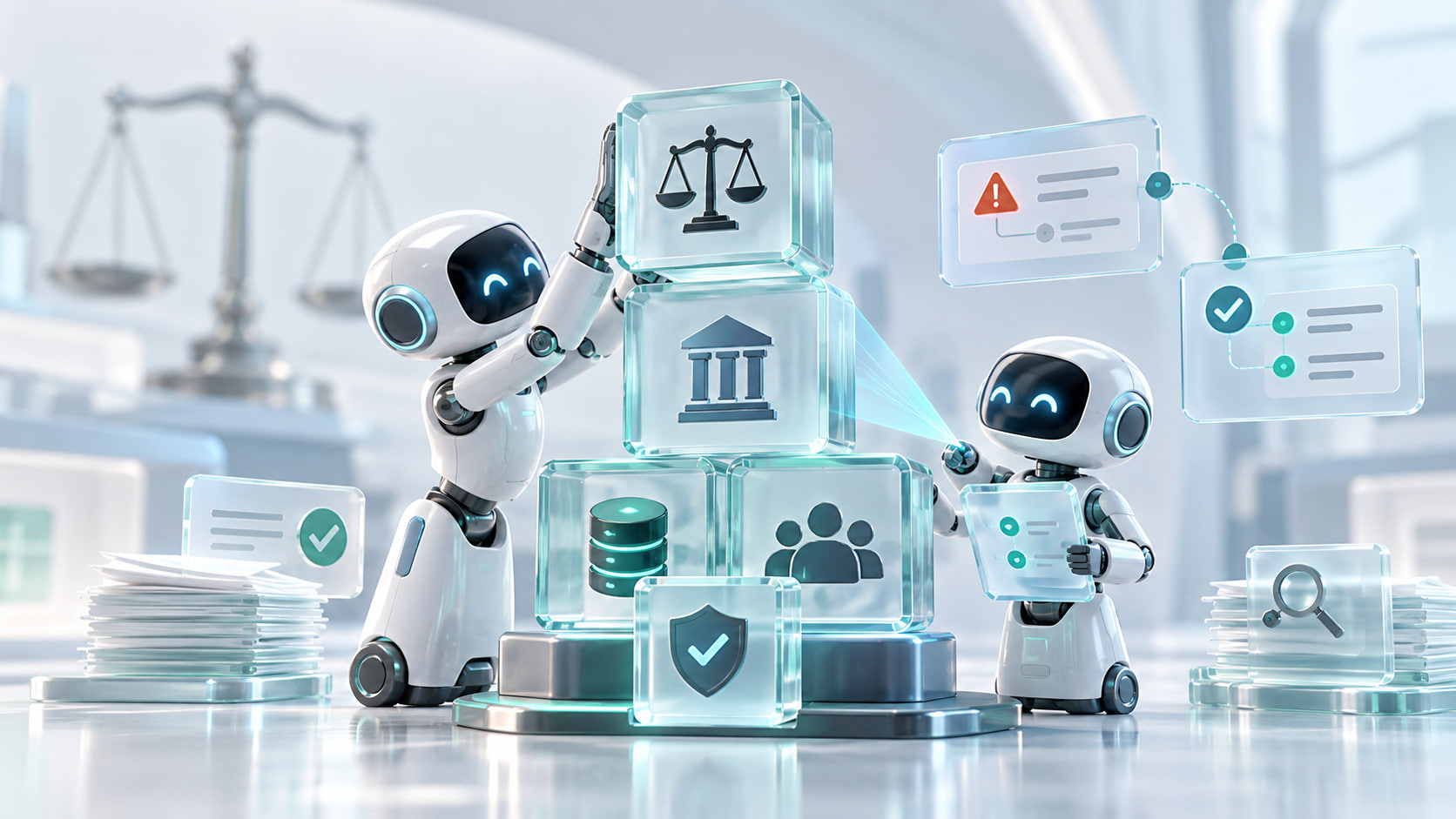
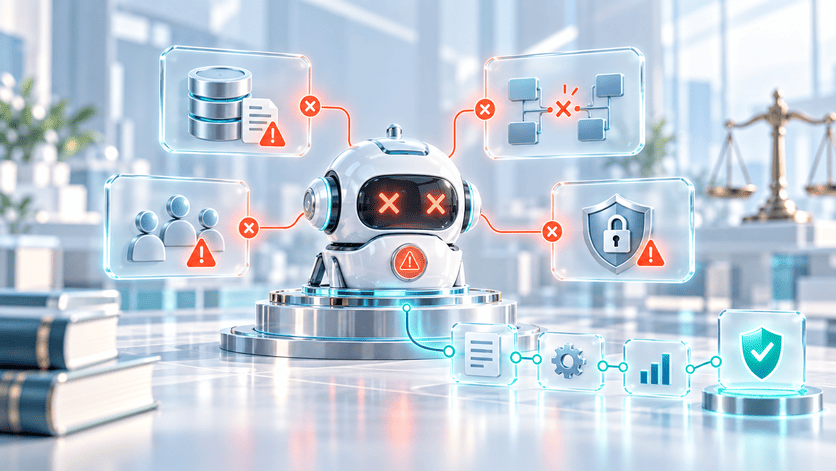
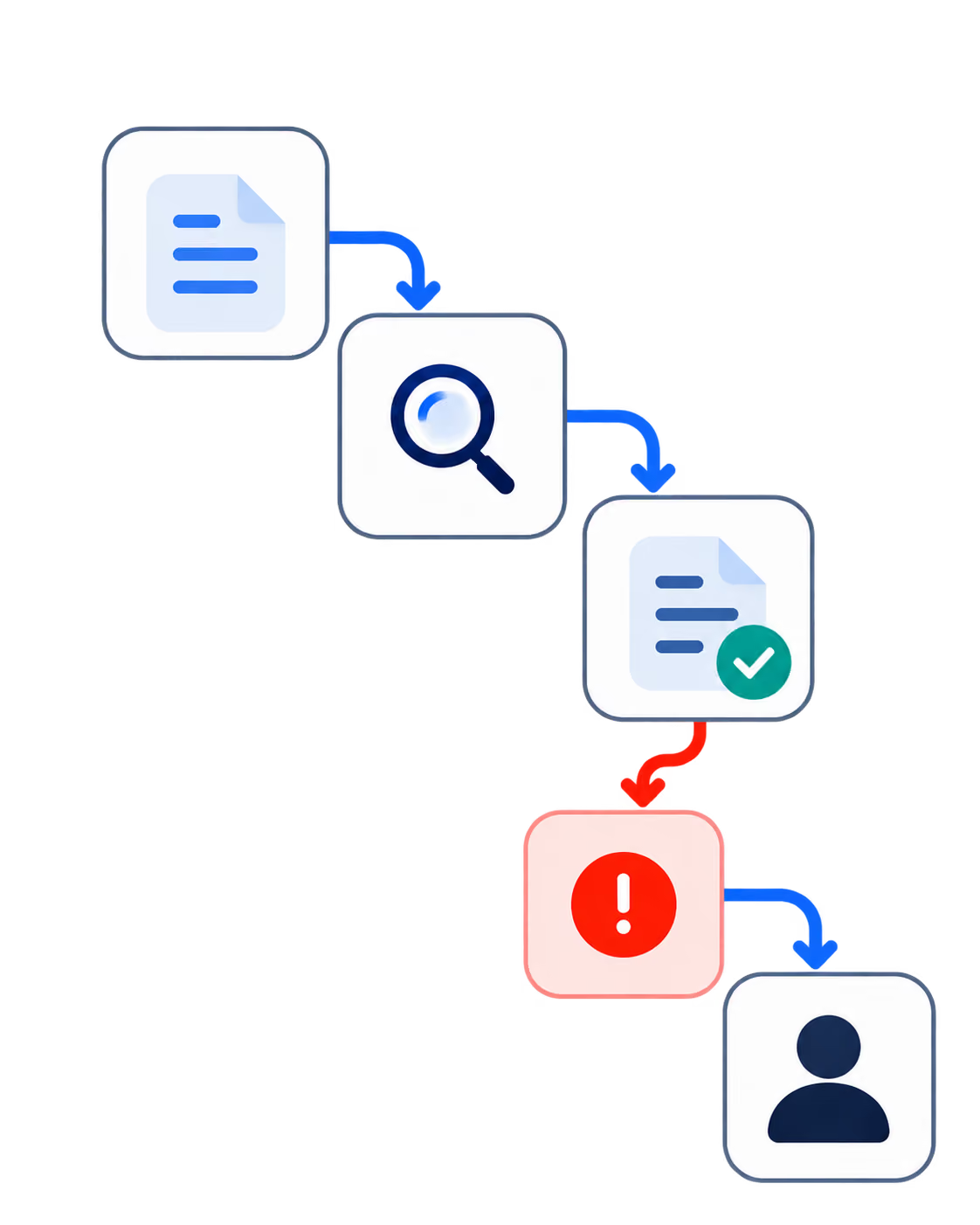
Businesses talk a lot about what AI can do, how fast, and how cost-effective it is. But in the pursuit of speed and cost, they forget about boundaries and control over these systems.
Network automation has been maturing for years. Gartner defines network automation platforms as systems that orchestrate configuration, deployment, and operational management across infrastructure, devices, controllers, services, and other automation tools.
To this existing automation, AI adds a different layer on top. It includes anomaly detection, root-cause inference, recommendations, policy validation, and in some cases, controlled remediation.
That last word matters because once a system can act on production network infrastructure, the conversation becomes a question of authority, blast radius, and recovery. And a wrong configuration push at night can take down a region, leak access, break compliance, or turn a customer SLA into a postmortem.
This article is for founders, CEOs, CTOs, and engineering leaders evaluating where AI fits in network operations. It offers a working model: what AI should observe, recommend, execute, approve, and roll back, and where each boundary tends to break.
Why AI Network Automation Becomes Risky in Production Infrastructure
Traditional network automation handles tasks such as configuration changes, deployment workflows, device management, and compliance checks. The work is very often repetitive, the inputs are explicit, and failure modes are well understood.
AI introduces a new class of behavior - inference. The system observes patterns and produces conclusions that are probabilistic, not deterministic. That shift matters because production network infrastructure punishes uncertainty.
So that’s why businesses must treat AI network automation as a production control system. Because if it can touch routers, firewalls, SD-WAN, or security controls, it needs the same governance discipline as any other piece of critical infrastructure in your company.
The NIST AI Risk Management Framework offers a useful checklist for what trustworthy AI looks like: valid and reliable, safe, secure, and resilient, accountable and transparent, explainable, privacy-enhanced, and fair.
Translating that into network operations means an automation system whose decisions can be examined, whose actions can be reversed, and whose mistakes can be attributed to a clear owner.
The AI Network Automation Boundary Model
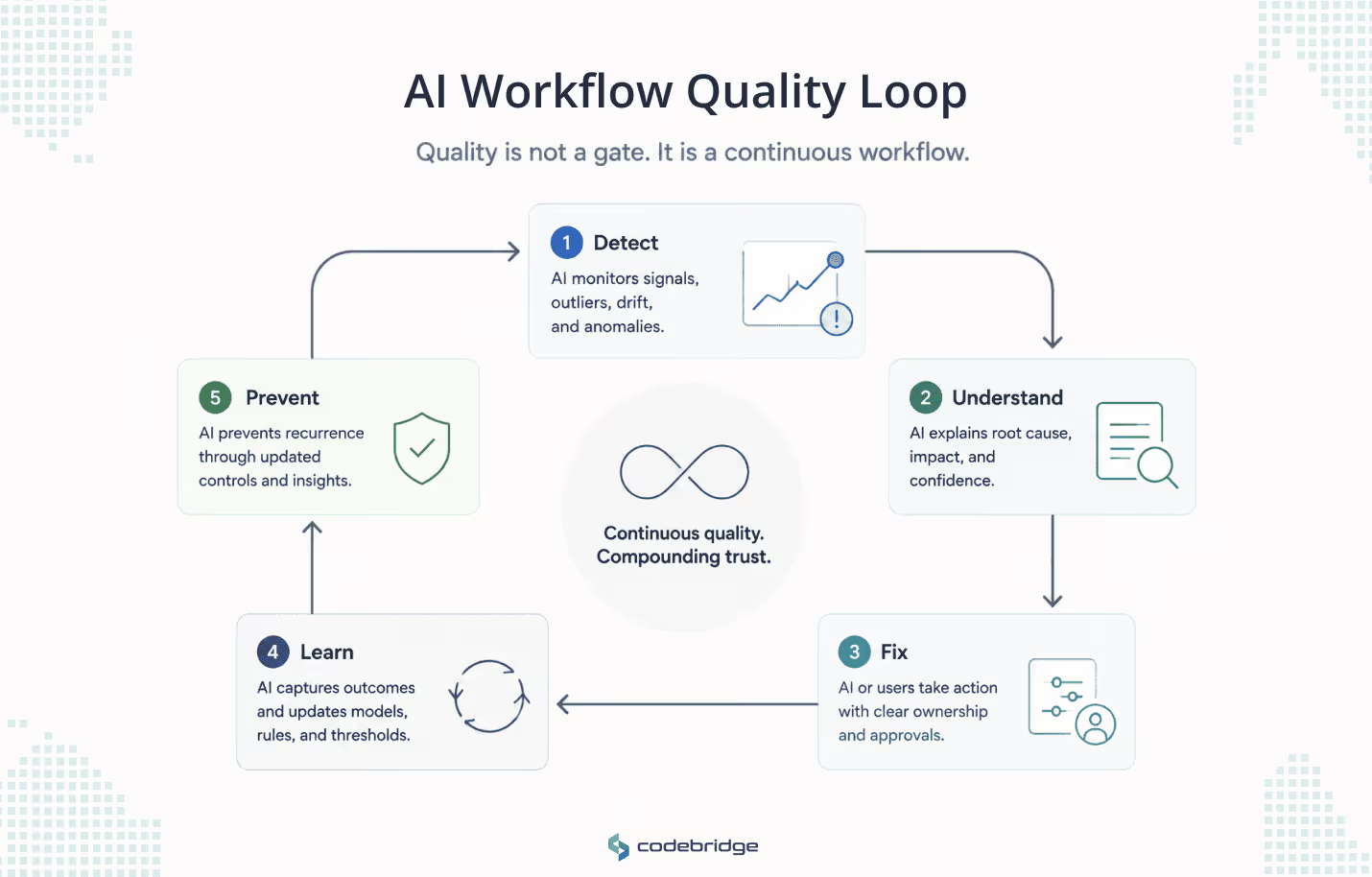
The single most useful exercise before deploying AI in network operations is defining five boundaries: observation, recommendation, execution, approval, and rollback. Each one fails differently. Each one needs explicit answers before code goes near production.
Boundary 1: What network data can AI observe?
Visibility comes first. Before AI can suggest anything useful, the team has to decide which signals it sees and how those signals are weighted. Inputs typically span telemetry, device logs, traffic patterns, incident history, firewall events, cloud networking metrics, dependency maps, user experience data, and security alerts.
But businesses need to be aware of three failure modes that show up here.
- Too little data produces weak recommendations.
- Too much access expands the blast radius and creates privacy and security exposure nobody planned for.
- Unstructured telemetry without context creates false confidence; a packet drop and an application latency spike look similar at the wire level but mean very different things to the business.
This is a data architecture problem before it is an AI problem. Telemetry, logs, incidents, cloud infrastructure, and operational workflows have to be connected in a way the system can interpret. Companies that skip this step end up with AI that produces confident answers from incomplete pictures.
Boundary 2: What can AI recommend in network operations?
Recommendation is safer than execution, but it is still not free. The failure mode worth taking seriously is the steady stream of plausible-sounding recommendations that erodes operator attention. Once engineers learn that the system cries wolf, they stop reading it, and the most valuable alert of the year gets dismissed in three seconds.
What separates a recommendation operators trust from one they ignore is is the reasoning attached to it.
"Latency on the east-west path rose 40% in the last 15 minutes" is observation.
"Latency rose because route X flapped twice and traffic now traverses a longer path through region Y, breaching the latency SLA for service Z" is something an engineer can act on.
The second version names the evidence, the business outcome at risk, and the next decision the operator has to make.
This is why Cisco's intent-based networking model is useful framing. It splits the work into translating intent into policy, activating policy across infrastructure, and assuring it through analytics. The interesting word is intent. A recommendation that describes network behavior only in network terms is half a recommendation. The version operators read at 2 a.m. ties observed behavior back to intended policy or a business outcome.
Two practical tests separate one from the other.
- Can an operator who did not build the model understand why it fired?
- Does the recommendation expose a confidence level that the operator can calibrate against over time?
A system that hides reasoning behind a single opaque confidence number gives operators no way to learn when to trust it. After a few months, they stop trying.
Boundary 3: What network changes can AI execute?
This is the boundary most companies get wrong. Detection capability is not execution capability. The fact that AI can identify a misconfigured firewall rule does not mean it should be allowed to rewrite it.
AI should earn execution rights gradually. A system that cannot explain a recommendation should not be allowed to apply it.
CISA's Secure by Design guidance, although written for technology manufacturers, says that permissions, approval flows, logging, and rollback should be designed before deployment, not retrofitted after the first incident.
Boundary 4: When does human approval stay mandatory?
Human approval is not a failure of automation. In production infrastructure, it is part of safe design. Approval should stay mandatory for customer-impacting network changes, security and access control changes, production routing changes, failover actions, anything in regulated systems, actions with unclear rollback, low-confidence actions, and changes affecting multiple tenants, regions, or business-critical services.
Before any AI-initiated network action, the system should be able to answer:
- Which service or customer group could be affected?
- What evidence supports the action?
- What is the confidence level?
- Has this action been tested in similar conditions?
- Can the change be rolled back automatically?
- Who owns the final decision?
- How will the action be logged and reviewed?
For companies embedding AI network automation into internal platforms or infrastructure-heavy products, approval design is not a governance decoration. It belongs in the product architecture from day one.
Boundary 5: How does the system roll back when AI is wrong?
Safe AI network automation is not defined by how confidently the system acts. It is defined by how quickly and safely the company can recover when the system acts incorrectly.
A serious rollback design rests on three properties. Every change has to be reversible by default, which means versioned configurations, pre-change validation, and a simulation or dry-run step before anything touches production.
Every change has to be observable after the fact, which means linked audit logs, post-change monitoring, and a clear incident owner. And every change has to be traceable to a business impact, so the team can tell the difference between a rollback that mattered and a rollback that was noise.
The rollback path should be designed before the automation path. Without that order, the company is not automating network operations. It is gambling with infrastructure.
How to Build Safe AI Network Automation Boundaries Step by Step
.avif)
A practical sequence for teams moving from interest to deployment. None of these steps is technically difficult on its own. The difficulty is that they have to be done in order, and most teams want to skip the first two.
Step 1: Map the network decisions before choosing AI tools.
Pick the ten most common network operations decisions the team makes in a quarter. For each one, document four things: who decides today (not who is named in the policy), what evidence they use, how long the decision typically takes, and where it stalls. Then rank the list by frequency × time-cost × risk. That ranking tells the team where AI has real ROI and where it would only automate noise. Vendor demos cannot answer this question; the ranking can.
The reason this step is non-negotiable is the shadow-workflow problem. The official runbook says one thing; the on-call engineer at 3 a.m. does something else because the runbook does not reflect what failed last Tuesday. Automating the official process automates a process nobody actually follows. The mapping has to involve the operators who do the work. The people who write the documents usually do not know what really happens. A useful filter: if the team cannot draw the decision tree on a whiteboard in 30 minutes with two senior operators in the room, the process is not ready to automate.
Step 2: Classify network actions by risk, not by familiarity.
A five-level scale works in practice: informational (summarize, enrich), recommendation (suggest root cause), assisted action (prepare a change), controlled execution (apply a predefined low-risk fix), and critical execution (touch routing, firewall, failover, access).
The classification trap is scoring risk by the technology involved rather than the impact path. A firewall change sounds high-risk because firewalls feel scary; a DNS change sounds routine because DNS is everywhere. In practice, a firewall rule on an isolated internal service is lower risk than a DNS change in front of a customer-facing API. The risk score has to combine four inputs: blast radius (users, regions, services affected), reversibility (minutes, hours, irreversible), detectability (how fast a problem surfaces in monitoring), and business exposure (revenue, compliance, security).
Each level then gets an automation rule attached: who can initiate it, who approves it, what evidence has to be in the request, and what the rollback path is. The output should not be a thick policy document. It should be a lookup an engineer asked at 2 a.m. can resolve in under a minute.
Step 3: Build approval paths around network impact, not org chart convenience.
Approval paths fail in two opposite ways. Too many approvals turn the process into rubber-stamping. Too few invite avoidable outages. The right design routes each decision to the person who can actually evaluate the risk. Org chart position does not predict that.
A workable model uses tiered reviewer pools with explicit escalation. NOC handles assisted actions. Senior network engineers handle controlled execution. A standing change-advisory group handles critical execution. Each tier has a response SLA, after which the request escalates one level up. Every approver sees the same evidence package: the recommendation, the confidence level, the blast radius estimate, the rollback plan, and the history of similar past actions.
Two failure modes deserve design effort from day one. The first is after-hours. Approval flows that work cleanly at 2 p.m. on Tuesday often break at 3 a.m. on Sunday because the named approver is asleep, on vacation, or no longer at the company. The on-call rotation has to be wired into the approval system itself, not maintained on a separate page nobody reads. The second is silent rubber-stamping. If 95% of approvals are clicked through in under 10 seconds, the approval step is theater. Track approval latency and decline rate over time; if both trend toward zero, the criteria need redesign so that approvals are reserved for cases that actually require a decision.
Step 4: Build the observability and audit layer before the execution layer.
Most teams build audit and observability infrastructure after the first incident proves they need it. By then the data they want is gone.
The audit layer needs three log streams, not one. Decision logs record what the AI observed, what it recommended, what evidence it used, and the confidence level it assigned. Action logs record what was approved, by whom, what changed in production, and when. Outcome logs record what happened after: was the action effective, did anything else break, how long until the next related incident. Each recommendation gets a unique ID that threads through all three streams, so investigators can reconstruct an entire incident in one query rather than fifteen.
Schema matters more than volume. Plain-text dumps into a central log store are not an audit trail; they are noise that happens to contain the answer. Define the fields up front: action ID, action class, blast radius estimate, approver, confidence, rollback availability, business impact tag. Retention has to match forensic and compliance horizons, which for production network changes is usually longer than the company's default log retention.
These logs do more than satisfy compliance. They are the training data for the next iteration of the system and the input to operator calibration sessions. Quarterly reviews of decision logs are where teams discover that the model is right 90% of the time on configuration drift but only 60% on routing anomalies. That is the signal to retrain or to restrict the weaker use case, not a finding to file away.
Step 5: Start with human-in-the-loop, then design the graduation path.
A reasonable phased path: AI observes, summarizes, recommends, and prepares changes; humans approve; AI executes low-risk actions; broader actions follow only after proven reliability. The hard part is not the phasing. It is defining what "proven reliability" means with numbers attached, before deployment, so the graduation decision is not a judgment call made under pressure from a senior leader who has decided the project is taking too long.
Concrete graduation criteria for a given use case might include 90 days of continuous operation, fewer than 2% false positives, more than 75% recommendation acceptance by operators, zero severity-1 incidents attributable to the recommendation, and a documented rollback test within the last quarter. When all criteria are met, the use case moves up one level on the action classification scale. When any criterion fails across two consecutive review periods, it moves back down. The mechanism has to be automatic; otherwise nobody pulls the trigger.
Two anti-patterns are worth naming explicitly. The first is permanent training wheels: teams that stay in "recommend mode" forever because nobody owns the graduation decision. Without scheduled checkpoints, the model never gets execution rights and the investment never pays back. The second is the reverse: teams that graduate the model and let operator skill atrophy. When the AI eventually fails on an unusual case, operators cannot intervene because they have not made that kind of decision in eighteen months. Periodic manual-mode exercises (operators decide before seeing the AI's recommendation) keep the human side of the loop calibrated.
Autonomy is the result of operational proof, not a feature on the roadmap. The proof has to be measured, not asserted.
Build vs Buy: When AI Network Automation Needs Custom Software
A commercial network automation platform is usually enough when the environment is standard, the vendor ecosystem is consistent, the use cases are common, and most work happens inside known tools with limited integration depth. Gartner's category definition still applies: a platform that orchestrates configuration, deployment, and operational management across the network estate.
Custom architecture becomes the better answer when the situation is messier: hybrid cloud and on-premise infrastructure, automation that has to plug into internal platforms, workflows crossing security, compliance, customer operations, and product reliability, network actions affecting SaaS tenants or enterprise customers, custom approval logic, fragmented observability, or tight coupling with DevOps, SRE, ITSM, CRM, and security tools that off-the-shelf products do not understand.
This is the layer where Codebridge tends to be relevant, not as a replacement for network vendors, but as an architecture-first software and AI development partner for companies that need custom automation workflows, integrations, control layers, observability, and production-grade reliability around complex systems.
The decision is rarely binary. Most mature operations run a commercial platform across the standard surface area and custom software around the edges where business logic, security, and integration depth matter most.
AI Network Automation Checklist for CEOs and CTOs
Before AI touches production network infrastructure, the leadership team should be able to answer each of these questions without hedging:
A team that cannot answer these is not ready for AI-driven execution in production. A team that can probably already has a clearer roadmap than most of the market.
Conclusion
AI network automation pays off when it improves operational judgment, reduces manual delay, and helps infrastructure teams act faster without losing control. None of that depends on autonomy. It depends on the work that happens before the model touches production: action classification, permission design, approval logic, observability, rollback, and ownership.
The companies that get this right will not be the ones with the most aggressive automation roadmaps. They will be the ones whose engineers can answer, in plain language, what the system is allowed to do, who is responsible when it acts, and how the company recovers when it is wrong. The rest of the work follows from there.














Heading 1
Heading 2
Heading 3
Heading 4
Heading 5
Heading 6
Lorem ipsum dolor sit amet, consectetur adipiscing elit, sed do eiusmod tempor incididunt ut labore et dolore magna aliqua. Ut enim ad minim veniam, quis nostrud exercitation ullamco laboris nisi ut aliquip ex ea commodo consequat. Duis aute irure dolor in reprehenderit in voluptate velit esse cillum dolore eu fugiat nulla pariatur.
Block quote
Ordered list
- Item 1
- Item 2
- Item 3
Unordered list
- Item A
- Item B
- Item C
Bold text
Emphasis
Superscript
Subscript