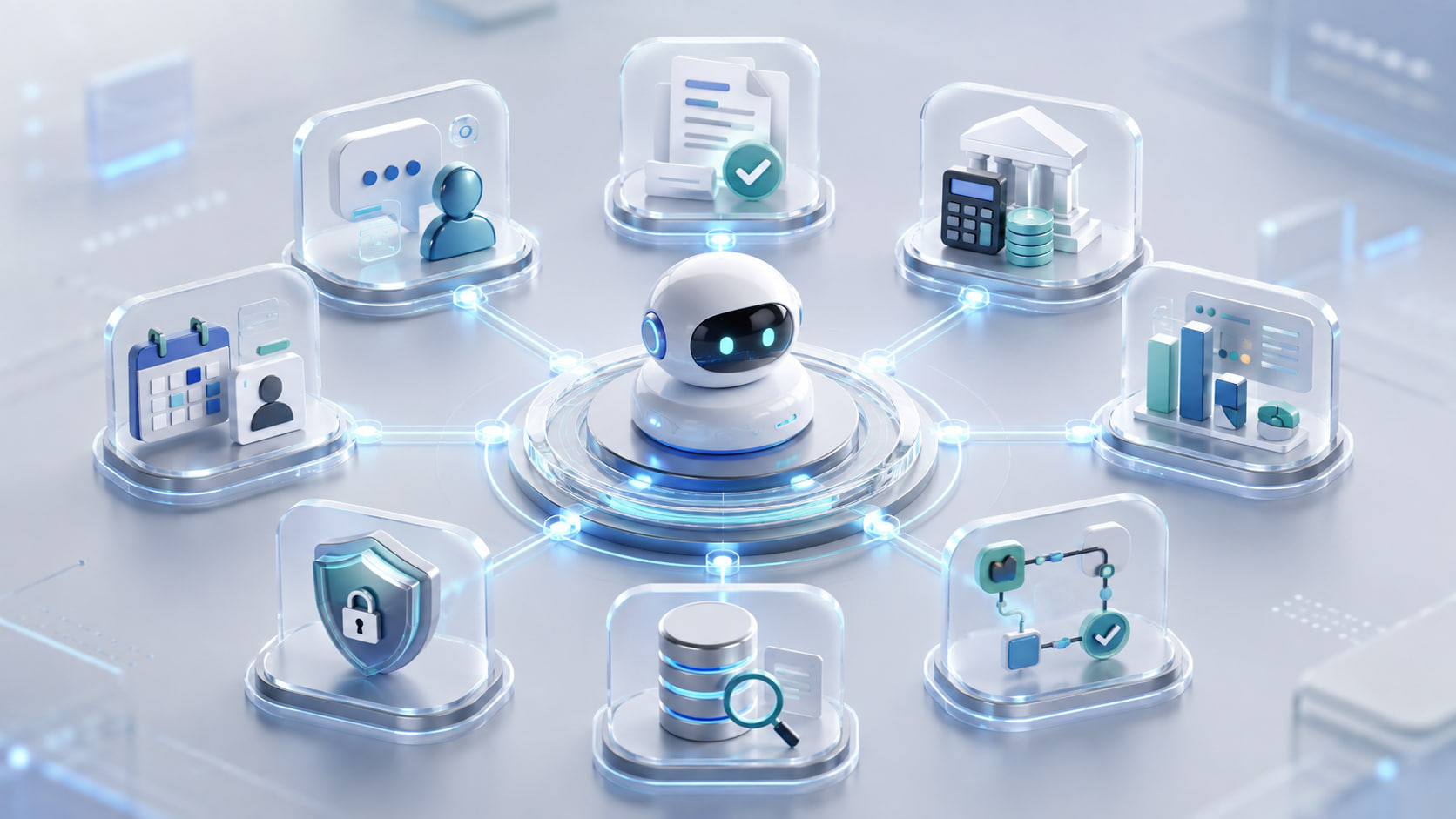
Enterprise software is moving beyond static workflows toward systems that can reason and act on their own. This shift is being driven by AI agents – software designed to make decisions, adapt to changing conditions, and pursue goals with minimal human input.
Gartner projects that by 2028, 33% of all enterprise software is expected to include agentic capabilities, and approximately 15% of daily work decisions are expected to be made autonomously by AI agents. Moreover, the AI agents market itself is projected to grow from $5.4 billion in 2024 to $236 billion by 2034.
But enthusiasm doesn’t guarantee success. In another projection, Gartner states that over 40% of agentic AI projects may be canceled by 2027. These failures are rarely caused by limitations in the technology itself. Instead, they stem from poor execution, like unclear business value and inadequate risk controls. The problem is compounded by what some informally call “agent washing,” where thousands of vendors claim agentic capabilities but only a few of them deliver genuine autonomous functionality.
The core challenge for enterprises is to find a development partner capable of moving beyond the demo into a stable, secure, production-ready environment that actually delivers measurable business outcomes.
This analysis focuses on 10 development firms capable of delivering production-ready AI agent systems. Companies were selected based on their ability to design multi-agent architectures, operate in regulated environments, integrate with legacy enterprise systems, and demonstrate measurable business results beyond proof-of-concept deployments.
1. Codebridge – Enterprise-Grade AI Agent Development with Big Four DNA
Codebridge builds AI systems for healthcare, legal, and financial services, where compliance requirements, data sensitivity, and operational stability shape every technical decision. Their work is typically deployed in production environments where errors have a material impact, and systems are expected to operate reliably over time.
Audit-First Approach
Engagements begin with a detailed review of existing systems, the company’s workflows, and risk boundaries. This analysis is used to identify where AI agents can improve outcomes and where they would add unnecessary complexity or maintenance issues. In some cases, the conclusion is that AI is not the right tool for the problem.
Core areas of expertise
- AI agents in regulated domains (healthcare, legal, financial services)
- Complex system and legacy integrations
- Audit-driven AI assessments and feasibility analysis
- Cloud-native, high-load, multi-tenant architectures
- Compliance, data security, and certification-heavy environments
Their deployments typically run across AWS, Azure, and GCP and operate within established security and compliance frameworks, including HIPAA, SOC 2, and GDPR.
Codebridge typically works with enterprises and large technology organizations that treat AI as part of their core infrastructure. These teams require systems that integrate with existing platforms and meet regulatory requirements.
2. BotsCrew – AI Agents & Generative AI for Global Brands
Founded in 2016, BotsCrew is an established provider in the chatbot and AI agent development space, with a portfolio spanning more than 150 projects. Their client list includes organizations such as Honda, Mars, Samsung NEXT, and the Red Cross, reflecting a focus on large-scale and brand-facing implementations.
BotsCrew places strong emphasis on an upfront discovery phase, using it to define technical scope, performance metrics, and cost expectations before development begins. This structured planning approach is intended to support production-ready deployments rather than limited proof-of-concept solutions.
Selective Highlights
- 150+ projects and 25+ generative AI products delivered across support automation, internal tools, and lead engagement.
- Choose Chicago's AI assistant engaged over 500,000 users through a GPT-based conversational experience.
- One of the top generative AI and chatbot development companies in 2018.
3. Orases – Custom AI Agent Development for US Enterprises
Since 2000, Orases has built a reputation for turning complex business requirements into working AI solutions, reflected in their 5.0 Clutch rating. Based in the United States, they specialize in custom agent development for mid-market and enterprise.
Orases specializes in connecting AI agents to legacy systems in healthcare, finance, and logistics. They build logical agents for compliance workflows and utility-based agents to optimize resource allocation, supporting day-to-day enterprise operations.
Every engagement begins with a technical assessment and standardized data-preparation steps, ensuring AI models are built on secure, compliant foundations. This approach especially matters for organizations migrating from decades-old systems because it reduces integration risk, such as downstream failures and regulatory exposure.
They also offer a complimentary project discovery phase. It’s a structured process that helps translate your vision into a practical software solution with a validated scope, cost, and timeline. This approach helps businesses to solve the "we don't know what we don't know" problem that most organizations face when exploring AI.
For companies preferring domestic partnerships and practical collaboration during requirements gathering, Orases delivers a close working relationship for its customers.
4. Master of Code Global – Conversational AI & Enterprise Agent Solutions
Master of Code Global develops conversational AI systems used by global consumer brands like Tom Ford, Burberry, and La Mer. Their work focuses on enterprise-scale agent orchestration, supporting millions of customer interactions across production environments.
One of the core parts of their offering is the LOFT framework, which introduces a structured reasoning layer for AI agents, helping them manage more complex interaction flows than basic chatbot implementations.
Why Enterprise Clients Choose Them
- ISO 27001 certified – baked in enterprise-grade security and compliance.
- Proven with luxury brands – Tom Ford, Burberry, La Mer, and others.
- Consultative approach – The team helps you identify the right conversational AI use cases before writing a line of code.
- 9.2 customer satisfaction – high-level of retention and customer satisfaction
They are designed for customer-facing environments where consistency, accuracy, and brand alignment are required. Master of Code Global delivers reliable AI agents and support to luxury retail environments with complex requirements.
5. Deviniti – Custom AI Agent & LLM Development
Based in Poland, Deviniti has delivered custom development work for over 200 clients. They mainly focus on self-hosted LLM deployments for data-sensitive organizations. The company develops custom AI agents designed to run within an organization’s own infrastructure. These deployments are typically used in regulated environments where data security and operational ownership must remain internal.
In one customer service deployment for Crédit Agricole, the system handles routine customer requests directly and escalates more complex cases to human agents. This setup allows the bank to manage system logic and operational boundaries within its existing governance framework.
Deviniti provides ongoing support and maintenance, including uptime monitoring, bug fixes, and regular updates that address performance and feature requirements. This level of operational support is typically expected when AI systems are treated as part of core infrastructure rather than short-term experiments.
The company works primarily with banks, healthcare providers, and other regulated organizations where data residency and system control are part of standard operating requirements. For teams that prefer to operate AI systems within their own environments, Deviniti supports that model.
6. WebbyLab – AI Agent Development & Implementation
WebbyLab builds end-to-end AI agent solutions for companies such as Nova Poshta, Uber, and Intersport. The company promises no vendor lock-in, with clients owning the AI agent code, data, infrastructure, and pipeline, so deployments can be moved or extended without dependence on a single platform.
The company also works on Model Context Protocol (MCP) implementations that support coordination between AI agents and existing enterprise systems. In practice, MCP acts as a control layer that manages how agents access tools and services so they operate together rather than in isolation.
This becomes relevant when organizations move beyond a single conversational interface and start deploying multiple agents across business workflows.
Technical Capabilities
- Hybrid RAG architectures – ground agent responses in your verified internal data, reducing hallucination risks.
- Data flow analysis – maps technical constraints and dependencies upfront to avoid expensive issues during implementation.
- Agent-as-a-Service (AaaS) – turns your internal automation tools into externally consumable products.
WebbyLab typically works with enterprises building cloud-native AI infrastructure while avoiding long-term dependency on a single vendor. Their systems are designed so that components can be modified and migrated as any operational requirements change.
7. VStorm – AI & Digital Transformation Solutions
VStorm develops AI agents used to automate operational workflows for mid-market organizations. Based in Poland, the company has implemented more than 30 AI agents across healthcare, real estate, and service-oriented industries, and has been recognized among the fastest-growing technology firms in Central Europe.
The team includes researchers and practitioners with experience in deploying AI systems within existing business processes, with a focus on measurable operational outcomes.
The TriStorm Methodology
VStorm's methodology is tested on a real-world project and structured around three phases:
- Strategic Alignment and Planning – identify which pain points actually justify AI investment.
- Proof of Value – build a working prototype that demonstrates measurable business impact before scaling.
- Process Augmentation – deploy the agent into business workflows with clear success metrics.
The company works with mid-market companies in healthcare, real estate, and service operations, deploying AI agents to support workflow steps like intake, validation, and routing.
8. Markovate – AI Agents for Specific Business Workflows
Markovate develops AI agents for companies that operate in legal, insurance, and healthcare environments. Their work focuses on systems that support decision-making and task execution within defined regulatory boundaries, rather than simple workflow automation. The company also holds ISO 9001:2015 and ISO/IEC 27001:2022 certifications, with internal practices aligned to HIPAA and GDPR requirements.
Expertise
- Document automation in legal and insurance contexts, where accuracy is crucial.
- Supply chain monitoring with agents that detect anomalies and trigger responses at the same time.
- Financial transaction management where agents review, flag, and route decisions in real-time.
Markovate has deployed systems such as CodmanAI for healthcare operations and LegalAlly for legal document workflows and case management. These deployments are typically used in organizations where decisions need to be traceable, and system behavior must stay consistent under strict regulations.
9. 10Clouds – AI Automation for Modern Enterprises
10Clouds develops AI-powered automation systems for startups, small and mid-sized businesses, and enterprise technology teams. The company holds a 4.9-star rating on Clutch and focuses on production deployments rather than exploratory prototypes.
Their work spans retail, healthcare, finance, logistics, HR, and marketing, using their AIConsole platform to automate tasks such as data processing, internal workflows, and operations in customer service.
AIConsole
The company built AIConsole after repeatedly running into the same issue. AI agents were technically sound but difficult to integrate into existing client systems without complete renovation. The platform developed over time and now reflects patterns that held up across multiple deployments, rather than developing a product from scratch.
AIConsole provides a set of reusable building blocks that teams use to connect agents to current workflows and systems. In practice, this reduces the amount of custom integration work required and makes deployments easier to adjust once they’re live.
For example, in one banking deployment, automating parts of the credit analysis process reduced average processing time by half. This change allowed the team to handle higher daily volume without expanding headcount.
10. BlueLabel – AI Development & Digital Innovation
For 13 years, BlueLabel has been building AI-enabled products, working with companies such as Chegg, Mapline AI, and Hyer. Their projects combine design and development to embed AI into existing applications, automate specific business processes, and enhance user experiences, such as making internal data searchable or handling routine tasks within a service workflow. The team also emphasizes designing AI systems that fit naturally into existing client products, rather than treating AI as a standalone feature.
How they Integrate AI
BlueLabel guides clients through different stages of generative AI adoption:
- Education and Strategy – remove the hype and identify where AI actually solves your problems.
- Proof-of-Concept – validate the approach before committing resources.
- Product Development – build AI features people will actually use.
- Agent Implementation – deploy autonomous systems into production workflows.
BlueLabel is a good fit for startups and small to mid-sized companies building AI features into customer-oriented products or internal tools. Their work often supports teams that need AI systems designed, built, and integrated into existing software without separating product development from AI engineering.
How to Choose the Right AI Agent Development Company
Choosing a development partner is a strategic decision that depends on your organization’s specific goals and technical maturity. There’s no universal answer, only the right fit for your particular context.
A. Define Your Specific Needs First
Before evaluating vendors, clarify the problem you’re solving. Are you building a customer-facing conversational agent or an internal operational agent? Organizations in regulated industries like FinTech or HealthTech must prioritize partners with a deep understanding of compliance frameworks: HIPAA, GDPR, and the EU AI Act.
Equally important: assess your data readiness. The quality and accessibility of your internal data are the primary drivers of an agent’s success. Even the most sophisticated AI architecture cannot compensate for poor data foundations.
B. Evaluate Potential Partners on Key Criteria
1. Technical & Architectural Expertise
A qualified partner should demonstrate a deep understanding of LLM orchestration, RAG pipelines, and multi-agent systems. They must be able to explain their planning modules and how the agent handles complex task decomposition. If they can’t articulate their architectural decisions clearly, that’s a warning sign.
2. Industry-Specific Knowledge
Generic AI expertise is rarely sufficient for complex enterprise environments. Look for case studies demonstrating a track record of handling similar system dependencies and regulatory requirements. Domain knowledge matters: a partner who understands healthcare workflows brings more value to a HealthTech project than one with only general AI capabilities.
3. Ownership Mentality
Avoid “order takers.” The best partners take ownership of the problem, challenge initial assumptions, and focus on delivering measurable business outcomes rather than checking off feature lists. They should be willing to push back when your specifications don’t align with actual business processes.
4. Realistic Approach to AI
A trustworthy partner is honest about AI’s limitations. They should be able to explain potential failure modes, infinite feedback loops, and agentic misalignment, and provide strategies for human-in-the-loop oversight. Be wary of anyone promising “fully autonomous” solutions without discussing risk controls.
C. Warning Signs to Avoid
As discussed earlier, watch for vendors promising “fully autonomous” solutions without discussing limitations or risk controls. Lack of specific case studies, over-reliance on marketing buzzwords, and the absence of a clear post-deployment support model are major red flags. If a company cannot explain its underlying architecture or how it ensures data privacy, it’s likely engaging in “agent washing”.
Conclusion
The companies on this list have proven they can build AI agents that work in production. They've done it for banks, healthcare systems, luxury brands, and enterprises in sensitive domains that can't afford failures. The 2028 projections that 15% of work decisions will be made autonomously open up new opportunities for companies. However, 40% of AI projects fail because they weren't built on solid foundations, and this gap between pilot and production is where most companies get stuck.
Beyond capability, look for teams with a realistic approach to AI that understand your industry, work within regulatory constraints, hold the certifications your environment requires, and support systems after they’re deployed. Features don’t matter much if the problem is misunderstood or the system can’t be maintained.
Choose your partner based on what you actually need. Codebridge, if you need a team with extensive experience delivering complex systems in regulated domains. Master of Code if conversational AI is your priority. Orases if you value a US-based partnership. The best technical team won't help if they're solving the wrong problem. Skip all the hype and build something that works.











Heading 1
Heading 2
Heading 3
Heading 4
Heading 5
Heading 6
Lorem ipsum dolor sit amet, consectetur adipiscing elit, sed do eiusmod tempor incididunt ut labore et dolore magna aliqua. Ut enim ad minim veniam, quis nostrud exercitation ullamco laboris nisi ut aliquip ex ea commodo consequat. Duis aute irure dolor in reprehenderit in voluptate velit esse cillum dolore eu fugiat nulla pariatur.
Block quote
Ordered list
- Item 1
- Item 2
- Item 3
Unordered list
- Item A
- Item B
- Item C
Bold text
Emphasis
Superscript
Subscript