You’ve got an idea for a startup or digital product, but you're not sure how to build it. Maybe you're a non-technical founder or an established business trying to grow faster without wasting time or budget. What’s your next move? That’s where consulting software development services come in.
At Codebridge, we recognize the vital role of expert guidance in crafting scalable digital solutions, and we're dedicated to assisting businesses in navigating the complexities of software development services to achieve their strategic objectives efficiently. Consulting software development offers specialized expertise to refine and enhance a company's software development processes and outcomes.

What is Consulting Software Development?
Consulting software development is a specialized service that provides expert guidance and support to businesses aiming to enhance their software development capabilities. It involves analyzing existing systems, pinpointing areas for improvement, and implementing strategies to boost efficiency, lower costs, and stimulate innovation. Unlike traditional IT consulting, which often addresses broader technology infrastructure, consulting software development concentrates on the specific processes and technologies used to create and maintain software applications. This targeted approach ensures that technical execution is closely aligned with overarching business objectives.
According to The Business Research Company, demand for software consulting is rising as companies seek smarter ways to innovate and launch scalable digital solutions. It's growing niche in the software industry and is expected to grow at a compound annual growth rate (CAGR) of 12.1% to 2030.
It's growing niche in the software industry and is expected to grow at a compound annual growth rate (CAGR) of 12.1% to 2030.
From Code to Comprehensive Strategy: The Evolution
The role of consulting software development has broadened significantly over time. Initially focused on basic coding assistance, it has evolved into a holistic approach that includes digital strategy formulation, technology stack optimization, process reengineering, and risk mitigation.
Consultants now collaborate with businesses to:
- Develop comprehensive digital strategies aligned with overall business goals.
- Optimize technology stacks for efficiency and effectiveness.
- Reengineer software development processes to improve productivity and reduce costs.
- Mitigate risks like security vulnerabilities and project delays.
By adopting this comprehensive approach, consulting software development helps businesses achieve faster time-to-market, enhanced system reliability, and a greater return on investment.
Essential Elements of Effective Consulting
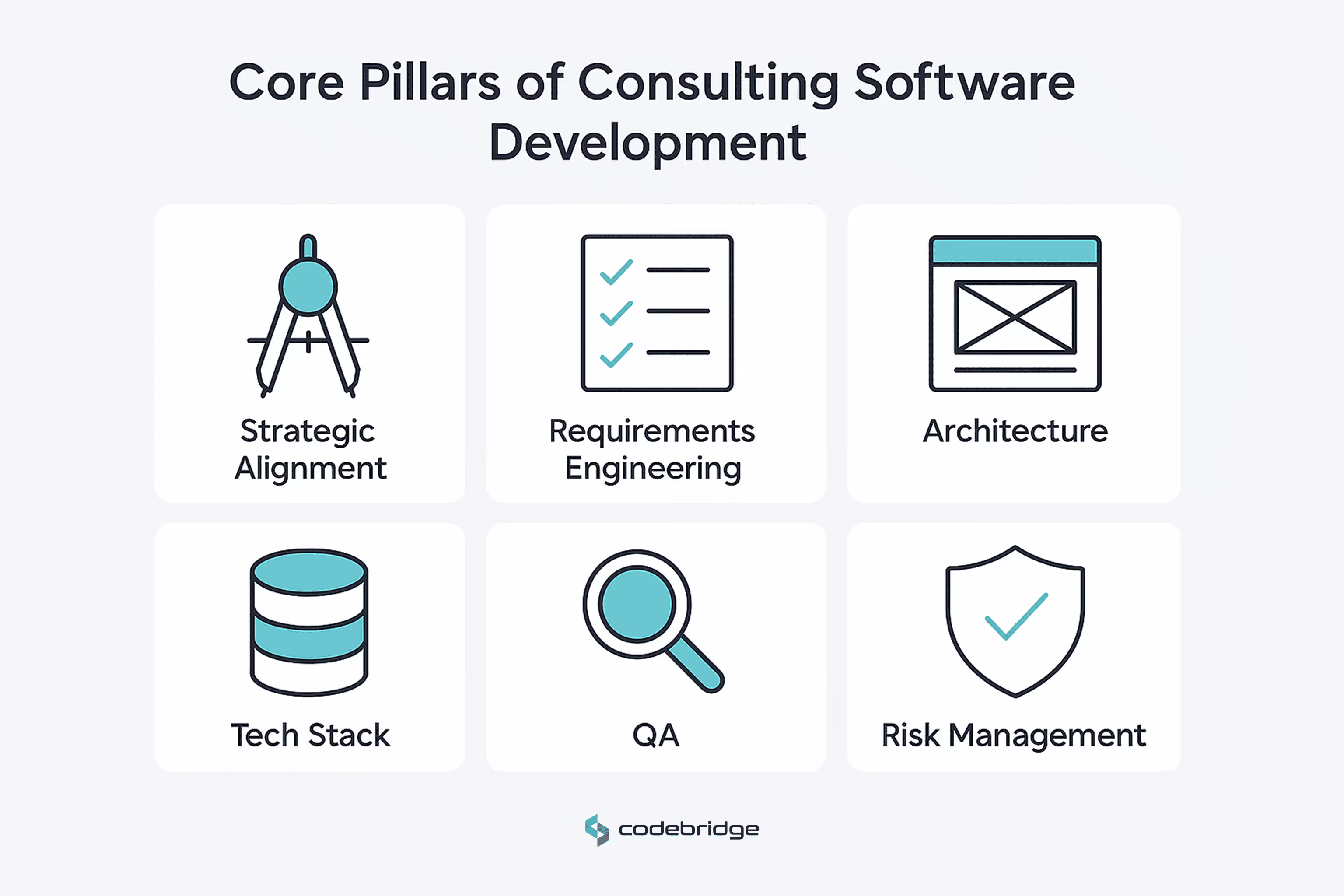
Effective consulting software development relies on several core pillars: strategic alignment, meticulous requirements engineering, architectural design, optimal technology selection, quality assurance, and proactive risk management.
Precision Techniques for Project Success
Strategic alignment starts with a deep understanding of the client's business goals. Meticulous requirements engineering ensures the software meets those needs precisely. To achieve this, consultants use techniques including:
- Value stream mapping to identify workflow bottlenecks.
- Stakeholder workshops to prioritize essential feature requirements.
- Technology audits to assess infrastructure scalability.
These techniques ensure the project aligns with business goals and that all stakeholders are on the same page.
Balancing Innovation and Practicality in Tech Choices
Architectural design and technology selection are critical for creating scalable, maintainable, and reliable systems. Consultants must balance innovation with practicality.
Key considerations include:
- Microservices vs. monolithic architectures: choosing the right approach based on project needs.
- CI/CD pipeline configuration for streamlined, automated processes.
- Tech stack viability: ensuring community support and consistent updates.
By carefully considering these factors, consultants can help businesses select the right technologies and architectures.
Frameworks for Flawless Execution and Risk Mitigation
Quality assurance and proactive risk management are essential for delivering high-quality software. Consultants implement testing frameworks and security protocols to minimize defects and vulnerabilities.
These frameworks include:
- Shift-left testing: integrating QA early in the development process.
- OWASP-compliant security protocols for robust vulnerability prevention.
- Disaster recovery simulations to guarantee high uptime SLAs.
Prioritizing quality assurance and risk management helps businesses deliver reliable and secure software.
Navigating the Software Development Process
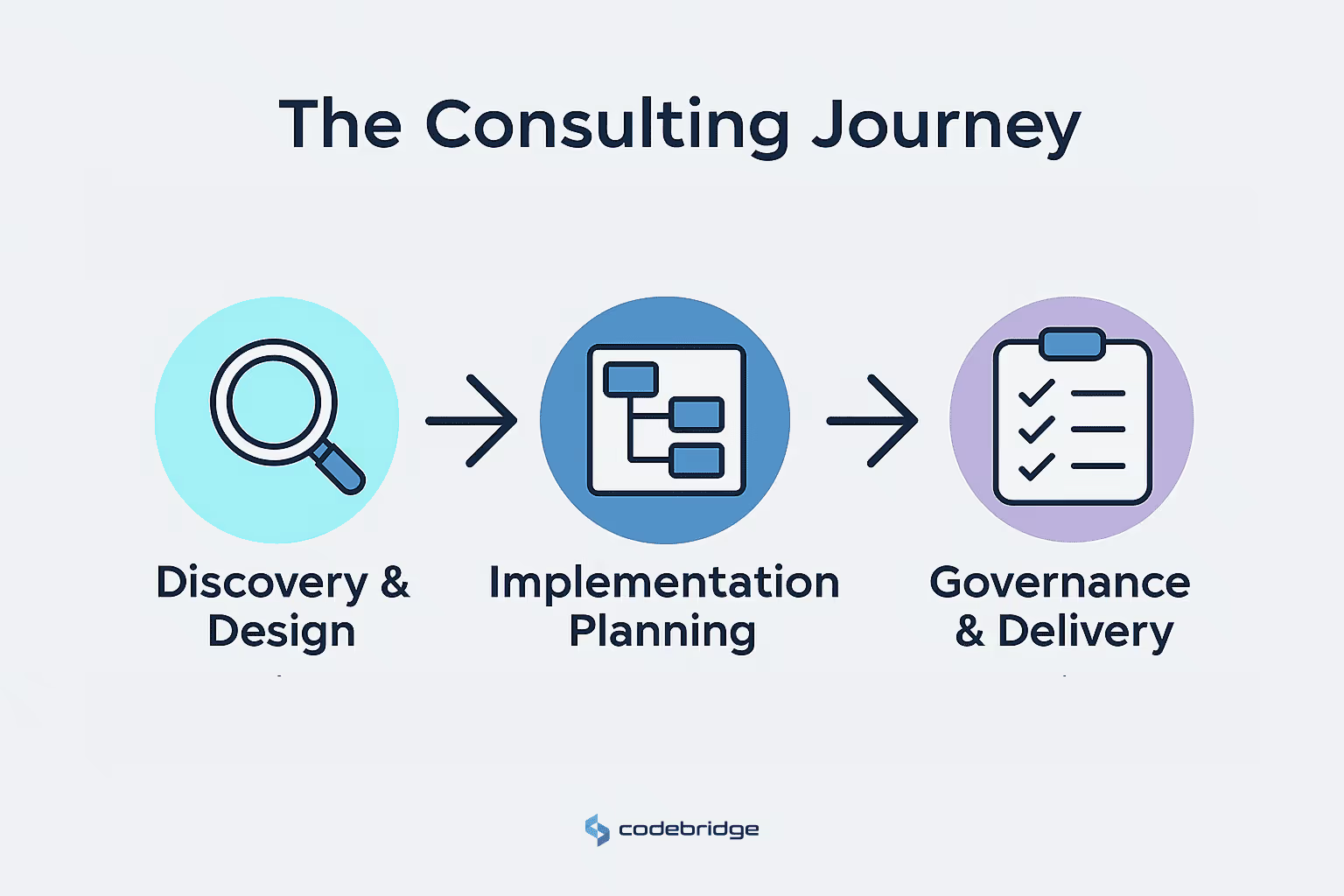
The consulting journey involves phases such as discovery and solution design, implementation planning, and robust governance.
Comprehensive Assessment and Strategic Design
The discovery and solution design phase begins with assessing the client's current state. Consultants evaluate systems, processes, and technologies to identify improvements.
This assessment includes:
- Process maturity evaluation using industry-standard benchmarks.
- Quantification of technical debt to inform strategic decisions.
- Skills gap analysis across development teams.
Based on this, consultants develop a tailored solution design.
Collaborative Workshops for Tailored Solutions
The solution design is developed through collaborative workshops with the client's team to ensure alignment with business goals.
Key activities include:
- User story mapping to prioritize key features.
- Architecture prototyping with design and collaboration tools.
- Realistic ROI projections for implementation scenarios.
Involving the client ensures the final solution is effective and sustainable.
Key Elements for Seamless Implementation and Control
The implementation planning phase involves a detailed plan with timelines, resource allocation, and governance frameworks.
Key elements include:
- Resource allocation matrices: balancing internal and external expertise.
- Milestone timelines: integrating buffer periods for flexibility.
- Governance frameworks: defining escalation paths and change control.
A comprehensive implementation plan helps businesses execute projects smoothly.
Business Benefits of Software Consulting
Consulting software development delivers financial and strategic benefits by optimizing processes and technologies.
Tangible ROI Metrics
Financial optimization is a key benefit. Consultants help reduce development costs by eliminating inefficiencies.
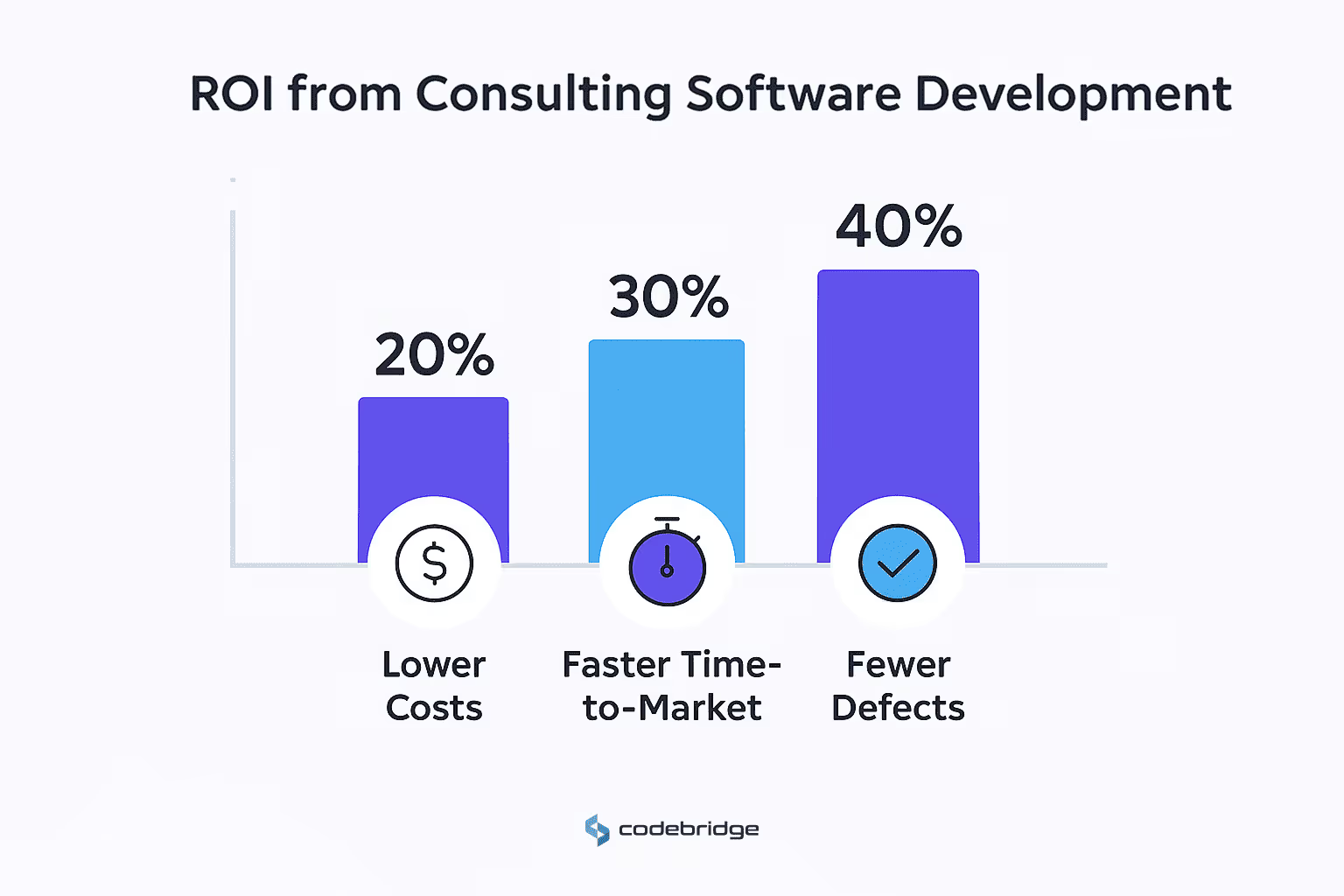
Specific ROI metrics include:
- Reduction in overall development costs.
- Acceleration of time-to-market.
- Decrease in post-launch defects.
Focusing on these metrics demonstrates the value of consulting services. For instance, a recent project with a fintech startup saw a 30% reduction in development costs and a 40% faster time-to-market after implementing recommendations from Codebridge's consultants.
Gaining a Competitive Edge Through Strategic Foresight
Consulting software development also provides strategic advantages. Consultants help businesses anticipate trends and adopt new technologies.
These advantages include:
- Technology foresight: preparing for emerging trends.
- Talent optimization: boosting team productivity.
Codebridge has been recognized as a top web development company, as evidenced by being named among the Top 100 Web Development Companies in USA.
A Vital Role in Software Ecosystems
Consultants provide technical leadership and informed decision arbitration in complex software ecosystems.
The Consultant's Toolkit: Leadership and Guidance
Consultants bring skills and expertise to provide leadership.
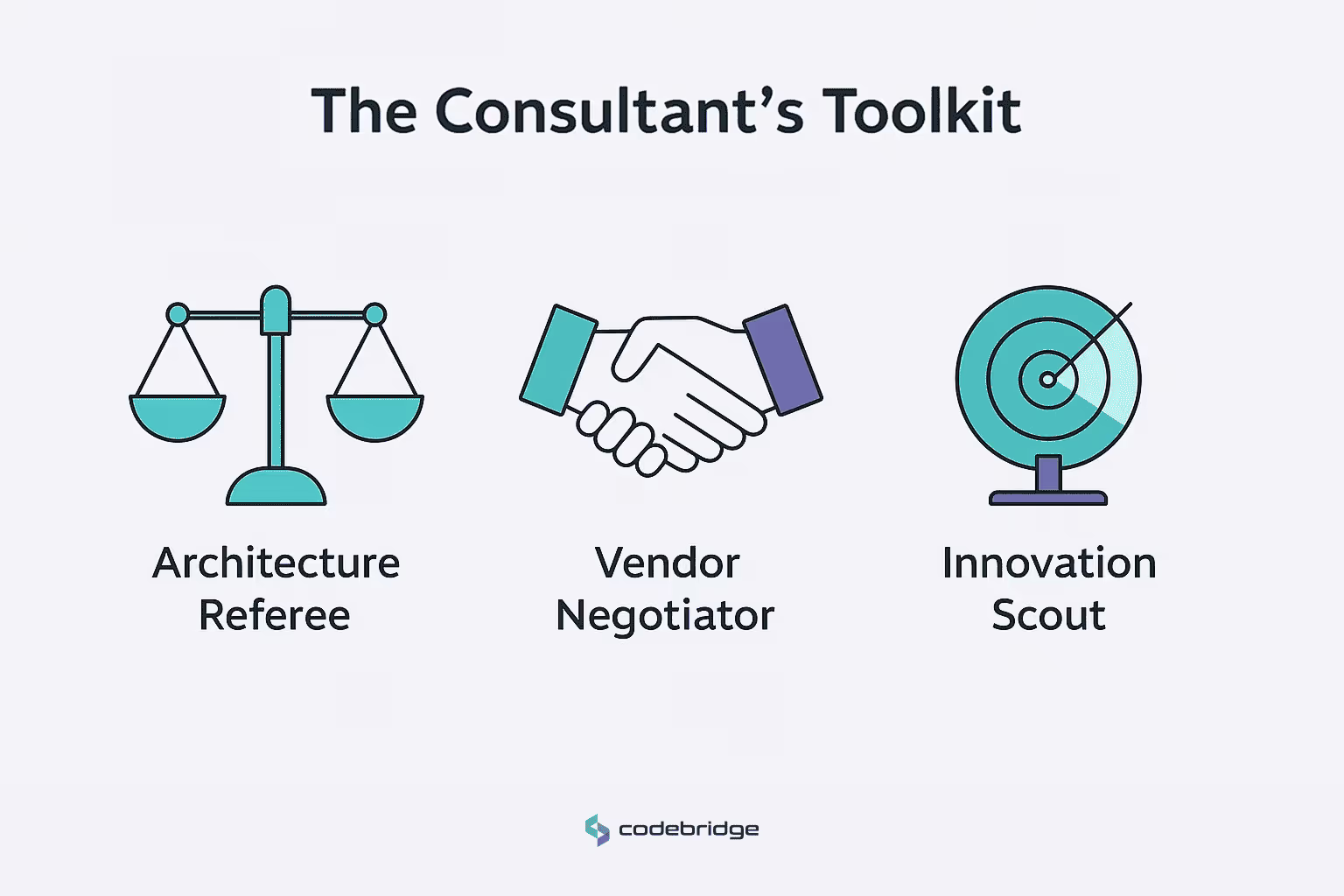
These skills include:
- Architecture referees: resolving conflicts and guiding architectural decisions.
- Vendor negotiators: optimizing SaaS/PaaS licensing costs.
- Innovation scouts: piloting promising technologies.
Leveraging these skills helps businesses make informed decisions.
Strategies for Continuous Improvement and Long-Term Success
Consultants help establish continuous improvement frameworks.
These frameworks include:
- KPI dashboards: tracking system performance.
- Retrospective rituals: iteratively refining processes.
- Tech debt repayment schedules: preventing system erosion.
Implementing these frameworks helps achieve long-term success.
Future Trends
The field is evolving, driven by new technologies and changing needs.
AI-Powered Consulting: The Next Frontier
One transformative trend is AI-augmented consulting, automating tasks and analyzing data.
Examples include:
- Requirements generation bots: streamlining user story creation.
- Architecture optimization algorithms: analyzing stack combinations.
- Risk prediction models: forecasting integration challenges.
Leveraging AI provides more efficient and data-driven services.
Sustainable Practices: Building a Greener Future
Another trend is the emphasis on sustainable software engineering.
Sustainable practices include:
- Carbon-aware coding: minimizing energy consumption.
- Green cloud migration: optimizing server utilization.
- Ethical AI audits: ensuring compliance.
Adopting these practices helps build a greener future.
Challenges in Consulting Software Development
Consulting software development presents challenges that businesses must address.
These challenges include:
- Communication barriers and collaboration strategies.
- Integrating consulting expertise with existing teams.
- Ensuring data security and confidentiality.
- Proactive cost management.
- Managing dependency on external consultants.
Addressing these challenges proactively maximizes the benefits of consulting.
Choosing the Best Consulting Software Development Partner
Choosing the right partner is crucial. Evaluate potential partners based on:
- Clearly defined project goals and requirements.
- Thorough research to identify potential partners.
- Evaluation of expertise, experience, and portfolio.
- Scrutiny of client references and reviews.
- Assessment of communication and cultural fit.
Consider firms like Codebridge, known for their expertise in custom software development and commitment to client success.
Future of Consulting Software Development
The future is bright, with opportunities for growth and innovation.
Key trends include:
- Increased specialization and niche services.
- Expansion of remote consulting.
- Integration of data-driven consulting.
- Focus on innovation and emerging technologies.
- Emphasis on sustainability and ethical practices.
Partnering in Consulting Software Development
Expert consulting in software development offers transformative benefits, enabling sustainable innovation and a competitive advantage. Strategic partnerships are essential for navigating the digital landscape and achieving success.
Ready to elevate your software development capabilities? Explore Codebridge's custom software development and book consultation.
FAQ
What is consulting software development and why is it important for businesses?
Consulting software development combines strategic technology guidance with hands-on engineering expertise. It helps businesses make informed decisions about architecture, features, tech stack, and processes—reducing risks, optimizing budgets, and speeding up product delivery.
How does a software development consultant support project planning?
Consultants analyze business goals, user needs, and existing systems to create a clear project roadmap. They define technical requirements, set priorities, estimate timelines, and choose the right technologies, ensuring the project starts with a strong foundation.
What are the benefits of hiring a consulting software development partner?
Benefits include access to senior-level expertise, improved decision-making, streamlined workflows, cost savings, and higher product quality. Consultants help companies avoid common pitfalls and ensure the final software solution aligns with long-term business objectives.
How do consulting services reduce risks in software development?
Consultants identify potential technical challenges, security concerns, and scalability issues early in the project. They implement best practices, conduct risk assessments, and provide guidance on mitigation strategies—preventing costly mistakes later in development.
What types of projects typically require software development consulting?
Projects involving digital transformation, system modernization, complex integrations, MVP development, large-scale architectures, or uncertain technology choices benefit most. Consulting ensures clarity, reduces complexity, and accelerates delivery for high-impact initiatives.
What should companies consider when choosing a consulting software development partner?
Businesses should look for proven experience, technical depth, strong communication, industry knowledge, and a collaborative approach. Reviewing case studies, client feedback, and methodology helps ensure the consultant can provide strategic insight and reliable execution.











Heading 1
Heading 2
Heading 3
Heading 4
Heading 5
Heading 6
Lorem ipsum dolor sit amet, consectetur adipiscing elit, sed do eiusmod tempor incididunt ut labore et dolore magna aliqua. Ut enim ad minim veniam, quis nostrud exercitation ullamco laboris nisi ut aliquip ex ea commodo consequat. Duis aute irure dolor in reprehenderit in voluptate velit esse cillum dolore eu fugiat nulla pariatur.
Block quote
Ordered list
- Item 1
- Item 2
- Item 3
Unordered list
- Item A
- Item B
- Item C
Bold text
Emphasis
Superscript
Subscript