Why 76% of Mobile Homebuyers Aren't Converting on Your App (And the 3 Fixes That Drive 300% More Leads)
Here's a stat that should make you pause. 76% of homebuyers[1] search for properties on mobile devices. Yet the average real estate website converts at just 4.7%[2]. That means for every 100 mobile users hitting your app, roughly 95 leave without becoming leads. Meghan, your Figma designs are ready. Your UX focus is spot on. But without the right conversion architecture, you're building a beautiful app that leaks leads.
Key Takeaways
Mobile homebuyers dominate at 76%[1] of all property searches, making mobile-first design non-negotiable for lead capture
Top performers like Zillow achieve conversion rates exceeding 5%[2] while the industry average lingers at 2%
CRM integration alone delivers a 41% increase[3] in lead conversions without adding new features
Fast-loading pages generate 30% higher[4] conversion rates than slow competitors
Most PropTech startups chase features. More listings. More filters. More tools. The assumption? Give agents and buyers everything, and conversions will follow. But the data tells a different story. HomeStack's custom app users discovered something counterintuitive. Simplifying UX and adding CRM integration outperformed feature-heavy competitors. Their clients saw lead conversion rates soar by 300%[1]. Not from flashy features. From removing friction and enabling smart follow-ups. Here's the kicker. Paid search, the channel most startups pour budget into, converts at just 1.5%[3]. Organic search? It hits 3.2%[3]. And phone interactions drive 38% of successful transactions[2]. Your app doesn't need more features. It needs smarter pathways to human connection.
What the Data Shows
The conversion gap in real estate is massive. Average websites convert at 4.7%[2]. But industry leaders like Zillow and Realtor.com consistently hit rates exceeding 5%[2]. That 2-3 percentage point difference? For a startup processing 10,000 monthly visitors, it means 200 to 300 extra leads. Every single month.
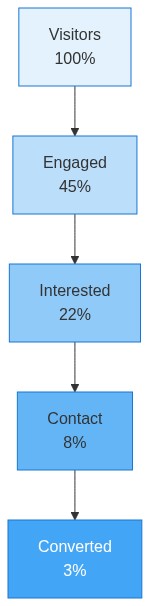
Real Estate / PropTech Conversion Funnel Speed matters more than most teams realize. Pages that load fast generate 30% higher conversion rates[4]. This isn't about shaving milliseconds for bragging rights. It's about keeping that 50% of homebuyers[3] browsing on smartphones from bouncing before your value proposition lands. The CRM effect deserves its own spotlight. Realtors using CRM systems see a 41% increase[3] in lead conversions. Why? Because speed-to-response wins deals. An app that captures leads but doesn't route them instantly to agents is leaving money on the table. Email follow-ups amplify everything. In real estate, email marketing delivers $40 ROI for every $1 spent[3]. Your app should be feeding automated nurture sequences, not just collecting contact forms that gather dust.
The 2026 Shift
Three trends will separate winners from everyone else in 2026. Smart teams are building for these now. AI-Powered Lead Scoring Goes Mobile. Forget basic lead forms. The next wave is AI that identifies high-intent buyers before they raise their hand. 54% of agents[1] already report AI tools improving lead quality. In 2026, mobile apps that surface "ready to buy" signals will convert at multiples of baseline rates. Custom apps like HomeStack and CRM-integrated platforms are already piloting this. Personalization Beyond "Hello [First Name]." Mobile experiences that feel personal, not just fast, will dominate. Think saved search behaviors that anticipate needs. Property recommendations that learn. The 76% of mobile homebuyers[1] expect app experiences as intuitive as consumer platforms they use daily. Zillow and Redfin-style personalization is becoming table stakes. Push Notification Intelligence. Generic push notifications annoy users. Smart ones drive action. The apps seeing 300% conversion lifts[1] pair push notifications with behavioral triggers. New listing in a saved neighborhood? Price drop on a favorited property? These contextual nudges convert.
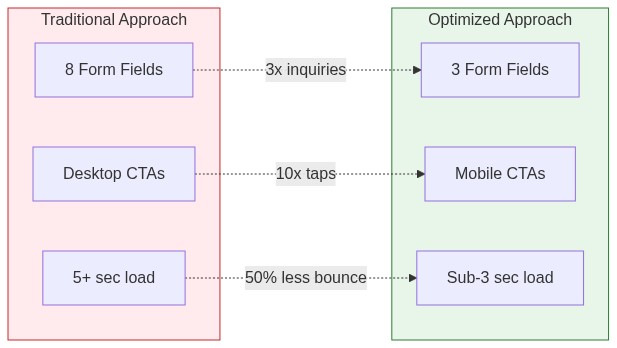
Real Estate / PropTech Before vs After Comparison
Practical Framework
Meghan, here's your action checklist for maximizing lead conversion as you move from Figma to build. Each item has a specific benchmark to hit.
Audit your page speed. Target under 3 seconds for initial load. Remember, fast pages drive 30% higher conversions[4]. Test on actual mobile devices, not just emulators.
Build CRM integration from day one. Don't bolt it on later. The 41% conversion lift[3] from CRM usage depends on instant lead routing. Pick a CRM your target agents already use.
Design for tap-to-call prominence. Phone interactions drive 38% of transactions[2]. Make agent contact one tap away on every property view.
Implement smart push notifications. Create triggers for price drops, new matches, and saved search updates. Benchmark: aim for push-driven sessions to convert 2x higher than organic opens.
Simplify your lead capture forms. Three fields maximum for initial capture. Name, email, phone. Every additional field drops completion rates. You can qualify leads after first contact.
Set up automated email sequences. Capture that $40 per $1 ROI[3] by triggering welcome sequences, property alerts, and re-engagement campaigns automatically.
Target a 5% conversion rate. The industry average is 2%[2]. Top performers like Zillow exceed 5%[2]. Set your baseline, measure weekly, and iterate ruthlessly on underperforming flows.
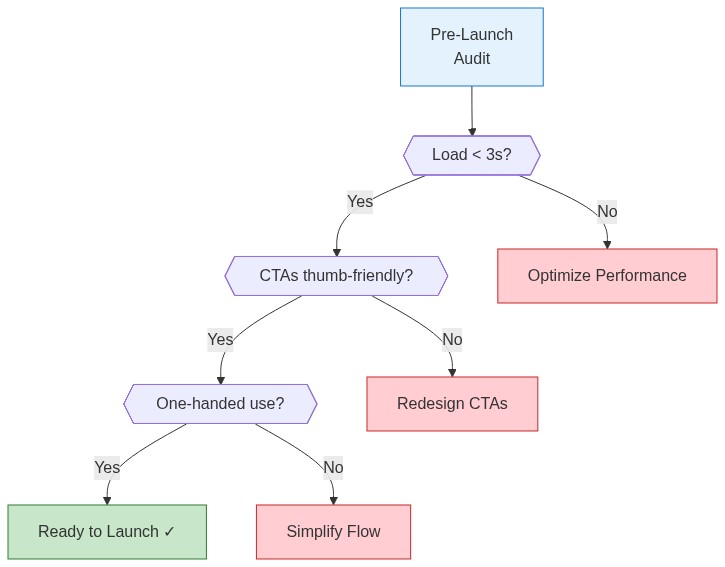
Pre-Launch Audit Checklist The bottom line? Your Figma designs set the stage. But conversion architecture determines whether agents and buyers actually become leads. Build for speed, simplicity, and smart follow-ups. That's how you turn 76% mobile traffic into a competitive advantage.
References
[1]HomeStack, Top 7 Tech Features Every Realtor Needs to Convert Leads, 2025
[2]Promodo, Real Estate Marketing Metrics and Benchmarks, 2025
[3]Amra and Elma, Top 20 Realtor Marketing Statistics, 2025
[4]Resimpli, 89+ Real Estate Marketing Statistics: Key Trends to Watch, 2025
Heading 1
Heading 2
Heading 3
Heading 4
Heading 5
Heading 6
Lorem ipsum dolor sit amet, consectetur adipiscing elit, sed do eiusmod tempor incididunt ut labore et dolore magna aliqua. Ut enim ad minim veniam, quis nostrud exercitation ullamco laboris nisi ut aliquip ex ea commodo consequat. Duis aute irure dolor in reprehenderit in voluptate velit esse cillum dolore eu fugiat nulla pariatur.
Cost-Effective IT Outsourcing Strategies for Businesses
Discover cost-effective IT outsourcing services for businesses. Learn how to enhance focus and access expert talent while reducing operational costs today!
Discover the best mobile app development company for your needs. Learn key traits and leading industry teams that can elevate your project and drive success.
Discover the top MVP development agencies to elevate your startup. Learn how partnering with a minimum viable product agencies can accelerate your success.
Discover the top mobile app development languages to choose the best coding language for your project. Learn more about native vs. cross-platform options!
Unlock growth with bespoke application development tailored to your business. Discover the benefits, processes, and competitive edge of creating custom software
Discover how to choose the right custom software partner for your business and understand the key benefits of bespoke software solutions tailored to your needs.
Avoid These 10 MVP Development Mistakes Like the Plague
Avoid the most dangerous MVP development mistakes. Learn the top pitfalls that derail startups and how to build a successful, validated product from day one.
Software Development Outsourcing Rates 2026: Costs and Trends
Explore 2026 software development outsourcing rates, emerging cost trends, regional price differences, and how AI-driven innovation is reshaping global pricing.
AI Business Solutions in 2026: How to Implement AI
Discover how AI business solutions in 2026 are transforming industries. Learn practical steps to implement AI, boost efficiency, and drive digital innovation.
Explore the future of cloud computing security in 2026. Learn expert insights on emerging threats, data protection trends, and best practices for defense.














.avif)



.avif)

.avif)