


Last quarter, a mid-sized travel publication killed their most profitable advertising partnership. The brand wanted editorial control over destination coverage,specifically, they wanted negative reviews of competitor resorts buried. The editorial team walked away from six figures in annual revenue. Three months later, their reader-funded commerce revenue had replaced 80% of what they'd lost.
This isn't an anomaly. It's the beginning of a structural shift in how travel media survives.
KEY TAKEAWAYS
Print isn't dead,it's 39.8% of magazine revenue, but the advertising model attached to it is increasingly compromised.
Shopify + Klaviyo integration creates owned revenue that doesn't require editorial concessions to brand partners.
The travel advertising market is growing at 9.1% CAGR, but that growth increasingly flows to platforms, not publishers.
Reader commerce (curated gear, experiences, memberships) converts editorial trust into sustainable revenue.
First-party data from Klaviyo becomes the new use in advertising negotiations,when you choose to have them.
The Advertising Dependency Problem Nobody Wants to Discuss
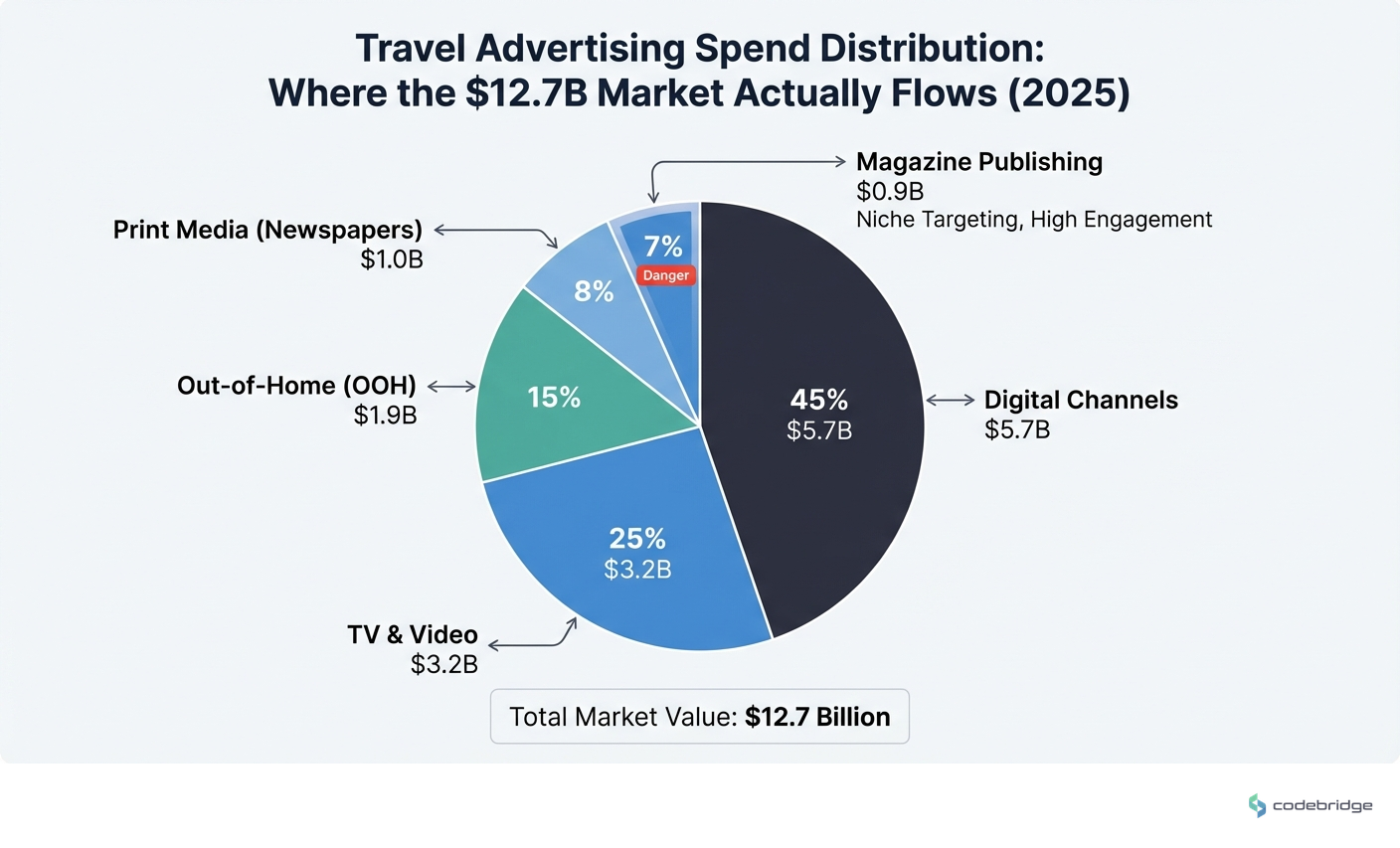
Here's what the market reports won't tell you directly: the travel advertising market hitting USD 12.7 billion in 2025 and projected to reach USD 30.6 billion by 2035 sounds like opportunity. But follow the money. Television still accounts for 41.7% of that spend because brands want visibility and trust-building at scale. Digital channels are accelerating, yes,but that acceleration benefits Google and Meta, not independent travel publications.
The magazine publishing market sits at USD 88.4 billion, and print's continued dominance sounds reassuring until you examine the advertiser relationships sustaining it. Tourism boards, hotel chains, cruise lines,they're not buying ads. They're buying influence. And the publications that resist find themselves watching competitors who don't resist capture the remaining ad budgets.
This creates an impossible choice: compromise your editorial credibility for short-term revenue, or maintain independence while watching your business model erode.
Why Commerce Changes the Power Dynamic

The publications quietly winning this transition aren't abandoning advertising entirely. They're building use. When 30% of your revenue comes from reader commerce,curated travel gear, booking affiliates you actually control, membership programs,you can walk away from the advertiser who wants to kill your negative review.
The goal isn't replacing advertising revenue. It's building enough independent revenue that advertising becomes optional,which paradoxically makes you more attractive to ethical advertisers.
Shopify's infrastructure handles the commerce complexity that would otherwise require a dedicated e-commerce team. Klaviyo's integration means your email list,the audience you've built through editorial trust,becomes a direct revenue channel. The combination matters because it's specifically designed for content-first businesses adding commerce, not the reverse.
The Pattern: What Successful Publications Do Differently
After examining how travel publications are navigating this transition, a clear pattern emerges. The ones building sustainable commerce revenue share three characteristics that distinguish them from publications simply adding a "Shop" link to their navigation.
1. They Treat Commerce as Editorial Extension, Not Bolt-On
The failing approach: hire someone to "monetize the audience" by adding affiliate links and a generic gear store. The working approach: editorial teams identify products they'd recommend anyway, then build commerce around genuine expertise.
A publication covering adventure travel doesn't sell random luggage. They sell the specific packing cubes their writers actually use, the headlamps that survived their Patagonia coverage, the portable water filters they tested across six countries. The commerce becomes content, and the content drives commerce.
2. They Build Email Sequences That Mirror Editorial Voice
Klaviyo's power isn't just automation,it's segmentation that respects how readers actually engage with travel content. Someone who reads every piece about budget Southeast Asia travel gets different product recommendations than someone consuming luxury European coverage.
The AI-powered personalization transforming publishing isn't about replacing editorial judgment. It's about ensuring the right readers see the right commerce opportunities at the right moment,after they've consumed the content that establishes trust.
3. They Use Commerce Data to Strengthen Advertising Negotiations
Here's the counter-intuitive insight: publications with strong commerce programs often get better advertising deals. Why? First-party purchase data. When you can tell an advertiser "our readers bought $200,000 in hiking gear last quarter, and here's the demographic breakdown," you're offering something Google can't,proof of purchase intent within a trusted editorial context.
The Framework: Building Commerce Without Compromising Editorial
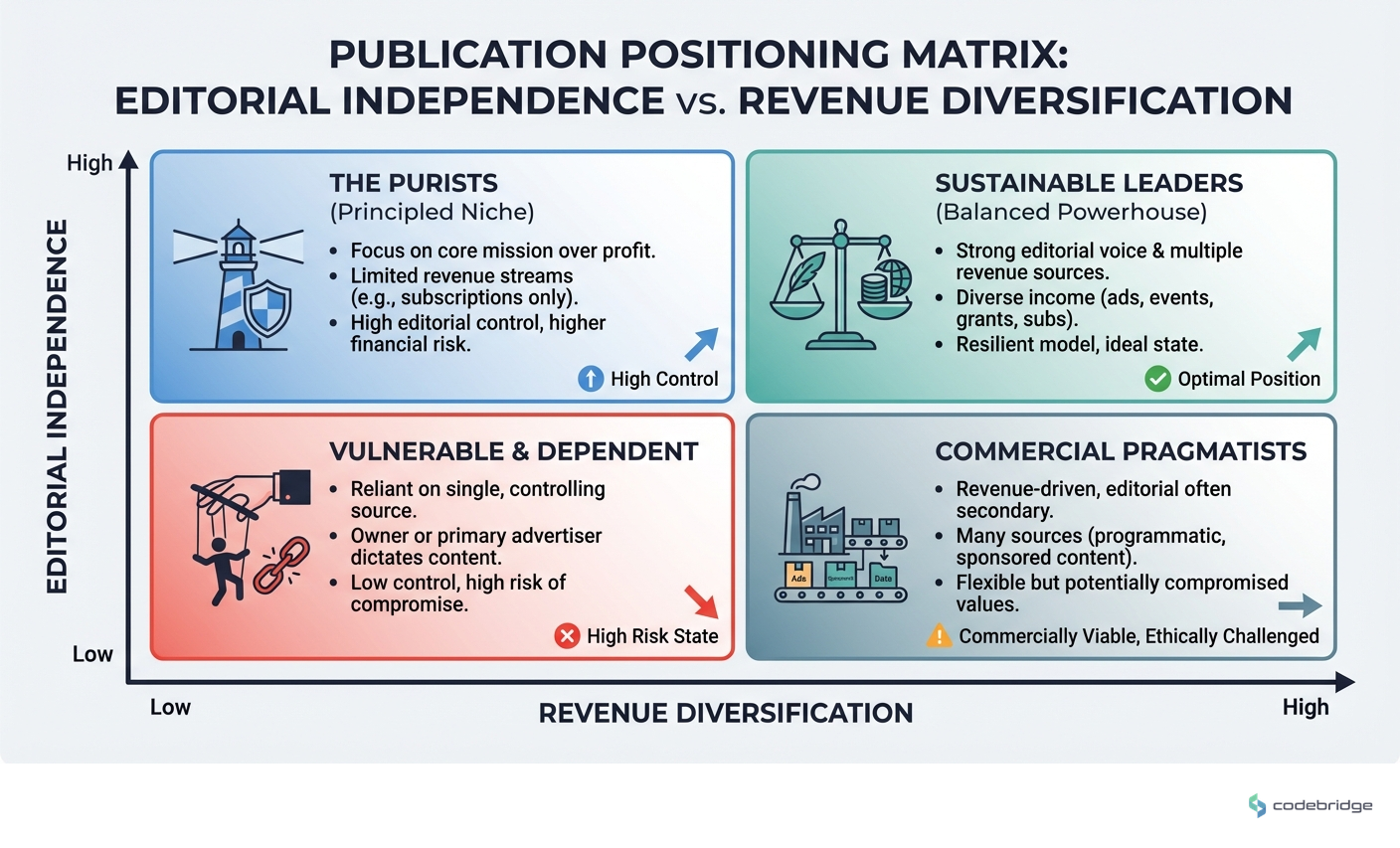
If you're considering this transition, here's the practical sequence that minimizes risk while building toward meaningful revenue diversification.
Step 1: Audit Your Editorial for Natural Commerce Opportunities
Pull your most-read content from the past year. Identify pieces where readers are clearly in purchase-consideration mode,gear guides, destination prep articles, "what to pack" content. These are your commerce entry points because the editorial intent already exists.
Step 2: Start With Curated Affiliate, Not Owned Inventory
Shopify's Collabs feature lets you build commerce pages around products you recommend without holding inventory. This tests reader appetite before you invest in branded merchandise or exclusive products. The digital publishing market's USD 2.93 billion increasingly flows to publishers who can demonstrate conversion, not just traffic.
Step 3: Build Klaviyo Flows That Respect Editorial Rhythm
Don't blast commerce emails to your entire list. Create segments based on content engagement, then build flows that introduce commerce naturally. A reader who just consumed your 3,000-word guide to traveling Japan should receive a curated gear email three days later,not a generic "shop now" message.
Step 4: Create Editorial-Commerce Feedback Loops
What sells informs what you cover. If readers are buying specific categories of gear, that's editorial signal. If certain destinations drive commerce engagement, that's commissioning guidance. The publications doing this well have broken down the wall between editorial and commerce teams,not to compromise editorial, but to ensure commerce serves editorial mission.
Step 5: Use Commerce use in Advertising Conversations
Once you have meaningful commerce revenue (aim for 20%+ of total revenue), you can renegotiate advertising relationships from strength. "We're happy to discuss a partnership, but editorial decisions remain independent" becomes credible when you can afford to walk away.
The acceleration of digital advertising channels means advertisers increasingly need publishers who can demonstrate engaged, purchase-ready audiences. Your commerce data becomes your negotiating use.
The Regional Shift You Can't Ignore
One more pattern worth noting: the slower growth in mature U.S. travel markets as APAC accelerates creates both challenge and opportunity. Publications serving North American audiences face advertising pressure as brand budgets shift. But publications that can demonstrate engaged audiences in emerging travel markets,and commerce data proving that engagement,position themselves for the next wave of advertiser interest.
This isn't about abandoning your current audience. It's about recognizing that commerce infrastructure scales across markets more easily than advertising relationships do.
What This Means for Your Editorial Independence
The publication that walked away from six figures in compromised advertising revenue? They didn't do it because they're idealists. They did it because they'd spent 18 months building commerce infrastructure that made the decision financially survivable.
Editorial independence isn't a luxury. It's the asset that makes your commerce credible and your advertising relationships sustainable. The Shopify + Klaviyo stack isn't magic,it's infrastructure that lets you monetize that asset directly, rather than selling it to the highest bidder.
The travel advertising market will keep growing. The question is whether that growth flows to publishers who've maintained reader trust, or to platforms that have simply captured attention. Building commerce capability now is how you ensure you're in the first category when the market fully shifts.
Evaluating commerce infrastructure for your publication?
Talk to our team about implementation approaches that protect editorial independence.
Diagnostic Checklist: Is Your Publication Ready for Commerce Diversification?
More than 60% of your revenue comes from advertising relationships that include editorial expectations
You've declined or compromised on editorial decisions due to advertiser pressure in the past 12 months
Your email list exceeds 25,000 subscribers but generates minimal direct revenue
Gear guides, packing lists, or "what to bring" content rank among your top-performing articles
You have no first-party purchase data to share with potential advertising partners
Your editorial team has product recommendations they make informally but don't monetize
Reader surveys indicate willingness to purchase curated products from trusted publications
REFERENCES



.avif)



.avif)

.avif)