Mobile Real Estate Apps Convert 51% Worse Than Desktop. Here's How to Fix It.
Mobile converts at 2.49%[1]. Desktop hits 5.06%. That's not a gap. It's a problem that's costing you leads every single day. And here's what makes this painful, Meghan. You've already invested in Figma designs. Your UX focus is solid. But without the right conversion architecture, you're building a beautiful app that underperforms. The good news? Companies like HomeStack users have seen up to 300% increases[2] in lead conversion after fixing these exact issues.
Key Takeaways
76% of homebuyers[2] use mobile devices during their property search, making your app their first impression
Most PropTech startups obsess over features. They pack their apps with listing filters, map views, and notification systems. But they ignore the conversion architecture underneath. Your Figma designs might look stunning. They might test well in user interviews. But beautiful UX without conversion optimization is like a showroom with no sales team. Zillow didn't become a benchmark leader by accident. They built their mobile and web experience around one goal: removing friction from the lead capture process. The result? Their CVR exceeds 5%[3] while competitors struggle to hit 2%. That's not a design difference. It's a conversion engineering difference. Here's the kicker. The mobile conversion gap exists because most apps copy desktop workflows onto smaller screens. They shrink forms instead of reimagining them. They add taps instead of removing them. Your real estate agents don't need another pretty app. They need an app that turns browsers into booked appointments.
What the Data Shows
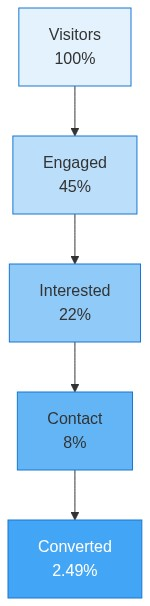
The numbers paint a clear picture of where mobile real estate apps fail. Mobile conversion rates sit at 2.49%[1] while desktop achieves 5.06%. That's a 51% performance gap you're leaving on the table. Every agent using your app feels this gap in their pipeline. Real Estate / PropTech Conversion Funnel The average real estate website converts at 4.7%[3]. Top performers exceed 5%. But mobile apps consistently underperform these benchmarks. Why? Speed and friction. Pages that load fast drive 30% higher conversions[5]. Every second of delay costs you leads. What about acquisition channels? Organic search converts at 3.2%[4]. Paid search converts at just 1.5%. This flips the common assumption that paid advertising outperforms organic growth. For your app, this means ASO and content integration matter more than ad spend. The agents who win use technology differently. Realtors with CRM systems see 41% higher lead conversions[4]. Email marketing delivers $40 ROI per $1 spent[4] in real estate. Your app needs to enable these behaviors, not just display listings.
The 2026 Shift
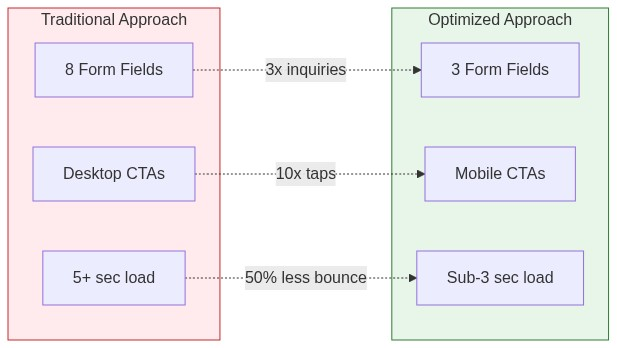
Three trends will reshape mobile real estate conversion in the next 12 months. Early movers will capture disproportionate market share while competitors play catch-up. Trend 1: Session replay analytics become standard. Fullstory-integrated PropTech apps are already using replay data to identify and eliminate friction points. You can watch exactly where users abandon your lead forms. This isn't A/B testing. It's forensic conversion analysis. The projected impact is higher conversion rates through systematic friction removal. Trend 2: Push notification strategies mature. With 76% of homebuyers[2] on mobile, push notifications become your primary re-engagement channel. But 2026 will separate spammers from strategists. HomeStack realtors are already seeing dramatic conversion boosts through behavioral push triggers rather than broadcast messaging. Trend 3: AI-driven lead scoring goes native. The 41% CRM conversion gains[4] from 2025 will extend directly into mobile apps. Zillow and Redfin-inspired tools are building lead scoring into the app experience itself. Agents will see qualified leads highlighted in real-time. Potential impact? That 300% conversion uplift[2] that HomeStack users achieved becomes the new baseline. Real Estate / PropTech Before vs After Comparison
Practical Framework
So what should you actually do with your Figma designs before development? Here's your conversion optimization checklist.
Audit your form fields. Every field beyond name, email, and phone costs you conversions. Benchmark: Top performers use 3 fields maximum for initial lead capture.
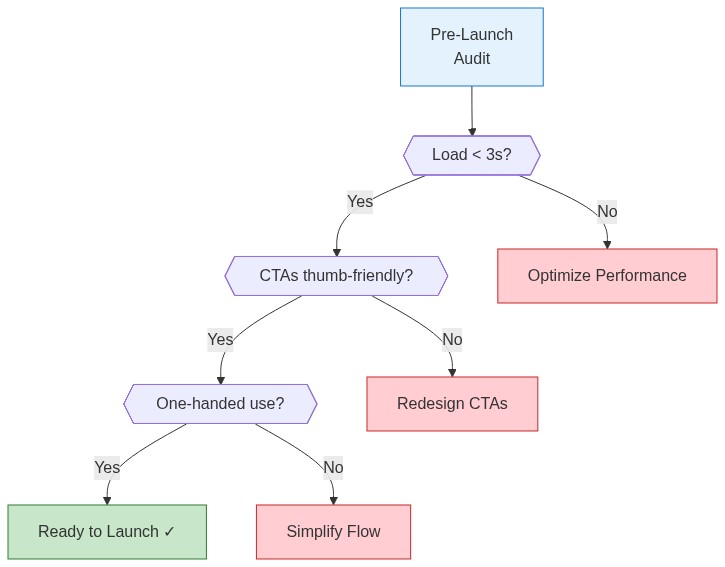
Set a speed budget. Your app's initial load should complete in under 2 seconds. Pages loading fast drive 30% higher conversions[5]. Test on mid-range Android devices, not just the latest iPhone.
Build CRM integration from day one. Don't bolt it on later. That 41% conversion increase[4] comes from seamless data flow. Make it native to your architecture.
Design thumb-friendly CTAs. Your primary action button should be reachable without repositioning the phone. Target: 48px minimum height, bottom third of screen placement.
Implement behavioral push triggers. New listing in saved search area? Push within 5 minutes. Price drop on favorited property? Immediate notification. Benchmark: 3 to 5 contextual pushes per week maximum.
Create agent-specific dashboards. Show conversion metrics your agents actually care about: leads this week, response time, and appointment set rate. Target: All key metrics visible without scrolling.
Plan for session replay integration. Add analytics hooks in your codebase now. You'll need to identify where users abandon the conversion funnel. Recommended tools: Fullstory, Hotjar, or LogRocket.
Pre-Launch Audit Checklist The bottom line? Your Figma designs are your starting point, not your finish line. Every design decision should answer one question: Does this make it easier or harder for a buyer to become a lead? Build with that filter and you'll join the 5%+ conversion club[3] that Zillow and Realtor.com already occupy.
[2]HomeStack, Top 7 Tech Features Every Realtor Needs to Convert Leads, 2025
[3]Promodo, Real Estate Marketing Metrics and Benchmarks, 2025
[4]Amra & Elma, Top 20 Realtor Marketing Statistics, 2025
[5]Resimpli, 89+ Real Estate Marketing Statistics: Key Trends to Watch, 2025
Heading 1
Heading 2
Heading 3
Heading 4
Heading 5
Heading 6
Lorem ipsum dolor sit amet, consectetur adipiscing elit, sed do eiusmod tempor incididunt ut labore et dolore magna aliqua. Ut enim ad minim veniam, quis nostrud exercitation ullamco laboris nisi ut aliquip ex ea commodo consequat. Duis aute irure dolor in reprehenderit in voluptate velit esse cillum dolore eu fugiat nulla pariatur.
Cost-Effective IT Outsourcing Strategies for Businesses
Discover cost-effective IT outsourcing services for businesses. Learn how to enhance focus and access expert talent while reducing operational costs today!
Discover the best mobile app development company for your needs. Learn key traits and leading industry teams that can elevate your project and drive success.
Discover the top MVP development agencies to elevate your startup. Learn how partnering with a minimum viable product agencies can accelerate your success.
Discover the top mobile app development languages to choose the best coding language for your project. Learn more about native vs. cross-platform options!
Unlock growth with bespoke application development tailored to your business. Discover the benefits, processes, and competitive edge of creating custom software
Discover how to choose the right custom software partner for your business and understand the key benefits of bespoke software solutions tailored to your needs.
Avoid These 10 MVP Development Mistakes Like the Plague
Avoid the most dangerous MVP development mistakes. Learn the top pitfalls that derail startups and how to build a successful, validated product from day one.
Software Development Outsourcing Rates 2026: Costs and Trends
Explore 2026 software development outsourcing rates, emerging cost trends, regional price differences, and how AI-driven innovation is reshaping global pricing.
AI Business Solutions in 2026: How to Implement AI
Discover how AI business solutions in 2026 are transforming industries. Learn practical steps to implement AI, boost efficiency, and drive digital innovation.
Explore the future of cloud computing security in 2026. Learn expert insights on emerging threats, data protection trends, and best practices for defense.













.avif)



.avif)

.avif)