

Mobile Apps Are Reshaping Beauty Salons: 7 Data-Backed Strategies for 2026
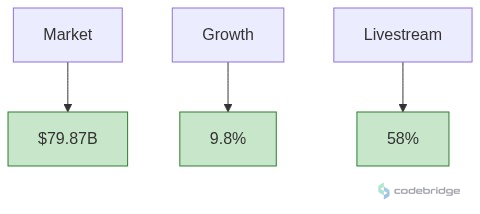
Here's a stat that should stop every salon owner in their tracks: 40% of clients[1] don't leave because of price. They leave because of service quality. And in 2026, "service quality" increasingly means digital experience. The beauty tech market is racing toward $79.87 billion[2] this year alone. Salons without mobile apps aren't just behind. They're invisible to half their potential customers.
Key Takeaways
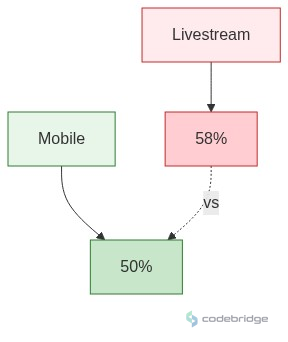
- 50% of salon customers[1] now book appointments through mobile apps. No app means losing half your bookings to competitors who have one.
- The spa and salon software market hits $1.01 billion in 2026[3] and will reach $1.69 billion by 2030. Early adopters capture the growth.
- 80% of salons[1] cite client retention as their top challenge. Mobile loyalty programs directly address this pain point.
- Beauty salon mobile apps added 22 million users[3] recently, generating $54 billion in revenue. The audience is ready.
- 58% of consumers[2] are open to shopping via livestreams. Interactive features in salon apps create new revenue channels.
The Problem Most Miss
Most salon owners think customer acquisition is their biggest expense. It's not. Customer replacement is. When 40% of clients switch[1] due to service dissatisfaction, businesses are paying acquisition costs twice. First to get the customer. Then to replace them. Mobile apps flip this equation by making every touchpoint feel personalized.
Ulta Beauty figured this out early. Their mobile app doesn't just handle bookings. It delivers personalized product recommendations, loyalty rewards, and appointment reminders. The result? A 9% year-over-year increase[2] in app downloads as of early 2025. That's not growth. That's compounding customer relationships.
Here's the kicker for hair coloring and permanent makeup specialists. These services require repeat visits by design. Color maintenance, touch-ups, seasonal changes. An app with automated reminders turns one-time customers into recurring revenue. Without it, businesses rely on customers remembering to rebook. Spoiler: they don't.
What the Data Shows
The numbers tell a clear story. The global salon service market stands at $232.6 billion in 2026[4] and is projected to hit $429.8 billion by 2035. That's a 6.5% CAGR. But the real growth isn't in services themselves. It's in how they're delivered. Digital-first salons are capturing disproportionate market share.
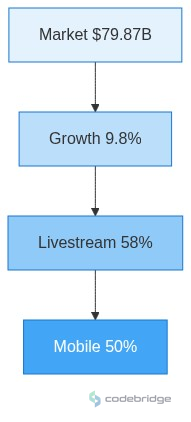
Consider the booking journey. Half of all salon customers[1] prefer mobile booking. For salons specializing in complex services like hair coloring, this matters even more. Customers want to browse stylist portfolios, check availability, and book in 60 seconds. Phone calls feel like friction. Friction kills conversions.
While this data comes primarily from mature Western markets, these patterns are even more pronounced in emerging markets like Eastern Europe. Smartphone penetration is high. Competition for digital-savvy customers is lower. Salons that launch mobile apps now in Belarus and neighboring countries face less noise and more opportunity than their Western counterparts.
The beauty camera apps segment reveals another trend. Growing from $3.78 billion to $4.32 billion[2] at a 14.2% CAGR, virtual try-on features are becoming expected. For permanent makeup clients especially, seeing a preview of their look builds confidence. Confidence drives bookings.
The 2026 Shift
Three trends are reshaping salon mobile strategy this year. Businesses that adapt early will own their local markets.
Trend 1: Subscription models take over. StyleSeat and Glamsquad pioneered subscription-based beauty services[5] through their apps. Monthly packages for color touch-ups or maintenance treatments create predictable revenue. For salons, this means lower CAC spread across multiple visits. For customers, it means savings and convenience. Both sides win.
Trend 2: AI-driven virtual consultations. The technology is finally ready. Ulta Beauty's app now offers personalized shade matching and style recommendations through AI. Salon apps can integrate similar features for color consultations. Customers upload a photo. The app suggests hair colors or permanent makeup options. This isn't gimmicky. It's reducing no-shows by setting realistic expectations before the appointment.
Trend 3: Salon booking software explodes. The market jumped from $518 million to $1.06 billion[6] in just one year. That's not gradual adoption. That's an industry transformation. Salons without booking software will feel like businesses without websites felt in 2010. Technically operational. Practically irrelevant.
Practical Framework
Here's a seven-step roadmap for salon chains launching mobile apps in 2026. Each step includes specific benchmarks to track progress.
- Audit your current booking abandonment rate. Benchmark: If more than 30% of website visitors leave without booking, mobile app convenience will capture those lost customers. Install analytics before launch to measure lift.
- Build a loyalty program with clear tier benefits. Benchmark: Aim for 40% of customers enrolled within six months. Ulta's model shows 9% download growth[2] correlates with strong loyalty features. Tie points to repeat visits, not just spending.
- Implement automated rebooking reminders. Benchmark: Hair color maintenance averages 4 to 6 weeks. Set reminders at week 3. Target 25% rebooking rate from reminder push notifications alone.
- Add a portfolio gallery for each stylist. Benchmark: Services like hair coloring and permanent makeup are visual. Salons with before/after galleries see higher conversion rates. Aim for 20 images per specialist minimum.
- Integrate local payment systems. For Eastern European markets, ensure card payments, bank transfers, and popular local options work seamlessly. Benchmark: Checkout completion should exceed 85%.
- Launch a referral program in the app. Benchmark: Word-of-mouth drives salon growth. Offer 15% off next service for successful referrals. Track referral source for each new customer. Target 20% of new customers from referrals within year one.
- Test subscription packages for maintenance services. Benchmark: Start with one subscription tier for color touch-ups. Price at 15% discount versus pay-per-visit. Goal: 10% of repeat customers converted to subscription within six months.
References
- WifiTalents, Salon Industry Statistics: Reports, 2026
- FreeYourself, Beauty App Usage Growth Statistics for 2025, 2026
- NimbleAppGenie, Beauty Salon Statistics, 2026
- Future Market Insights, Salon Service Market Size and Forecast 2025 to 2035, 2026
- SendWork Blog, Mobile Beauty Trends Innovations and Services, 2026
- Global Growth Insights, Salon Booking Software Market, 2026
Heading 1
Heading 2
Heading 3
Heading 4
Heading 5
Heading 6
Lorem ipsum dolor sit amet, consectetur adipiscing elit, sed do eiusmod tempor incididunt ut labore et dolore magna aliqua. Ut enim ad minim veniam, quis nostrud exercitation ullamco laboris nisi ut aliquip ex ea commodo consequat. Duis aute irure dolor in reprehenderit in voluptate velit esse cillum dolore eu fugiat nulla pariatur.
Block quote
Ordered list
- Item 1
- Item 2
- Item 3
Unordered list
- Item A
- Item B
- Item C
Bold text
Emphasis
Superscript
Subscript








.avif)


.avif)

.avif)