

80% of Salons Struggle With Retention: How Mobile Apps Are Changing the Game in 2026
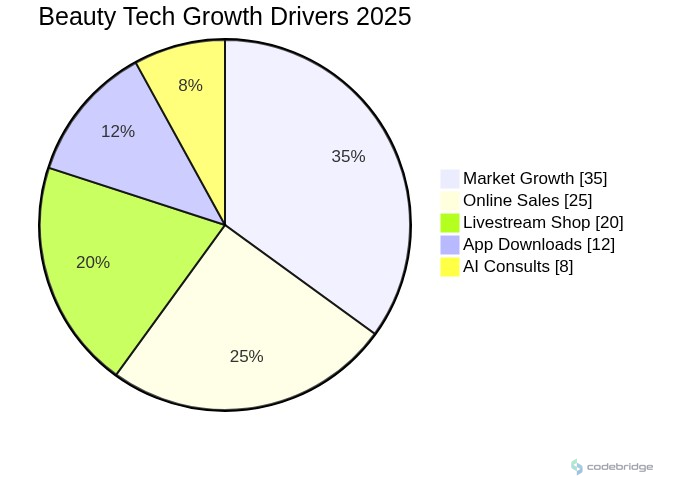
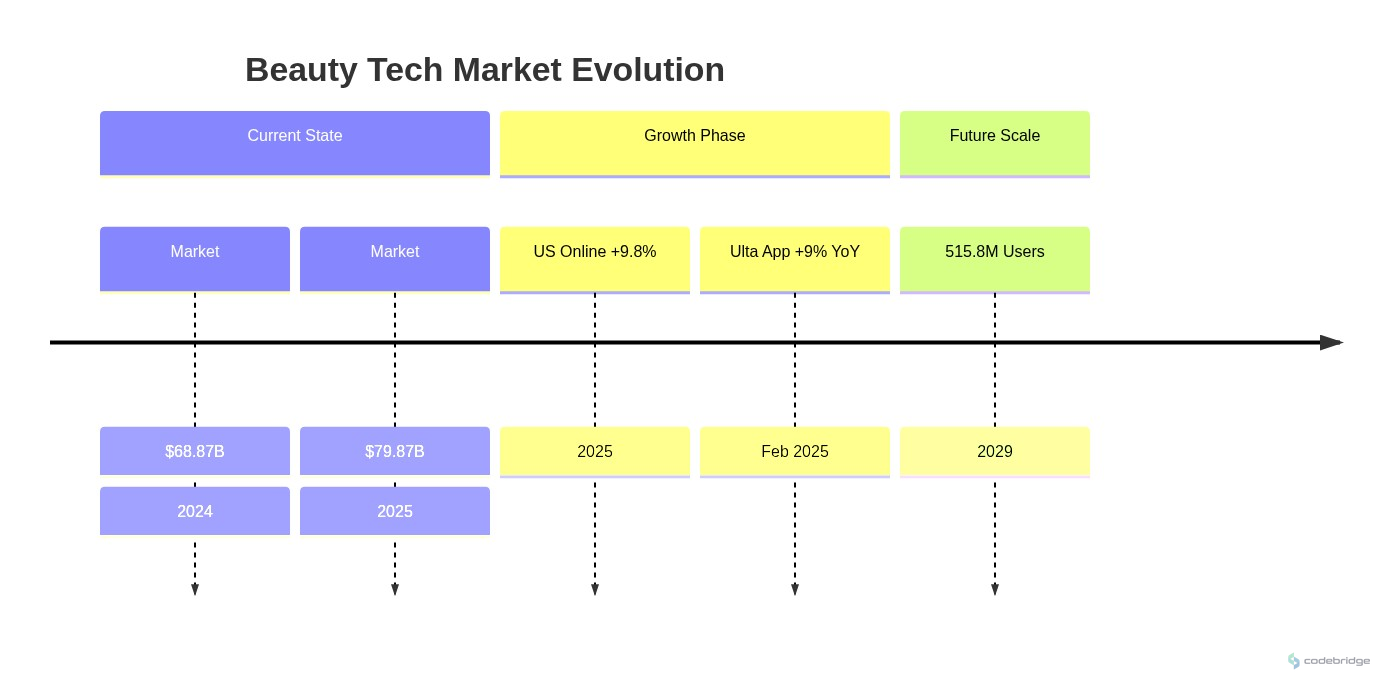
Here's a stat that should stop every salon owner in their tracks. 80% of salons[1] report client retention as their primary business challenge. Not finding new clients. Keeping the ones they already have. In an industry projected to hit $79.87 billion[2] globally by the end of 2025, most businesses are bleeding customers while chasing expensive new ones.
The solution isn't more advertising. It's smarter technology. And in 2026, that means a well-designed mobile app.
Key Takeaways
- 50% of salon customers[1] already use mobile apps to book appointments, making digital booking table stakes
- The beauty salon mobile app industry added 22 million users[3] and generated $54 billion in revenue
- Spa and salon software market will grow from $1.01 billion to $1.69 billion[3] by 2030 at 10.9% CAGR
- Beauty tech users are projected to reach 515.8 million[2] by 2029
- 58% of consumers[2] are open to shopping via livestreams, signaling demand for interactive app features
The Problem Most Miss
There's a common belief in the salon industry: acquisition is everything. Spend more on ads. Run more promotions. Get more first-time visitors through the door. But here's the kicker. The data tells a completely different story.
Retention, not acquisition, determines long-term profitability. Yet most salons pour resources into finding new clients while existing ones quietly disappear. The math doesn't work. Customer acquisition cost (CAC) in beauty services keeps climbing. Meanwhile, a loyal client who books every 6 weeks for hair coloring or touch-ups is worth 10 to 20 times more than a one-time visitor.
Ulta Beauty figured this out. Their enhanced mobile app strategy delivered a 9% year-over-year increase[2] in app downloads as of February 2025. They didn't just build a booking tool. They built a relationship platform with personalized advice and targeted engagement. The result? Customers who stick around and spend more. While data comes primarily from mature markets like the US, these patterns are even more pronounced in emerging markets like Eastern Europe and Belarus, where digital adoption is accelerating rapidly and early movers gain outsized advantages.
What the Data Shows
Mobile isn't optional anymore. It's where your customers live. Half of all salon bookings now happen through apps. That 50% figure[1] represents a fundamental shift in how people interact with beauty businesses. If a salon doesn't offer app-based booking, it's invisible to half its potential market.
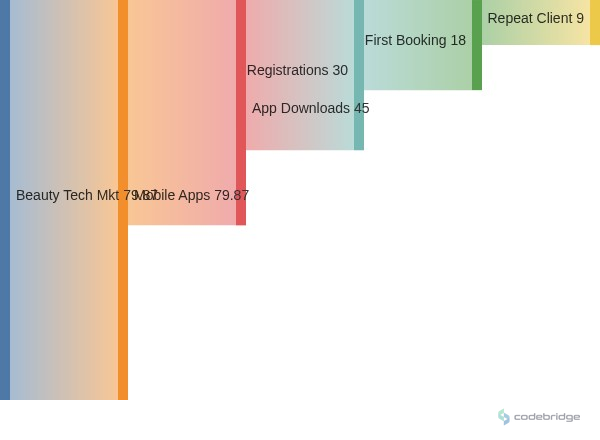
The numbers get more interesting when you look at growth trajectories. The salon booking software market nearly doubled from $518 million in 2024 to $1.057 billion[4] in 2025. That momentum continues into 2026 with projected 6.7% CAGR through 2035. Salons investing in mobile infrastructure now aren't chasing a trend. They're building on proven demand.
StyleSeat demonstrates what's possible when booking meets smart technology. Their platform streamlined appointments for mobile beauty professionals while adding reviews and credibility features. The result? Service providers who build loyal followings through digital-first relationships. Similarly, Glamsquad's on-demand model shows how apps drive demand for flexible, location-based treatments.
But smaller salons shouldn't assume this technology is only for big players. Budget constraints are real. The surprise? Apps boost retention for smaller operations despite limited resources. A simple loyalty program through a mobile app can transform a struggling salon's economics by keeping existing clients engaged between visits.
The 2026 Shift
Three trends will reshape salon technology this year. Understanding them isn't optional for businesses that want to stay competitive.
1. Subscription-based beauty services go mainstream. Consumer preference for recurring convenience models exploded in 2025. Now in 2026, salons offering membership tiers through apps will capture consistent revenue streams. Think monthly packages for color touch-ups or quarterly permanent makeup maintenance. The subscription model reduces CAC to near zero for repeat visits and creates predictable cash flow.
2. AI-driven virtual consultations become standard. Real-time personalization is now viable at scale. Apps with AR try-on features for hair color or makeup previews don't just entertain. They convert browsers into bookers. Clients who visualize results before booking show up with clearer expectations and higher satisfaction rates.
3. On-demand mobile services accelerate. The post-2025 shift toward home-based treatments isn't slowing down. Apps that offer both in-salon booking and at-home service options will capture clients who want flexibility. This hybrid approach works especially well for permanent makeup touch-ups and specialized color services.
Practical Framework
So what should salon businesses actually do? Here's a seven-step framework with specific benchmarks.
- Implement automated booking reminders. Target a 15% reduction in no-shows within 90 days. Most salon apps see this improvement simply by adding 24-hour and 2-hour reminder push notifications.
- Launch a points-based loyalty program. Aim for 40% of existing clients enrolled within 6 months. Every 10 visits should trigger a meaningful reward. Think free add-on services rather than discounts that erode margins.
- Add personalized product recommendations. Track services history and push relevant retail products. Target 20% of app users making at least one product purchase per quarter.
- Create rebooking prompts at checkout. Before a client leaves, the app should prompt next-appointment scheduling based on service type. Hair coloring clients get 4-6 week suggestions. Permanent makeup clients see 12-18 month touch-up reminders.
- Build an in-app review system. Satisfied clients should have a one-tap path to leaving feedback. Target 25% of completed appointments generating reviews within 48 hours.
- Segment push notifications by service history. Color clients get different messages than styling clients. Benchmark: 3-5% tap-through rate on promotional notifications versus industry average of 1-2%.
- Track and optimize cost per retained client. Measure monthly. The goal is getting this metric below 30% of your cost per new client acquisition within 12 months of app launch.
References
- WifiTalents, Salon Industry Statistics: Reports, 2025
- FreeYourself, Beauty App Usage Growth Statistics, 2025
- NimbleAppGenie, Beauty Salon Statistics, 2026
- Global Growth Insights, Salon Booking Software Market Report, 2025
- SendWork, Mobile Beauty Trends: Innovations and Opportunities, 2025
- BE-DEV, Beauty Apps: How Mobile Apps Are Revolutionizing the Industry, 2025
Heading 1
Heading 2
Heading 3
Heading 4
Heading 5
Heading 6
Lorem ipsum dolor sit amet, consectetur adipiscing elit, sed do eiusmod tempor incididunt ut labore et dolore magna aliqua. Ut enim ad minim veniam, quis nostrud exercitation ullamco laboris nisi ut aliquip ex ea commodo consequat. Duis aute irure dolor in reprehenderit in voluptate velit esse cillum dolore eu fugiat nulla pariatur.
Block quote
Ordered list
- Item 1
- Item 2
- Item 3
Unordered list
- Item A
- Item B
- Item C
Bold text
Emphasis
Superscript
Subscript








.avif)


.avif)

.avif)