76% of Homebuyers Search on Mobile, But Only 2.49% Convert: How to Fix Your Real Estate App
Here's a number that should stop you cold. 76% of homebuyers[1] use their phones to search for properties. Yet mobile apps convert at just 2.49%[2]. That's a massive leak in your funnel, Meghan. Your Figma designs look great. But if they're not built for conversion, you're leaving leads on the table. The good news? Top performers like Zillow crack 5% conversion rates[3]. The gap between average and exceptional isn't luck. It's strategy.
Key Takeaways
Mobile dominates search with 76% of buyers[1] using phones, but conversion lags desktop by half
Top real estate platforms achieve CVR above 5%[3] while the industry average sits at just 2%
CRM integration alone drives a 41% increase[4] in lead conversions for realtors
Organic search converts at 3.2%[4] compared to paid search at 1.5%, flipping common assumptions
Everyone obsesses over getting traffic. Download numbers. Session counts. But here's the kicker: traffic without conversion is just expensive noise. Your real estate app could have beautiful property cards and smooth animations. None of that matters if users bounce before contacting an agent. The real problem isn't attracting buyers. It's capturing intent at the exact moment they're ready to act. HomeStack's custom app users[6] discovered this when they integrated CRM and buyer analytics directly into their mobile experience. The result? Lead conversion rates jumped by up to 300%. They didn't redesign everything. They just made it stupidly easy to take the next step. Most apps treat lead capture as an afterthought. A contact form buried three taps deep. A phone number that requires copy-pasting. Meanwhile, your buyer found a property they love at 11 PM on their couch. By morning, they've moved on. Your UX focus is smart. But UX for conversion requires different thinking than UX for browsing.
What the Data Shows
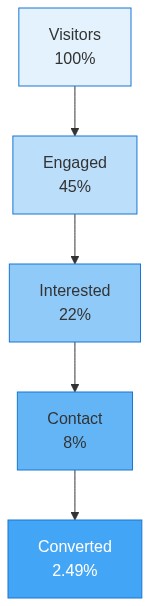
Let's break down what's actually happening in PropTech conversion right now. The average real estate website converts at 4.7%[3]. Top performers push past 5%. But mobile apps? They're stuck at 2.49%[2]. Desktop converts at 5.06%. That's more than double.
Real Estate / PropTech Conversion Funnel Why the gap? Mobile sessions are shorter. Distractions are constant. Typing is painful. And most apps don't account for these realities. They shrink desktop experiences instead of rethinking them entirely. Your agents need leads that are warm and ready. Your buyers need frictionless paths to connect. Here's what separates Zillow and Realtor.com from everyone else. They've optimized for mobile-first behavior, not mobile-friendly layouts. Both platforms achieve conversion rates exceeding 5%[3]. That's 2.5x the industry average. They do it through speed, personalization, and dead-simple lead capture. One stat should guide your development decisions. Fast-loading pages drive 30% higher conversions[5] in real estate. Not slightly higher. Thirty percent. Every second of load time costs you leads. Your Figma prototype might look perfect, but if it's image-heavy without optimization, you're already behind.
The 2026 Shift
Three trends will separate winners from everyone else in PropTech this year. And they all connect to your current project. Trend 1: Session Replay and Behavioral Analytics Guessing why users drop off is over. Apps integrating tools like Fullstory now watch exactly where friction happens. Personalized mobile experiences through analytics[7] are replacing generic flows. Early adopters are boosting conversions by identifying and fixing specific abandonment points. For your app, this means building analytics hooks into your MVP from day one. Not bolting them on later. Trend 2: Push Notifications That Actually ConvertCustom real estate apps with smart notifications[1] are cutting buyer search time by 60%. The key word is "smart." Not spam. Notifications triggered by saved search matches, price drops, or open house timing. HomeStack realtors using this approach saw that 300% conversion lift mentioned earlier. Generic "check out new listings" pushes get muted. Contextual, timely alerts get tapped.
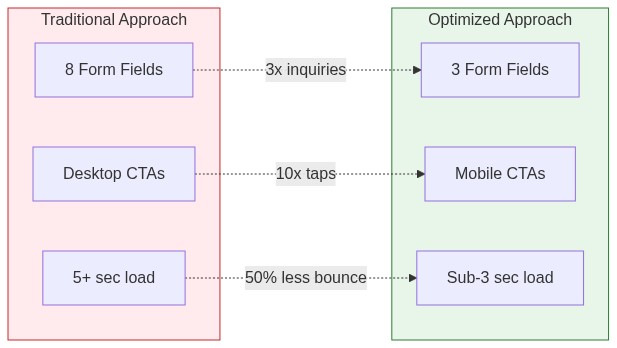
Real Estate / PropTech Before vs After ComparisonTrend 3: AI-Driven Lead Scoring and Routing CRM integration already delivers a 41% conversion increase[4]. In 2026, that's table stakes. The edge comes from AI that scores lead quality and routes hot prospects to agents instantly. Apps inspired by Zillow and Redfin are automating this. Cold leads get nurture sequences. Hot leads get immediate calls. Your agents will love you for it.
Practical Framework
Here's your seven-step action plan, Meghan. Each item has a specific benchmark to hit.
Audit your current Figma flow for tap-to-contact distance. Benchmark: Maximum 2 taps from any property listing to agent contact. Zillow achieves this. You should too.
Set a page load target before development begins. Benchmark: Under 3 seconds on 4G mobile. 30% conversion lift[5] comes from speed. Compress images, lazy load below-fold content, minimize JavaScript.
Build CRM integration into your architecture now. Benchmark: Aim for that 41% conversion increase[4] as your baseline expectation. Every lead should flow directly into agent workflows without manual entry.
Design your lead capture for one-thumb use. Benchmark: Form completion rate above 60%. Pre-fill what you can. Use progressive disclosure. Never ask for information you can infer.
Implement behavioral triggers for push notifications. Benchmark: 10% tap-through rate on property alerts. Test timing, copy, and relevance ruthlessly. Generic fails. Specific wins.
Add session recording before launch. Benchmark: Identify your top 3 drop-off points within 30 days. Tools like Fullstory or Hotjar show exactly where users abandon. Fix those first.
Create separate conversion paths for agents and buyers. Benchmark: Track each segment's conversion rate independently. Agents want lead tools. Buyers want property tools. Don't force one flow on both.
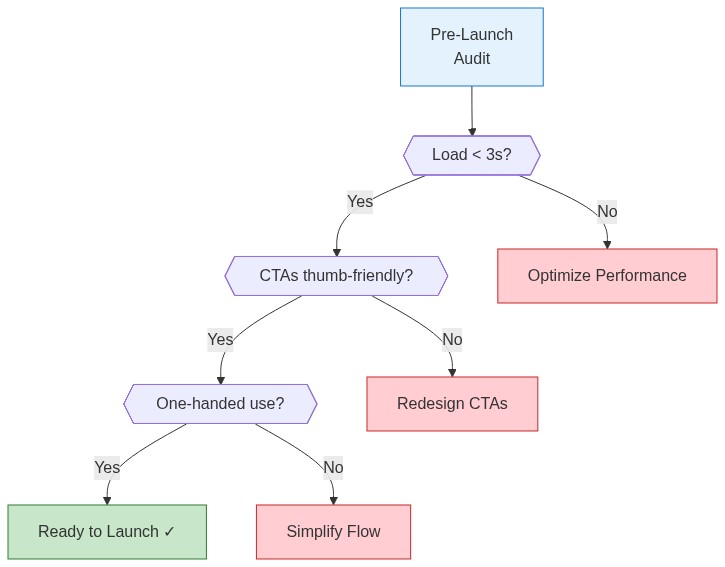
Pre-Launch Audit Checklist The bottom line? Your target should be 5%+ conversion[3]. That's what top performers achieve. With the right mobile-first approach, your startup can hit it.
References
[1]HomeStack, Top 7 Tech Features Every Realtor Needs to Convert Leads, 2025
Lorem ipsum dolor sit amet, consectetur adipiscing elit, sed do eiusmod tempor incididunt ut labore et dolore magna aliqua. Ut enim ad minim veniam, quis nostrud exercitation ullamco laboris nisi ut aliquip ex ea commodo consequat. Duis aute irure dolor in reprehenderit in voluptate velit esse cillum dolore eu fugiat nulla pariatur.
Cost-Effective IT Outsourcing Strategies for Businesses
Discover cost-effective IT outsourcing services for businesses. Learn how to enhance focus and access expert talent while reducing operational costs today!
Discover the best mobile app development company for your needs. Learn key traits and leading industry teams that can elevate your project and drive success.
Discover the top MVP development agencies to elevate your startup. Learn how partnering with a minimum viable product agencies can accelerate your success.
Discover the top mobile app development languages to choose the best coding language for your project. Learn more about native vs. cross-platform options!
Unlock growth with bespoke application development tailored to your business. Discover the benefits, processes, and competitive edge of creating custom software
Discover how to choose the right custom software partner for your business and understand the key benefits of bespoke software solutions tailored to your needs.
Avoid These 10 MVP Development Mistakes Like the Plague
Avoid the most dangerous MVP development mistakes. Learn the top pitfalls that derail startups and how to build a successful, validated product from day one.
Software Development Outsourcing Rates 2026: Costs and Trends
Explore 2026 software development outsourcing rates, emerging cost trends, regional price differences, and how AI-driven innovation is reshaping global pricing.
AI Business Solutions in 2026: How to Implement AI
Discover how AI business solutions in 2026 are transforming industries. Learn practical steps to implement AI, boost efficiency, and drive digital innovation.
Explore the future of cloud computing security in 2026. Learn expert insights on emerging threats, data protection trends, and best practices for defense.















.avif)



.avif)

.avif)