Lately, a lot has changed in the design. We've gone from simple wireframes and mockups to full-fledged prototypes that look like they're from a sci-fi movie. That being said, there are still some tried and true tools that can help you get your next project off the ground without breaking the bank or requiring a degree in coding just to run them.
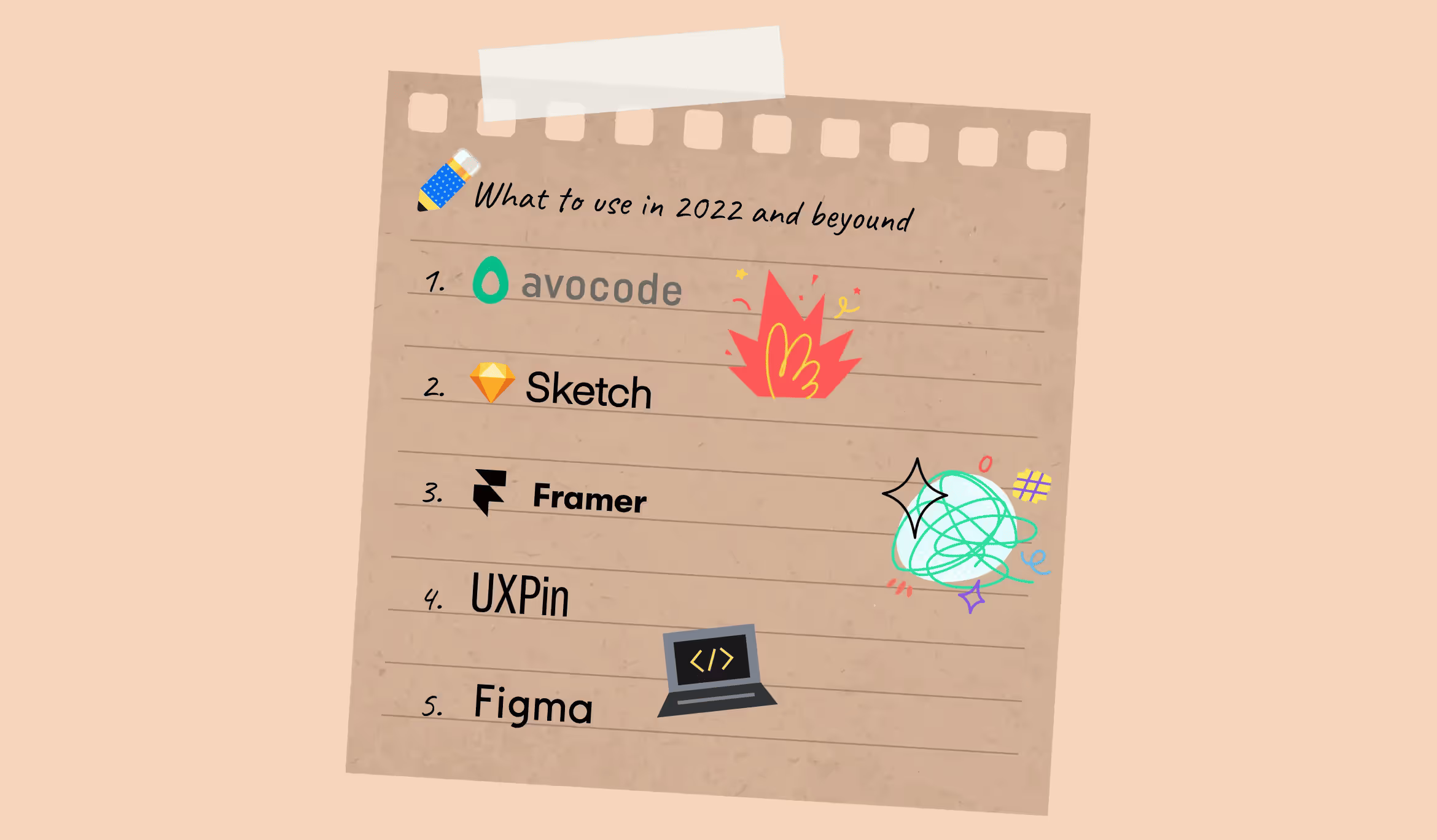
Here at Codebridge, we've got a professional UI/UX design team we're proud of. For this article, they've shared their list of five favorite UI/UX design tools that streamline daily work.
Avocode
Avocode is a design tool that lets you export designs from Sketch, Photoshop, Adobe XD, and Adobe Illustrator. Avocode allows you to view your designs in their original context, making it easier to see how they look in a browser or on different devices. With this tool, you can also generate CSS code for any UI component, customizing the look and feel of your website or mobile app.
Sketch
For all Mac lovers out there, there's Sketch. It's a vector-based design tool for iOS, Android, and web design. Distinctive features of Sketch include a user-friendly interface and cross-platform compatibility, so it's an optimal choice for any UI/UX designer. It's also great for prototyping because you can quickly change your designs without redoing everything from scratch.
The best part of using Sketch is its simplicity; it doesn't require much training or knowledge of coding languages like HTML5 or CSS3 to use every feature appropriately.
Framer
Framer is a code-free design tool that allows you to create interactive prototypes. Made for designers, developers, and product teams in mind, Framer lets you quickly design and prototype your ideas in a simple and intuitive interface. Framer is used by the world's top design agencies and leading startups to create their products: from Airbnb's app to Slack desktop client.
With Framer's powerful interactions toolkit, you can build more than just clickable mockups – you can build prototypes that allow people to use your product as if it were real.
UXPin
UXPin is a UX design tool that helps you create and share interactive wireframes, prototypes, and mockups. It's easy to learn and use, and it comes with a large library of UX components. The tool has everything you need to design great products: from UI kits to full-featured wireframing tools.
The free version comes with limited features. It's enough to start, but more is needed for more advanced projects. You can unlock everything else for $12 per month or $99 per year: vector-based drawing tools and access to reusable design elements (including icons).
Figma
Last but not least is Figma, a design tool for collaborative design. It lets you work on the same project with a team, giving everyone access to the same files and assets so they can make changes whenever necessary. You can upload multiple project versions and comment on each element individually. The comments are also visible in real time, so you can see what people say as they work on their designs. This makes it easy to get feedback from others without having to send around documents or emails back and forth – which is especially useful when working with large groups of people or clients who aren't tech-savvy.
Figma is also great for designing and prototyping; it allows you to create prototypes that can be tested and iterated quickly based on user feedback.
Conclusion
As design technology evolves, the tools available to UI/UX professionals have become more advanced and user-friendly. The five tools we've highlighted — Avocode, Sketch, Framer, UXPin, and Figma — are invaluable for streamlining workflows, enhancing collaboration, and creating stunning prototypes. Whether you're crafting detailed wireframes, building interactive prototypes, or collaborating with a team, these tools offer features that cater to diverse design needs.
At Codebridge, we understand the importance of using the right tools to drive design excellence. If you’re looking to elevate your project with top-tier design expertise and cutting-edge tools, our professional UI/UX design team is here to help. Contact us today to discuss how we can turn your vision into a reality and ensure your next project is a resounding success.
FAQ
What made certain design tools stand out?
Top design tools stood out for their collaboration features, cloud-based workflows, strong prototyping capabilities, and seamless handoff between designers and developers.
Which types of design tools were most important?
UI/UX design tools, prototyping platforms, collaboration tools, and design system management solutions were especially important as remote and hybrid work became standard.
Why was real-time collaboration a key feature in 2022 design tools?
Real-time collaboration allowed distributed teams to design, review, and iterate simultaneously. This reduced feedback cycles and improved alignment across teams.
How did prototyping tools evolve?
Prototyping tools became more interactive and realistic, supporting animations, microinteractions, and user flow testing without requiring code.
What role did design systems play in tool adoption?
Design systems helped teams maintain consistency and scale design efforts. Tools that supported shared components and style libraries were highly valued.
How did 2022 design tools improve designer–developer collaboration?
Many tools introduced better developer handoff features, including inspect modes, design specs, and code-ready assets, reducing miscommunication and rework.












Heading 1
Heading 2
Heading 3
Heading 4
Heading 5
Heading 6
Lorem ipsum dolor sit amet, consectetur adipiscing elit, sed do eiusmod tempor incididunt ut labore et dolore magna aliqua. Ut enim ad minim veniam, quis nostrud exercitation ullamco laboris nisi ut aliquip ex ea commodo consequat. Duis aute irure dolor in reprehenderit in voluptate velit esse cillum dolore eu fugiat nulla pariatur.
Block quote
Ordered list
- Item 1
- Item 2
- Item 3
Unordered list
- Item A
- Item B
- Item C
Bold text
Emphasis
Superscript
Subscript