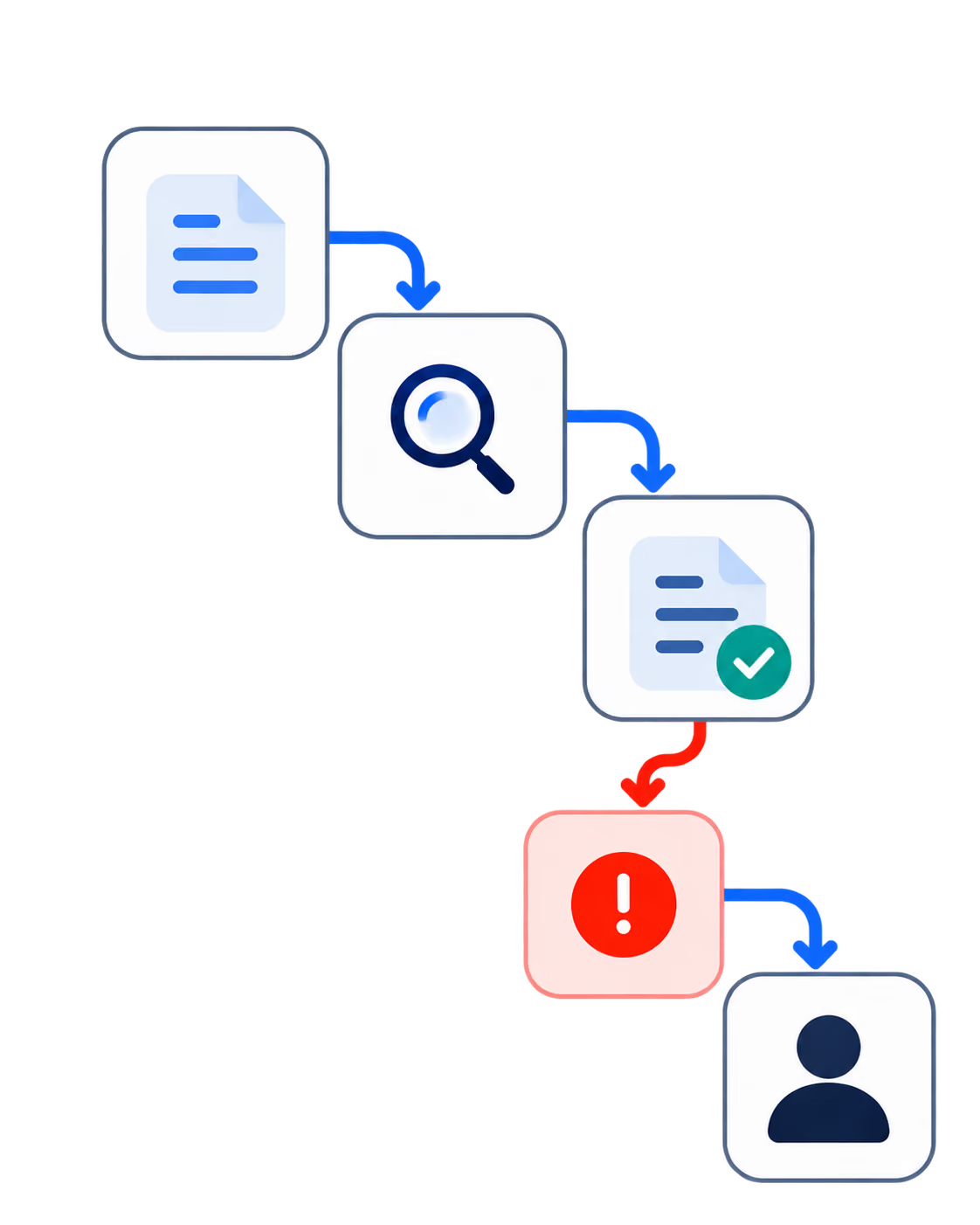
At our company, we prioritize sharing practical tips and hacks developed by our team during their daily work. This approach aligns with one of Amazon's rules: preventing defects from "swimming with the flow." By popularizing personal tips from our employees, we aim to eliminate mistakes and prevent them from affecting the entire company. We recently spoke with Lelia Vlasenko, our Junior QA Engineer, who transitioned from a logistics background to quality assurance. Over the past six months, Lelia has developed several key insights that have significantly improved her working processes. Here are her top tips for ensuring high quality in QA:

Month 1: Dive into the Project by Writing Test Cases
During the first month, nothing will introduce you to the project better than writing test cases from the UI part. This hands-on approach allows you to immediately dive in and understand the layout and connections within the project. Writing test cases provides a comprehensive overview of the project's functionality and helps you identify potential areas of concern early on.
Month 2: Maintain Ordered Bug Reports
In the second month, it is crucial to keep bug reports well-organized. Even someone entirely unfamiliar with the project should be able to reproduce what is written and understand the bug's nature and how it deviates from the requirements. Clear and concise bug reports ensure that issues are addressed efficiently and accurately.
Month 3: Ask Questions Relentlessly
By the third month, asking questions becomes essential. If an answer is unclear, don't hesitate to seek clarification. This practice not only helps you understand the project better but also ensures that the customer's requirements are met precisely. Open communication is key to avoiding misunderstandings and ensuring that everyone is on the same page.
Month 4: Learn to Write a Traceability Matrix
In the fourth month, mastering the traceability matrix is necessary. Knowing that your test cases cover all functional requirements makes the QA process much more straightforward. It is important, however, not to overdo it — limit yourself to no more than three test cases per requirement. This balance ensures thorough testing without redundancy.
Month 5: Plan Your Day and Week
By the fifth month, developing a daily and weekly plan becomes vital. Allocate an hour each day to learn something new or watch educational videos. This practice not only keeps you updated with the latest trends and techniques but also frees your mind from the anxiety of forgetting tasks. A well-structured plan provides a clear path and reduces stress.
Ensuring High Quality and Productivity
Lelia's tips are practical and valuable for anyone involved in quality assurance processes. By implementing these strategies, QA engineers can enhance their productivity and maintain high standards of quality in their work. The key takeaways include diving into the project through hands-on test case writing, maintaining clear and ordered bug reports, asking questions to ensure clarity, mastering the traceability matrix, and planning daily and weekly tasks effectively.
Popularizing personal tips of our employees is a method to eliminate mistakes and prevent them from scaling across the company, ensuring consistent high-quality standards.
Conclusion
We believe that sharing insights from our employees not only helps in maintaining high quality but also fosters a culture of continuous improvement. Lelia Vlasenko's journey from logistics to QA engineering is a testament to the power of practical experience and the value of personal tips in achieving excellence. If you are looking to enhance your quality assurance processes, these tips from Lelia are a great starting point.
For more insights and practical tips on quality assurance and other aspects of software development, stay tuned to our blog. If you have any questions or need assistance with your QA processes, don't hesitate to contact us. We are here to help you achieve the highest standards in your projects.
FAQ
What is quality assurance (QA) in software development?
Quality assurance is the process of ensuring that software meets defined standards for functionality, reliability, performance, and usability. It focuses on preventing defects rather than only fixing them after development.
Why is quality assurance essential for successful products?
QA helps identify issues early, reduces development costs, and ensures a stable and user-friendly product. High-quality software builds trust and improves customer satisfaction.
What are the core rules of effective quality assurance?
Key rules include early QA involvement, clear requirements, consistent testing processes, automation where appropriate, and continuous feedback throughout development.
How does early QA involvement improve outcomes?
Involving QA from the start helps clarify requirements, detect risks early, and prevent costly rework later in the development cycle.
When should test automation be used in QA?
Automation is most effective for repetitive, regression, and performance testing. It increases test coverage and speeds up release cycles when combined with manual testing.
How can teams measure the effectiveness of their QA process?
Effectiveness can be measured through defect detection rates, test coverage, release stability, reduced rework, and improved user satisfaction metrics.














Heading 1
Heading 2
Heading 3
Heading 4
Heading 5
Heading 6
Lorem ipsum dolor sit amet, consectetur adipiscing elit, sed do eiusmod tempor incididunt ut labore et dolore magna aliqua. Ut enim ad minim veniam, quis nostrud exercitation ullamco laboris nisi ut aliquip ex ea commodo consequat. Duis aute irure dolor in reprehenderit in voluptate velit esse cillum dolore eu fugiat nulla pariatur.
Block quote
Ordered list
- Item 1
- Item 2
- Item 3
Unordered list
- Item A
- Item B
- Item C
Bold text
Emphasis
Superscript
Subscript