The world of education has undergone significant changes in recent years. From the proliferation of online learning platforms to the integration of augmented reality (AR) and virtual reality (VR), the educational landscape is rapidly evolving. One of the most promising advancements in this field is mixed reality (MR), a technology that combines elements of both AR and VR to create immersive and interactive learning experiences. In this article, we'll explore how mixed reality is transforming education today and what innovations we can expect in the future.
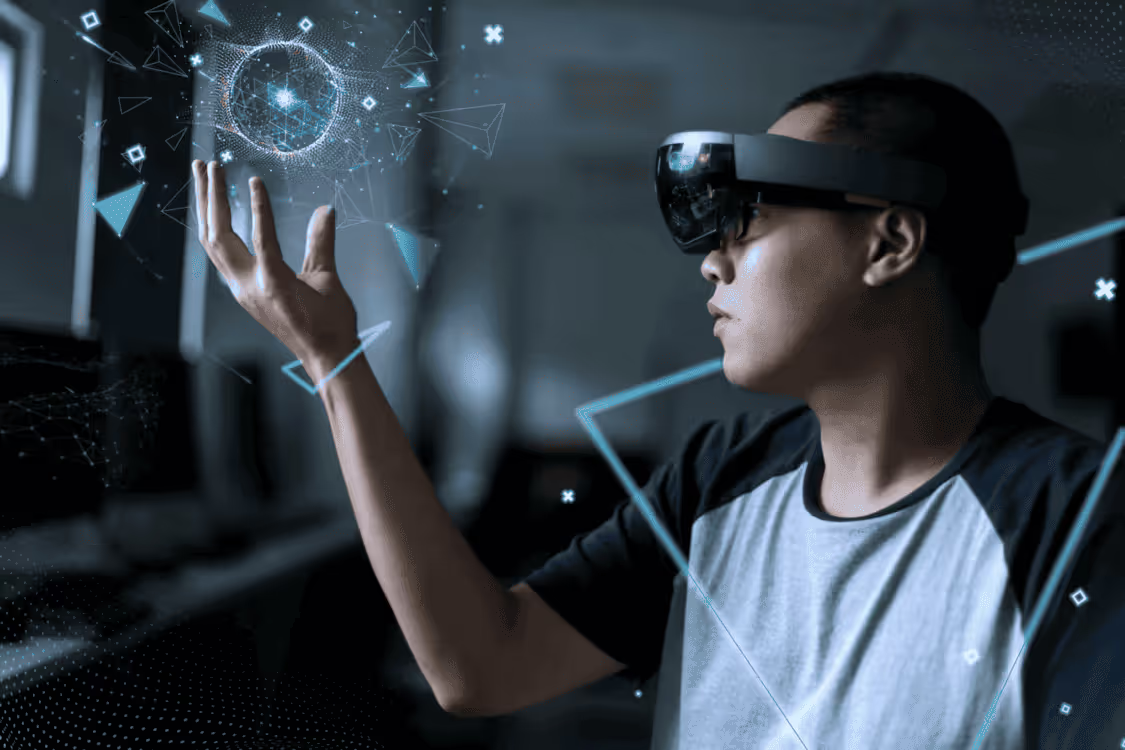
Education is No Longer Confined to the Classroom
Traditional education systems have long been limited to the physical boundaries of the classroom. However, advancements in technology have expanded the reach of education beyond these confines. With the advent of mixed reality, learning can now take place anywhere and at any time, providing unprecedented access to educational resources. This shift is particularly important in an era where remote and hybrid learning models are becoming the norm.
The Definition and Scope of Mixed Reality
Mixed reality (MR) is an immersive blend of VR, AR, 3D modeling software, 360-degree video capture technology, and other tools that merge physical space with digital content in real time. Unlike VR, which creates a completely virtual environment, or AR, which overlays digital information on the real world, MR combines both to create a cohesive and interactive experience. This unique combination allows learners to interact with both physical and digital elements simultaneously, enhancing their understanding and engagement.
Virtual Reality is Changing the Way We Learn
Virtual reality (VR) has the potential to revolutionize education by providing immersive experiences that enhance learning. VR can transport students to different times and places, allowing them to explore environments and scenarios that would otherwise be inaccessible.
Applications of VR in Education
VR can be used in various educational contexts to teach students about complex or dangerous topics in a safe and controlled environment. For example:
- Science and Biology: Students can explore the microscopic world of bacteria or the intricate structures of human organs without needing physical specimens or expensive equipment.
- History and Geography: Learners can virtually visit historical sites or explore geographical landscapes, gaining a deeper understanding of the subjects they are studying.
- Professional Training: VR simulations can be used for training in fields such as medicine, engineering, and aviation, where hands-on practice is crucial but often limited by resources or safety concerns.
Augmented Reality Brings Virtual Experiences to Life
Augmented reality (AR) enhances the real-world environment by overlaying digital information such as sound, video, graphics, or GPS data. This technology can be used to provide additional context and information, making learning more interactive and engaging.
Practical Uses of AR in Education
AR can be used in a variety of educational applications, such as:
- Interactive Textbooks: AR can bring traditional textbooks to life by adding interactive elements such as 3D models, videos, and quizzes.
- Language Learning: AR apps can provide real-time translations and pronunciation guides, helping students learn new languages more effectively.
- STEM Education: AR can be used to visualize complex concepts in science, technology, engineering, and mathematics, making them easier to understand and more engaging for students.
Mixed Reality Uses Both VR and AR to Create Wonderfully Connected Learning Experiences
Mixed reality (MR) takes the best of both VR and AR to create immersive and interactive learning experiences that go beyond the capabilities of either technology alone. By combining the physical and digital worlds, MR offers unique opportunities for education.
Benefits of Mixed Reality in Education
MR can transform the learning experience in several ways:
- Remote Learning: Students can attend classes and participate in activities from anywhere in the world, making education more accessible.
- Interactive Science Experiments: Learners can conduct virtual experiments that would be too dangerous or expensive to perform in a traditional classroom setting.
- Enhanced Collaboration: MR allows students and teachers to interact with digital objects in real time, fostering collaboration and teamwork.
Transforming Educational Experiences with Mixed Reality
Mixed reality is not just a new way to learn; it represents a fundamental shift in how education is delivered and experienced. By incorporating technology into the learning environment, MR provides a more immersive and engaging experience for students.
The Transformative Power of Mixed Reality
The use of mixed reality devices, such as the Microsoft HoloLens, allows students to interact with 3D objects and environments in real time. This hands-on approach helps students understand complex concepts more clearly and retain information better.
VR and AR are Changing What We Know About Education
Both VR and AR have the potential to revolutionize education by providing new ways to experience and interact with information. However, it is the combination of these technologies in MR that offers the most promise for the future of education.
Educational Value of Mixed Reality
MR allows students to experience things that would otherwise be impossible, such as visiting historical sites, exploring the human body, or conducting dangerous experiments. This technology not only enhances the learning experience but also provides valuable educational opportunities that were previously inaccessible.
The Future of Mixed Reality in Education
As mixed reality technology continues to evolve, its applications in education are expected to expand. Future innovations may include:
- Personalized Learning: MR can provide customized learning experiences tailored to each student's needs and abilities.
- Lifelong Learning: MR can support continuous education and professional development by providing immersive training and learning experiences.
- Global Collaboration: MR can connect students and educators from around the world, fostering cross-cultural understanding and collaboration.
Mixed reality is not just a new way to learn; it represents a fundamental shift in how education is delivered and experienced, making learning more immersive and accessible than ever before.
Conclusion
The future of education is bright, thanks to the transformative power of mixed reality. By combining virtual and augmented reality experiences with real-world objects, MR is revolutionizing the way we learn. This technology offers new opportunities for educators and students alike, allowing them to interact with each other and explore concepts in ways that were previously impossible. As mixed reality continues to evolve, it promises to reshape the educational landscape, providing more accessible, engaging, and effective learning experiences for all.
FAQ
What is mixed reality (MR) in education?
Mixed reality combines elements of virtual reality (VR) and augmented reality (AR) to create immersive learning environments where digital content interacts with the physical world in real time.
How does mixed reality improve the learning experience?
MR enhances engagement by enabling hands-on, interactive learning. Students can visualize complex concepts, practice skills safely, and learn through experience rather than passive content consumption.
Which educational fields benefit most from mixed reality?
Fields such as medicine, engineering, science, history, and vocational training benefit greatly from MR. It allows simulations, virtual labs, and realistic scenarios that are difficult to recreate in traditional classrooms.
How does mixed reality support personalized learning?
MR can adapt content based on learner progress and interaction, providing tailored experiences. This helps accommodate different learning styles and paces.
What challenges come with adopting mixed reality in education?
Challenges include high initial costs, hardware accessibility, content development complexity, and the need for teacher training to effectively integrate MR into curricula.
What does the future hold for mixed reality in education?
As technology becomes more affordable and accessible, mixed reality will play a larger role in mainstream education. It is expected to transform classrooms into interactive, immersive learning environments.













Heading 1
Heading 2
Heading 3
Heading 4
Heading 5
Heading 6
Lorem ipsum dolor sit amet, consectetur adipiscing elit, sed do eiusmod tempor incididunt ut labore et dolore magna aliqua. Ut enim ad minim veniam, quis nostrud exercitation ullamco laboris nisi ut aliquip ex ea commodo consequat. Duis aute irure dolor in reprehenderit in voluptate velit esse cillum dolore eu fugiat nulla pariatur.
Block quote
Ordered list
- Item 1
- Item 2
- Item 3
Unordered list
- Item A
- Item B
- Item C
Bold text
Emphasis
Superscript
Subscript